
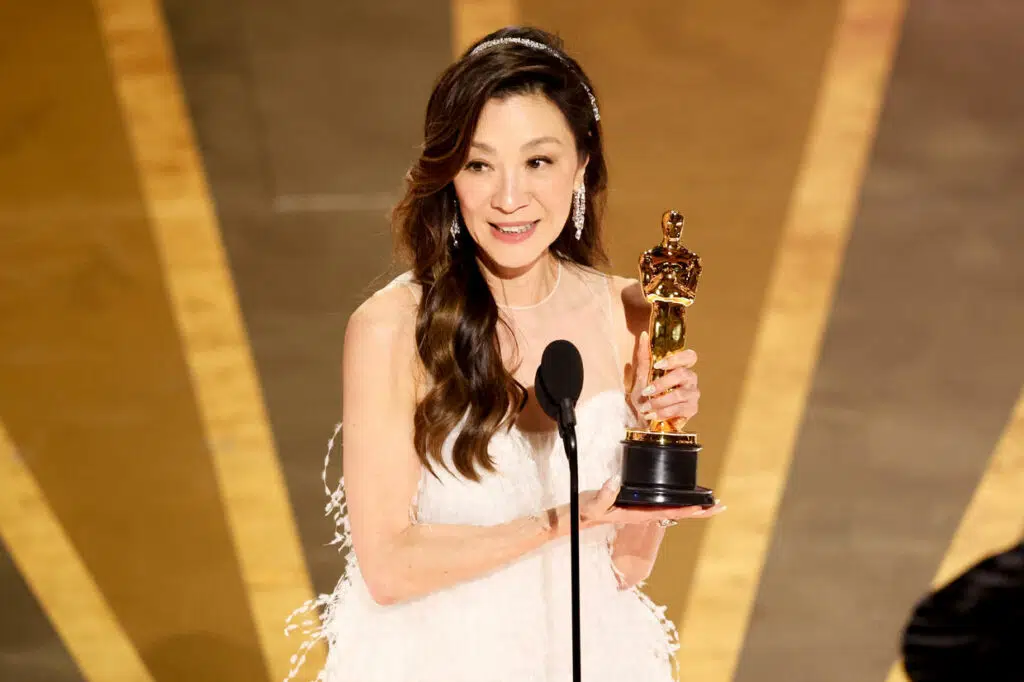
As the big winner at this year's Oscars that takes home seven awards "Everything Everywhere All at Once" (referred to as EEAaO below) has every reason to be loved: wild imagination, visually complex scenes, bold and clever reference to classic movies. It features a middle-aged Asian woman as the lead character, showcasing a complicated Asian mother-daughter relationship filled with love and tension at the same time.
Despite its achievements, the film has received criticism for its conservative core of storytelling. Besides, some have labeled it as ‘database movie’, a non-linear and shallow film expression that glosses over the cruel realities of life, which suggests the decline of social impact and imagination of films. Admittedly, the winner excels in some aspect, but as a film enthusiast who believe in the social significance of film, I expect more from filmmakers.
‘All At Once' as an form
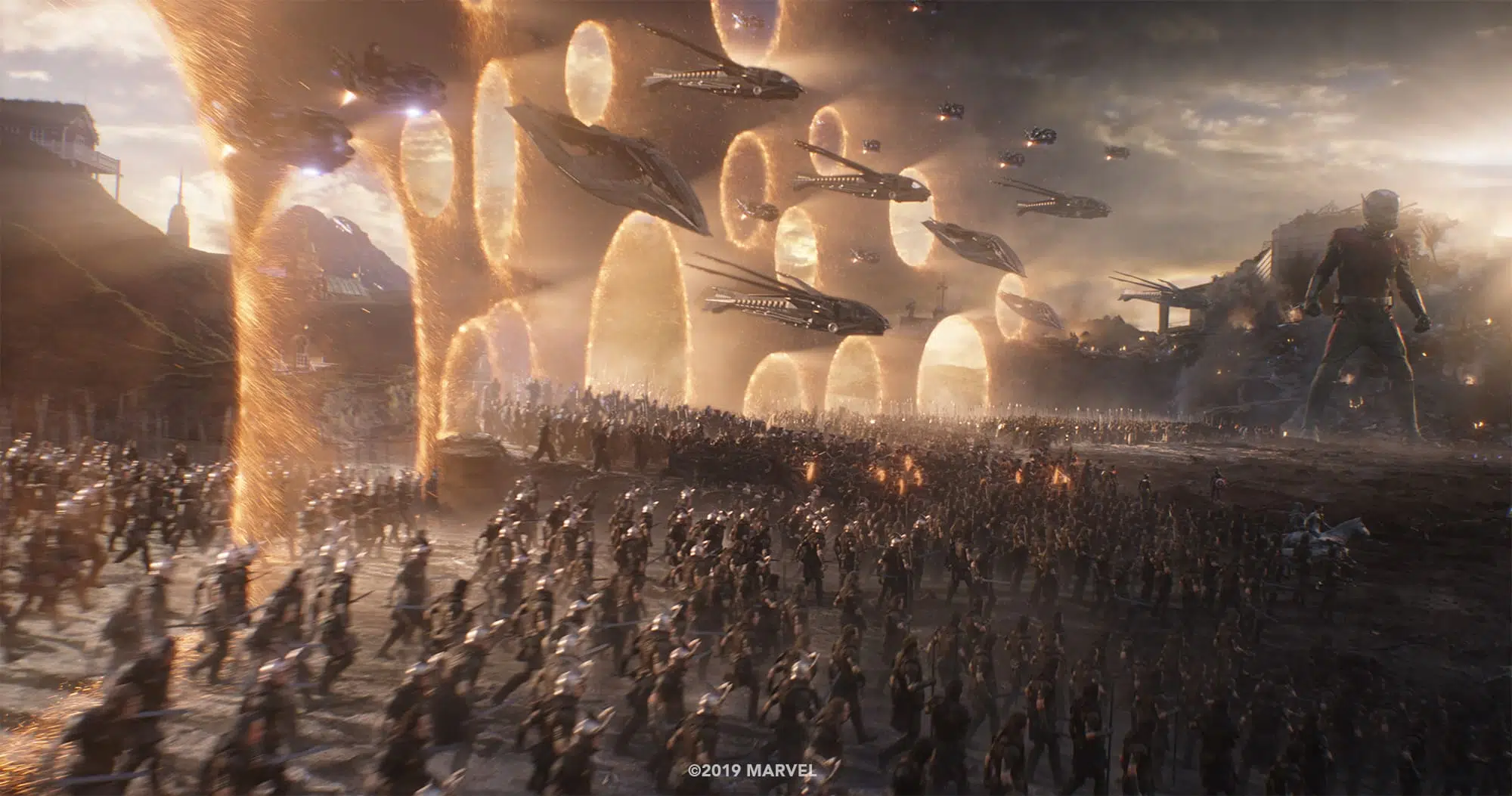
Recent years see the increasing popularity of the concept of the multiverse in Hollywood movies, particularly in blockbusters like the Marvel series. In films such as “Avengers: Endgame”, "Spider-Man: No Way Home" and "Doctor Strange in the Multiverse of Madness," the multiverse offers a chance to reboot the reality. The superheroes are brought back to life, gather on a once desolate wasteland and save the world from collapsing.
Everything Everywhere All at Once also tells a story set in multiverse, where variations of event take place as a result of different decisions. Somehow, these diverse universes may be interconnected and observable. Interestingly, apart from where the story sets, the film itself is a multiverse as well, which consists of three universes.
1) The first universe is film’s narratives, which revolves around the life of Evelyn, an Asian woman dealing with family conflicts, generation differences and others.
2) The universe of classic movies, a vast ‘database cinema’ to which the film pays tributes.
3) The one of expressiveness, where spectacles achieved through match cut that connect circular elements between different scenes or shots.
By editing, splicing and combing scenes from different times and spaces, there is no medium more suited than film for expressing the concept of multiverse, and EEAaO serves as the best example. It is this art form that truly embodies the idea of “everything everywhere all at once”.
Stereotype of Asians
In response to the social changes in the United States, an increasing number of films featuring Chinese Americans have emerged. This is not surprising since films have the ability to shed light on social issues, particularly in light of the surge in racial discrimination against Asians since the pandemic. In addition to that, these films explore the theme of generation differences, as reflected in Crazy Rich Asian, The Farewell, Turning Red as well as EEAaO. However, it’s worth noting that while they contribute to portraying the Asian American experience, still they fall prey to stereotypes about Asians.

In EEAaO, Joy the daughter, who represents the "Z generation", is portrayed as an outsider who doesn't fit into the traditional Chinese family due to her differing values from the older generation. Meanwhile, Evelyn, Joy's mother, comes across as a rigid and conservative immigrant who cling to traditional values. One of the most intense conflicts between Joy and her mother Evelyn lies in her sexual orientation. As Evelyn fails to understand and accept her, Joy’s alternative self, Jobu Tupaki is generated, and she channels her anguish into a scheme to annihilate the multiverse. The film portrays the universal issue of generational conflict in America through a stereotypical lens, interpreting it as a difference between Eastern and Western cultures.
The portrayal of a coin laundry business in the film also reinforces a common stereotype of Asian immigrants, who often resort to such ventures as an easy means of starting their own businesses. While open to criticism, the stereotypes offer a chance to show the shared difficulties Evelyn face as an East Asian woman: the fall of their dreams, the repetitive everyday life like the revolving laundry machine, the sense of stagnation in middle age without any notable achievements. Despite being a business owner, she is trapped in the degraded laundry work. On top of that, she must also navigate the mundane issues of dealing with customers and tax matters.
In the midst of hopelessness, a ray of hope shines down upon her- not from this earth, but from the vast expanse of the universe. The multiverse promises her the freedom to make a fresh start, to break free from the monotony of everyday life consumed by laundry detergent and invoices, and to become anything she desires - a renowned superstar, a fearless warrior, or even a silent stone. And so, the story's suspense builds - will Evelyn take flight, soaring freely beyond the hopeless reality, or will she be grounded by love, duty, and forgiveness?
Database Cinema
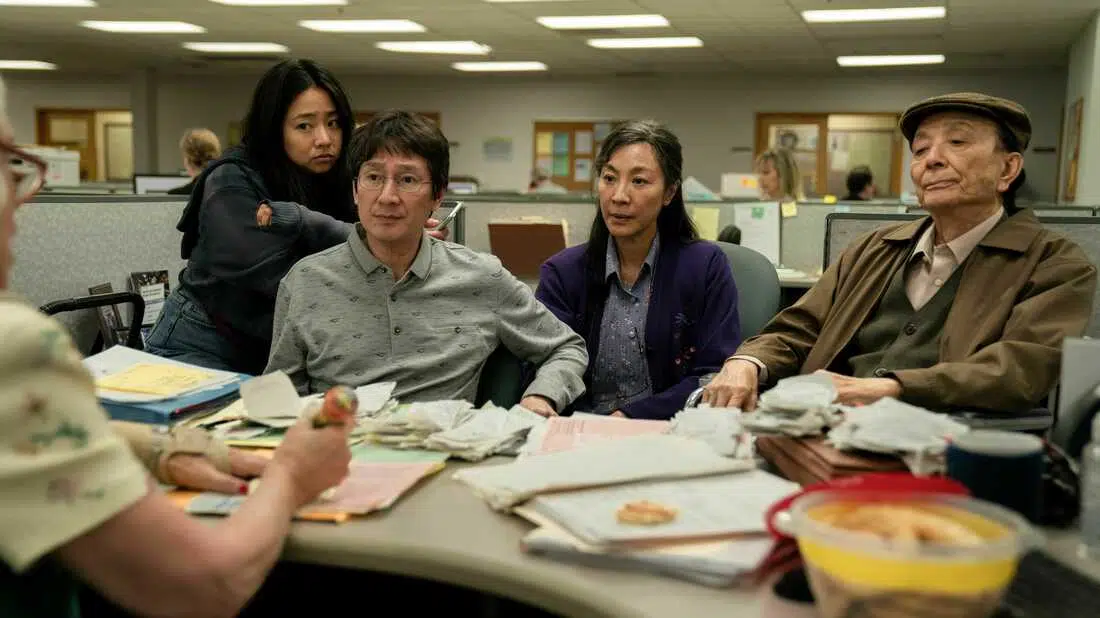
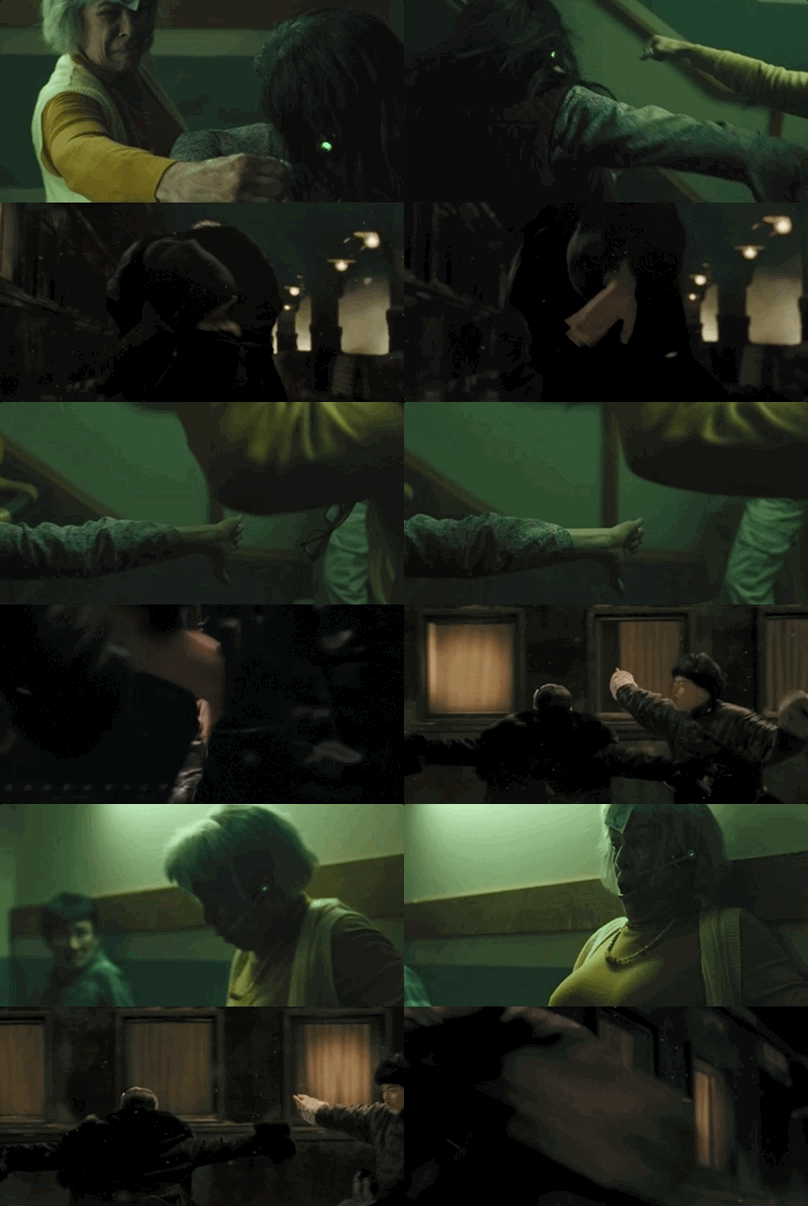
The multiverse in the film begins with Evelyn’s ‘verse jumping’ at Internal Revenue Service, where her husband Waymond abruptly transform from a mild-mannered man to a precise and cold-mind fighter who manages to fend off the fully-armed police using Chinese Kungfu. The Vietnamese-American actor, Ke Huy Quan, absent from the screen for over a decade, not only resembles Jackie Chan in appearance, but also incorporates Chan's kung fu style from his films into the exciting fight scenes and action sequences. And there are far more scenes that pay tributes to previous films.
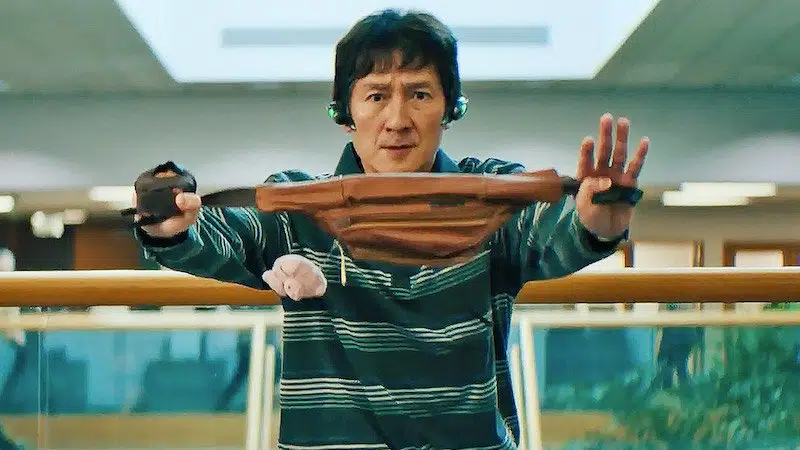
As mentioned above, the film as an art form can be considered a multiverse, and the universe of ‘database cinema’ plays an important part. In EEAaO, the directors Daniel Kwan and Daniel Scheinert do not provide explanations for how multiverse is created, how verse jumping is possible, or why multiverse travel is achieved through Bluetooth earphones flashing a green light. They seem to deliberately leave such questions behind to reach the sheer goal of demonstrating how every parallel universe is generated from scenes in classic works, presenting a rich ‘database’ of films. This is how the film is filled with countless references to classic movies, with many of them hidden in plain sight in almost every scene and each joke.
The kung-fu universe, for example, is reminiscent of Michelle Yeoh’s early martial art films and bears a striking resemblance to Kill Bill. Other fight scenes pay homage to movie such as Kung Fu Hustle, The Grandmaster, Fight Club, The Shining and others.
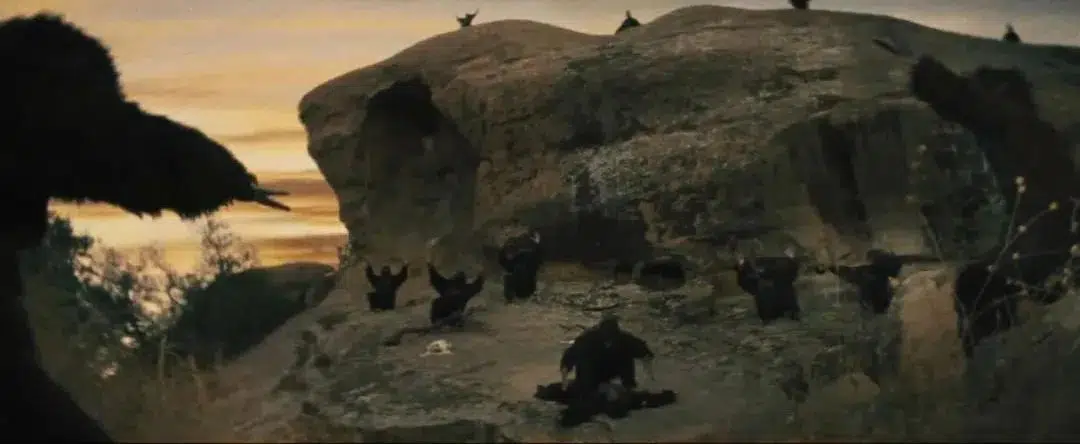
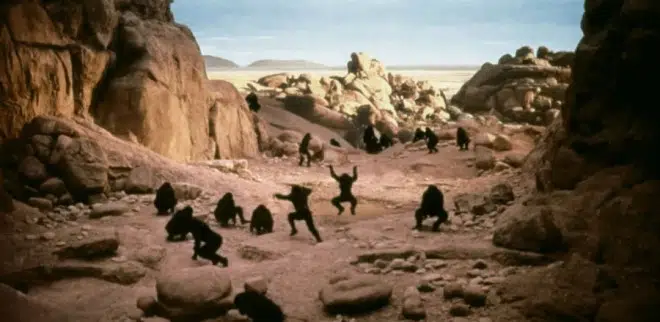
The hot dog finger universe with its upgrade shots might be a tribute to Terrence Malick and 2001: A Space Odyssey.
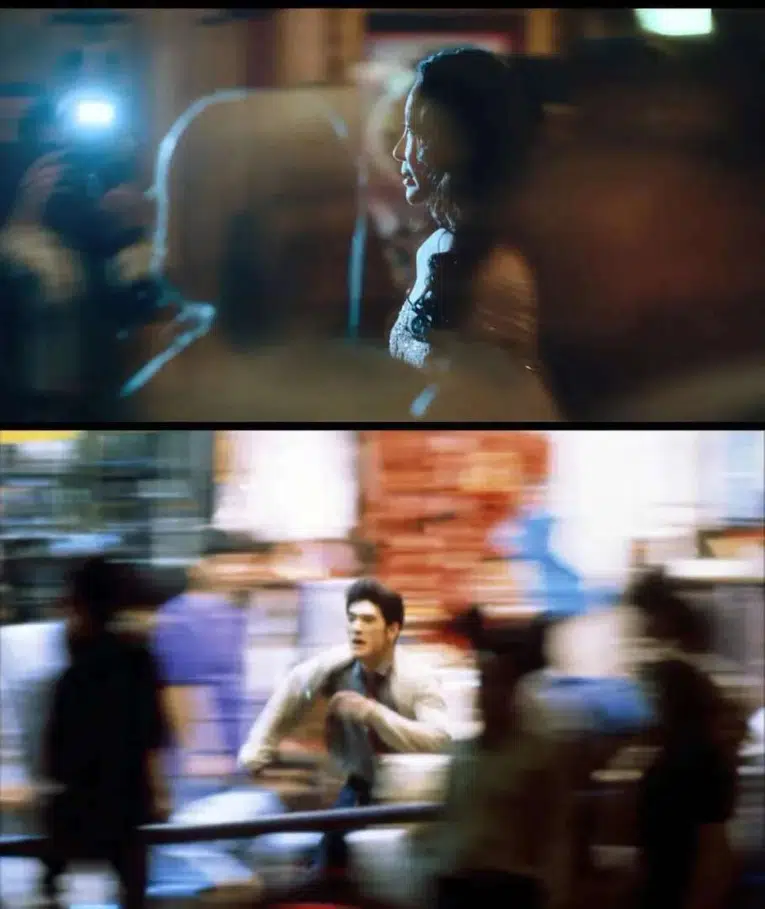
The urban love universe, the most stylistically incompatible one in my opinion, imitates Wong Kar-wai's unique freeze-frame images.
Some other strange yet interesting universes, including the one with Chief Racoon as a nod to Ratatouille.
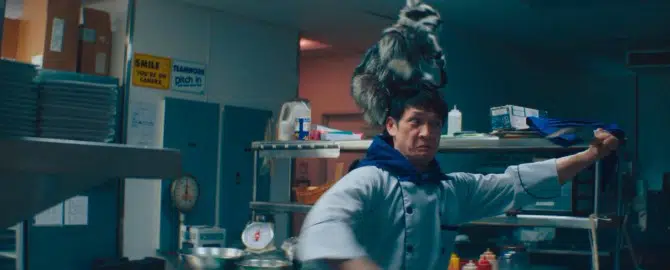
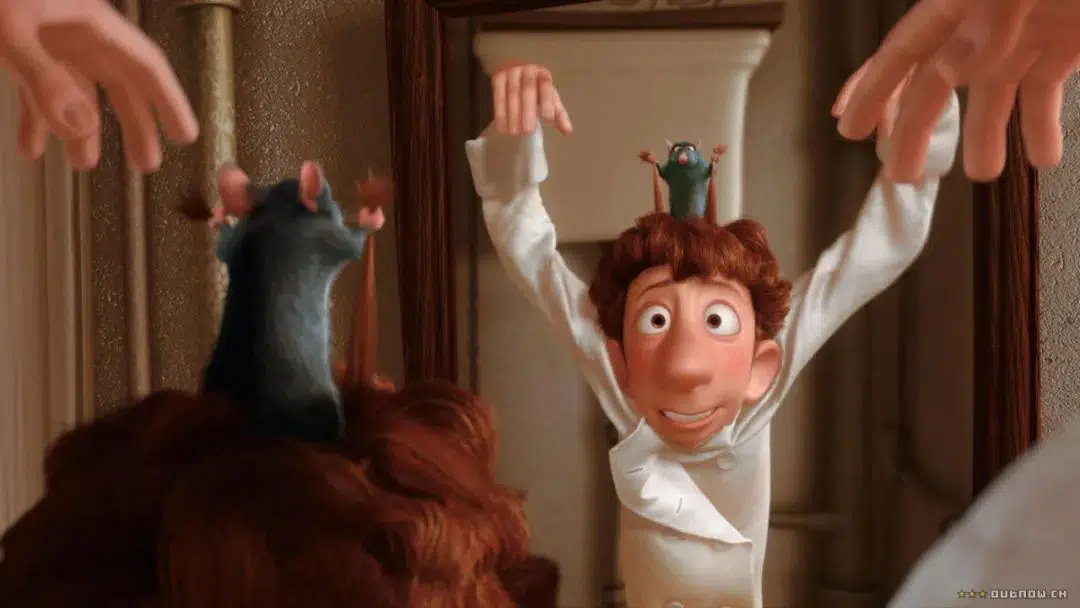
With patience, viewers can identify all these references, making the film a treasure trove, or rather, ‘database’ of movie trivia.
In the digital age we live in, the concept of a "database" has become increasingly important to researchers as a metaphor for representing the world. In the past, text and images were the primary means of representation, but today people rely more on data. This is where the concept of "database cinema" comes in. A key feature of this type of film is the extraction and embodiment of elements (such as scenes, editing techniques, audio, and visual) from a wide range of old films, which are then used to construct a non-linear narrative that differs from traditional narrative films. As Manovich (2002) explains, "As a cultural form, the database represents the world as a list of items and it refuses to order this list."
However, there is a tension between the rejection of order and the need for a clear, linear narrative. As reflected in EEAaO, the wild imagination and frequent verse jump to some extent affect the flow of the story. Nevertheless, the tension indicates that the trajectory of movie history is moving away from traditional narrative towards an era of "database cinema." As a representative example of this film type, EEAaO doesn’t require deep understanding from the audience. All that captivate are based on visual, sound, editing, shallow story and corny subject of family reconciliation, which fail to make it an innovative, rebellious and radical one that delve deeply into the challenges of Asian women or other issues alike.

Therefore, it’s understandable that the film receives criticism. The so-called wild imagination is nothing more than imitations and references achieved through match cut, no matter how visually wonderful it appears. It fails to present anything new, anything that truly reflects imagination, unlike what filmmakers such as Gaston Méliès, Stanley Kubrick, Tarkovsky and Alfonso Cuarón have shown us. Nowadays, attempts at wilder imagination and deeper reflection of social reality in filmmaking keep falling short, and referencing previously released films in a wacky way seems to be a innovative approach. However, it's clear that this approach is not truly innovative, and it suggests nothing more than the decline of imagination in filmmaking.
Reference
Lev Manovich, 2002, The Language of New Media. MIT Press.



Share your thoughts!
Be the first to start the conversation.