
In the past, certain Marvel movies may have left audiences feeling like they were indulging in fast food while watching them—easy to consume but ultimately forgettable, serving as a distraction during dull moments. Marvel and audiences have kept an unspoken rule: Marvel Studios get box office revenue, and audiences kill time; until "The Marvels" came along.
Another similar junk-food-like movie, "The Marvels" lacks substance and arrives in bite-sized portions. With a runtime of just 1 hour and 45 minutes, it stands as the shortest film within the Marvel Cinematic Universe.
Of course, if we don't equate ticket prices with runtime, then a shorter film might be a good thing. It means audiences could be liberated from the cinema sooner.
However, this particular film doesn't just grapple with the typical pitfalls of Marvel movies, like a lackluster plot, superficial character development, and feeble antagonists; it actually exacerbates these problems to an unprecedented degree, introducing additional flaws that seem irreparable.
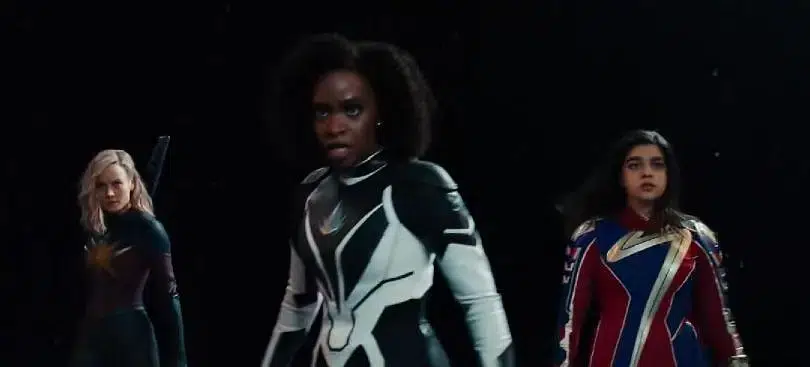
For instance, before watching "The Marvels," theoretically, you need to catch up on "Captain Marvel," as well as the TV series "WandaVision," "Ms. Marvel," and "Secret Invasion." Even after doing so, you might as well catch up on "Hawkeye" and "Ant-Man and the Wasp: Quantumania" .
The knowledge the audience needs to grapple before watching this movie not only hinders ordinary first-time audiences from fully appreciating the story and character arcs, but also requires dedicated fans to invest a significant amount of effort in figuring out timelines and character relationships.
Marvel movies have significantly shifted from an era where casual viewing without the fear of missing out was feasible. Now, each new release demands an extensive revisit of past works, whose overall quality is rapidly declining. It's become a tiresome and demanding task!
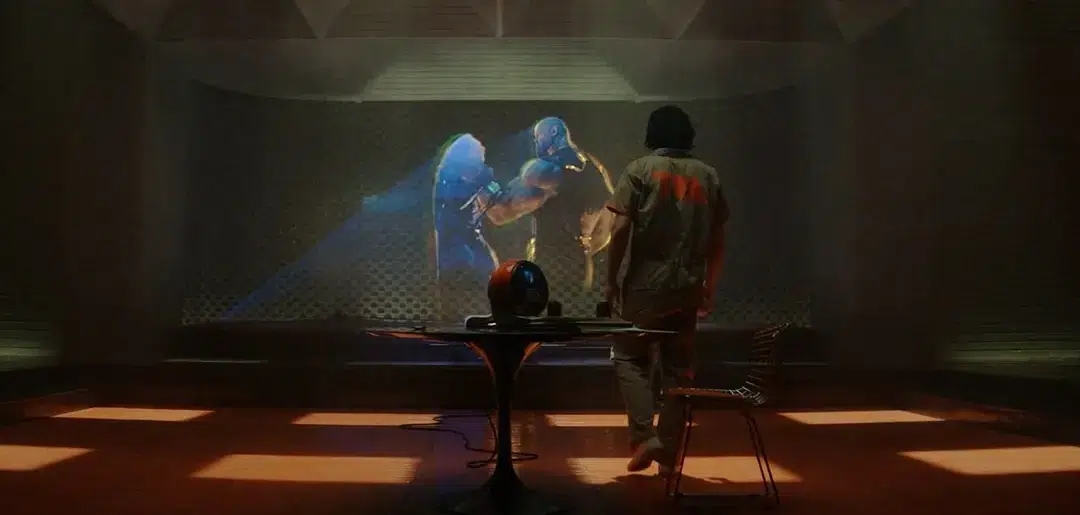
Although Marvel movies have always presented themselves as sci-fi, in "The Marvels," all the scientific explanations related to interstellar travel appear cursory and simplistic. It's possible that the cast members are aware of this, leading them to hurriedly gloss over these explanations, seemingly afraid that the audience might attempt to grasp the concepts.
As a substantial part of the movie is swiftly glossed over, suddenly the musical prince planet makes its appearance on screen. My initial drowsiness is instantly replaced by profound confusion, leading me to question whether the director had lost their grip on sanity or if I had somehow lost my own.
Ignoring the awkward presentation, after the musical interlude between Carol and the musical prince, they inexplicably return to a normal conversation—couldn't they have just talked normally?
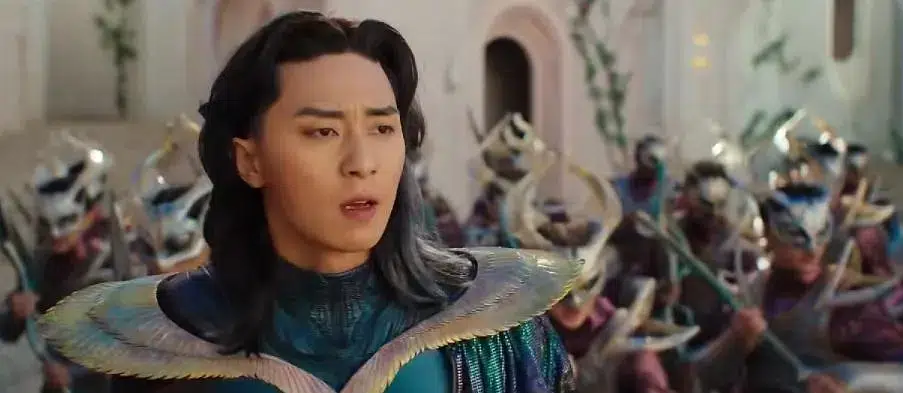
Either Disney had a sudden burst of inspiration to introduce a new Marvel princess, or the entire "The Marvels" crew collectively time-travelled to Bollywood, because there is no other way to explain the abrupt arrangement of such a bizarre song and dance routine into this sci-fi drama.
Leaving aside the unappealing story, even the performances in this movie also fall short. Except for the actors playing Captain Marvel and Ms. Marvel, who show a certain degree of conviction, everyone else in the movie seems uncertain about what they are portraying. You can sense their confusion through their utterly unconvincing performances.
Even Samuel L. Jackson, in his role as Nick Fury, who has embodied the character for 15 years, appears uncertain about Fury's portrayal in this particular film. Consequently, he delivers his lines in a nonchalant manner, as if unsure of the character's essence or direction in this installment.
The director who once commanded S.H.I.E.L.D. now struggles to resurrect a new organization called S.W.O.R.D., facing imminent destruction by three superheroines, and ultimately relying on a group of cats for salvation. Throughout this entire ordeal, Fury appears utterly helpless. The portrayal lacks the conviction and strength previously associated with his character, leaving one to question the essence of his persona in this narrative.
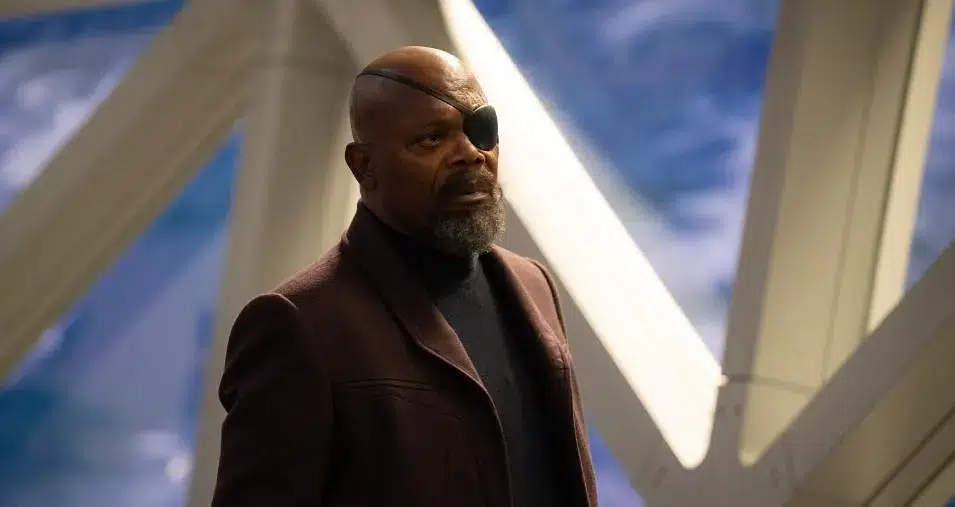
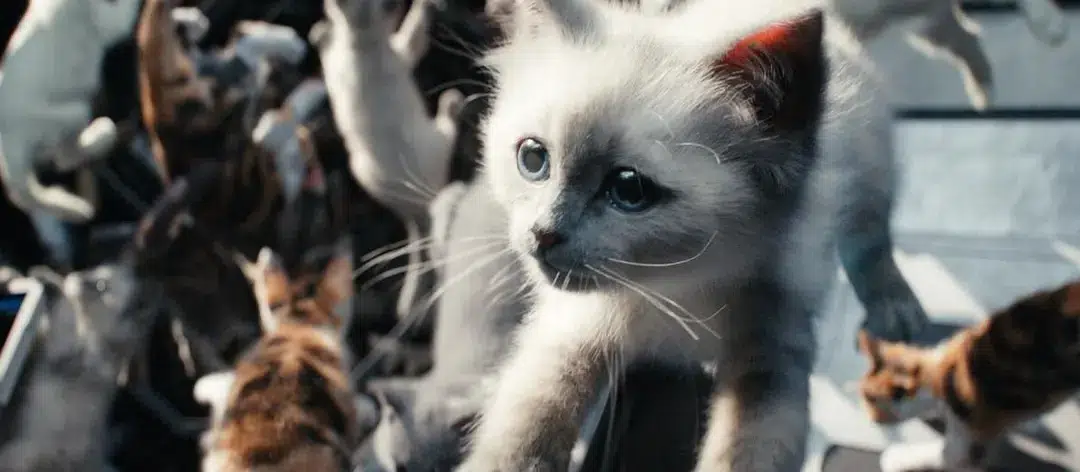
It seems likely that the director recognized the dissatisfaction brewing among the audience due to the movie's direction. In a hasty attempt to remedy this, they introduced what they perceived as a cure-all solution: cats.
Chewie in the first entry was a decent idea, but it was only a momentary novelty, and the sense of surprise quickly faded away. While in "The Marvels," it was exploited so intense that the entire screen is nearly flooded with poorly executed cats created with terrible CG effect. The attempt was to evoke a cute and endearing feeling among the audience, thus enhancing their impression of the movie—unfortunately, it didn't work. Using adorable cats as a remedy for fatal flaws in the story and characters is an extremely irresponsible approach.
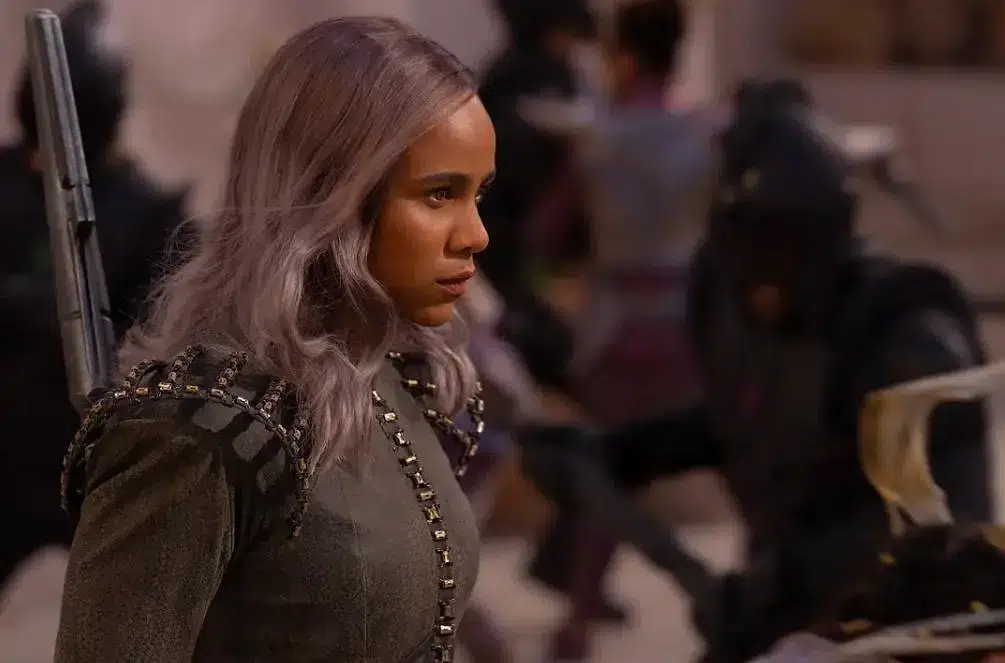
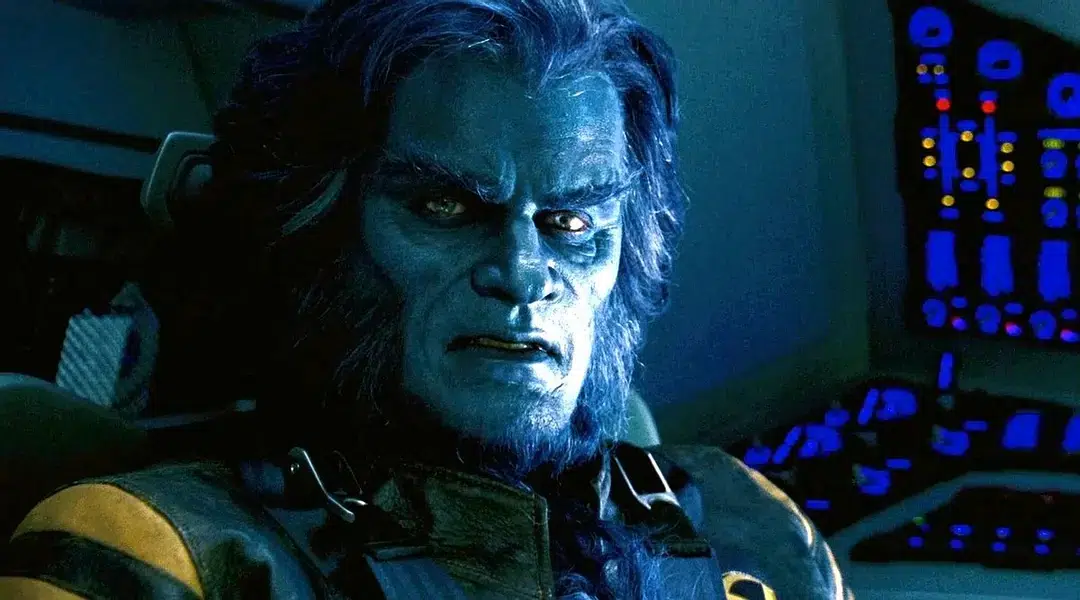
Even the so-called highlight of the movie is not in the main plot but in the post-credits scenes—Beast from X-Men makes his first appearance in the Marvel Cinematic Universe. At the same time, in a parallel universe, Maria Rambeau also debuts as the superhero "Photon."
However, given the prior announcement of Wolverine joining "Deadpool 3," the incorporation of X-Men into the Marvel Universe is no longer a secret. Placing it in a post-credits scene does little to surprise.
In conclusion, the Marvel Cinematic Universe really needs to reflect on its future plan. Given one disappointing Marvel movie after another, such as "The Marvels," audience confidence in the superhero genre might soon erode completely.





Share your thoughts!
Be the first to start the conversation.