
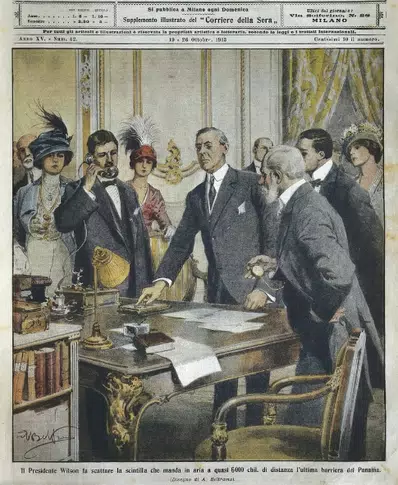
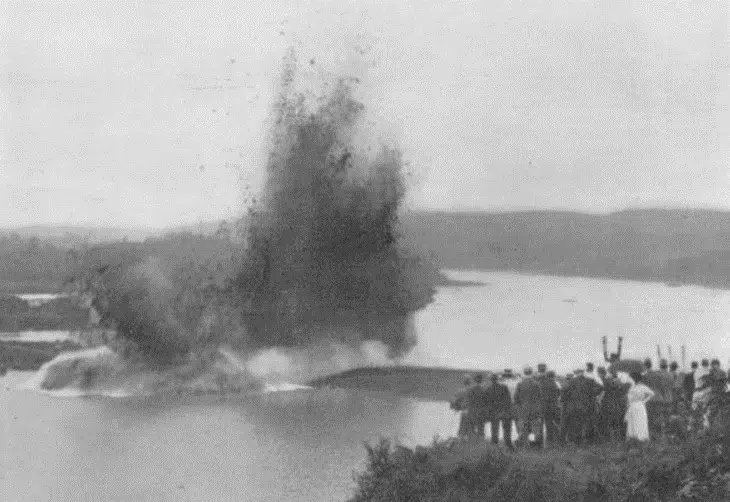
On October 10, 1913, U.S. President Woodrow Wilson, detonated explosives through a telegraph signal from the White House to break the Gamboa Dike. Water flooded the Culebra Cut, thereby joining the Atlantic and Pacific oceans via the Panama Canal. For over a century, the canal has been a stage which shows of international relations and geopolitical dynamics are on.
The small Central American nation Panama, also a stage for events, has been applied by Hollywood studios as backdrops to craft narratives within the frame of genre cinema. Unfortunately, nearly all of them are conventions of crime and espionage, allowing audiences in the comfort of their homes or theaters in the North to witness the pains of the South. Yet, as Panama, situated in the South, produces scarce indigenous films, it is left to present its geographical marvel, the canal, as the stage upon which these Hollywood thrilling stories unfold.
Now, with the opportunity presented by the 110th anniversary of its inaugural voyage, let's take a retrospective look at the stories of the Panama Canal portrayed in Hollywood’s films. After all, the empire that successfully carved this engineering marvel has dominantly overseen this vital passage for nearly a century in a colonial fashion.

Panama:The U.S. Military Strikes from the Pacific Dam
Coincidentally, last year saw the release of a film simply and bluntly titled “Panama,” starring Cole Hauser with a cameo appearance by Mel Gibson. The movie recounts a espionage tale of the 1989 U.S. invasion of Panama and the overthrow of the military dictatorship of Manuel Noriega. Unfortunately, much like its straightforward title, the film is characterized by its simplicity, roughness, and banality. However, there is an interesting detail, perhaps borrowed from the rock and roll lore about the Guns N’ Roses band. It’s said that when the U.S. forces entered the capital, Panama City, General Noriega, who had a penchant for opera and a disdain for rock, took refuge in the Vatican Embassy. The advancing troops reportedly played the band's hit song 'Welcome to the Jungle' and cranked up the high-pitched speakers to the maximum to disrupt the anxiety of the trapped general. In this low-quality film, during a tumultuous scene in another chaotic Central American nation, Honduras, right-wing militants storm a jungle hideout of left-wing Sandino guerrillas. The leader, wielding a submachine gun, shouts, 'Welcome to the jungle!' then wildly firing his semi-automatic rifle as if it were an electric guitar.

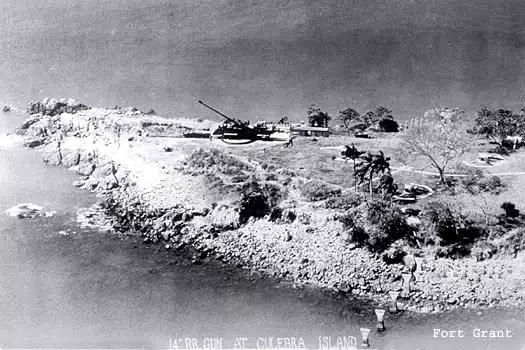
Rife with poorly executed gunfire scenes, “Panama” doesn’t seem willing to spare a penny on purchasing footage about the canal from the Geographic Channel. Only in the concluding shot of the dusk sky, embellishing the successfully completed mission, reveal a scene of the 2-kilometer dam guarding the northern bank of the Pacific mouth of the canal. This dam, along with four connected islands on the other end, once collectively formed the formidable defense structure of Fort Grant, guarding the entrance and exit of the canal. From its opening in 1914 until World War II, it stood as the most powerful U.S. military fortification, equipped with two guns covering a range of 44 kilometers. These guns, swiftly transportable via canal rail to the Caribbean side from the Pacific, were 14-inch machine guns. However, after the Japanese attack on Pearl Harbor in December 1941, the Panamanian garrison quickly realized the futility of such robust defense in the face of modern carrier formations. The island where the cannons once stood, Culebra, has now transformed into a natural center. In the hall, two moderately sized aquariums showcase marine life from the Pacific and the Caribbean. Outside, an intelligent demonstration system, accompanied by a nearby telescope, teaches viewers to identify the types of cargo ships awaiting entry into the canal.
Basic: The Exotic Canal Zone
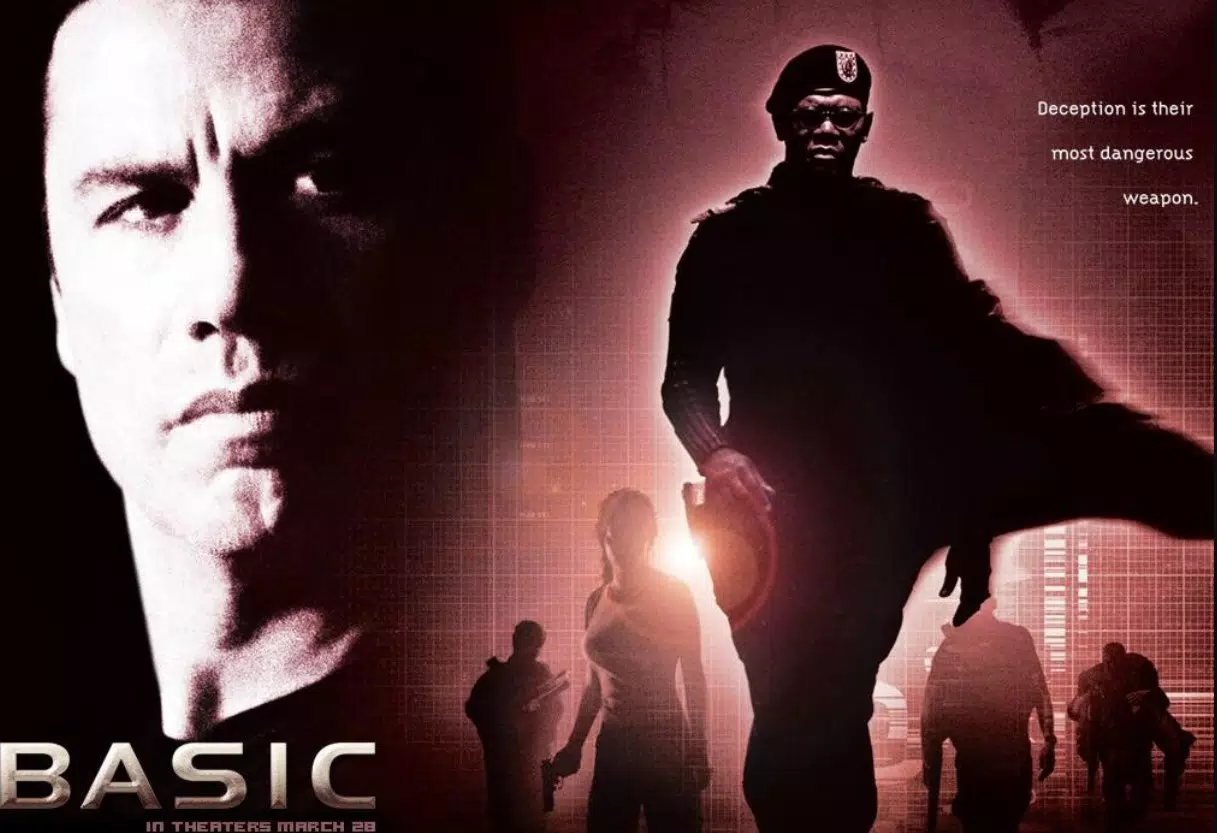
Also, in the twilight scenery, the image of a large ship slowly navigating the canal, accompanied by Ravel's famous orchestra work "Boléro", is directly presented at the beginning of the 2003 film "Basic," starring John Travolta. A voiceover narrates the history of the canal:
"The French attempted to construct a canal here before the Americans, and at its peak, 500 workers per week succumbed to dysentery, with no time for proper burial. So, the French bought entire ships of alcohol from Cuba, sealed a corpse in each barrel, and sold them to various medical anatomy centers in Europe. For a while, this became a major source of income. You see, this place has always had its unique way of dealing with interests and death."

"Basic" refers to the century-old U.S. military bases scattered strategically throughout key areas of the canal zone. In the memoir " Erased: The Untold Story of the Panama Canal " by Marixa Lasso, a history professor at the National University of Colombia, she reminisces about her childhood:
"The canal zone was an exotic place: within the zone, on either side of the roads, lush jungles stood in stark contrast to the arid cattle ranches found alongside other sections of the Pan-American Highway in Panama. This jungle formed a unique backdrop for military bases and a few American-style suburban towns. The towns, with neatly manicured lawns, swimming pools, and air-conditioned villas, presented a striking contrast to the surrounding jungle." However, she quickly shifts her tone in the book, pointing out, "That distinctive jungle landscape was never the original terrain of the canal zone; it was a product of the 20th century, built upon the erasure of the urban and rural history of the area spanning 400 years. In 1912, the canal zone was one of the most densely populated areas in Panama, filled with smaller versions of Panama City and Colón, complete with rental houses, taverns, and markets." She further summarizes, "For early 20th-century Panama, the population displacement from the canal zone was one of the most traumatic events, surpassing even Panama's separation from Colombia in 1903 in terms of its intensity of pain."

Thus, in the movie, the depiction is confined to the American military bases and living quarters, with absolutely no portrayal of Panama beyond the confines of the isolated network. In this narrative, the only connection between the two sides is the drug trade; American military personnel get involved in drug trafficking, while some individuals strive for justice through private means. The three teams of six individuals creating a jungle mystery on a rainy night in the movie, under the contribution of two investigators, unveil numerous plausible and captivating versions. As stated at the beginning, Panama has always had its unique way of dealing with interests and death.





Share your thoughts!
Be the first to start the conversation.