
As the last movie from Marvel Cinematic Universe for this year, "The Marvels" premiered globally on November 10. Coincidentally, this week, there are reports that Robert Downey Jr., who plays “Iron Man,” and Chris Evans, who plays “Captain America,” are expected to make a return for "Avengers: Secret Wars," and “Black Widow” may also be resurrected. With the setbacks of "Black Panther: Wakanda Forever" and "Ant-Man and the Wasp: Quantumania" and with the continuous increasing aesthetic fatigue amongst audiences, the underlying message of this rumor seems to be clear: Marvel Studios knew that "The Marvels" wouldn’t be its savior. And after watching the film, it's likely that audiences would also agree on this.
"The Marvels" is the second solo superhero movie featuring Carol Danvers (played by Brie Larson), released four years after the previous entry, which ends with Carol leaving Earth, leading “the Skrulls” in search of a new home. This is set years later, with Carol having defeated “the Supreme Intelligence” ruling “the Kree”, but she has not yet returned to Earth.
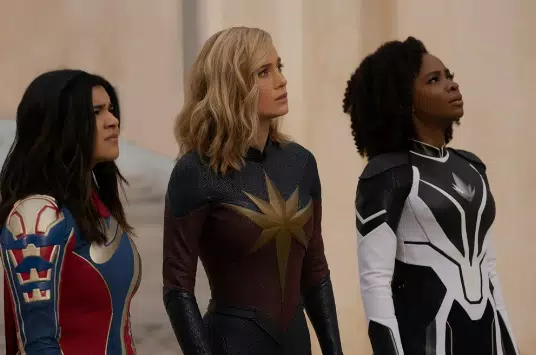
Monica Rambeau, the once mischievous captain, is now a capable astronaut leading her own team. She is disappointed and finds it hard to forgive Carol's failure to keep her promise. Kamala Khan, a self-proclaimed "Ms. Marvel" and Carol's biggest fan, gains superpowers through a bracelet given by her grandmother. The three characters become entangled through a mysterious wormhole, and whenever they use their powers simultaneously, they swap positions. On the other side, the new Kree leader harbors resentment for Carol destroying their home and seeks to plunder energy to build a new habitat for his people.
Essentially, "The Marvels" appears to mimic the style of animated movies made by its parent company, Disney. This resemblance might not particularly stand out for devoted Marvel fans, but for the general audience, it could be perceived as an enjoyable and innovative blend.
"The Marvels" stands out as an unconventional Marvel movie, diverging from typical Marvel film elements. It notably lacks recognizable aspects often seen in Marvel movies, including the protagonists' introspection of their identities, the development of their powers, strong emotional connections with allies, and high-intensity action sequences. Instead, the film leans heavily into traditional Disney movie elements, featuring comedic moments, musical sequences, romantic interludes, and adorable animal sidekicks. In essence, despite its entertaining facade, "The Marvels" seems to deviate from the distinct superhero movie essence expected within the Marvel universe.
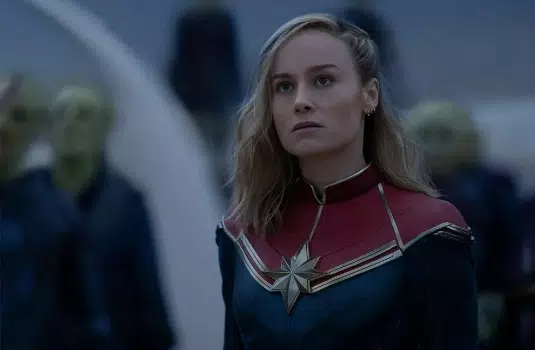
As a commercially-oriented film intended for entertainment, its most critical flaw lies in the absence of a profound emotional center. In the previous installment, the storyline explored the concept of a woman rediscovering herself after experiencing loss and enduring manipulation by a man, which resonated emotionally with the audience. However, in this sequel, there's a lack of portrayal of Carol Danvers' internal turmoil, despite her briefly mentioning feelings of self-imposed guilt regarding the situation involving "the Kree." The plot is structured to present her actions as a minor mistake, which she swiftly and effortlessly rectifies, minimizing the potential depth of her personal struggle.
Furthermore, the formation of "The Marvels" comprising Carol, Monica, and Kamala appears forced and contrived. Typically, members of a superhero team complement each other's abilities, and even if their personalities are very different, it generates a subtle tension that adds depth. However, in "The Marvels," despite the resolution of conflicts between Carol and Monica, there is a lack of a deeper familial bond among them. The idol-fan dynamic between Carol and Kamala is primarily played for comedic effect, lacking genuine reevaluation from Carol's perspective. Because of the shallow connections between the three characters, when the plot reaches a moment requiring self-sacrifice for the greater good, it fails to generate an emotional climax.
Furthermore, the characterization of the antagonist Dar-Benn, played by Zawe Ashton, is quite superficial. This zealous leader burdened with the responsibility of national rejuvenation should ideally have complex and multifaceted qualities, but due to the limited screen time, there is no space for in-depth exploration. The character ends up becoming a mere backdrop.
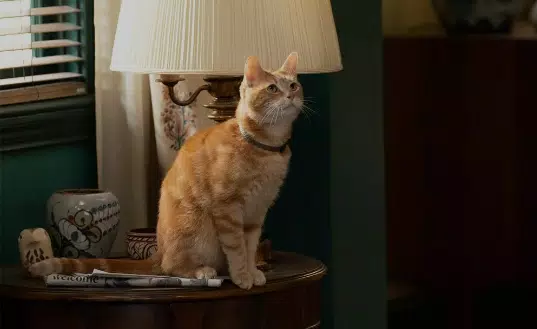
Regarding the heavily promoted cats within the movie, they are abundant and undeniably adorable. However, their portrayal as "Chewie" is significantly more emphasized compared to their representation as regular cats, revealing an issue with subpar CGI effects.




Share your thoughts!
Be the first to start the conversation.