
In 2018, a relatively "unknown" animated film, "Spider-Man: Into the Spider-Verse," was released. Despite its initial low profile and being an animated feature, the film sparked considerable discussion and excitement upon its release. While the Marvel Cinematic Universe (MCU) was dealing with Thanos in its third phase, "Spider-Man: Into the Spider-Verse" had already brought together multiple Spider-Men from different universes. The following year, the film even won the Oscar for Best Animated Feature, surpassing the stylistically impressive "Isle of Dogs."
The unique and breathtaking visual style of "Spider-Man: Into the Spider-Verse," along with its innovative handling of different Spider-Man characters, and breaking conventions in storytelling, were the pivotal factors behind the film's success. These very elements have been taken to even greater heights in the sequel, pushing the boundaries of creativity to achieve something entirely new.
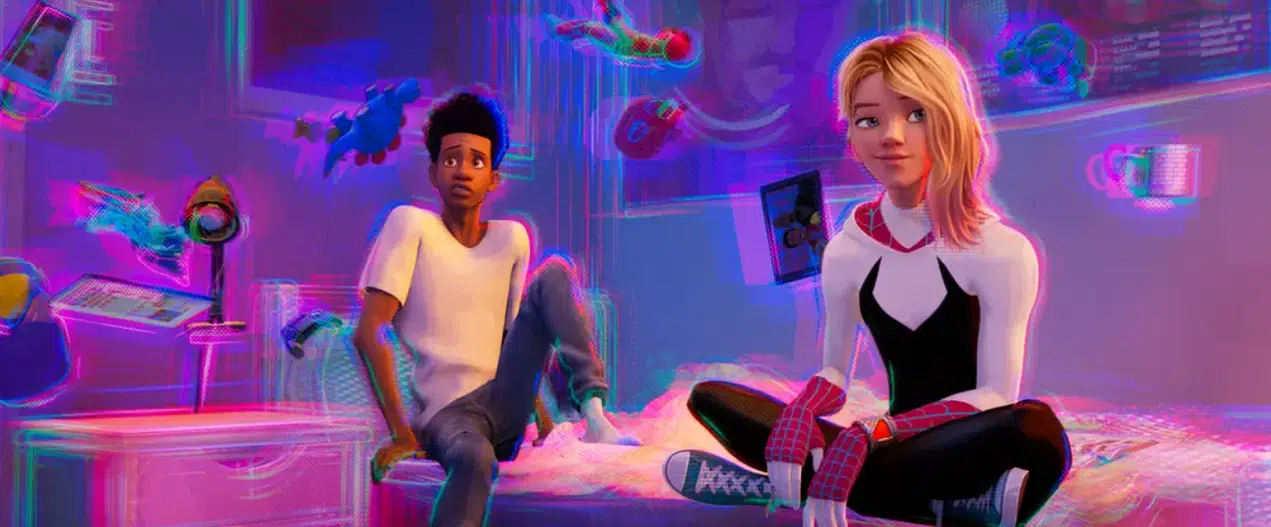
Five years later, "Spider-Man: Across The Spider-Verse" is released, presenting an unprecedented crisis in the multiverse that could lead to the collapse and destruction of countless universes where Spider-Men exist. Miles Morales, the central protagonist and the fourth generation of Spider-Man on the big screen must find a way to break the curse and fate of Spider-Man. Due to the vast narrative scope of the story and the presence of numerous Spider-Man characters, it's accurate to say that the current release, "Across The Spider-Verse," represents only the first part of the story.
The second part, "Spider-Man: Beyond the Spider-Verse," is scheduled for release on March 29, 2024. Given the extensive runtime of 140 minutes for the first part, how does the film maintain its quality?
Overall Impression
If you haven't seen the previous installment, there might be a slight learning curve in understanding the characters and the plot. However, it's essential to remember that the big-screen animated Spider-Man series tells the coming-of-age story of the protagonist, Miles Morales.
In Miles' universe, there was already a Spider-Man named Peter Parker. However, after a spider bite accident, Miles also gained Spider-Man abilities. During a confrontation with Kingpin, Peter sacrifices himself, making Miles the new Spider-Man in his universe. The quantum machine of Kingpin's gang unintentionally opened a multiverse portal, forcing several Spider-Men into Miles' universe. Together, they avenged Kingpin, thinking they sealed the multiverse portal and returned to their respective universes.
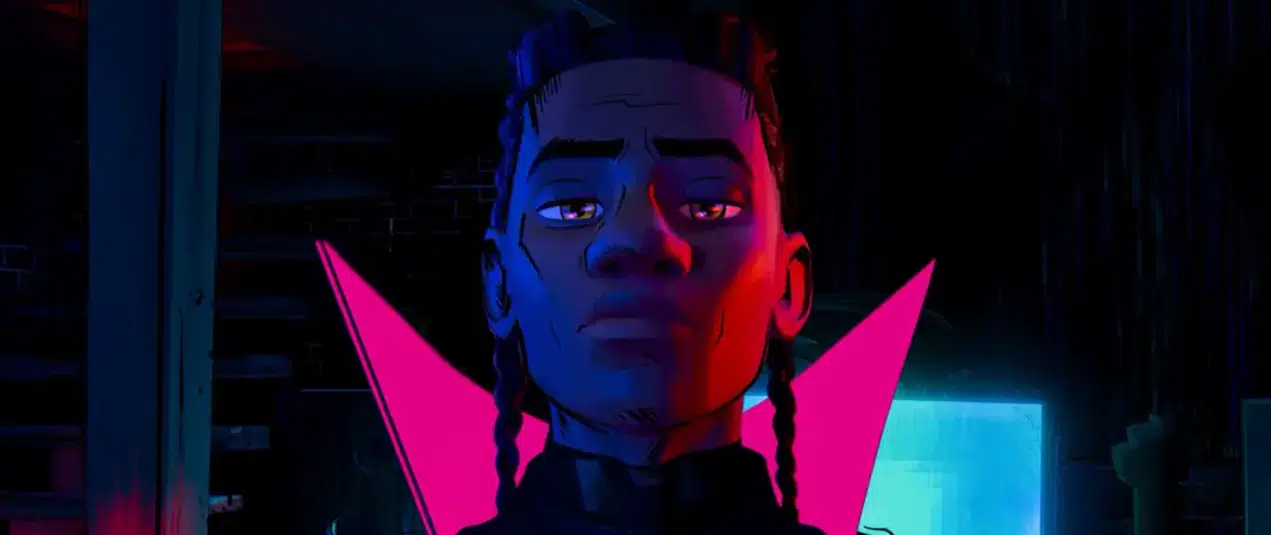
But wait! How could it end like that? Just as a butterfly flapping its wings can cause a tsunami, how can a colossal battle that turned New York upside-down bring the story to a close? "Across The Spider-Verse" takes place two years after defeating Kingpin. Miles, now noticeably more mature, has become somewhat famous in his universe. However, the film doesn't rehash the events of "Into The Spider-Verse" for the audience; instead, it shifts the narrative focus to Gwen after the Kingpin incident. We, the audience, follow Gwen's perspective, entering her world and quietly listening to her story.
By changing the storyteller to another Spider-Man, the film subtly addresses the somewhat generic destiny shared by many Spider-Men. Later, the film returns to Miles, who encounters the Spot— the butterfly capable of causing a tsunami. Although the Spot doesn't receive much emphasis in the film and isn't a true antagonist, it serves as a mirror for Miles, isolating him from the rest of the Spider-Man team. In Miles' personal growth, he must also deal with the generation gap with his parents and face challenging decisions and understanding.
Unconsciously, the first act of the film spends considerable time weaving a new story background. With a plethora of characters and overflowing elements, the film presents a visual style with striking color clashes and exaggerated tension from animated movements. This combination creates a sense of pace from the beginning, leaving no room for the audience to catch their breath or feel excessively lengthy.
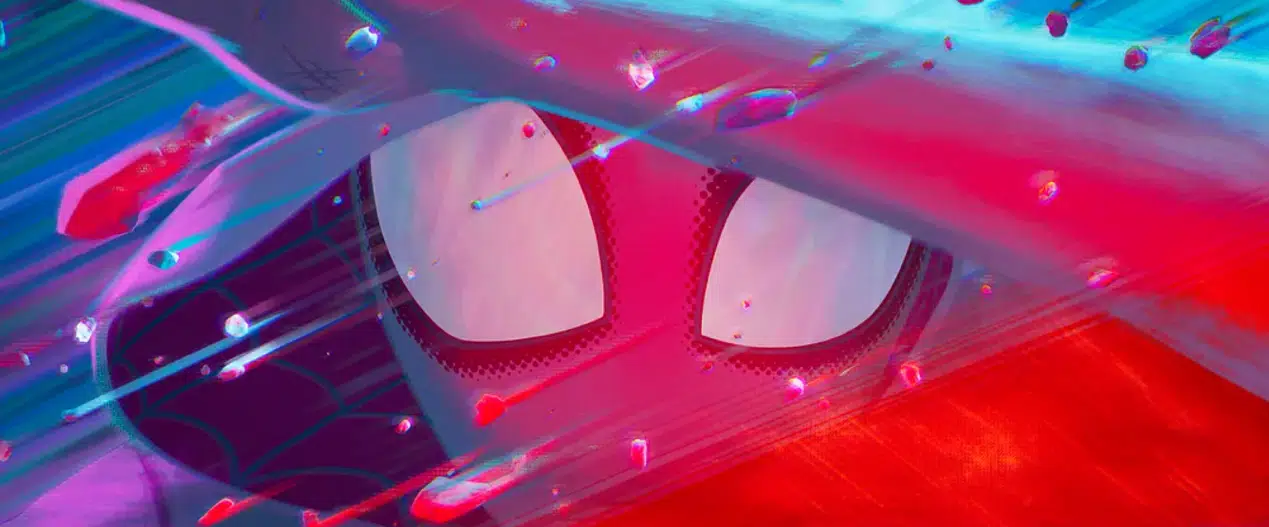
The film doesn't maintain a consistently high narrative frequency, as moderation is the best form of expression. When Gwen and Miles reunite, the film allows them a rare moment alone. Just as teenagers mature, girls often surpass boys in mental maturity, rationality, and consideration for the bigger picture. Boys, on the other hand, tend to be more expressive, impulsive, and carefree. The film subtly portrays the gender differences between teenagers, emphasizing them when Miles attempts to deepen his relationship with Gwen. However, Gwen shifts the focus to the tragedy and regrets in the love destiny of Spider-Man, touching upon the curse-like fate of Spider-Man. In this "serendipitous" arrangement, Miles inadvertently enters the Spider-Man League base created by Spider-Man 2099, Miguel, initiating an exhilarating adventure across the multiverse!
I had high expectations for "Spider-Man: Across The Spider-Verse," and even so, the film still pleasantly surprised me. The most anticipated and impactful visual style, compared to the previous installment, has elevated to a more colorful and vibrant level. "Into The Spider-Verse" mainly told the story in Miles' universe, resulting in a relatively unified visual style.
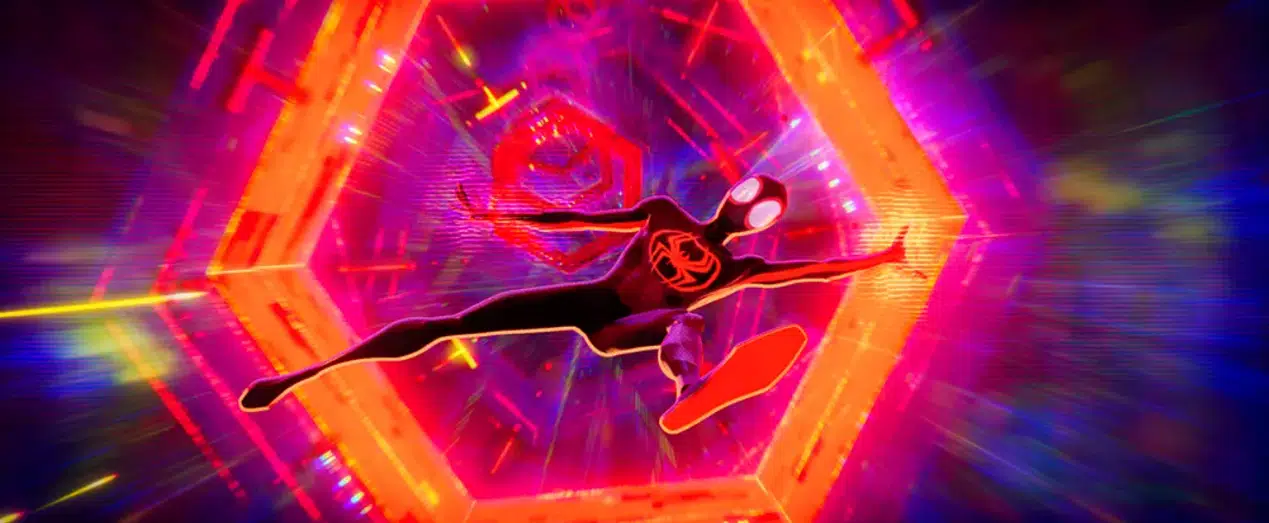
However, in "Across The Spider-Verse," as Miles traverses different universes, the film distinguishes each universe with its unique stylistic tone. For instance, Gwen's world has a strong watercolor style with large areas of tinting effects, intermittently changing environmental lighting, perfectly matching Gwen's fluctuating feelings towards family, Miles, and herself. In the world of the Indian Spider-Man, the subdued color scheme and rough line style capture the characteristics of the densely populated Indian city. There are many surprises that I won't spoil here. So, while watching "Across The Spider-Verse," I felt that my imagination was not enough, as the film continuously expands the possibilities of diverse animation styles.
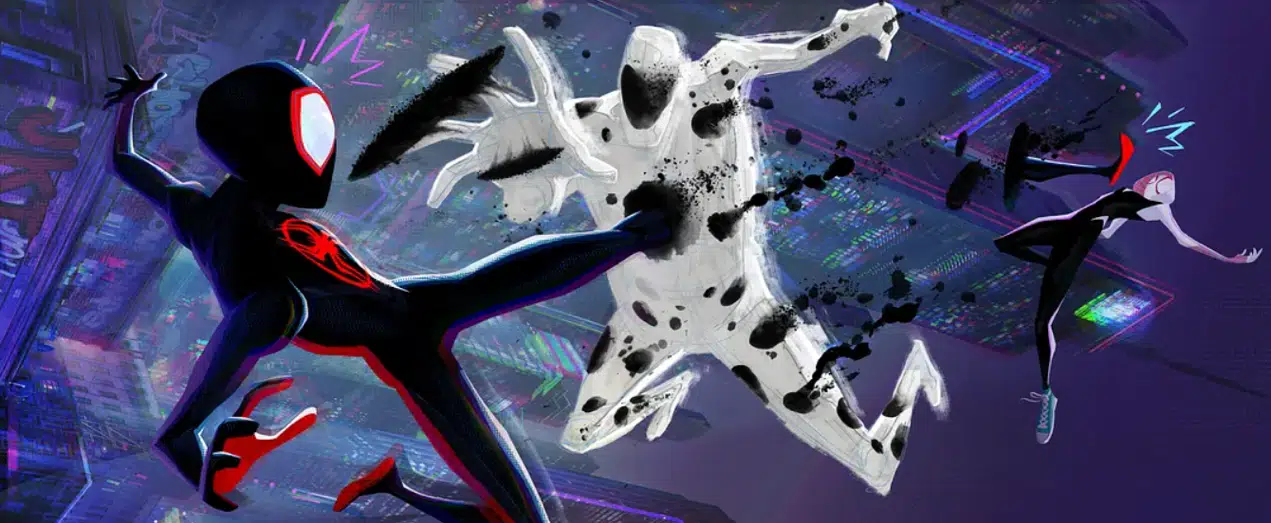
In terms of action sequences, the film's action design cleverly utilizes the freedom and more challenging execution of body language achievable in animation compared to live-action. The exaggerated shot proportions, coupled with classic comic-style text, infuse the action scenes with dynamic rhythms, allowing Spider-Man's superhuman abilities to be fully unleashed. The opening battle is already comparable to the final duel in the previous installment. It seems Sony is keen on building the Spider-Man universe with as many Spider-People as possible.
The frequent shifts between different visual styles may be overwhelming initially, leading to questions like, "Isn't this too chaotic?" However, once you adapt to this expressive approach, you can immerse yourself in the story and characters.
Character Development
Let's delve into the characterization aspect. In animated films, exaggerated facial expressions are commonly used for performances, making it challenging to convey characters' thoughts through more realistic and subtle micro-expressions. To compensate for this, the film enhances the rendering atmosphere of the environment and characters before their appearance. For instance, the film uses the color tone to express the character's state of mind in Gwen's universe. Miguel's presence, especially when in the base, exudes a strong imposing aura. Additionally, the retro comic-style flat design of Spider-Punk emphasizes the sense of being out of step with others and the belief in being the coolest. The appearance of another mysterious yet familiar character at the end is also meticulously crafted to create a tense atmosphere. Importantly, these visual language, composition designs, and image crafting give each character a distinctive style.
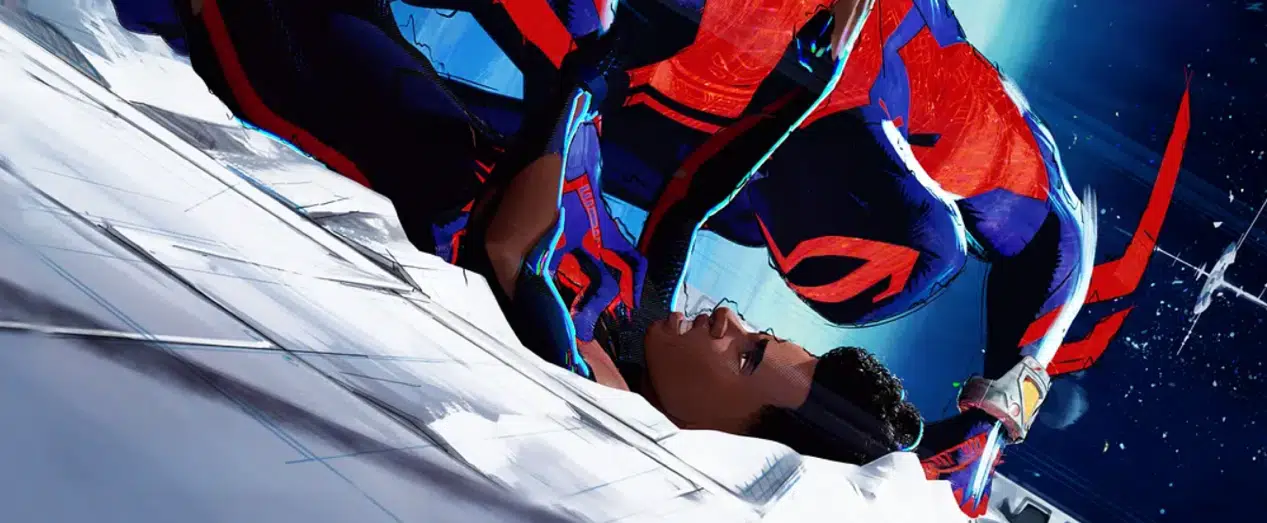
Moreover, "Across The Spider-Verse" cleverly combines the well-known background stories of Spider-Man to help the audience better relate to Miles, Gwen, and the common challenges faced by other Spider-People. Since Spider-Man's stories may feel repetitive to fans, the film allows viewers to empathize more with the internal states of Miles and Gwen, as well as other Spider-People, by presenting them with similar predicaments. This approach effectively breathes life into the animated characters.
A New Story of Destruction and Construction
Having discussed the characters, let's take a deeper look at the story setup. In terms of plot weaving, the film plays with the preconceived notions of the audience. At this point, viewers become god-like observers already well aware of Spider-Man's destiny. Miles, who has been kept in the dark, suddenly finds himself understanding the "essence" of Spider-Man and the future fate he is destined to face. The film challenges how Miles will choose to defy fate and in what manner. As a superhero, Miles grapples with the dilemma of sacrificing himself to save the world or acting selfishly. A series of events unfold impulsively, taking Miles and the audience into an even more unknown future. The film breaks away from the traditional superhero movie formula, where a tangible tool often catalyzes advancing the plot. If there is an exhilarating agent in this film, it is the unpredictable fate of Spider-Man.
It can be said that "Spider-Man: Across the Spider-Verse" presents Miles with an entirely new moral dilemma. He is not resisting his fate but challenging a whole set of propositions regarding the transformation of superheroes. The film delves into how to become a superhero recognized by both the world and oneself. In my view, this film is not just a rare gem in terms of artistic and visual style in animated films over the years. It also challenges the concept of superheroes at the story level and delves into the depth of character submersion, bringing out the vulnerable and selfish sides of superheroes as ordinary people.
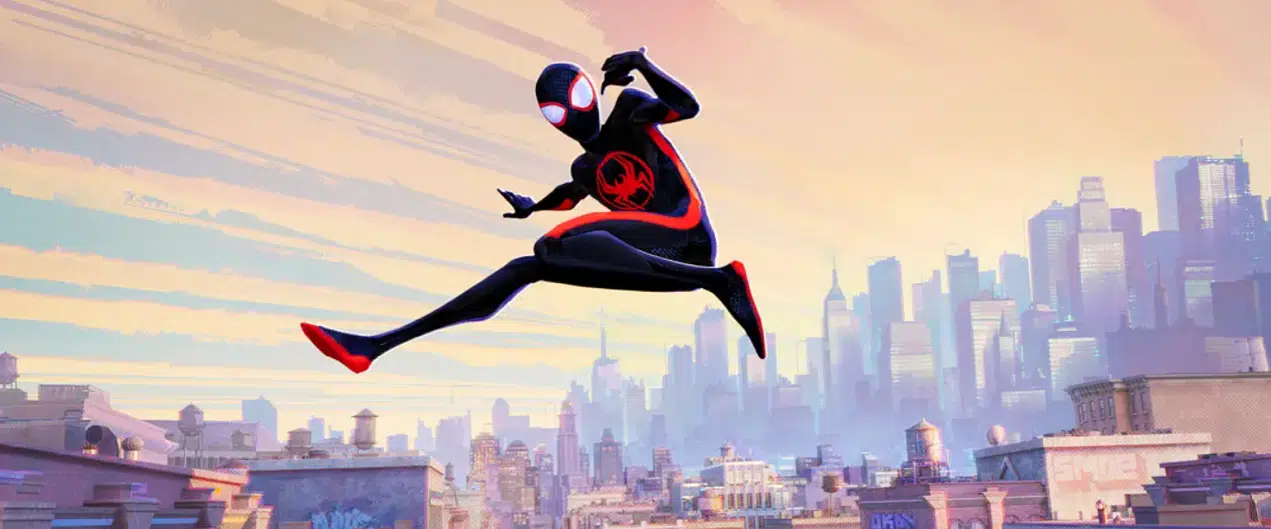 As we all know, there's a famous quote associated with the Spider-Man IP: "With great power comes great responsibility." In "Spider-Man: Across the Spider-Verse," this phrase seems to become a curse! The core of the film is the need to break the bond between ability and responsibility, attempting to explore a new dimension for Spider-Man as a superhero. While the film has a clear antagonist in the form of Spot, the internal conflicts within Spider-Man become Miles' inner demons. The real "antagonist" in the film is not just Spot but other Spider-People and, ultimately, Miles himself.
There's a scene in the film where Miles is chased by numerous members of the Spider-People alliance, and he finally breaks out of the alliance building. At this moment, Miles is not the traditional Spider-Man in the true sense. Instead, he represents a mutated superhero character who must sever ties with all previous Spider-Men. Traditional superheroes often proclaim to save the world with a deep sense of righteousness, but Miles doesn't immediately think of a win-win solution. However, he knows that giving up on his loved ones is not a reason to accept his fate. Even the film's story setting makes me sense a hint of criticism towards the traditional superhero image.
Looking at all the superhero characters, each has a tragic background. Batman loses his parents at a young age, the Flash's mother is killed, Iron Man's parents die, Thor loses all his loved ones except himself. Spider-Man, needless to say, loses parents, girlfriends, brothers, and more. Thus, Miles questions why it's necessary to become a tragic character to become a hero. We know that superhero themes have gone from rising to prosperity on the big screen and then, over the past two or three years, have grown wildly but inconsistently. Now, with a film like this attempting to break the rules of superhero storytelling, it genuinely offers a breath of fresh air.
Of course, I also understand that many years ago, comics had already explored deeper works criticizing society and human nature within the superhero genre. However, for the classic positive IP like Spider-Man to play with this theme showcases the urgent need for superhero genres to explore new and stimulating paths. This allows for the transformation of classic characters and gains a fresh understanding in the eyes of the audience. Therefore, I prefer to view "Spider-Man: Across the Spider-Verse" from another perspective. Its bold and breakthrough strides in the story and character depth seem more like a daring attempt at self-rescue. In the current landscape filled with superhero movies and TV shows, Sony's Spider-Man is making efforts to seek a breakthrough. It aims to distinguish itself from the MCU, which knows it has various problems but finds it challenging to change course and the continuously rebooted DC. The younger and more agile Sony Spider-Man universe is trying to carve out its territory.
Shortcomings and Regrets
However, "Spider-Man: Across the Spider-Verse" is not without its flaws. The film has some noticeable issues that need to be addressed and discussed. For example, in the art and visual aspects, which are both strengths and weaknesses, some people may love this style, while others may find it hard to adapt. In "Spider-Man: Across the Spider-Verse," the film amplifies this style, and there are even a few scenes where I felt the colors and changes were overwhelming, causing a slight disorientation due to a loss of focus in composition and visual center.

Another point is that while "Spider-Man: Across the Spider-Verse" is a sequel to "Spider-Man: Into the Spider-Verse," and it's defined as the first part of a two-part film, regardless, it should be an independent movie with its duration. It should have a clear narrative arc and a definite conclusion! Unfortunately, the film's handling of the ending creates a sudden and abrupt feeling of slamming on the brakes. The film doesn't present a tragic atmosphere that naturally forms, like in "The Avengers" when the superhero team fails to defeat Thanos, resulting in a cohesive and tragic mood. This kind of tragedy can be an inherent conclusion for a movie, where half of the universe's life disappears, heroes fail, the villain achieves their goal, and the story concludes.
The way "Spider-Man: Across the Spider-Verse" ends does build anticipation for the next film. Still, this reliance weakens the film's independent existence. It feels as if the director originally intended to tell a story in 4-5 hours but had to forcibly split it into two parts. What worries me even more is how the creators will handle the story in the next installment.
Ending and Prospects
In conclusion, Spider-Man: Across the Spider-Verse introduces a new threat as Spott, having gained more dark matter energy, can traverse various universes and unleash destructive energy capable of destabilizing the multiverse. His target is Miles. The Spider-Man team is divided into two factions: a small Spider-Team led by Gwen and Peter B., supporting Miles, and Miguel leading more Spider-People trying to apprehend Miles to prevent him from disrupting the stability of the multiverse. Additionally, a new villain, the Wanderer from another universe, makes an appearance without revealing too much about their identity.
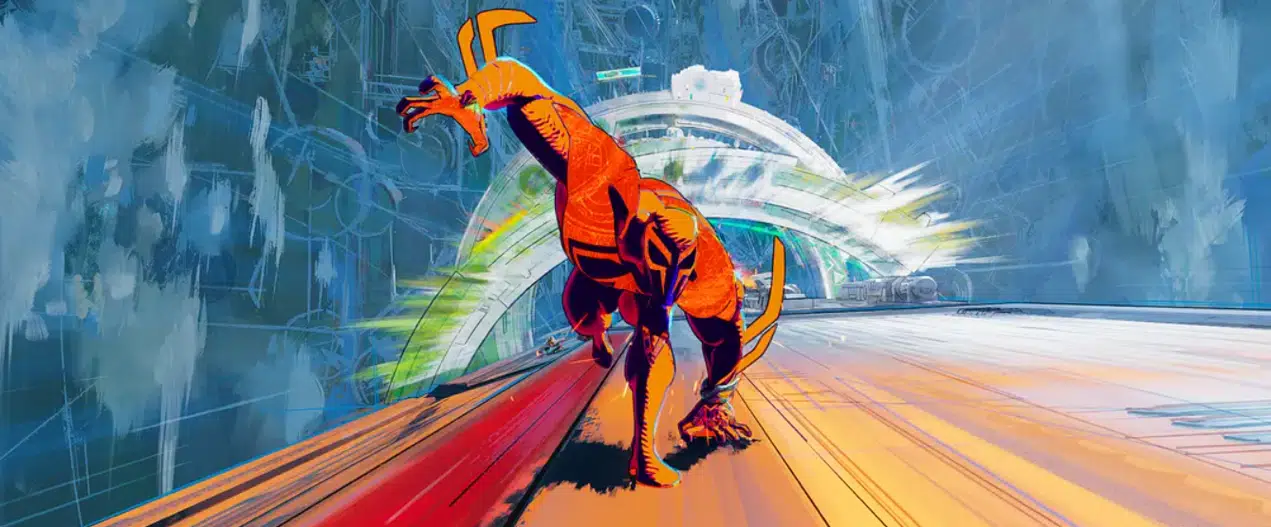
From this ending, if the creators follow the usual formula, the next installment may bring a more traditional plot. This could involve the Spider-People, after listening to Miles' plan, joining forces to combat the Spott villain, breaking the cycle of destiny, and preserving the universe. However, my speculation about this ending does not define how the entire plot will unfold and evolve. I believe the creative team can still achieve a breakthrough, maintaining the series' theme of breaking with tradition and establishing a completely new and highly relevant Spider-Man narrative.
Perhaps in the next installment, we will gain a fresh understanding of the phrase "with great power comes great responsibility." Overall, Spider-Man: Across the Spider-Verse showcases innovative creativity in the realm of animation and ventures beyond the traditional formulaic framework in the superhero genre. It is undoubtedly worth watching.





Share your thoughts!
Be the first to start the conversation.