
“Where any view of money exists, art cannot be carried on, but war only.”
Many years ago, the poet William Blake (1757-1827) wrote this phrase, or rather comment, in his engraving inspired by the Greek myth of Laocoön. The idea that art must be solely fueled by an intrinsic desire and not by the fame or success that may come with it is an argument as old as time. Nonetheless, in the audiovisual industry, more specifically in cinema, a notion was developed in recent times that the money earned and the individual “victory” of each work are what paradoxically give art its greatest value. We don't really analyze too much the littlest and most essential stories that the seventh art develops and is in this scenario where slow cinema comes into play. Basically, this term is issued to categorize those movies that take their time to tell a story, that observe reality instead of “shaping” it how they want to; those that on the surface, seem to tell nothing in particular and that, opposite to what the average viewer wants to watch, are similar to our mundane and ordinary lives.
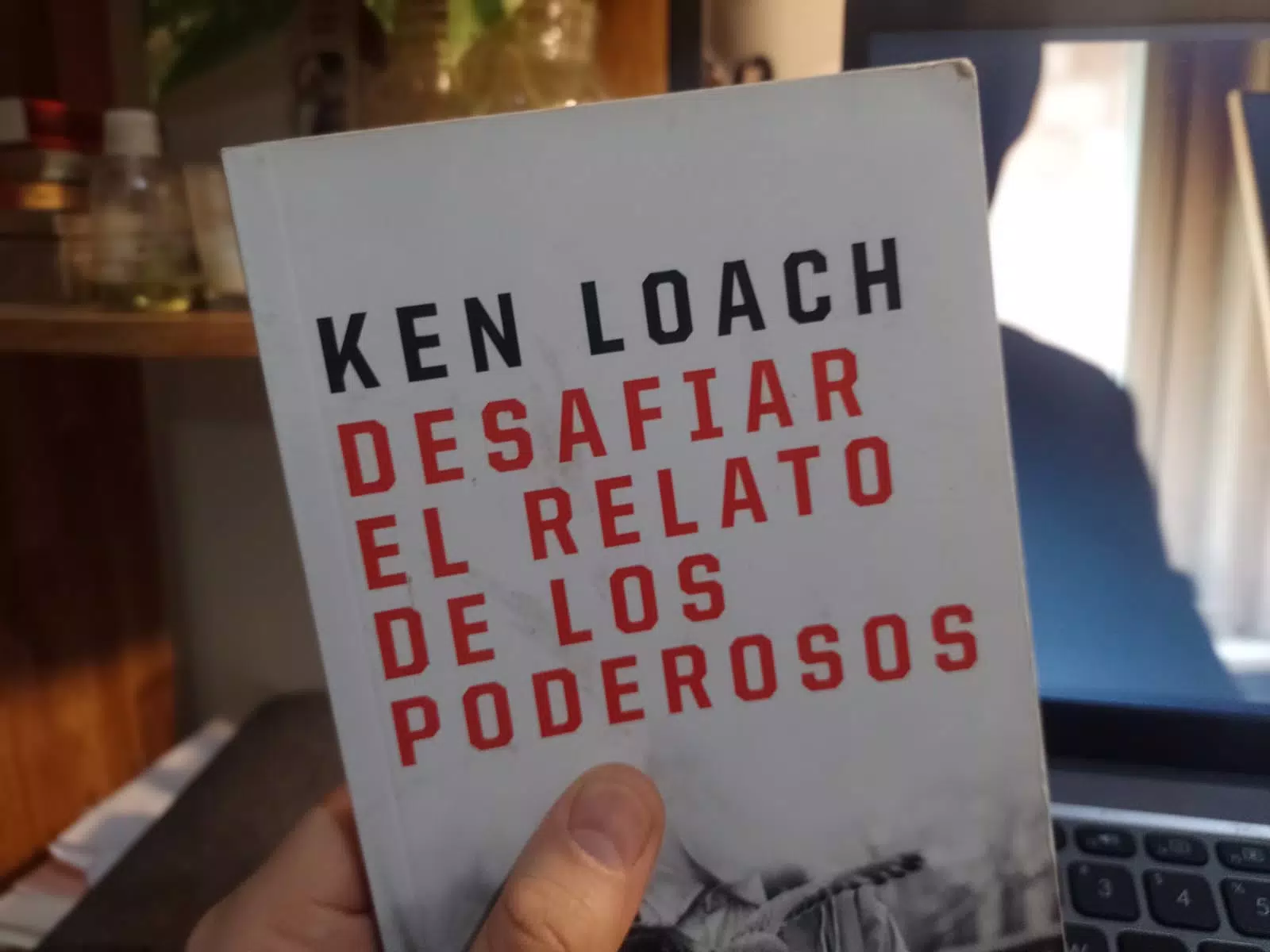
The first time I watched a film directed by the legendary British director Ken Loach―probably the pseudo-documentarist with the most fictional tendencies nowadays―was when I casually watched I, Daniel Blake (2016) approximately seven years ago. This film is a beautiful and raw portrait of moral decay in modern society told through a carpenter's point of view. After suffering a work accident, this carpenter fights tirelessly against a system that poses millions of obstacles in his way of obtaining unemployment insurance. I vividly remember what I felt watching that pure, realistic and empathetic film which presented the perspective of a director who has a strong political mark in his work, but who never tries to present an altered reality as extremist supporters do. These supporters want to convince others about the most absurd and incoherent ideas that everything "against" their ideology is wrong. But Loach presents a universal film which was—and still is—a work that anyone can, unfortunately, relate to.
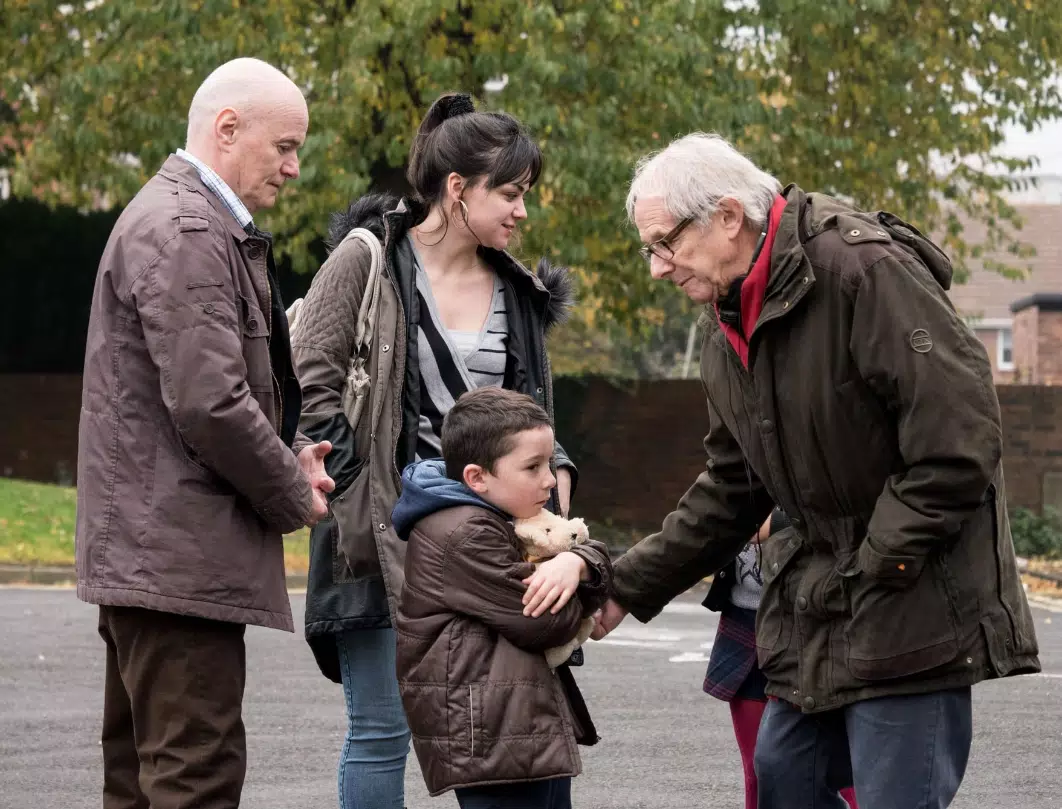
As if it was part of those trilogies actually defined as one by the audience's attention to detail rather than by the director himself, his latest movie is part of an audiovisual trident revolving around past—and current—social problems of the North-East region of the United Kingdom. The incredible Sorry We Missed You (2019) is also part of this trident and the “spiritual sequel” of his 2016 Palme d'Or winner. This film presents the story of a family that decides to start working independently to have more time for themselves, but as they find different jobs, they face a work system that also exploits them. According to his own words, The Old Oak is Loach's last film—the director is 87 years old. Nonetheless, I personally consider Loach, just like Scorsese or Spielberg—except for the huge differences—the type of artist that dies with his work. I mean that he can't rest in peace knowing he is wasting time by not doing what he loves until the very last moment. I don't want to abruptly insert myself in this exclusive and sophisticated group, but if one day I accomplish my dream of being a director, I think I would do exactly the same.
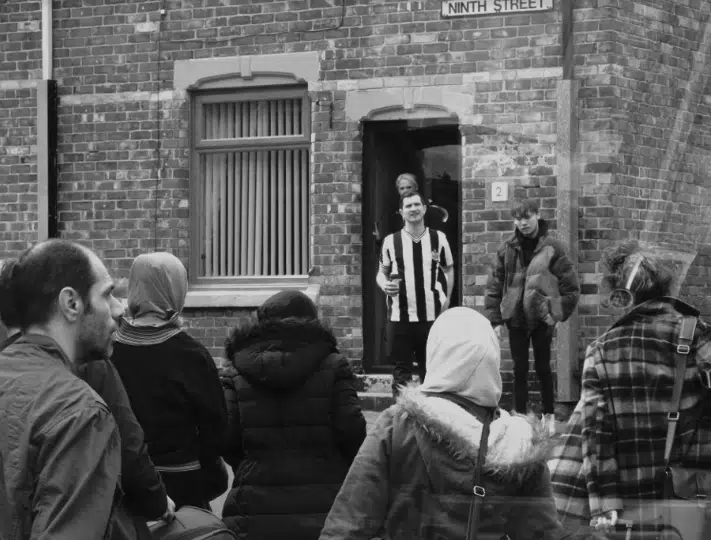
The first images of his new drama—which premiered progressively in many countries since the end of 2023—seem static, as if taken from a documentary. These photographs freeze time and show the purest and most undeniable side of reality. In them, we can see different locals of a villa in Durham who are unhappy with the arrival of a group of Syrian immigrants who, thanks to the owner of the last standing pub in the city, have a second chance to move forward with their lives. The image moves and, among the immigrants who descend from the bus, we see Yara. She is a young photographer whose camera is broken by a typical bully, and with whom we can genuinely connect right away: we live in a world where humans' cruelty and kindness coexist in every corner.
As many current matters around us, immigration is a difficult one to address in cinema. We are demanded a lot of patriotism and loyalty to our country but, where does the sense of humanity remain? Where is the line that divides the apparent absolute duty towards our native land and the solidarity we should show towards foreigners drawn? Loach manages to maintain solemnity in his story through a constant thought reflected in his visuals. He never crosses those limits which established his paradigmatic vision of this matter and, even in this way, he manages to keep us “hooked". Loach's work, which is considered a type of slow cinema, may be the complete opposite since, in his movies, something important happens all the time. All the events are both causes and consequences of the former and latter, just like life itself.
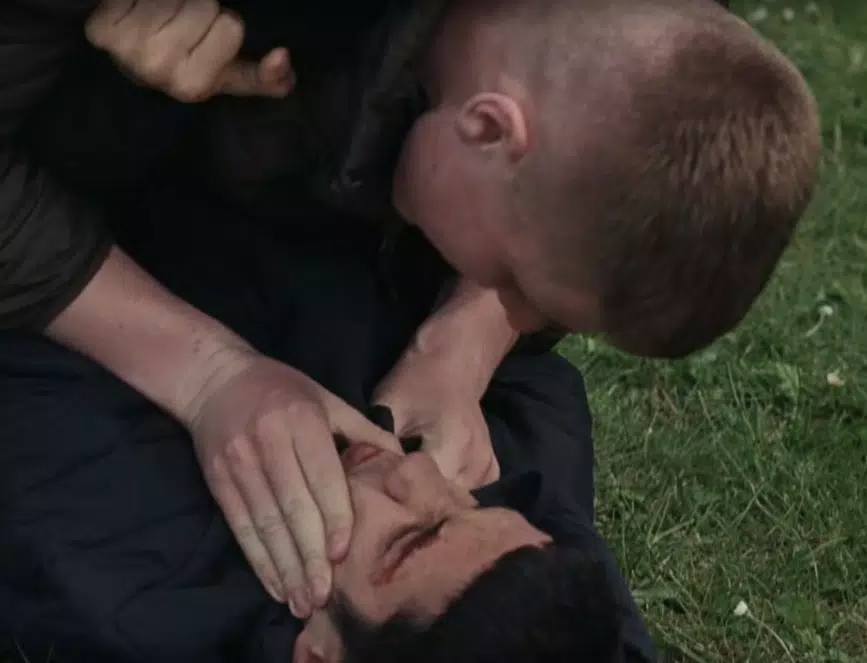
For example (maybe the most effective example), there's a specific scene where TJ Ballantyne—the owner of The Old Oak pub—meets Yara's family and, in spite of the cultural differences, it seems like he is home. We immediately see a scene where one of the family members of that Syrian family suffers bullying at high school. Promptly, TJ Ballantyne debates with his regular clients if hitting the immigrant teenager was right since, according to the young bullies, he had harassed a girl. TJ doesn't believe the bullying story and faces the people he has known all his life. Ken Loach redefines slow cinema to permeate a series of events with a vast variety of emotions and feelings, that otherwise would have been as monotonous as it can get.
Therefore, long live this type of slow cinema.
BY JERÓNIMO CASCO
Posted on SEPTEMBER 4, 2024, 13:40 PM | UTC-GMT -3
You can also find me on Instagram as 👉 JerodeSeptimoArte
If you liked this article remember to give it a 👉 LIKE, put it in your FAVORITES, COMMENT 🗣️ , and FOLLOW ME for more movie and series content 📽




Share your thoughts!
Be the first to start the conversation.