

City; Field , a Flawed but Worthwhile Attempt at the Two-Part Structure
City; Field — is an evocative title with its punctuation being particularly noteworthy. Rather than using a comma to indicate a brief pause, the title employs a semicolon, signifying a clear separation between the two types of regions and hinting at the film’s divided structure.
As the title suggests, Juliana Rojas’s new film City; Field doesn’t tell just one story but two, each one of them set in contrasting environments: the bustling metropolis of São Paulo and the tranquil rural area of Mato Grosso do Sul. Although the two stories offer a stark contrast in their environments and specific settings, they both originate from the same kind of migratory movement, albeit in opposite directions: in the first story, after a flood, Joana is forced to leave the countryside and move to the unfamiliar city, where she stays with her sister and makes a living as a domestic worker; in the second story, a couple, Flavia and Mara, return from the city to Flavia's late father’s farm, learning to work and live amidst the fields.
This isn’t the first time Rojas has employed a contrasting structure. In her previous film, Good Manners, co-directed with Marco Dutra, the narrative is also split into two parts, marked by the death of a mother and the birth of a wolf-child, and similarly involves a geographical separation: the bright, spacious high-rise apartment in the city center and the cramped, dilapidated house in the slums. However, the two-part structure of City; Field is no longer a natural division within the narrative itself, but rather a juxtaposition — if not a collage — entirely dictated by the external will of the author. In recent years, this type of segmented structure has gradually evolved into a popular genre within art cinema. In the works of directors like Ryusuke Hamaguchi or Radu Jude, we see this genre applied in modern contexts: collections of stories composed of several vignettes or fables, presented in a light, often comedic tone tinged with elements of pop culture.
City; Field, however, belongs to a different lineage, one imbued with a more pre-modern spirit. It is not a diptych but rather a sequence that trace a path from modernity back to a primitive state, much like the road leading to the countryside that overlaps between the two chapters, framing the natural world as the ultimate destination. In this asymmetry, Rojas’s choice becomes strikingly clear: in the City chapter, the field is an absent presence—a homeland that haunts the characters, reappearing in dreams, songs, and visions.; in the Field chapter, the city is completely absent, existing only as an undisclosed offstage, so much so that when the characters leave the field, they also leave the story itself. When, if ever, does the city become the protagonist in the film? Beyond a small, visually accessible neighborhood near the characters' residence, what we see are only a few scattered scenes linked by transportation. If anything receives particular emphasis, it is the traces of nature lingering in the cracks of concrete (like plants on a balcony) or the communal spirit that serves as a counterforce to modern urban life (the mutual aid among domestic workers). In stark contrast, the countryside is presented as a complete ecosystem, with land, crops, and various living beings forming its body, and folk mysticism acting as the blood vessels and nerves that animate it: drinking ayahuasca to communicate with the stars and forests; the dead transforming into a wolf, roaming the territory it once inhabited. These ancient experiences, forgotten in the march of modernity, are returned to the marginalized people of contemporary society, permeating their circumstances and traumas.
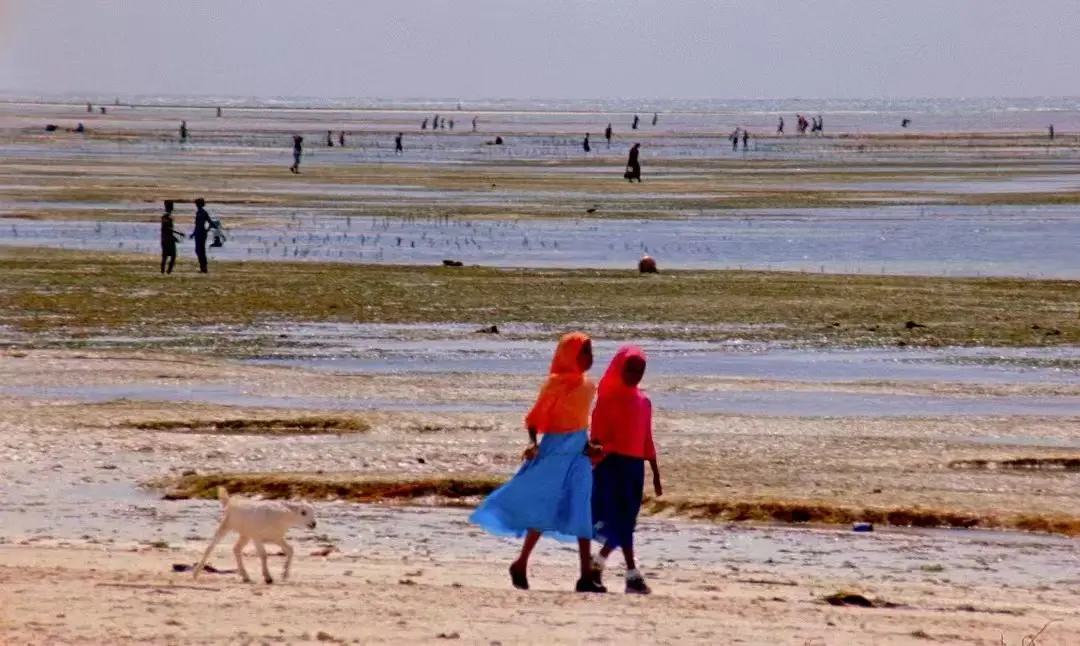
In City; Field, the segmented structure is used to assemble and topologize the themes of nature, fantasy, folk culture, and marginalized communities, drawing comparisons to two similarly structured films from last year: Samsara by Lois Patiño (also featured in the Berlinale Encounters section) and Eureka by Lisandro Alonso (another example of South American “fantasy” cinema). Samsara employs the Buddhist concept of “reincarnation” to connect the death of an elderly woman in a Laotian temple with the birth of a lamb on the Tanzanian coast. Eureka constructs three parallel timelines, navigating between them in a more complex manner—from a black-and-white Western film on a television screen, to the contemporary realities of Indigenous life, and then following the protagonist as she transforms into a bird and flies to a jungle gripped by a gold rush. Earlier examples of such a structure can be traced back to Apichatpong Weerasethakul’s Tropical Malady, where the second half of the film becomes a metaphor for the first: the caresses and gazes exchanged between men under the tropical sun are transmuted into a battle and stare-down between man and tiger in the forest. The commonality between these films, both in theme and form, seems to lie not just in their religious or folk elements, but in a process of “re-enchantment” with nature — a rediscovery of a surreal imagination through the oldest modes of coexistence between humans and the natural world.
But why use a segmented structure? For one, juxtaposition between sections, rather than linear development within a single section, more effectively evokes the subtle, ineffable connections between different aspects of the natural world. On the other hand, the “shape” of the structure itself — whether symmetrical, inverted, cyclical — often becomes the transcendental core of the film. This forms a nearly mythological order, a ritualistic cinematic form. However, this approach carries its own risks: it’s easy to become complacent with the internal coherence of the structure’s underlying concept, but that concept alone cannot determine the true essence of the film. What makes Apichatpong’s work unique is that, unlike typical Third World cinema, which often advocates a raw aesthetic, his films are structured by various concepts and ideas. Yet, this does not prevent the landscapes and bodies within his films from retaining their tangible solidity and fluid richness to the fullest extent in the actual mise-en-scène. The sensory intensity of his films completely overshadows the organizational logic and mechanisms that produced them. It is in this way that his films approach the transcendence of nature that is neither about representation nor about meaning. In contrast, Eureka continues the polished yet dull aesthetic of Alonso’s previous work, Jauja, where the natural landscapes are carefully captured as beautiful specimens, but what do those seemingly whimsical segments and transitions, that meticulously crafted totem of structure, really accomplish other than reducing everything to a set of utilizable symbols? Abandoning the pursuit of nature’s inherent vitality in favor of replicating a falsely mysterious symbolic order, is no doubt a kitschy inversion of priorities.
City; Field is similarly limited in its sensory impact, but unlike Alonso's work, this limitation stems not from an overly abstract form, The limitations come from writing that is overly specific, even melodramatic, and from a patchwork of different film genre styles that mirrors the structural collage. Rojas’s films have always exhibited a multiplicity of genre influences: Hard Labor grafts the economic crisis of the middle class onto a psychological thriller framework; Good Manners blends social issues with a fantastical fairy tale; and Necropolis Symphony is a peculiar, amateurish musical — in fact, musical sequences run through nearly all of her works, appearing as lyrical or transitional elements in both parts of her latest film. However, unlike Lars von Trier and Bruno Dumont, who subversively parody and play with genre elements on a formal level, thereby simultaneously deconstructing genre templates and authorial seriousness, Rojas (and her former collaborator Dutra) merely borrows the lexicon of genre cinema to translate her own text, trading greater limitations and clumsiness for a momentary burst of novelty. Once we realize that the horror-tinged climax of City; Field is little more than a convenient strategy to reveal the suspense, this novelty quickly fades. If genre techniques are to be used seriously rather than playfully, their success often depends on focused and refined mise-en-scène — this is precisely the challenge of genre filmmaking. Hasty switches between multiple tones only reduces each to mere clippings and decals, unable to fulfill any real function. In the end, the relative success of Necropolis Symphony and Hard Labor can be attributed to their simplicity, while City; Field, much like Good Manners, rushes to adorn itself as a flashy film.

Al comienzo de la película, antes de que las bisagras del género se ajusten por completo, Rojas ofrece la toma más vívida de toda la película: la primera toma: una calle empinadamente descendente en medio de la ciudad (aún más empinada por un teleobjetivo), donde un autobús desciende lentamente de manera tambaleante, casi como un animal torpe que se desplaza. Aunque todavía estamos en el corazón de la ciudad, y no hay un solo elemento en esta escena que pueda vincularse con la naturaleza, no obstante, presenciamos el mundo material más primitivo que se esconde bajo la vida moderna. En esta toma, que probablemente no fue planeada meticulosamente, Rojas realmente se acerca a Apichatpong Weerasethakul, quien no solo es un maestro en filmar animales sino también máquinas: los autos y la consola de mezcla de sonido en Memoria, los tubos de neón en Cementerio de esplendor, los conductos de ventilación en Síndromes y un siglo— Síndromes y un siglo realmente podría llamarse Cidade; Campo, o más exactamente, "Cidade-Campo", porque los dos no son meramente simétricos, sino dialécticamente entrelazados. Si el "animal-máquina" en el inicio de Cidade; Campo nos recuerda a la vaca al comienzo de El tío Boonmee que recuerda sus vidas pasadas, entonces el lobo que aparece en el clímax de la película es solo equivalente al oso en el final de Burning Days: ninguno existe en la realidad (son CGI), y a nivel textual, son meramente marcadores vacíos dentro de un sistema simbólico. El error común cometido tanto por Rojas como por Anthony Chen es que tratan la naturaleza como un destino final, es decir, un lugar distante al que llegar, donde las personas encuentran reconciliación y curación, como si las respuestas a todos los males modernos estuvieran mística y definitivamente ubicadas en algún más allá trascendental. Pero la naturaleza está a nuestro alrededor. Créelo o no: con solo una toma, una breve pero efectiva observación de la realidad, se nos presenta un cuerpo, aunque no un organismo, sino una máquina. Entonces, ¿no podemos imaginar en la primera historia de la película que la ciudad no solo podría ser vista como un páramo árido que requiere solidaridad para resistir, sino como un campo de juego, con su propio ecosistema coherente y posibilidades de supervivencia, tal como el campo se ve como una ciudad utópica que refugia a aquellos exiliados de la modernidad?
wirtten by ANNI
THE DISSIDENTS are a collective of cinephiles dedicated to articulate our perspectives on cinema through writing and other means. We believe that the assessments of films should be determined by individuals instead of academic institutions. We prioritize powerful statements over impartial viewpoints, and the responsibility to criticize over the right to praise. We do not acknowledge the hierarchy between appreciators and creators or between enthusiasts and insiders. We must define and defend our own cinema. |






Share your thoughts!
Be the first to start the conversation.