
Burnt Money: Forbidden Love, Sacred Outlaws
The History and Myths
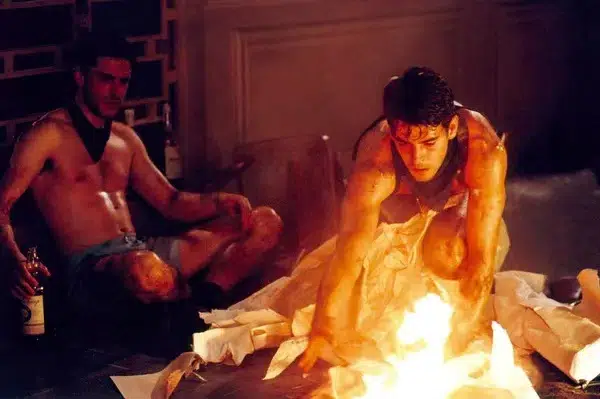
On 28 September 1965, in the Buenos Aires suburb of San Fernando, a truck transporting wages was attacked by a group of criminals, including Marcelo Brignone, known as "El Nene," and Héctor Jacinto Dorda, nicknamed "Ángel.” The chaotic gunfight rapidly escalated, transforming their covert operation into a desperate escape. Fleeing in haste, they sought refuge in an apartment in the Liberaij building in Montevideo, Uruguay. On November 6, supported by Argentine authorities, over 350 Uruguayan police officers besieged their hideout, igniting a 16-hour standoff that culminated in a bloody massacre. Refusing to submit to the corrupt authorities, the criminals burned their stolen loot in defiance before meeting their end in the final assault.[1]
Immortalized as The Battle of Liberaij ("La batalla del Liberaij"), this tragedy became etched in collective memory as a symbolic narrative of an era's violence: a period marked by the dull echoes of boots, reverberating orders, and tragic vengeance. Transcending its historical moment, the event entered the realm of modern myth, intertwining themes of institutional violence, historical memory, and forbidden love. Its resonance inspired artistic retellings, most notably Marcelo Piñeyro’s 2000 film Burnt Money (Plata Quemada), adapted directly from Ricardo Piglia’s 1997 novel, which reframed the tragedy as both an act of rebellion and an elegy for doomed love.
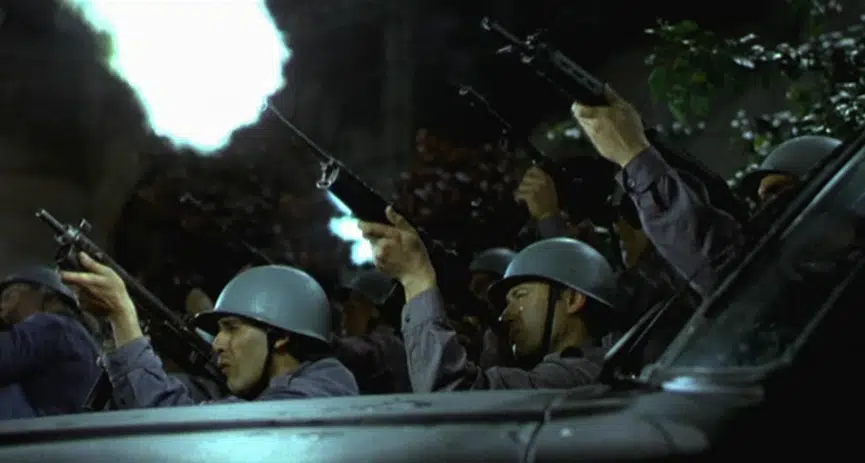
At the intersection of history and myth, the romantic tradition of outlaw couples often casts love as a stabilizing enclave amid chaos, while death assumes the role of destiny shaped by the era. The most famous outlaw couple Bonnie and Clyde, also drawn from real events, symbolize rebellion against capitalist America and its fractured dreams, standing as romantic outlaws opposed to the world. By contrast, the bond between El Nene and Ángel is far more precarious, trembling under the weight of fear, shame, and violence. Their endless escape offers no liberation but a harrowing confrontation with the unnamable and uncontrollable forces shaping their existence.
While Bonnie and Clyde's death in a hail of bullets serves as a public declaration, El Nene and Ángel bear the dual burdens of "illegality" and "homosexuality," and even cannot be narrated by romanticism. Their bond is tangled with fear, doubt, and invisible scars, culminating in a stark dialectical gesture. The end of the story is personal, with the society being expelled from both the room and the screen, leaving only whispers, oppressive silences, and the shared sweat of condemned bodies. Forbidden love reaches its ultimate consummation not in triumph, but in fire.
The Twins
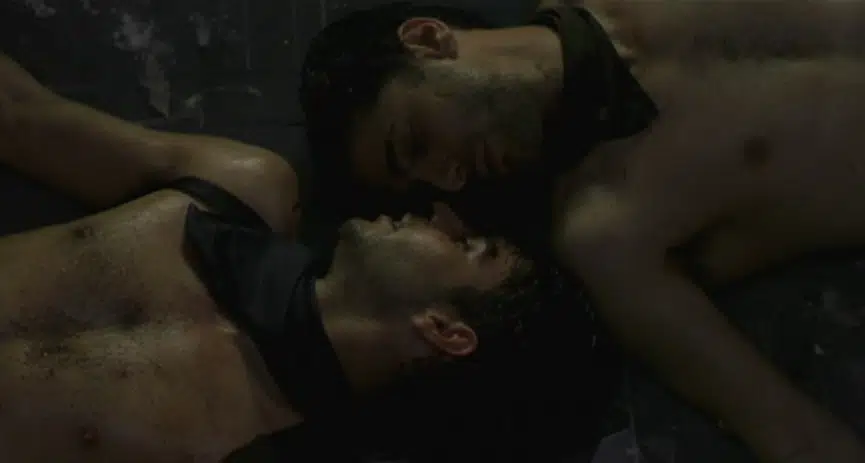
In a muffled voiceover, two men, known as “The Twins,” emerge like shadows cast at the edges of existence. Burnt Money reimagines the crime genre through a queer lens, blending its conventions with subversive themes. The crime, initially ignited with rapid brutality, becomes secondary. Instead, the voiceover fades, and time fractures into prolonged silences, isolating the characters in their own fragmented temporality, where intense emotions clash with the inexorable passage of time. Those anticipating exhilarating heist sequences may be disappointed by the film's focus on a more profound and unbearable chaos. While robbery, gunfire, and violence serve merely as pretexts to unveil the scorched remains of love and destruction. Burnt Money intertwines gestures of love and violence, evolving a microcosm of forbidden passion and the dialectics of the sacred and the sordid.
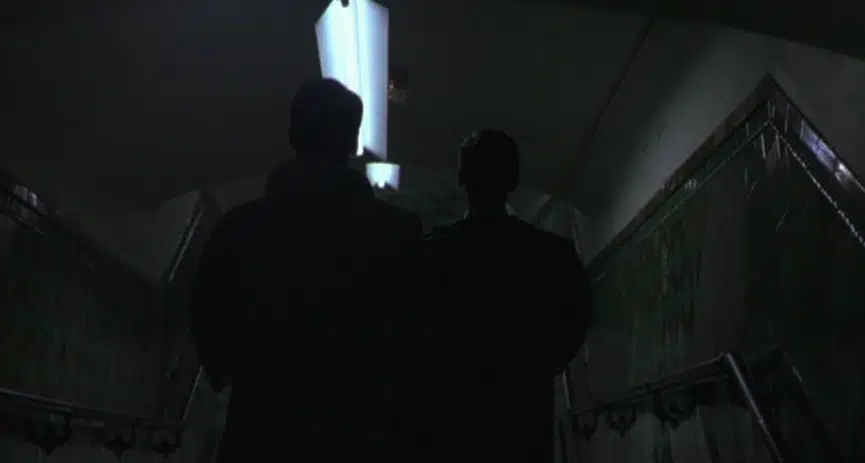
The hostile external world—marked by violence, corruption, and betrayal—erodes the fragile bond Ángel and El Nene struggle to preserve. They exist under the long shadow of Argentine history, shaped by a state where patriarchal and Catholic norms converge to suppress dissent, stigmatizing homosexuality as both a moral failing and a crime. Yet, beyond the closing credits' disclosure of reality—a quiet acknowledgment of history’s impotence rather than a true revelation—the film offers little political critique. Piñeyro avoids the era's brutality and the machinery of power, turning instead to the more subtle manifestations of social fear, which are shaped and perpetuated by systemic power. This dynamic is poignantly reflected in the contempt that surrounds Ángel and El Nene. From malevolence to physical aggression, these small assaults embody the prejudices and behaviors forged by oppressive structures, enabling marginalized fear and shame to be projected onto the division of the subject.
Instead, repressed desire becomes a ghost within the imagery, a crack in the edifice of the masculine patriarchal state. Ángel embodies rigidity, self-destruction, and repression, while El Nene represents fluidity, carnality, and rebellion. Ángel’s pursuit of impossible purity becomes a prison for his desire, while El Nene’s sensual acts externalize a yearning for liberation. These figures are two sides of the same tragedy: one represses his longing through the impossible ideal of sanctity; the other channels his desire into defiant, physical acts of liberation.
The Dialectic
Ángel, a body extended towards the heavens yet too burdened to rise, carries the mark of sanctity in his name and the Virgin Mary medallion he wears. While El Nene, grounded in the material world, embodies the sordid—his words, body, and gestures carrying the decay of nameless places. He continuously paralyzes himself through reckless behaviors and escapism, yet, in Ángel, El Nene finds both temptation and redemption. This tenderness is most profound when he carefully removes a bullet from Ángel’s body, the touch imbued with a reverence akin to a sacred ritual. In that moment, every drop of blood and caress becomes an offering, transforming their bond into something transcendent—an ethereal connection that emerges from the depths of the sordid.
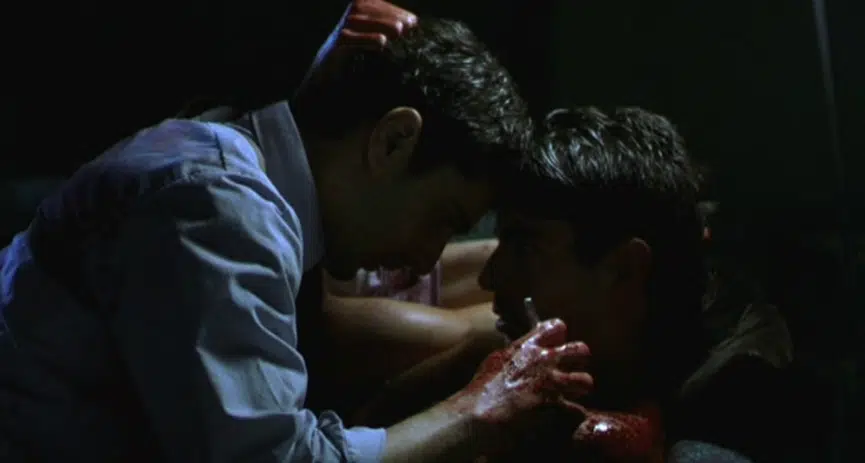
The converge of the apostate and the martyr introduces a fundamental tension between crime and salvation, birthing a dialectic of the sordid and the sacred. This tension forms a complementary, tragic, and inseparable dynamic. Ultimately, music, light, and fallen bodies: everything converges into the atmosphere of a funeral rite. Yet it is only with the arrival of death, as Ángel cradles the dying El Nene and recites a desperate prayer, that the lovers ascend into an embodiment of Michelangelo’s Pietà. No longer seeking to escape the sordid or achieve perfect sanctity, they unite instead in the sacrifice of tragedy.
The camera, in slow and solemn reverence, captures this scene, lingering on the tender touches of their bodies and postures, creating a sense of intimacy that transcends the violence surrounding them. The light, initially harsh and sharp, gradually softens as it illuminates their embrace, akin to the gradual softening of light at sunset. Ángel, like Michelangelo’s Virgin Mary, holds the withered body of his beloved with infinite tenderness, transcending all verbalized pain to become part of a fleeting sacredness. In this moment, Ángel ceases his struggle, not by washing away his sins, but by embracing the love born from 'sordidness,' discovering within it a sanctity that faith had always withheld from him. As El Nene is embraced by Ángel’s arms, the stains of his past seem to vanish: he becomes a purely lover, no longer a soul torn by contradictions but an embodiment of absolute love. Here, sordidness transcends itself, transforming into grace.
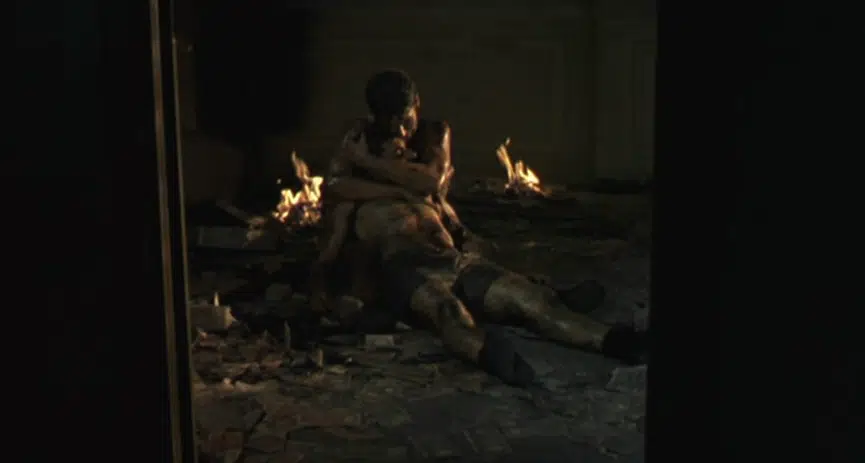
The sordidness in Burnt Money is not a weakness or a condemnation. Its sacredness lies in its resilience—the ability to persist and shine, even at the heart of corruption. Here, love becomes a ghostly presence, a fragile trace that rejects the world. Power, in turn, is not shattered by its massive presence but by the invisible fissures it leaves within the flesh, repressed desires, and fragmented impulses.
The Erotic
As a queer erotic film, the camera transcends the spectacle of carnal desire, even the film depicts only heterosexual sexual scenes. This is a space that speaks the unspeakable, yet it should not be mistaken for merely cautious self-censorship. Rather, it is an exploration of what remains when everything collapses: crime committed, passion dissolved, and life vanished. The elimination of the physical dimension of sexual expression thrusts the body into a state of silence and vertigo, wherein the soul and flesh become intertwined. The eroticism of Burnt Money lies not in explicit sexual acts but the intricate construction of passion between “the Twins”. It is like an energy on the verge of overflowing, yet perpetually restrained. The moments they share are intensified by this restraint, serving as amplifiers of desire. Leonardo Sbaraglia and Eduardo Noriega deliver extraordinary performances: every missed caress, hesitant glance, and silence grows more charged and erotic than any exposed depiction could achieve.
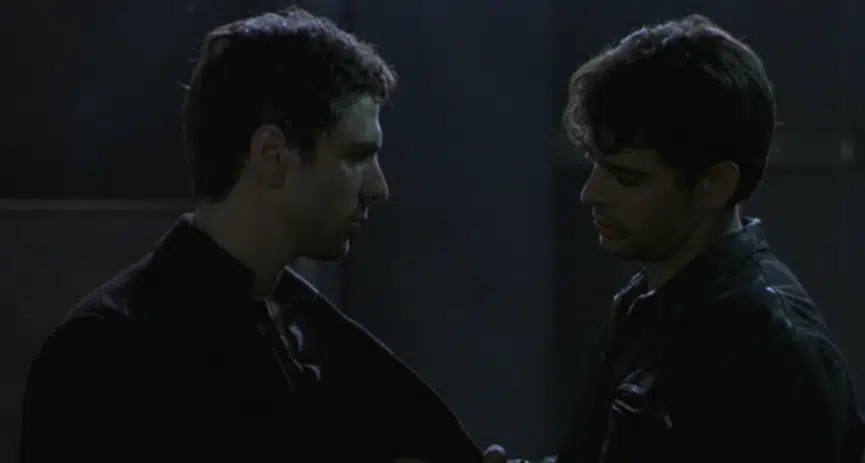
The absence of physical consummation results in an unbearable intensity—eroticism is found not in what is seen, but in what refuses to be seen. True union between the lovers does not exist in their bodies but burns instead in pain, in anticipation, in the unbearable tension between possibility and impossibility, until it inevitably collapses into destruction.
The bond between El Nene and Ángel is composed of silences, shadows, and fractures, always present and absent, affirming their love while simultaneously evading it. Their bodies bear the indelible scars of battles fought—not only with the world but also within themselves. The harm achieved precisely through internalized, serial self-deception: El Nene continuously paralyzes himself through reckless behaviors and escapism, having an affair with a woman and constantly confiding in her about his male partner; and Ángel imposes strict and painful abstinence upon himself that prevents both parties from truly confronting the depths of their love.

Piñeyro establishes this eroticism on the foundation of waiting and incompleteness, emphasizing its tragic dimensions: caresses transform into wounds, words into weapons, and even their bodies into vessels of imminent destruction. It is in this way that we can't forget the period when queer identities were criminalized and marginalized, and standing on the threshold of the era, the film feels like remembering the ruins and legacy of all identity politics struggles.
References:
[1] La batalla del Liberaij (https://www.montevideoantiguo.net/la-batalla-del-liberaij/)
written by Sharon
THE DISSIDENTS are a collective of cinephiles dedicated to articulate our perspectives on cinema through writing and other means. We believe that the assessments of films should be determined by individuals instead of academic institutions. We prioritize powerful statements over impartial viewpoints, and the responsibility to criticize over the right to praise. We do not acknowledge the hierarchy between appreciators and creators or between enthusiasts and insiders. We must define and defend our own cinema. |






Share your thoughts!
Be the first to start the conversation.