
The Silent Catalyst: Mamiya in Cure
Cure (1997) is one of those rare films that defy conventional categorization; it's not just a horror movie but a haunting exploration of the human psyche that forces the viewer to confront the fragility of free will and the darkness lurking within the soul. Directed by Kiyoshi Kurosawa, the film has left an indelible mark on my cinematic memory—not merely for its disturbing narrative and enigmatic style but for the singular portrayal of Mamiya, the on-screen killer who embodies our inner, repressed demons. In this review, I aim to delve deep into Mamiya’s character and the film’s thematic complexity, illustrating why he has become my favorite on-screen killer. His presence challenges the boundaries between normalcy and chaos, inviting an introspection into the symbolic order of everyday life and the dark undercurrents that lie beneath.
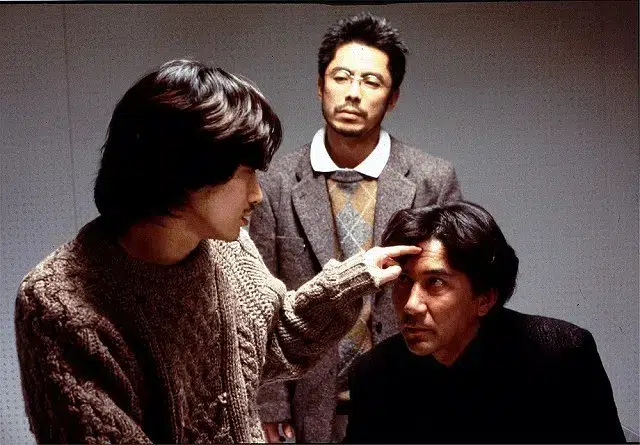
The narrative of Cure is as intricate as it is captivating. Set against the backdrop of an ostensibly ordinary Tokyo, the film unfolds through a series of inexplicable murders that shock the city. Ordinary citizens suddenly find themselves compelled, as if possessed by an unseen force, to commit gruesome acts of violence, later confessing without any recollection of why they acted out so brutally. Detective Kenichi Takabe and psychologist Sakuma begin piecing together a perplexing pattern that points invariably to the enigmatic Mamiya. His subtle interventions—eschewing overt physical threat in favor of psychological manipulation—disrupt the delicate balance of normalcy. In doing so, the film reveals a dark truth: the source of the chaos is not an external malevolence but one that emerges from the deepest, often repressed, layers of the self. This exploration of irrational group behavior and the collapse of societal order paints a chilling picture of how everyday symbols and structures can suddenly reveal their inherent vulnerabilities.
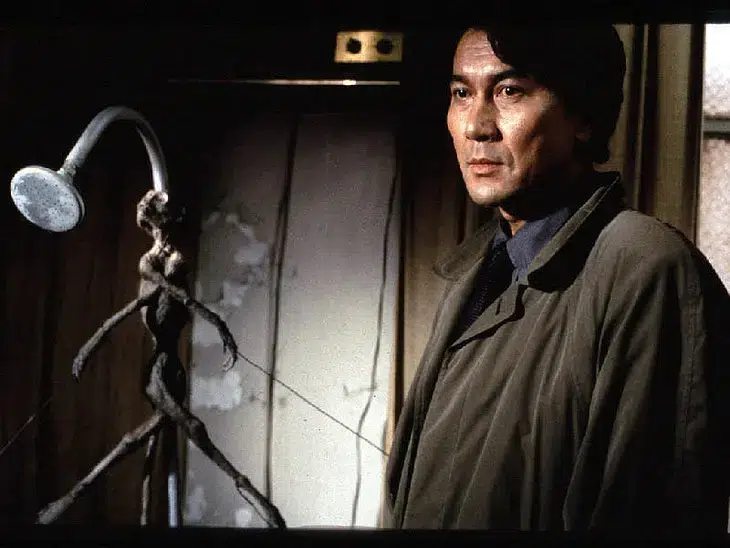
Mamiya, portrayed with unnerving subtlety by Masato Hagiwara, is less a conventional villain than a catalyst for the irrationality simmering beneath the surface of everyday consciousness. His methods are not those of an overt aggressor but of a hypnotist, who employs suggestion to tap into deeply repressed emotions—guilt, anger, and trauma—lurking in his victims. This process can be viewed as a metaphor for a “collective syndrome” whereby individual actions, driven by repressed inner turmoil, erupt into chaotic violence. Mamiya’s influence transforms the latent shadows of the psyche into palpable reality, turning the ordinary into a stage for the darkest human impulses. In essence, he serves as an 'X': a symbol, an unknown force that disrupts and unravels the facade of day-to-day life. His enigmatic ability to trigger hidden madness underscores the fundamental fragility of free will and challenges our assumptions about the true origins of violence.
At the core of Cure lies a profound meditation on identity and memory. The film juxtaposes the comforting facade of everyday life—the established symbolic order—with the discordant return of suppressed memories and repressed impulses. These undercurrents, usually hidden from view, emerge like cracks in a carefully constructed edifice, undermining the order that individuals cling to for a sense of normalcy. The repressed elements—malice, guilt, and the trauma of forgotten pasts—are reminiscent of hidden holes within the symbolic structure, inevitable fissures through which chaos seeps in. This collapse of the orderly façade not only intensifies the narrative’s tension but also speaks to the modern human condition: a state where even the most “ordered” lives carry the potential for anarchy. Cure thereby serves as an invitation to confront the unsettling truth that our identities are mosaics of both light and darkness, ever teetering on the edge of breakdown.
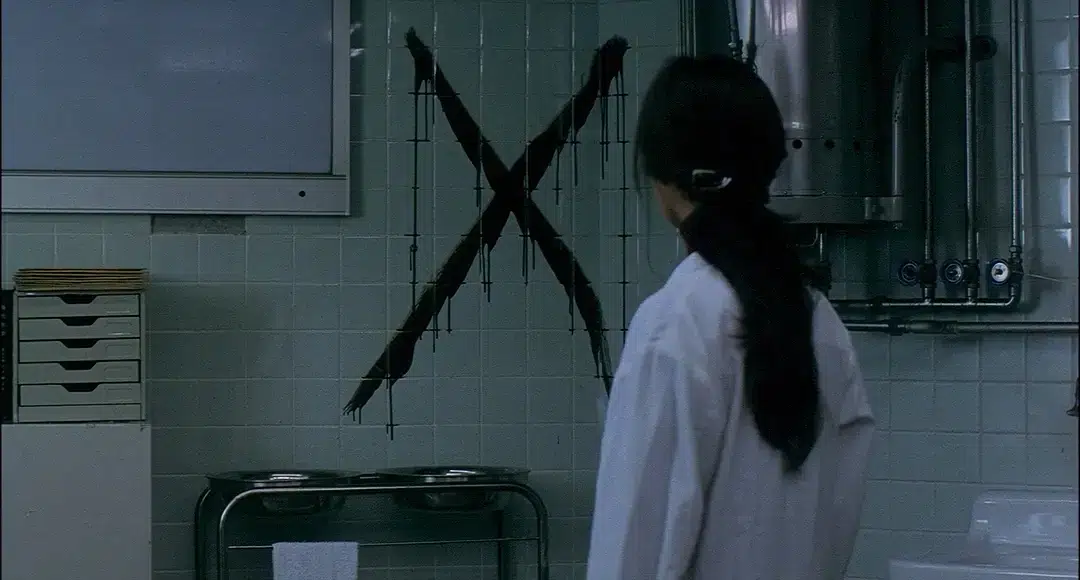
One of the film’s most intriguing devices is the symbolic use of the letter “X.” Far from being merely an arbitrary mark, “X” encapsulates the very essence of the unknown. It is a mysterious signifier—an emblem that denotes absence, ambiguity, and potential transformation. In Cure, the “X” emerges as a multifaceted symbol: it is both a chant and a marker, a cut through the fabric of reality, and an unknown variable that unsettles the structured symbolism of everyday life. Mamiya himself becomes the physical incarnation of this symbol. His enigmatic nature and hypnotic influence blurs the lines between the visible and the unseen, transforming the mundane into a portal for unanticipated darkness. In this way, the film interrogates how symbols guide our understanding and also obscure the deeper, often unsettling truths that lie beneath the surface of our social and psychological lives.
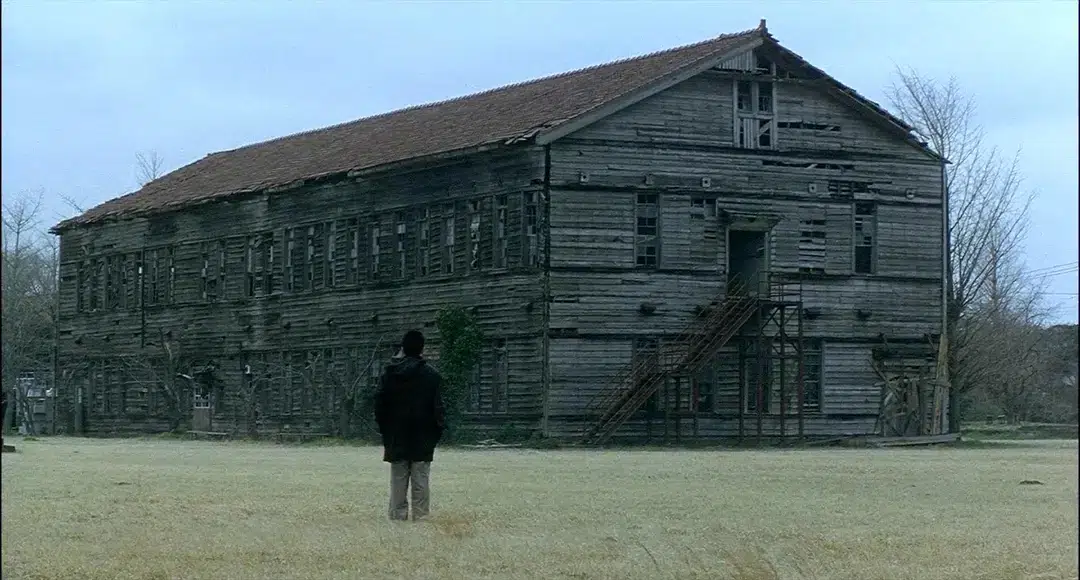
Kiyoshi Kurosawa’s masterful directorial approach is pivotal in establishing the film’s chilling atmosphere. With carefully composed long takes, static and almost claustrophobic shots, and a muted, almost antiseptic color palette, every frame of Cure is meticulously designed to reflect the psychological confinement of its characters. Notably, the absence of a conventional musical score amplifies the unease—the ambient sounds and sparse silences instead of typical dramatic music force viewers to listen closely to the subtle cues of everyday life. Cinematographer Tokushô Kikumura captures the sterile, oppressive urban environments of Tokyo, transforming bleak hospitals and dimly lit apartments into visual metaphors for the inner psychological prisons of the mind. Kurosawa’s techniques not only evoke a sense of impending collapse but also illustrate how easily the thin veneer of societal order can be disrupted by unseen, irrational forces.
In a genre populated by visceral and physically imposing killers like Michael Myers or Hannibal Lecter, Mamiya represents a stark divergence. His threat is subtle yet pervasive—a mastermind who orchestrates violence not by direct intervention but by exploiting the hidden predispositions and traumas lying dormant within his victims. Instead of relying on overt brute force or bloodshed, Mamiya challenges the conventional imagery of horror by turning the human mind itself into a battleground. His ability to catalyze latent aggression in seemingly ordinary people forces us to reconsider the nature of evil: it is not necessarily external, but can be an intrinsic, fragile component of human existence. Such a cerebral and disturbing approach redefines what it means to be an on-screen killer, elevating Mamiya from a simple antagonist to a profound symbol of inner darkness and the inherent volatility of the human condition.
On its release, Cure generated a wide spectrum of critical responses—from accolades for its minimalist style and psychological depth to debates over its ambiguous narrative. With time, however, the film’s stature has only grown. Critics continue to laud Kurosawa’s ingenious direction and the unsettling calm with which he portrays the collapse of societal order. The film’s inclusion in major restored collections, as well as its continued discussion among cinephiles, attests to its enduring influence. Cure has not only redefined the conventions of psychological thrillers but has also paved the way for future explorations of inner human darkness, making Mamiya a timeless figure who embodies the ceaseless struggle between order and chaos.
For me, Mamiya is far more than just a character in a movie; he is a mirror reflecting the unseen vulnerabilities that lie dormant in all of us. His method of instigating violence—a subtle, almost intangible triggering of repressed emotions—raises profound questions about the inherent nature of human cruelty. Mamiya compels us to acknowledge that under the veneer of everyday normality lurks a deep and often irrational potential for violence, a collective madness that society desperately tries to keep at bay. His influence extends beyond the screen, serving as a disturbing reminder that the boundaries between order and chaos are much more permeable than we might care to admit. Ultimately, his character forces us to face the disquieting truth: in our pursuit of order, we might simultaneously be nurturing the very seeds of our own self-destruction.
written by desi
THE DISSIDENTS are a collective of cinephiles dedicated to articulate our perspectives on cinema through writing and other means. We believe that the assessments of films should be determined by individuals instead of academic institutions. We prioritize powerful statements over impartial viewpoints, and the responsibility to criticize over the right to praise. We do not acknowledge the hierarchy between appreciators and creators or between enthusiasts and insiders. We must define and defend our own cinema. |






Share your thoughts!
Be the first to start the conversation.