
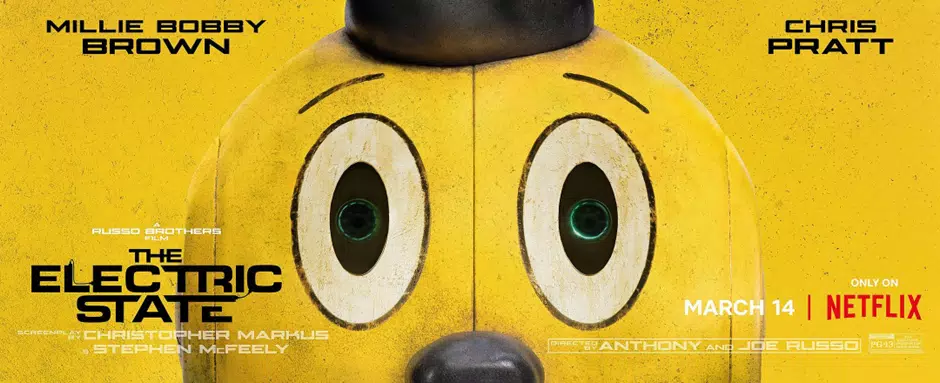
 Hello, Peliplaters!
What do you think of The Electric State? A few months ago, I wasn't hopeful about its trailer at all. The tone is a complete reversal from the original graphic novel, which depicts a death-by-entertainment apocalypse. Its world is shown through fragmented texts and rich yet lusterless colors. Everywhere, "humans" (or what's left of them) wear Sentre Stimulus TLE virtual reality headsets—their bodies decayed like mummies while the VR devices on their heads still glow. In this landscape, the only "living beings" for readers to follow are two protagonists on a road trip: a young girl untouched by Sentre devices and a robot seemingly containing her brother's consciousness.
The book contains all the typical elements of a road trip: highways, cars, deserts, gas station communities, and journeys between distinctly different cities. Each turn of the page reveals a new landscape. Yet in substance, this is nothing like our real-life road trips. Sentre has possessed every living person's body. The protagonists' escape isn't just about fleeing Sentre-affected areas—it's about discovering the brother's true form. Sentre's corruption of human society runs bone-deep. Amid ever-changing scenery, they appear to move closer from their destination while actually going nowhere. No one is truly alive, and that's the case everywhere. While the original tells a hopeless tragedy, the trailer suggested a superhero-style family comedy. However, after watching the film, I had a completely different perspective.
The sci-fi illustrations in the original novel had fans eagerly anticipating its screen adaptation. However, they might have overlooked a crucial challenge: while the illustrations are static, film requires constant motion—through camera movement, filmed objects, diegetic or non-diegetic sound, or background music added in post-production. At least one of these elements must always be in motion. Even when films use freeze-frame shots, they are not about stillness itself but their contrast with the moving elements.
One can experience how different background sounds affect static images by simply putting on headphones while browsing a photo album or walking through a gallery. Readers, on the other hand, may have interpreted the original work's illustrations differently—perhaps even adding their own musical accompaniment. However, the atmosphere the author created—that juxtaposition of spiritual carnival against physical decay—cannot be replicated in film using identical techniques. This meant that to successfully adapt the novel, the directors needed to make transformative changes. The Russo brothers, Joe and Anthony, not only made these changes but perhaps have taken them too far.
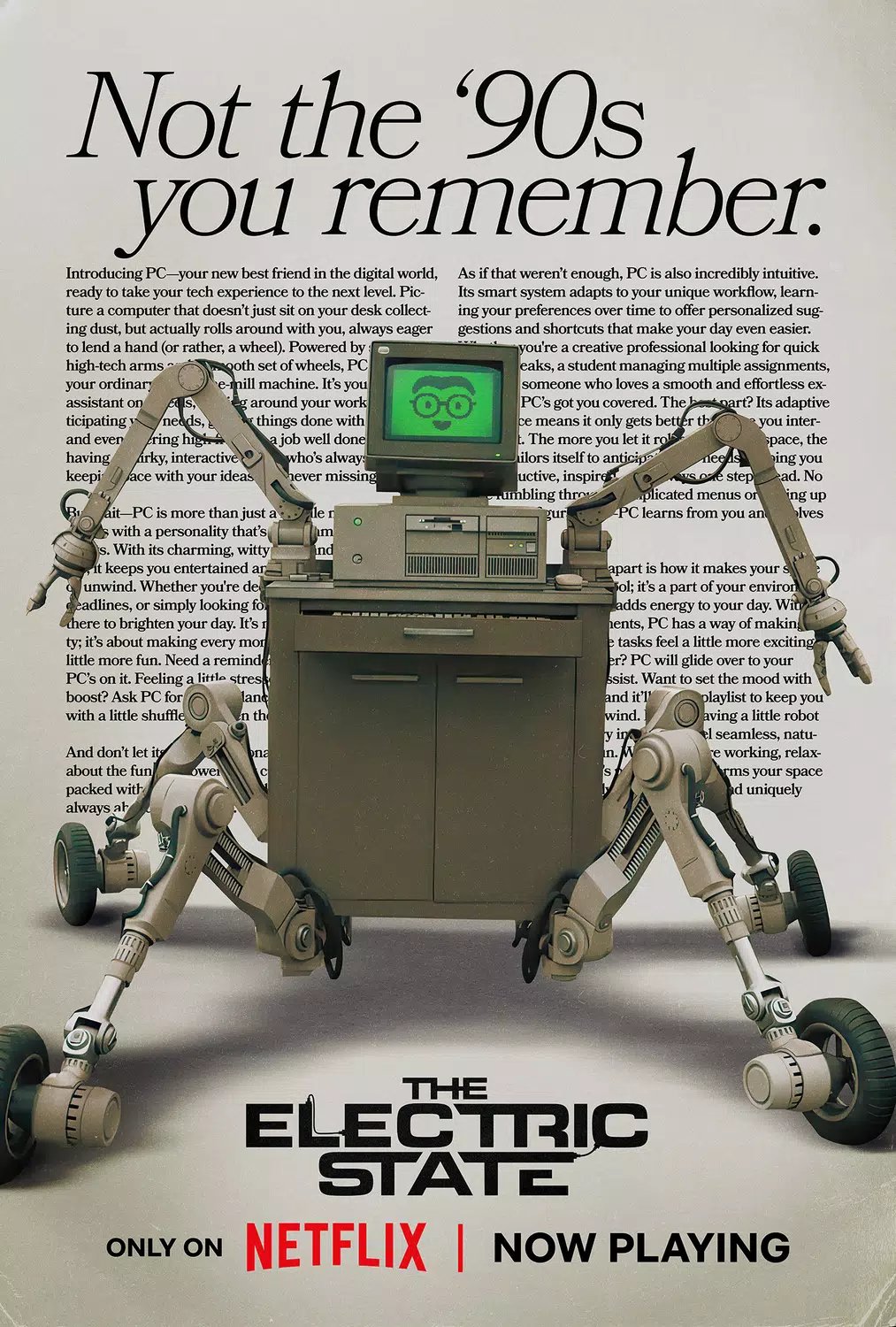
The Electric State feels more like a reimagining of the original work than a direct adaptation. While it maintains the core premise—the Sentre company corrupts humanity with virtual reality headsets after helping defeat AI—the film takes significant creative liberties. The art design faithfully reproduces several characters while introducing compelling new ones (see images at the end). The difference is that the Russo brothers made a bold choice to transform the original's tragic tone into outright comedy—a decision that has alienated many devoted fans of the source material. They've added new comedic characters and interspersed humorous scenes between plot points. As a result, the original's overwhelming sense of despair and civilizational collapse has largely disappeared. Even the few faithful recreations of Sentre-mummified humans lose their impact amid the comedic elements. Similarly, the central road trip storyline has shifted from Michelle and her brother Christopher's desperate journey to an optimistic quest to save the world.
Simply put, The Electric State has transformed the original's bleak, adults-only wasteland into a family-friendly adventure that appeals to viewers of all ages.
How effective is this approach? Honestly, it's brilliant—I would even recommend watching the movie before reading the original novel, just as I suggest watching Snowpiercer (2013) before reading its source comic. By leaning into comedy, the film version of The Electric State explores a theme that the original novel touched on but never fully realized: rebellion against fate. Though subtle, the young girl protagonist in the original does show rebellious traits throughout, yet her defiance often seems either too natural or too insignificant against the broader backdrop.
She lives with unloving foster parents, making her defiance of authority unsurprising. At the story's start, she walks through a corpse-filled desert carrying a shotgun, not making readers worry about why she has it, but whether it could protect her. She breaks her foster mother's nose without warning and makes an unexpected choice after finding her brother's body...
Readers may sign at these moments but perhaps never realize she has been rebelling. The wide shots and towering mechanical devices under the original author's pen diminish her resistance to the scale to that of a droplet in the ocean. She does fight the tide, but her ripples go almost unnoticed. Most tellingly, the original story gives her few conversations with others favoring lengthy monologues that emphasize her isolation. The author's vision of the apocalypse is utterly pessimistic, suggesting humanity's doom was sealed the moment Sentre was invented, with no hope for salvation. While poetic, this outlook rings false.
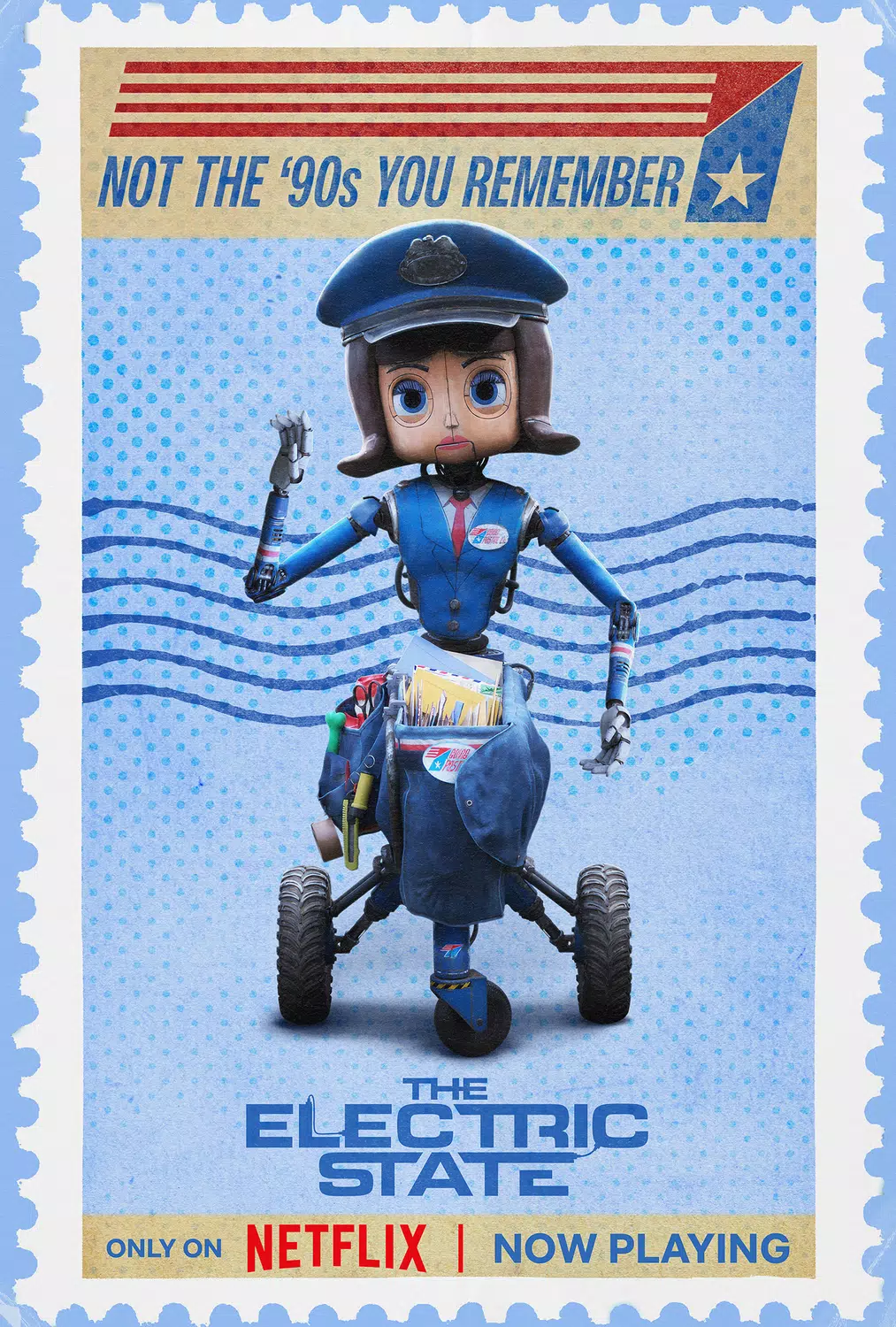
Throughout history, human civilization has persisted because people have dared to say "no" to dire circumstances. The new characters created by the Russo brothers embody this spirit, each defying tradition and breaking through prejudice. Take Keats, a veteran of the AI wars who befriends a construction robot—their illegal friendship leads them to run a black market for forbidden second-hand goods. Then there's Pop Fly, an outdated baseball training robot that I initially dismissed as useless against Sentre's high-tech weapons. Yet its unpredictable pitching angles and bat swings caught every enemy off guard, just like a seasoned baseball player. And there's Penny Pal. It's hard to imagine that a postal robot with a gentle demeanor and a soft voice could deliver armor-crushing punches (though perhaps it makes sense, given the arm strength needed to deliver thousands of letters daily).
When was the last time you saw a comedy about future technology and artificial intelligence? I can't think of one in ten seconds. For AI-themed films, creators tend to focus on AI conspiracies and threats. Although there have been more and more discussions about artificial intelligence, whether human-machine collaboration or everyday applications, most lean toward hostile conspiracy theories and doomsday scenarios. Yes, we should maintain healthy skepticism toward new technologies, but this flood of sensationalized information has clouded our judgment. Most people are struggling to understand real AI objectively, instead absorbing superficial misinformation, which seems plausible because AI technology remains partly underdeveloped.
The Russo brothers didn't attempt to debunk conspiracy theories but to highlight humanity itself, as perfectly exemplified by their new character Keats. Chris Pratt brings Keats to life with personality and quick wit—his humorous lines often make me forget the dire circumstances surrounding him. The robot characters, surprisingly, display more humanity than their Sentre-corrupted human counterparts.
However, Millie Bobby Brown's portrayal of Michelle lacks depth, and I can't tell whether this stems from miscasting, weak script writing, or both. Her scenes feel disconnected, and she seems trapped in her Stranger Things character, Eleven. Michelle's rebellion comes across as forced rather than authentic. The story itself doesn't help—the Russo brothers barely scratch the surface of Michelle's background, simply stating her immunity to Sentre without exploring what makes her unique.
Keats, by contrast, better represents someone who lives outside Sentre's influence. Beyond just dealing in antiques, he shows genuine passion for these pre-virtual reality artifacts. Given Michelle's rejection of Sentre, there should've been more alignment between her and Keats's worldviews, or at least some sign of her interest in the tangible world beyond virtual reality.
What do you think, Peliplaters?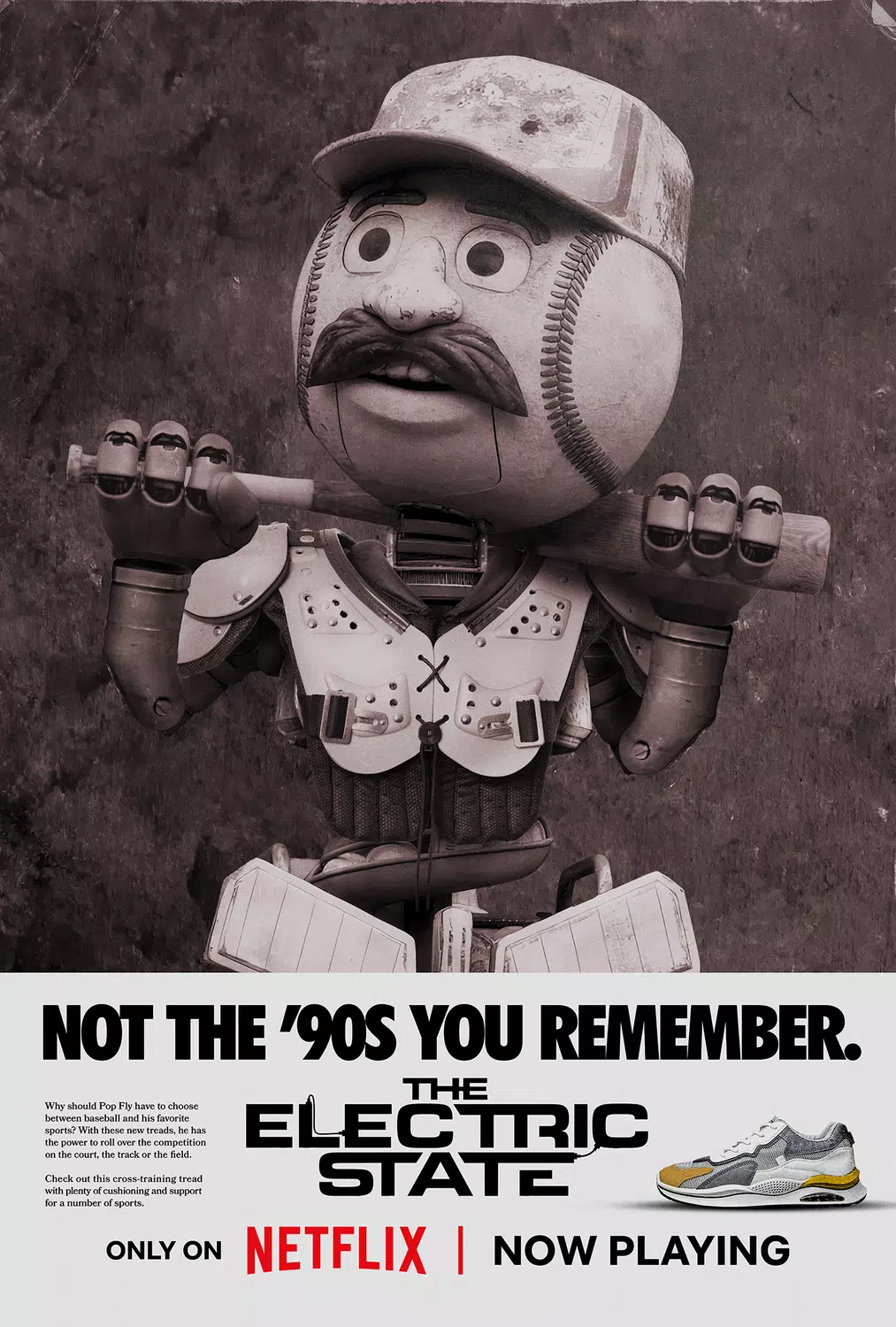



Share your thoughts!
Be the first to start the conversation.