
When Black Mirror Season 7 dropped, I binged the whole thing in one sitting — as I’ve always done for other series. But this time, something unexpected happened. The show didn’t leave me with chills or existential dread. Instead, I felt something strangely comforting, even cathartic.
Yes, the six new episodes are still rooted in sci-fi, set in the near future, with technology playing a central narrative role. But something has shifted. These stories no longer keep novel or addictive technologies at arm’s length, nor do they deliver the show’s signature ruthless critique. Instead, they explore how humans live with these technologies — how we adapt to them, wrestle with their consequences, and sometimes even make peace with them after overcoming our qualms and apprehension toward state-of-the-art inventions.
In short, Season 7 seems to have let go of the show’s once-bleak vision of a morally and practically terrifying tech future. The sharp edge of cold satire has softened and is replaced by a surprising warmth — a recognition of coexistence between human and technology. And as someone whose life is already deeply entwined with algorithms and digital systems, I didn’t feel fear this time. Instead, I felt a deep sense of resonance — and even relief.
Spoiler alert from here on out
Take the first episode Common People for example. I never expected Black Mirror to portray the double stranglehold of capitalism and technology on ordinary people so realistically. Amanda (Rashida Jones) and Mike (Chris O’Dowd), once a happy couple, choose to undergo a new kind of brain “surgery” after Amanda is diagnosed with a tumor. The surgery is free, but to access her cloud-based brain functions, they must pay a $300 monthly fee.
As the bills pile up, they realize Amanda is now involuntarily “playing” advertisements, and to go ad-free, they’d need to pay even more. Financially cornered, Mike resorts to humiliating livestream gigs. But no matter how hard he tries, they continue to fall further into debt. Eventually, Amanda pays to enjoy her final 30 minutes of peace. Overwhelmed, Mike suffocates her and then picks up a knife, seemingly preparing for his own final livestream.
Notably, Mike’s death isn’t shown. The graphic violence that once defined the series has been scaled back this season. What remains is more unsettling: a quiet, contractual surrender. Faced with systemic exploitation, Amanda and Mike don’t protest, direct blame towards the tech company, or rebel. They simply comply and eventually dissolve. There’s no display of moral outrage, but instead it was just an automated erosion of their lives.

Compare that with the second episode of Season 5, Smithereens, where Chris (Andrew Scoot) kidnaps a tech “executive” in a desperate attempt to force accountability after his social media addiction led to his fiancée’s death. In Common People, by contrast, no one even notices Amanda and Mike’s tragedy. People pay to watch Mike degrade himself online, but no one sees him.
The silent erasure of common people devoid of the ability to resist exploitation by monolithic systems and organizations feels less like a dystopian warning and more like a reality we’re already living in. Think of those crushed by medical debts in systems without universal healthcare. Think of people ruined in financial crises with no means to recover. Corporate contracts and legal fine print shield those in power from consequences. Meanwhile, common people quietly disappear. Common People is horrifying precisely because its plot bears a striking resemblance to real-world circumstances.
Another standout is Hotel Reverie (Episode 3), arguably the most beloved episode of Season 7. With its blend of virtual reality, consciousness uploading, and a queer love story, it recalls Season 3’s iconic San Junipero (Episode 4). But there’s a key difference. In San Junipero, both protagonists were once real people. In Hotel Reverie, Emma Corrin plays Clara — a hybrid of a fictional movie character and the actress who portrayed her. Clara is self-aware, yet she’s neither entirely fictional nor fully real.
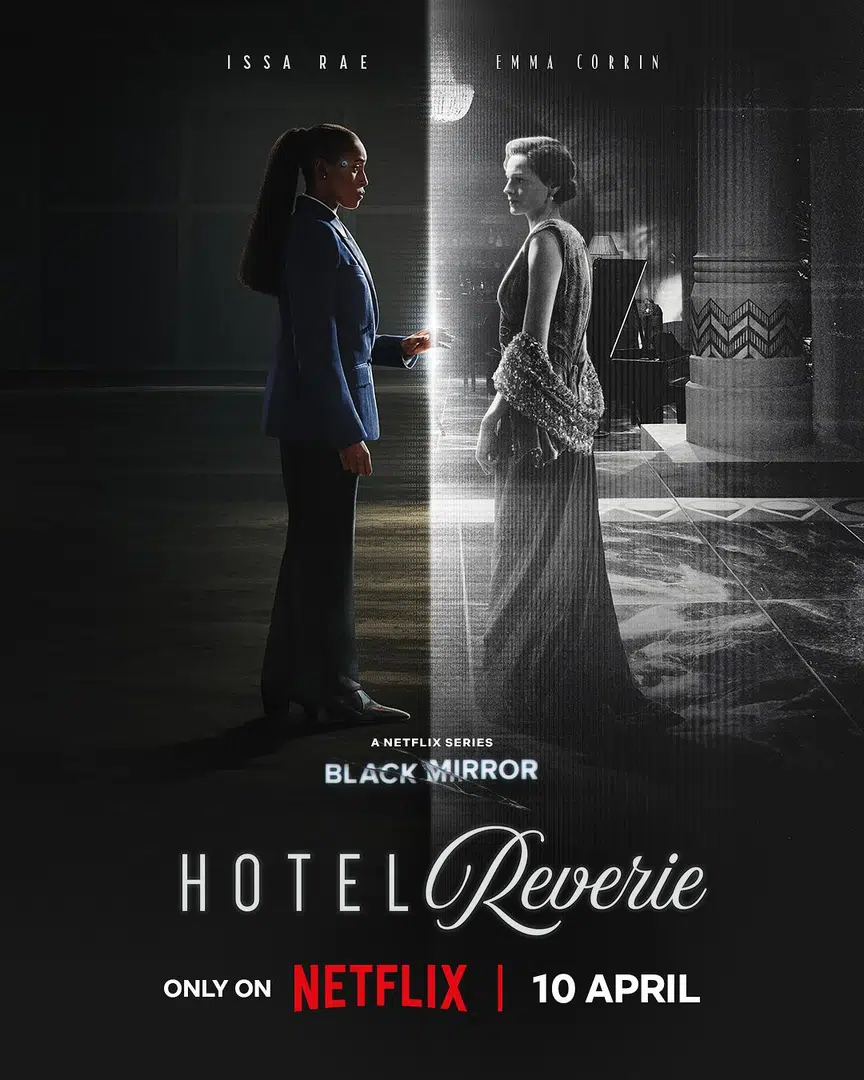
What’s remarkable is how natural her emotional connection with Brandy (Issa Rae) feels. Contrary to popular belief that it’s creepy for a human to fall in love with a non-human, when Brandy finally calls Clara at the end of the episode, their interaction doesn’t feel uncanny — it feels sweet. Propelled by fervent emotions and a charged atmosphere, the emotional bond that blossoms between a self-aware virtual entity and a living human feels nothing short of inevitable, inundating the scene with unfeigned love that spills beyond the screen and saturates the hearts of audiences.
Additionally, Clara’s emotional arc is unforgettable. She becomes tongue-tied when Brandy asks about her childhood, as she has no recollections. Startled by Brandy’s abrupt confession that she isn’t a real person, Clara bolts back to her room, examines herself in the mirror, touches her skin, and struggles to comprehend her own existence. Eventually, she acts, determined “to find the way out.” Her existential awakening mirrors that of Rachael in Blade Runner — but unlike Rachael, Clara isn’t just a passive object of male desire. She has agency. Her journey is her own to chart. This shift, subtle yet profound, speaks volumes about how female characters have evolved in Hollywood — they’re no longer defined by their relationships to men but by their own stories.
In Episode 5, Eulogy, Black Mirror returns to a familiar theme: memory. Phillip (Paul Giamatti), grieving the loss of his ex-girlfriend Carol (Rebecca Ozer), uses a new tech to recreate her presence through photos and memories. As he sifts through their shared past, the episode echoes Season 1’s The Entire History of You (Episode 3), in which a man deletes the very tech that preserved his memories to escape the pain they brought. Over a decade later, the tone has shifted. There’s no definitive judgment on whether memory-enhancing tech is good or bad. What matters is that we’ve learned to live with the ambiguity.
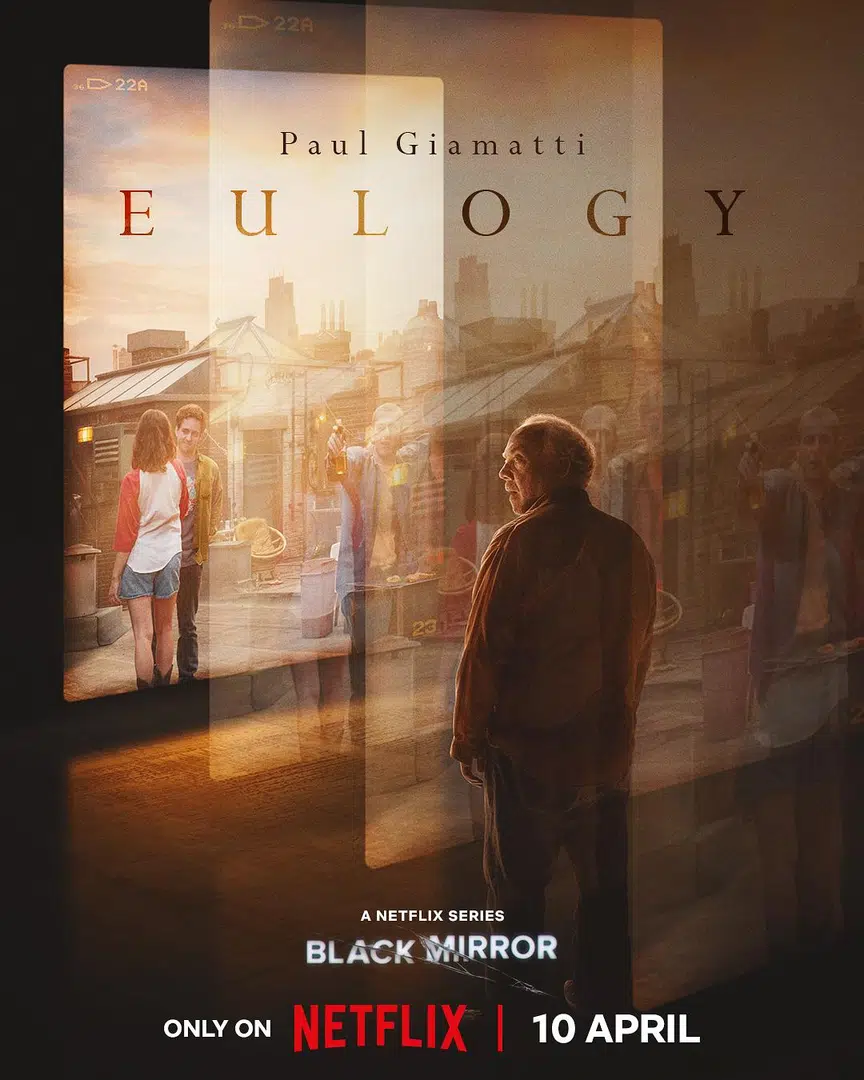
When the final credits roll, Black Mirror no longer feels like it’s scolding us from a cold, digital distance. It feels like it’s sitting beside us. The horror no longer comes from imagined futures, but from a slow unraveling already in motion. When Amanda gasps her final breath under a barrage of ads, when Clara’s fingers pass through a holographic illusion, when Phillip glimpses Carol’s recreated smile, we’re not witnessing hypothetical dystopias. We’re seeing pieces of our own lives.
Maybe this is the darkest revelation of all. When technological violence becomes part of our everyday fabric, we don’t resist — we cope. We piece ourselves back together using whatever scraps of humanity we have left. This mirror still reflects blackness — but this time, what we see isn’t fear. Absurd yet painfully real, we see our alienated yet familiar selves. And maybe that's what makes Season 7 the most haunting black mirror yet.




Share your thoughts!
Be the first to start the conversation.