
Hello Peliplaters!
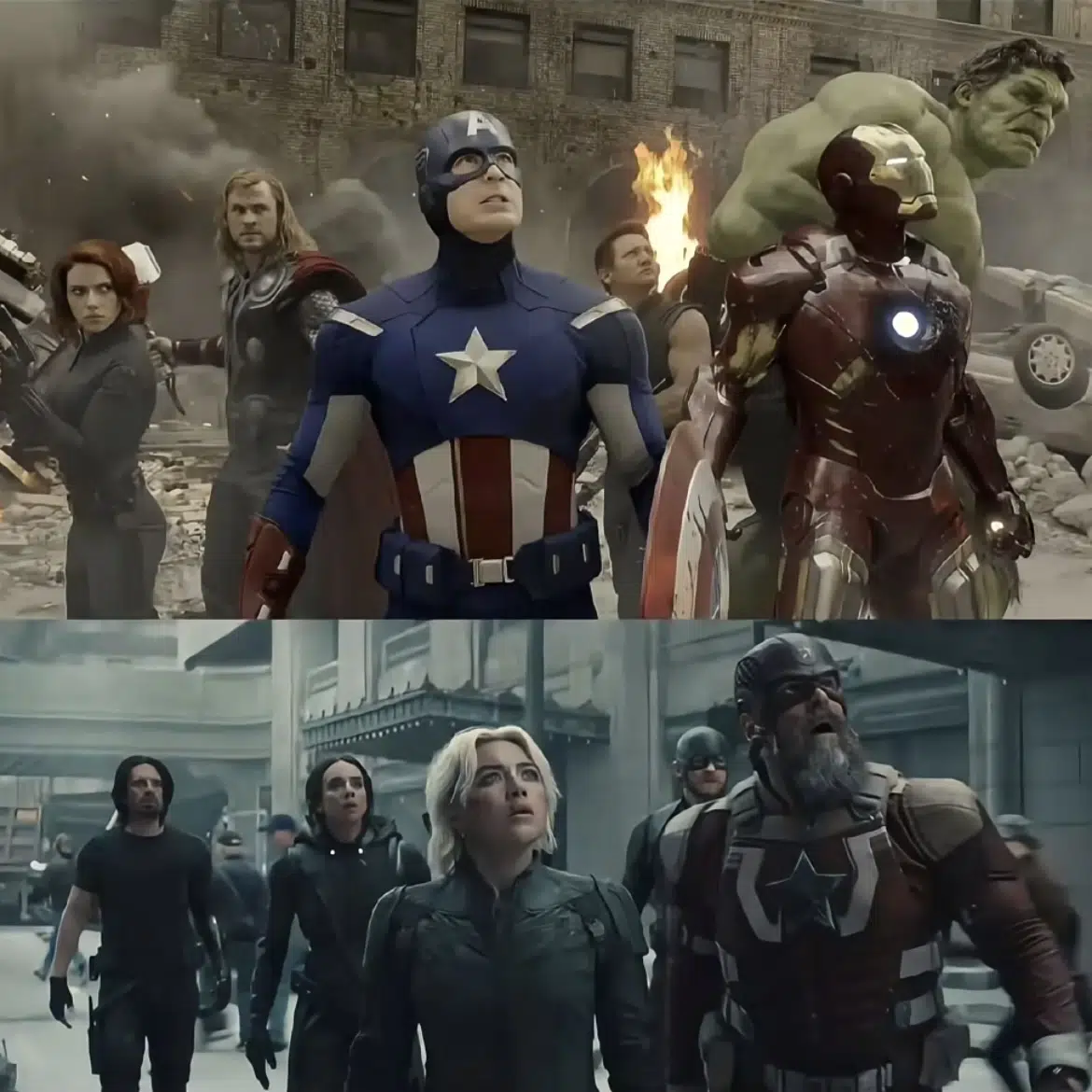
When comparing MCU's acclaimed works with its critical failures, a clear pattern emerged across movies, animations, and TV series like "Iron Man," "Spider-Man: Into the Spider-Verse," "WandaVision," "Loki," and "Deadpool & Wolverine"—they all centered on the concept of "family." The people these superheroes considered "family" weren't necessarily blood relatives but individuals who helped them understand the true meaning of their powers. In these stories, the superheroes progressed from self-doubt to redemption; they would begin by either doubting their abilities or misusing them until their "family" guided them back to their true purposes.
In contrast, MCU's poorly received films often fixated on individual heroism, hammering home the message that "anyone can be a superhero." Their plot twists felt contrived and overblown, serving only to prove that the protagonists have the ability to save humanity and deserve universal praise. These stories fell flat—like a rich guy showing off his wealth or a muscular guy flexing his muscles—because their message failed to resonate with viewers. In other words, WHO CARES?
Some say Marvel was merely exploiting these biographical films for profit, but they didn't even meet the standards of commercial films. Think about it—when you're shopping or dining out, no businessman with the right mind would randomly approach you and say, "Our products are great. You should buy them."
Speaking of "Thunderbolts*", its "superheroes" never sought heroic status—they simply did what was necessary (except for Red Guardian, who everyone knew was brainwashed and served mainly as comic relief). The film opened by revealing these characters' selfishness. When John arrogantly brought up his stint as Captain America, Yelena promptly mocked him and deliberately highlighted his true nature as just another mercenary.
Why did fans love Yelena's dialogue? Because of her authenticity. Like her sister Natasha, she mercilessly destroyed superhero illusions. When she angrily declared, "We're all losers," she not only punctured Marvel's carefully constructed myth in these biographical films but also allowed fans to view superheroes through an ordinary person's eyes.
Superheroes are fundamentally human beings. Even before gaining their powers, they're first and foremost normal people.
Who wasn't normal? Thanos. He viewed himself as the master of all living beings in the universe. Though he never stated this explicitly, his actions made it clear. He used the Infinity Stones to force everyone to conform to his worldview before snapping his fingers.
Look at those biographical films—weren't their superhero protagonists acting similarly?
The title of "superhero" isn't self-proclaimed by those with powers but bestowed upon by others. A superhero doesn't need validation from all of humanity—only from those closest to them. This is because superheroes are human, and humans have limitations. That's why when Marvel films fail, fans often compare them to DC films, which consistently acknowledge their characters' limitations.
Superheroes cannot be gods.
Finally, let me explain why the ending of "Thunderbolts*" was so moving. When Bob, under the influence of his inner demons, believed himself to be a god, Yelena—the only team member without superpowers—walked unflinchingly into the dark realm he created. While others believed entering this realm meant complete disappearance from existence, Yelena not only ventured into it but also helped Bob overcome his inner demons without hesitation.
Bob wasn't Yelena's blood relative—they were merely chance acquaintances—yet Yelena saw something of herself in him and embraced him as family. The other team members followed her into the darkness because they, too, considered Yelena family. Some viewers might find their relationships too casual. How could anyone so readily treat a stranger as family and risk their lives for it?
But that's just human nature—when you choose to love someone, you don't ask why. This stands in stark contrast to Thanos, who always needed reasons and endless justifications for torturing others and erasing half the universe's population.
In "Avengers: Endgame", Iron Man's scenes left a deep impression on me. To be honest, I didn't really like Iron Man (perhaps because I was jealous of his trustfund), but I must applaud him. He appeared "selfish" at the film's beginning, refusing to risk participating in the time travel plan and finding many reasons to justify his stance. Yet when he secretly simulated the plan's probability of success late at night, he gave himself no excuses to refuse. After his simulation succeeded, he suppressed his emotions while explaining the results to Pepper, telling her he didn't have to go. Pepper simply asked if he could rest easy knowing he didn't try. In the end, he not only joined the plan but also sacrificed his life for it. When Iron Man made that final snap, he offered no explanation—he simply stated, "I am Iron Man."
Would Iron Man still have made the same choice if he knew it meant his death? His pre-battle monologue suggested yes. All marvel fans know of Iron Man's arrogance, yet when he time traveled to before his own birth and met his father's younger self, something changed. His father introduced himself as someone who prioritized collective interests over personal ones. Through their interaction, Iron Man discovered his father wasn't quite what he claimed—he was just like his son, tough-talking but tender-hearted. This realization brought Iron Man peace. Having grown up starved for paternal love, he'd deliberately acted selfishly to prove his father wrong. In truth, both father and son shared the same capacity for caring about others.
I didn't cry when Spiderman turned to dust in "Infinity War," but tears came when Iron Man embraced him after Spiderman's revival in "Endgame." In that moment, I realized it was Iron Man's capacity for caring that made this reunion possible. This ability to care deeply is the true superpower.
Therefore, Yelena's embrace of Bob didn't just transform him—it corrected Marvel's course, just as Iron Man's sacrifice corrected Thanos's mistakes.
What do you think, Peliplaters?




Share your thoughts!
Be the first to start the conversation.