
Moshi moshi. I fear that Peliplat is changing me. It's making me, dare I say, more well rounded. At least, it's expanding my viewing horizons, as I have started to consume content that was not previously on my radar.
It used to take a lot for me to watch anime. As a white, Canadian adult, anime seemed like something for kids or at least something from such a foreign culture that it just wasn't made for me. A colleague once convinced me to watch Death Note, promising that it was the greatest TV show ever. I made it through six episodes. Why do all the characters say exactly what they've done or what they're about to do? I think I just didn't get it. After that debacle, I thought my anime-watching career was over.
Then I started reading articles from Anime After Dark on Peliplat, and I started to realize that this subgenre is more than I anticipated. Growing up whiter than Casper, my anime experience consisted largely of the TV shows that made it across the Pacific, like Pokémon and Yu-Gi-Oh! Often, these shows were connected to card games, which were much more exciting to me than the shows themselves. In my adult life, there were odd failed experiments like Death Note and The Lord of the Rings: The War of the Rohirrim, but nothing fully captured my imagination. It wasn't until I started reading the AAD articles that I learned of anime's darker side. As a guy who gets enticed by darkness, my curiosity was, once again, rekindled.

Then there was the movie club. Yes, I'm in a movie club. Every couple of weeks, me and some friends get together virtually to yap cinema. How it works is this: One of us chooses a movie; we all watch the movie; we pick a night where we are all available; we talk about the movie. Pretty straightforward; nothing revolutionary. Still, it's a lot of fun, and a great way to stay connected to friends who have moved to different cities. Often, our conversations last longer than the length of the movie we're discussing.
For our last selection, one of the white boys (spoiler alert, the whole club is white boys, but we're working on a diversity initiative (no we're not)) in the club chose Perfect Blue. I had already heard about this anime through Peliplat, so it was not an unknown movie for me. For the club, although we had done animations like Fantastic Planet before, this was our very first anime.
Despite us all being avid cinephiles, it was true that we were all quite new to the anime sphere. Even the guys in the club who I thought were anime guys said in the meeting that this was their first Satoshi Kon movie. This interested me because I thought that Kon was one of the godfathers of anime. Like, if you watched anime at all, then you knew all of Kon's stuff just like you knew all of Studio Ghibli's stuff.
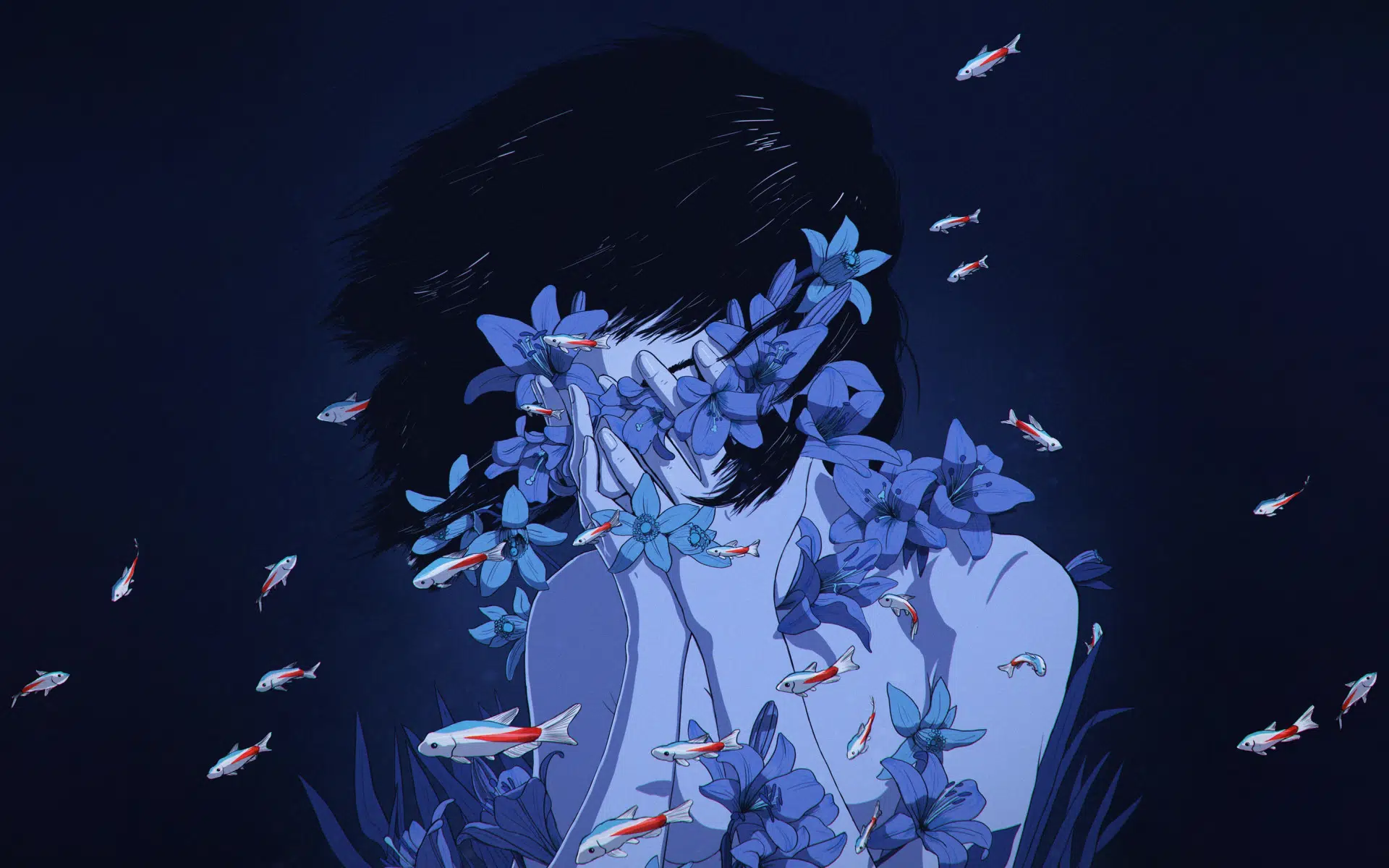
During the virtual movie club meeting, us hakujins waxed poetic about Kon's directorial debut. We all enjoyed it, but there was a general consensus that the ending gets wrapped up too much in its warped-reality concept. One friend even admitted that he got too stoned beforehand and had a horrible experience because of how the movie's content seemed to be attacking him. Just say no, kids.
For me, personally, it was the visuals that kept me enticed. Whether it's the anime aesthetic or the late-90s influence, something about this particular movie is so drop-dead gorgeous that it made me want to watch it over again. Some moments that especially stood out were when Mima started to receive visits from her previous idol persona. I loved it when she sees her in the train window and when she chases her down a hallway only to have the idol float away into the night. These visual vibes are as immaculate as they are terrifying.

I can't go into that much detail about the subtext of this movie. AAD gets this kind of stuff, like the nuance of Japanese culture, but, for me, a white boy dipping his toes in the anime waters, it's all too new to have any groundbreaking opinions. As usual, I have more questions than answers, like why does Japan have an obsession with perfect teen idols?
In her Oshi no Ko article, AAD dives deep into this topic. I found that article very illuminating and it helped me better understand what I was seeing in Perfect Blue. Her comment about how reincarnation is inherent to idol worship was particularly fascinating.
Through the lens of Perfect Blue, we see this reincarnation attempted by Mima's manager, Rumi. This concept that once one idol falls another will come to replace her is given sinister tones when Rumi takes it to a new level, willing to change who she is in order to recreate or, rather, bring back Mima. AAD even goes as far as to say that Japanese people fantasize about "the idea of being reincarnated as their offspring." Again, I'm not in a cultural position to prove the validity of this statement, but it does continue to inform the Rumi character.
Rumi, one can perceive, considers herself as a mother figure for Mima. After all, she is the one who is furiously against her doing the rape scene in the police procedural show. Taking this mother-figure archetype to deeper realms, and infusing it with this Japanese fantasy, we notice that it's quite in-line with idol culture for Rumi to want to reincarnate herself as Mima.

What's also fantastic about Perfect Blue is its runtime. It's no secret that short movies are all the rage, but this movie does more in 81 minutes than most movies do in 120 or even 180 minutes. Not only is it short, but it feels like the correct length. I wasn't left feeling like the themes were unexplored or that the plot needed more development. Instead, I was filled with a desire to rewatch the film in order to bask in its visual glory and see what easter eggs I may have missed. For example, in the first 20 minutes, there are a plethora of references to Mima's image crisis. Her one line in the TV show within the movie is "excuse me, who are you?" This very question is essential in the later stages of this short but dense movie.

The movie deals mainly with obsessions. I don't want to come across like I'm obsessed with AAD. However, I am a fan of their work because I appreciate someone who writes well and informs me about a previously unknown world. Despite Perfect Blue's world being totally foreign to me, my friends and I all enjoyed it because of its interpretation of reality. Although it's an intense watch, it is still a great gateway to this dark side of anime.
What will happen in the end? Will I consume so much AAD that my account becomes AAD and I leave AAD in a state of crisis, unsure what is AAD and what is not? Doubtful. I'm just happy to see AAD continue to post on Peliplat. As long as their articles keep coming, I'll stay fascinated with anime. I doubt I'll become an anime aficionado, but I do plan to watch more, especially Paprika and Millennium Actress, both of which are directed by Kon. If you have any other anime suggestions for me, please comment below. Arigatō for reading and, please, try to remember who you are. Sayōnara!





Share your thoughts!
Be the first to start the conversation.