
By Esteban Eordogh – June 1, 2025
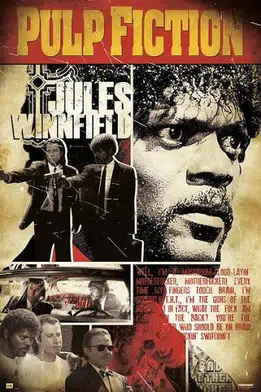
Some characters, even when they aren’t the center of the story, end up taking it over. Jules Winnfield, played by Samuel L. Jackson in Pulp Fiction, is one of those cases. A man who, between bullets and Bible verses, became the moral heartbeat of a film that redefined cinema.
---
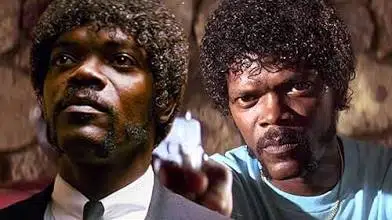
Jules Winnfield, portrayed by Samuel L. Jackson in Quentin Tarantino's "Pulp Fiction," is a hitman working for Marsellus Wallace, alongside Vincent Vega. He is known for his distinctive personality, including his use of Bible verses, especially Ezekiel 25:17, and his eventual decision to leave crime after a near-death experience, which he interprets as a sign from God.

Jules Winnfield: The Side Character Who Stole the Show
In movies, the lead actors usually get the glory, but sometimes, a supporting character bursts in with such force that they overshadow everything else. That’s what happened with Jules, the philosophical hitman of *Pulp Fiction*. Samuel L. Jackson gave him such a magnetic presence that every time he appeared on screen, it was impossible to look away.
It wasn’t just his sharp suit, his deep voice, or the way he recited scripture with the solemnity of a preacher. It was something deeper: Jules had a journey, a transformation that took him from being a cold-blooded killer to a man searching for redemption. And that evolution, masterfully portrayed by Jackson, is what made him the soul of the film.
---
The Power of Presence

Character Role:
Jules is a skilled and hardened hitman, known for his calm demeanor and willingness to use violence when necessary.
From the very first moment, Jules commands attention. While Vincent Vega (John Travolta) moves with the carefree attitude of a seasoned criminal, Jules speaks with the precision of a man who knows every word carries weight. His monologue about the differences between Europe and America isn’t just small talk—it’s the first clue that this man thinks, observes, analyzes.
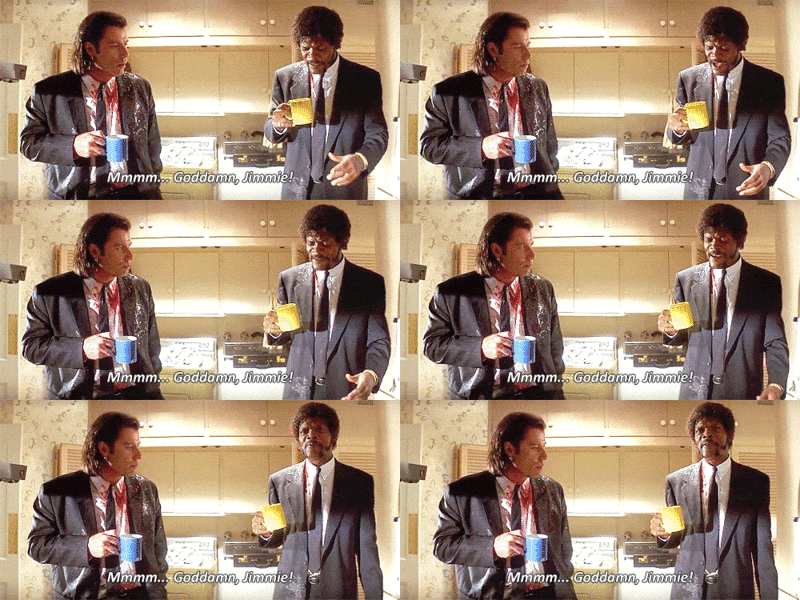
Then comes the apartment scene, where Tim Roth and Amanda Plummer play a pair of terrified thieves. But when Jules walks in, the air turns thick. He doesn’t need to shout or curse (though he does)—his mere glare is enough to convey danger. And when he recites Ezekiel 25:17, he doesn’t sound like just another hitman, but an armed prophet, convinced his violence serves a divine purpose.
---
The Crack in the Armor
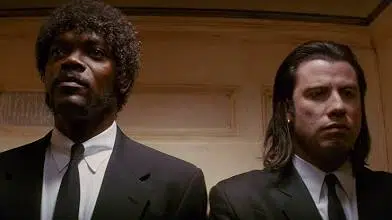
What’s fascinating about Jules is that beneath that hardened exterior is a man starting to question everything. The turning point comes when, after surviving a hail of bullets that should have killed him, he calls it “a miracle.” Vincent laughs it off, but for Jules, it’s a sign. Something shifts in his face—the certainty of a killer fractures, and in its place comes doubt, the need to find something more.
That crack widens in the finale, when Jules faces Ringo and Yolanda again. He could kill them, like he would have at the start of the film, but he chooses to let them go. Not out of weakness, but because he’s decided to break the cycle. “I’m trying real hard to be the shepherd,” he says, and in that moment, he stops being a villain and becomes something more complex: a man searching for his path.
---
Why Jules Endures
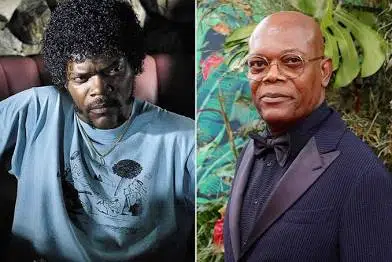
Samuel L. Jackson didn’t just play Jules—he inhabited him. He gave him a voice, a rhythm, a presence that transcended the script. Jules wasn’t just a supporting character—he was Pulp Fiction’s moral counterweight, the one asking questions in a world of violent answers.
And that’s what makes him unforgettable. Because in the end, Pulp Fiction isn’t just a movie about gangsters, drugs, and chance. At its core, it’s the story of a man who, in the middle of chaos, found the possibility of change.
---
Final Thoughts
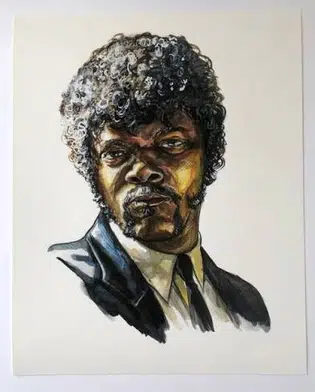
How often does a supporting actor steal a movie like this? Jules Winnfield proves that greatness isn’t about screen time—it’s about the intensity with which a character lives.
What other side characters have left their mark on you? Which moment of Jules’ hit you hardest? Because in the end, cinema isn’t just about the leads—it’s about those who, from the edges, end up defining everything.
---
For Film Buffs:
Do you remember the first time you heard Ezekiel 25:17? Or that look in Jules’ eyes when he walks away from violence? Samuel L. Jackson turned every gesture into something epic.
For Film Critics:
This piece isn’t just celebrating a performance—it’s asking what makes a character endure. Jules wasn’t the protagonist, but without him, Pulp Fiction wouldn’t be the same.
---
Epilogue
Some characters don’t need more minutes. They need more soul. And Jules Winnfield had plenty to spare.
--
Here's a more detailed look at Jules:
Role:
Jules is initially a professional hitman, operating alongside Vincent Vega, working for the notorious crime boss, Marsellus Wallace.

Pulp Fiction (1994) - IMDb
When gangsters Jules and Vincent talk to each other (or all the other characters, for that matter) there is a natural flow, a sense of realism and yet something...

IMDb

Pulp Fiction (1994) - Samuel L. Jackson as Jules Winnfield - IMDb
Jules: There's a passage I got memorized. Ezekiel 25:17. "The path of the righteous man is beset on all sides by the inequities of the selfish and the tyranny o...
IMDb
 3:47
3:47
Pulp Fiction | 'A Miracle' (HD) - John Travolta, Samuel L. Jackson


YouTube ·
Miramax

1:01
Samuel L. Jackson isn't so righteous #pulpfiction - YouTube

YouTube ·
Paramount Movies

4:09
Pulp Fiction: A Miracle (HD CLIP) - YouTube

YouTube ·
Binge Society




Share your thoughts!
Be the first to start the conversation.