
Since its release in 1979, Alien has always been a story about the body – its boundaries, its vulnerabilities, its transformations. From Kane’s infamous chestburster scene to body horror birthing in Alien: Romulus, the franchise has continually asked: What happens when your body is no longer yours? Now, with FX’s Alien: Earth, created by Noah Hawley, the question is reframed with chilling relevance: What if your body was never yours to begin with?
Set in the year 2120, just two years before the events of the original Alien, Alien: Earth acts as both a spiritual prequel and a radical reinvention. The show opens with text on screen that defines the future’s race for immortality: cyborgs (cybernetically enhanced humans), synths (AI-powered artificial bodies), and hybrids (synthetic beings embedded with human consciousness). These are Earth’s evolutions, and which technology prevails will determine which corporation controls the universe. Humanity is obsolete, inefficient, and inconvenient.
We begin in familiar territory aboard a deep-space Weyland-Yutani research vessel on a 65-year mission, 805 million miles from Earth. The setting of the USCSS Maginot is classic Alien. The crew gathers around a table. Mother, the ship’s AI, still hums softly in the background, ever-watchful. But something’s wrong. The comms are dead. Log files have been corrupted. They’re burning too much fuel. The show doesn't waste time establishing tone: foreboding, clinical, claustrophobic. If you’ve seen the original film, you feel the dread creeping in, frame by frame.
It doesn’t take long before that dread becomes reality. Something or someone has sabotaged the engine controls. The mystery unfolds slowly but ominously, with tension among the crew rising as it becomes clear that the mission, the collection of classified specimens, is more important than their lives. The hierarchy is clear: real humans, especially those of lower rank, are expendable. The security officer, Morrow (played with layered menace by Babou Ceesay), is a cyborg, and the crew’s distrust of him feeds a slow-burning conflict. The show masterfully layers personal tension with systemic rot: this is what happens when corporations don’t just own labour, but bodies. But what sets Alien: Earth apart isn’t just the horror aboard the Maginot – it’s what’s happening back on Earth.
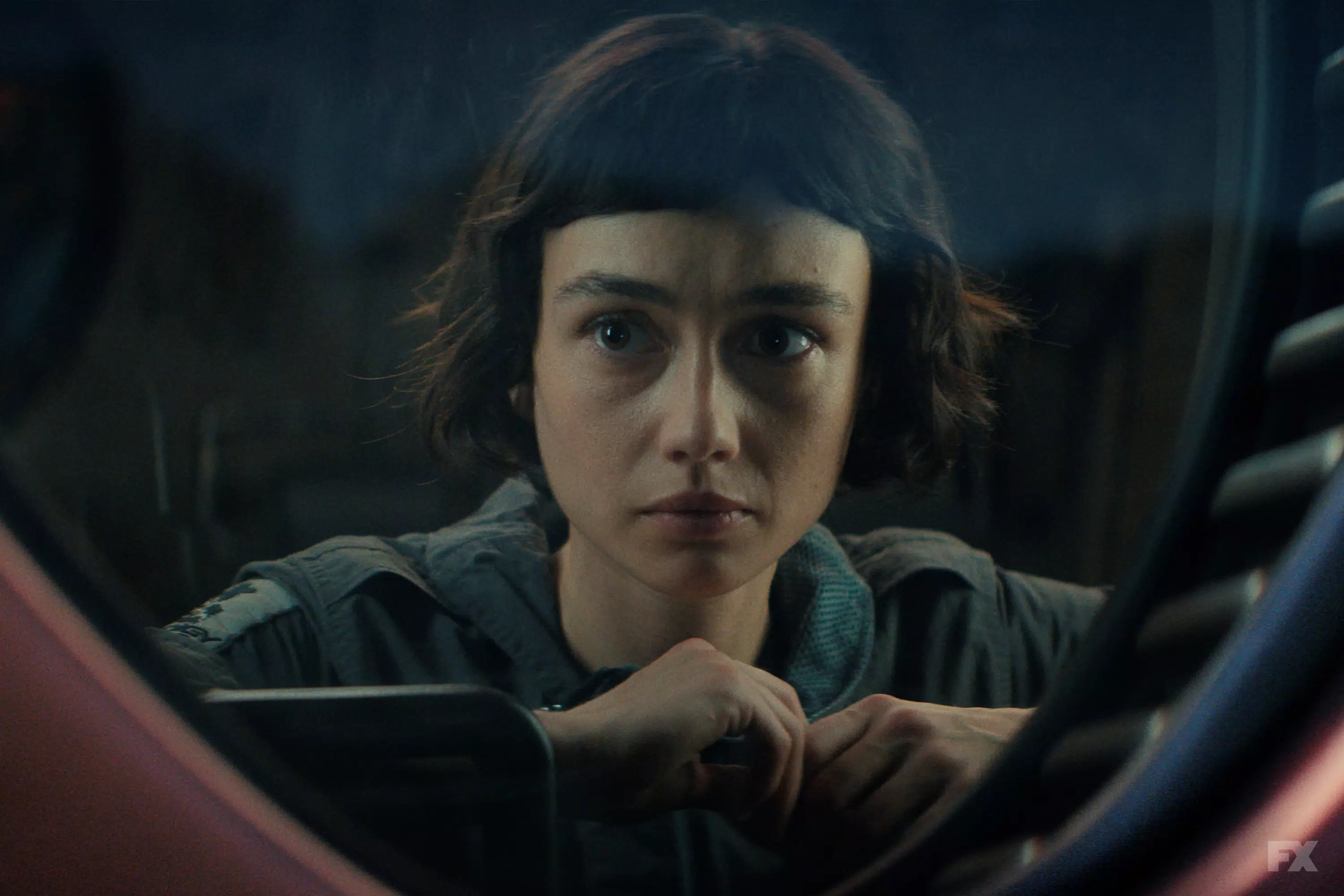
On a remote island called Neverland, run by Prodigy Corporation – one of five mega-corporations controlling the galaxy – a secret experiment is underway: uploading the consciousness of terminally ill or “defective” children into synthetic adult bodies, creating “hybrids” – super-strong, fast, and durable. The first success is a girl named Marcy, who renames herself Wendy (played with heartbreaking complexity by Sydney Chandler). It’s not a random choice: in the world of Alien: Earth, every child who becomes a hybrid adopts the name of a Peter Pan character. It’s the young trillionaire CEO of Prodigy, Boy Kavalier’s (Samuel Blenkin), favourite book. The hybrids are his “Lost Boys” – children who will never grow up, trapped in bodies they didn’t choose, moulded into tools for the corporate future.
The Peter Pan allegory is hauntingly effective. Just like the novel, Prodigy’s Neverland is a place where innocence and danger coexist. “In the old days at home, the Neverland had always begun to look a little dark and threatening by bedtime,” the novel reads. This Neverland and the one in Peter Pan can be ominous and menacing. Here, it’s a home but also a lab and a prison. We first meet Wendy and her mentor, Kirsh (Timothy Olyphant, unemotional and stoic), as they watch a scorpion "trapped under glass, menaced by giants.” That line sets the tone for the hybrid children who are observed, experimented on, and never free. It also mirrors the alien specimens in the series, which, like the children, are being contained, studied, and commodified. And just like in any Alien film, the monsters don’t stay contained for long. As J. M. Barrie writes in Peter Pan: “The roar of the beasts of prey was quite different now. And above all, you lost the certainty that you would win.”
Where previous entries in the Alien franchise focused on the invasion of the monstrous into human space – xenomorphs breaching the boundaries of ships, of bodies – Alien: Earth reverses the equation somewhat. The hybrids are the invasion: human minds inside new shells, designed not for survival, but for servitude. It’s here that the show’s queer and trans allegories (unintentional or not) come to light. The process of hybridization is referred to as “transitioning.” Like many trans experiences in the real world, especially with body dysmorphia, these children are forced to suppress their feelings, retrain their movements, and learn to act “normal” in bodies that don’t match their sense of self.
This is not a metaphor for metaphor’s sake. It’s baked into the story’s core. In one devastating scene, Nibs (Lily Newmark) looks at herself in a mirror and sees a fractured reflection – an adult shell with a child’s sorrow staring back. The show doesn't shy away from this dissonance. These are children denied the chance to develop, moulded into perfect tools for someone else’s dream. That dream belongs to Boy Kavalier, who believes he’s building the future of humanity. “If they don’t stay human, then what did we win?” asks Dame Sylvia (Essie Davis), a scientist caught between maternal guilt and professional duty. It’s a question that lingers like acid in the gut.
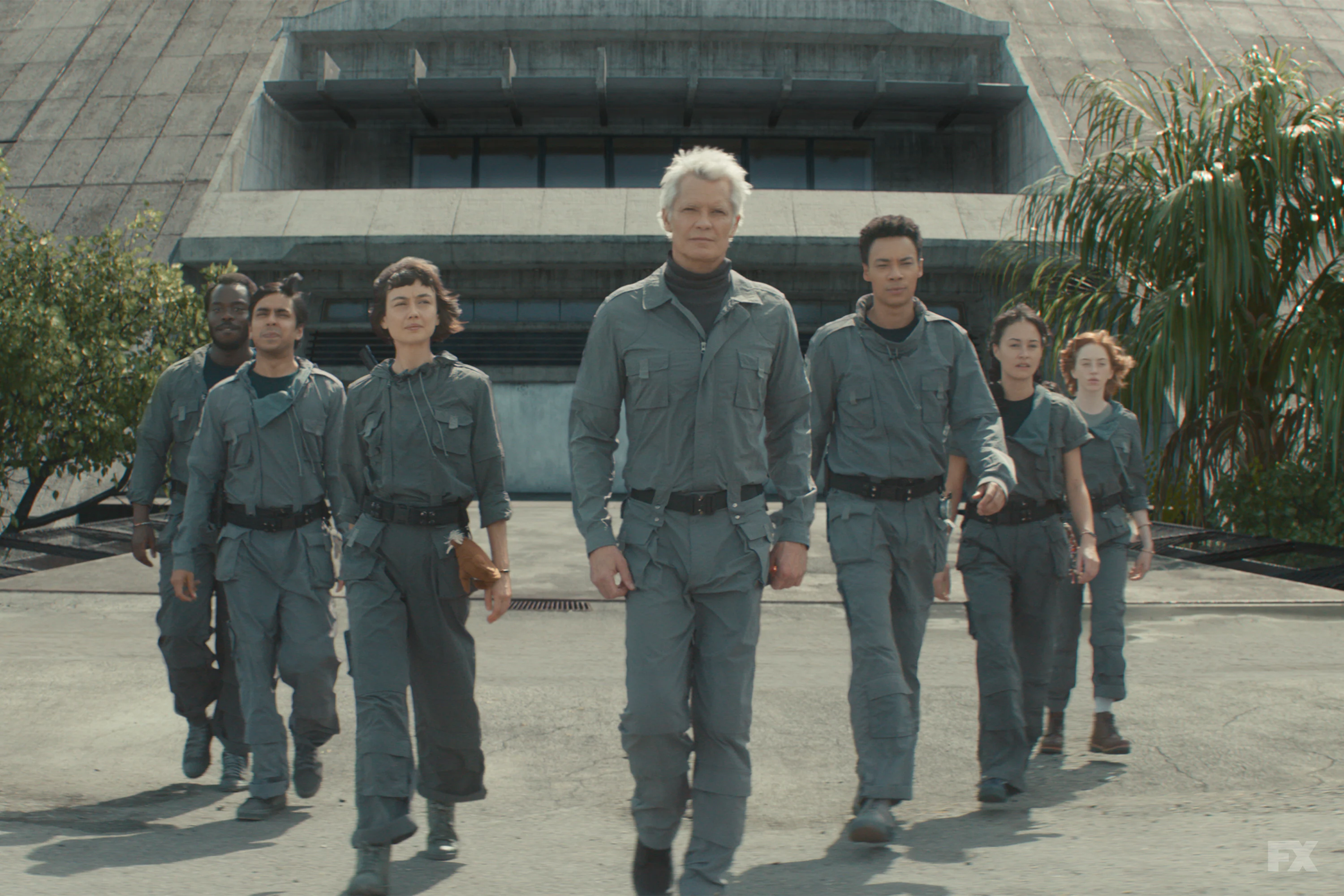
The hybrid children are both protagonists and victims. They're powerful, able to run, fight, and resist in ways real children never could, but they're also deeply lost. “If I’m not human,” Wendy asks, “what am I?” Her desire to reconnect with her brother Joe (Alex Lawther) becomes the emotional through-line of the series. Joe, an army man stationed in New Siam, a Prodigy city, believes Wendy is dead. He even attended her funeral. When the Maginot crashes into the city, like a harbinger of death from the sky, Joe and his team are sent to investigate. The show kicks into high gear as alien specimens escape containment. But the emotional stakes remain: Wendy watches him through surveillance, aching to protect him, still his sister even in a new form. This is where Alien: Earth merges its two storylines into a brutal, beautiful crescendo. As the alien creatures (not just xenomorphs, but new horrors as well) spread chaos, the hybrid children volunteer to help. Not because they’re ordered to, but because they choose to. Wendy’s mission to save Joe becomes a symbolic rejection of the systems that made her. It’s her saying: I still feel. I still love. I am still human.
The action set-pieces, especially Joe’s team entering the crashed Maginot, are stunningly tense. The cinematography plays with light and shadow brilliantly, hiding creatures in corners and teasing us with familiar imagery: facehuggers scurrying across the floor, eggs pulsating in silence, and the slow, spine-tingling hiss from the dark. There’s real carnage here; bodies torn to pieces, blood sprayed across walls. It’s primal. It reminds us, as Kirsh says, that we convinced ourselves we were no longer prey. But xenomorphs have no time for our illusions. In their world, we’re still meat.
There’s also the ever-present political tension between the mega-corps. The Maginot crashing into Prodigy’s territory sets off a storm between Weyland-Yutani and Prodigy. Who owns the ship? Who owns the specimens aboard? These questions feel terrifyingly timely. Just like in Aliens (1986), where corporate greed led to colonists being sacrificed for profit, Alien: Earth shows us that nothing has changed. Only now, corporations don’t just risk lives – they redesign them.
If you're familiar with the franchise, Alien: Earth rewards you. It riffs on the films with love and intelligence. The xenomorphs are just as terrifying as ever before. But if you’re new to Alien, the show still works. The horror is visceral. The world-building is rich (while exposition-heavy at first). The emotional arcs, especially the bond between Wendy and Joe, are affecting and gripping.
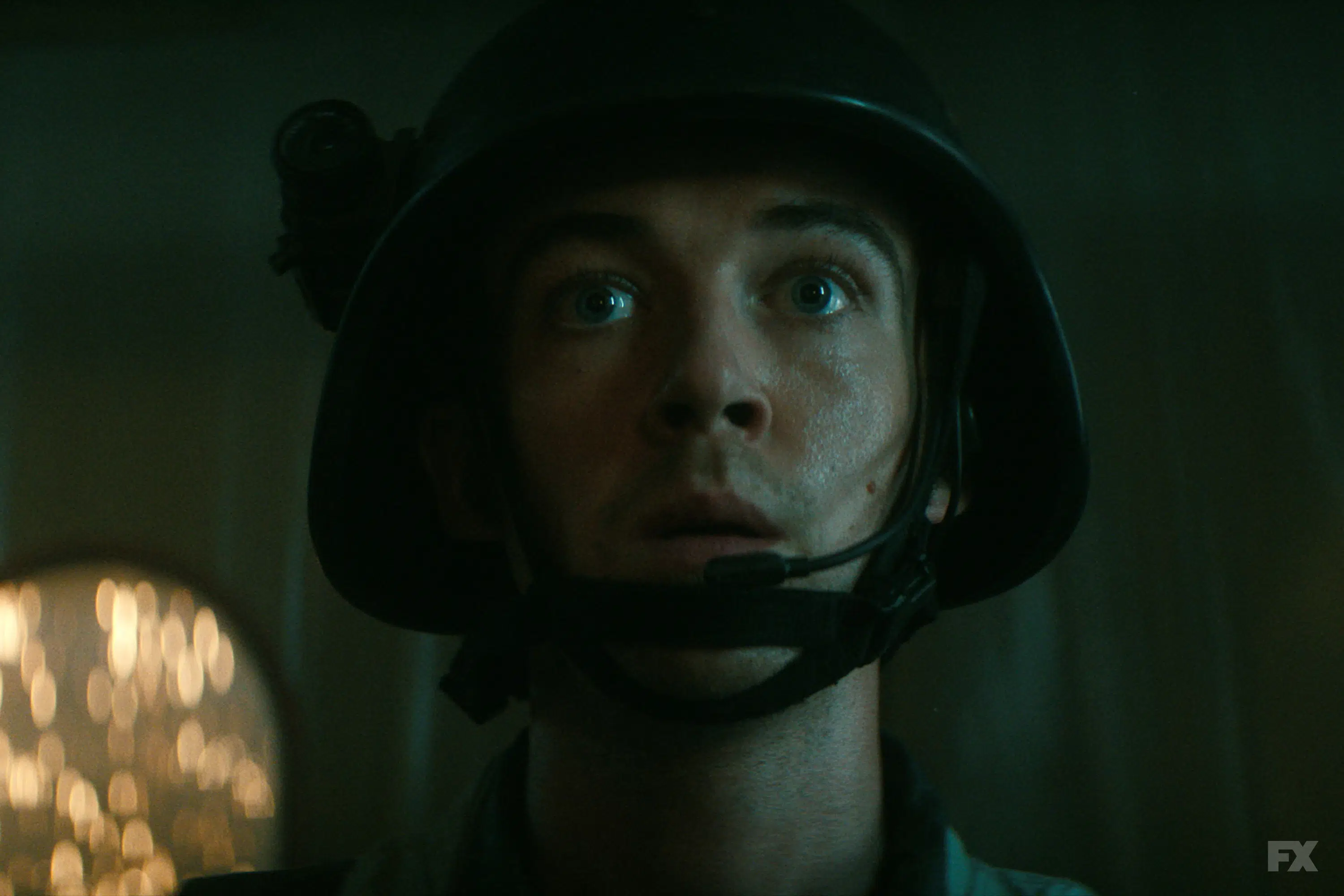
And it’s surprising how it feels very queer-coded. The hybrids’ journey is unmistakably trans in its metaphor: from dysphoria and alienation to reclamation and self-definition. It’s also a story about bodily autonomy; about how systems try to erase the “wrong” parts of you, and how your sense of self must fight to survive. Even the scientists begin to question what they’ve done. Sylvia and Arthur (David Rysdahl), her husband, become the show’s conscience, worried about what will happen when everything inevitably goes to hell. And it will.
As of episode six, we’re left with more questions than answers, but in the best way. Can the hybrids break free from Prodigy’s grip? Will Wendy destroy the system that made her, or become the next iteration of it? There’s a thrilling momentum now, one that promises revelations in the final stretch. Alien: Earth doesn’t just expand the franchise – it reframes it. Yes, the universe is cold and cruel. Yes, corporations will strip us down to our bones. But somewhere in the machinery, there’s still a pulse. Still love. Still identity. Still humanity. Even if it comes in the form of a synthetic body trapped in Neverland.
FX’s "Alien: Earth” premieres on August 12 at 8pm ET on FX and on Disney+ in Canada, with new episodes premiering every Tuesday.






Share your thoughts!
Be the first to start the conversation.