
Gal (Shirley Cruz), the protagonist in Anna Muylaert's new painful but heartwarming movie The Best Mother in the World (2025), is the mother of two young children: five year-old Benin (Benin Ayo), and nine year-old Rihanna (Rihanna Barbosa). At the start of the story, Gal is in an abusive relationship with Leandro (Seu Jorge), and she’s doing all she can to try to break free from him.
The story is centered around Gal's journey as a Black, marginalized and possibly neurodivergent woman as she pulls her heavy recycling cart across the immensity of São Paulo, Brazil, with her children onboard the cart. Her plan is to take them to her cousin’s home on the other side of the city, where Gal hopes she’ll be able to keep away from Leandro. It’s a harrowing and traumatizing journey for Gal, but she does her best to turn it into a fun adventure for her children.
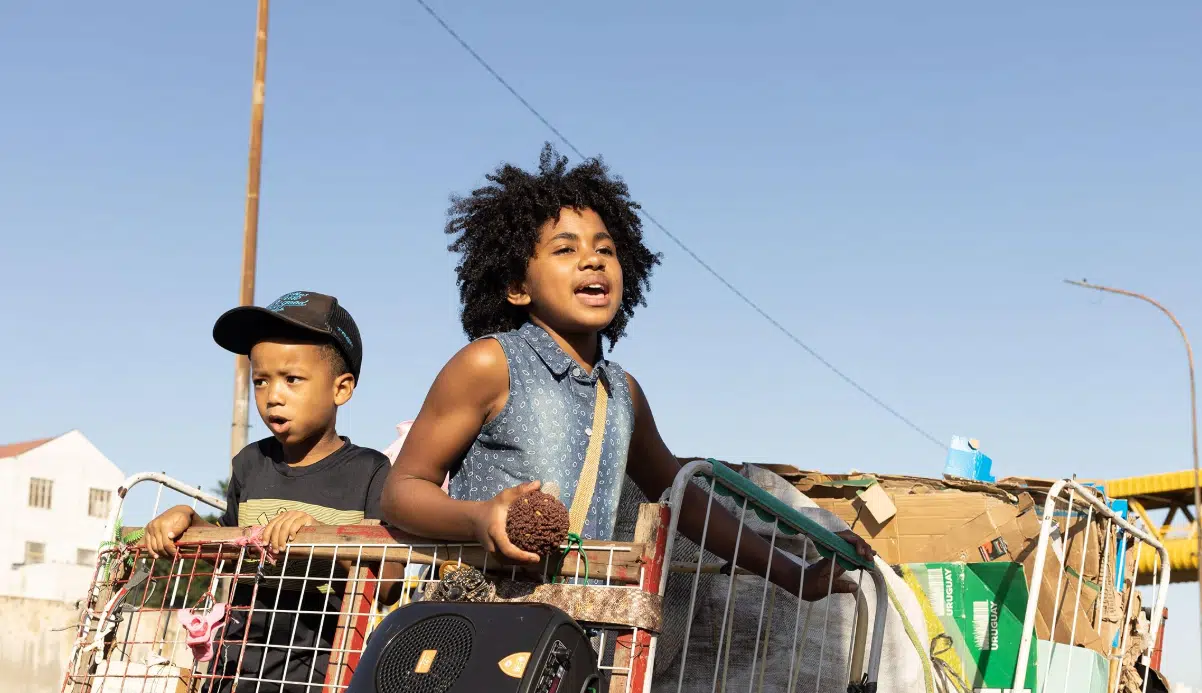
Rihanna
Benin is still young, so he still has a romanticized view about what’s going on. However, Rihanna is old enough to understand that the adventure her mother says they’re in isn’t exactly that. Although Rihanna isn’t able to find the exact words to express what’s going on, and she probably isn’t able to understand the range of feelings she’s experiencing, either, she knows her mom is trying really hard to run away from danger. For Rihanna, every night and day she spends on the streets with her mom and her brother represents something new and exciting, but that also comes with a lot of uncertainty and worries.
In the hands of a less seasoned writer, Rihanna's character could’ve also become a victim of Leandro and we might’ve even seen that onscreen. However, Muylaert knows that Rihanna carries a burden of her own, one that is an unfortunate consequence that many young children who find themselves in abusive homes suffer from: Rihanna feels the need to take care of her mother, while also trying to reaffirm Gal’s life choices.
At the beginning of the movie, when Gal arrives at Leandro’s apartment to take her children away, Rihanna is ready to leave the house and immediately jumps into action, collecting hers and Benin’s things from their rooms. Later on, well into their journey, after a few days of sleeping on the streets, Rihanna complains that she wants to go back home, which suggests that this is not the first time they had to get up and leave after one of Leandro’s violent outbursts. Rihanna knows that Leandro means danger. Earlier in the movie, when the three of them arrive at Gal’s recycling cooperative after a day of hard work collecting trash and recyclables, Rihanna sees Leandro waiting for them, and she’s quick to let her mom know they need to leave.
Rihanna’s tone as she talks with her mom and her brother might sound like she’s just another nine year-old girl who wants to feel like she’s older and wiser than she really is. However, Rihanna exhibits that kind of behavior not because she’s acting childish, but because she needs to sound like she’s older, more mature than her age in front of the people around her. She needs to be perceived as an equal by the adults around her because she’s unintentionally given more responsibility than she’s able to handle at her age. Once Rihanna – along with Gal and Benin – arrives at her aunt’s house, we get to see a brief glimpse of Rihanna acting as the child she is, but that quickly changes once Leandro is back in the picture.
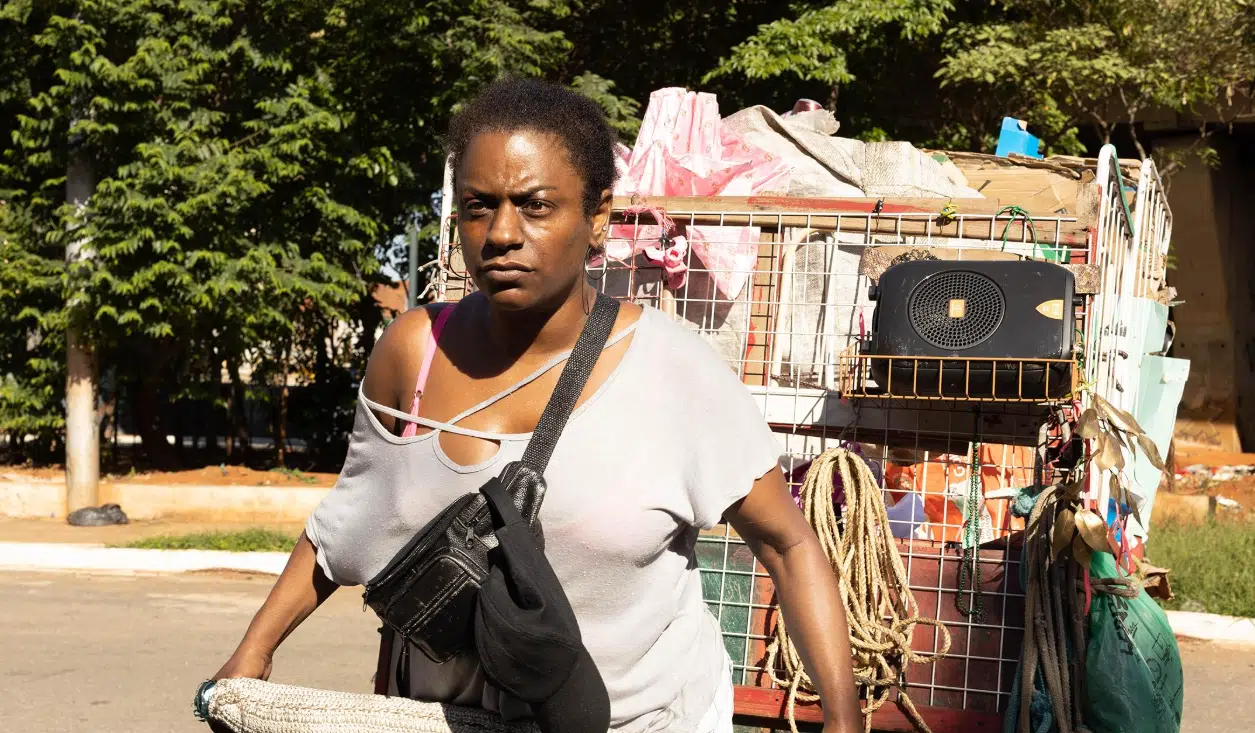
Safe Spaces vs Family
Although Gal plans to take her children to her cousin’s house, which means that home is presented as a safe place earlier in the movie, it’s clear that Gal’s family history plays a part in the context around Gal that want to force her to go back to a violent cycle of female subjugation, under the pretense that Gal needs a stable place to raise children. Once Leandro shows up with presents and money, and even a wedding proposal, the meaning of that home changes from safe to unsafe, and it starts to represent a threat against Gal and her children. By this point, Gal is under the impression she has no other options but to marry Leandro, so she can have the so called stability that every woman supposedly needs – and that must do so for her children.
Even in the context beyond marginalized women, which intersects with Gal, Black and poor women are disproportionately affected by this misogynistic system that forces women into an uncertain, unsafe and dehumanizing place where they’re meant to exist only for the sake of their children. Which also means that their children are kept under the same violent nuclear family environment. It’s a failed family concept that supports violent men, marginalizes women, while also feeding into a violent cycle where young women, like Rihanna, will eventually become part of that reality in the future.
Early in their journey through São Paulo, Gal meets Munda, a women in a wheelchair who works as a street vendor selling soccer team flags. When Munda comes into the picture, if you’re familiar with the squatting occupations in São Paulo, then you know that Gal will probably not only find a safe place, but also a community – in other words, a new and stable extended family. However, by then, Gal’s knowledge about the occupations is limited, so she’s under the impressions these communities are places for criminals, and not for her and her children.
Occupations are community-organized buildings that are occupied by unhoused people. In São Paulo, these buildings are usually located in the downtown area. Before the buildings are occupied by unhoused people’s organizations, they’re are often kept empty either by the government or by private investors who own them – which is an illegal way to bring up the property market value while also pushing workers away from important central locations in the city. When unhoused people organize themselves to occupy these empty buildings, that represents an act of defiance against a system that wants to further marginalize a large part of the population in São Paulo – those who aren’t able to afford the cost to live in the city. These organizations are often run by Black women and/or queer people, and through these, those who are part of it manage to find the help to get back on their feet while also establishing new social connections.
By the end of the movie, Munda and the occupation come to represent that safe space that Gal and her children so desperately needed. The occupation becomes the place where their family of three will have a chance to start over again, where they’ll manage to work towards building a better, more stable future. The Best Mother in the World shows that, sometimes, the word family doesn’t mean just blood, but also community.
The Best Mom
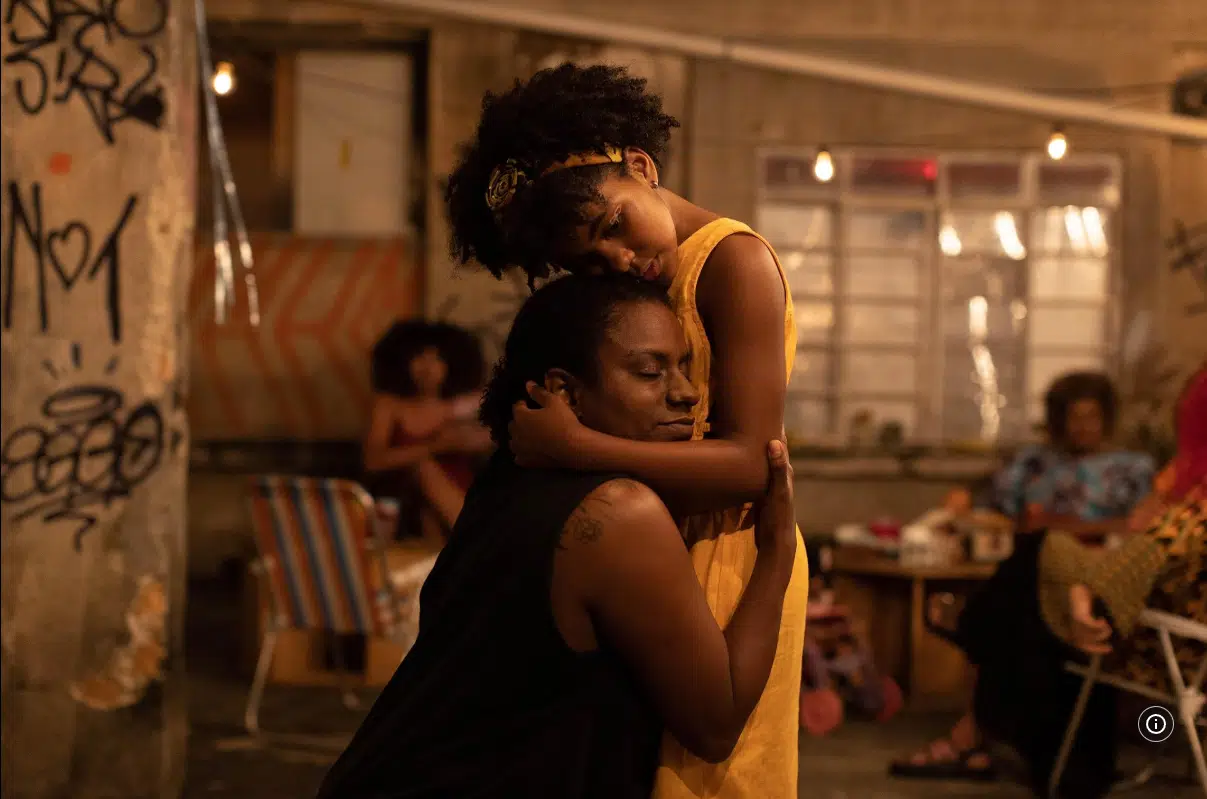
Gal loves Leandro in her own way. As it’s often the case, victims of abuse will often establish a co-dependent relationship with their abusers, offering excuses and taking some of the blame for themselves. And, as is the case with Gal, these women will only take a definite measure of what’s going on with them once they feel their children are also in harm’s way. Although stories like these are often told as heroic tales, shown through shiny and also dehumanizing lenses that frame these characters as selflessness mothers, The Best Mother in The World makes sure to show that Gal has a lot of internal conflict about making the decision to leave Leandro. Even as she finally blocks his number on her cellphone (a moment that erupted a wave of applause and cheers in the theater, as we all sighed in relief), she’s still struggling about it. Gal’s decision to end her relationship with Leandro happens not because of Rihanna, but for Rihanna.
Near the end of the film, once Leandro shows up again, Rihanna runs away with Benin, and Gal has to search for them. After Gal finds them, she’s in despair because she doesn’t know how to protect Rihanna from Leandro’s (now obvious to her) predatory behavior, while also not being able to keep her children fed and safe. Rihanna assumes the responsibility of reassuring her mom that she’s smart and capable, which means that, once again, Rihanna is pushed to a place where she has to act as a caregiver towards her own mother. The last scene in the movie is directly connected to this one.
By the end of the story, Rihanna is finally free to play with other kids in the occupation, she’s finally free from her worries. She rides a scooter around inside the occupation, she laughs, and she’s feeling safe enough to voice her fears. That’s when she tells her mom that Gal is the best mother in the world, and not as a way to give Gal some motivation or to keep her away from the prior violent and stagnant conditions she was stuck in – Rihanna says this as an honest display of affection towards her mom.
Some people might think that The Best Mother in The World is a bit too unrealistic to capture the suffering of women forced to be in violent relationships, while also living in larger social reality that’s violent, too. For instance, some viewers might wonder, how can a man in a white horse show up to help Gal exactly when she needed it the most? Maybe some would even say this is a ridiculous narrative decision. But the truth is, The Best Mother in the World is all about going against a pre-written destiny that has violence in its lines. It’s about portraying a brighter future for Gal while also acknowledging that change can only come with help from the people around her. Even if, for some viewers, the way that Gal manages to get help from the people around her might seem, in terms of the story structure, a bit too obvious or even unreal, deep down the truth is, sometimes when people show up to help us when we needed it the most, that also feels like a real life magical intervention.
I watched The Best Mother in the World in this years Vancouver Latin American Film Festival (VLAFF). It was a joy to share the theatre experience with so many other Latin-Americans while celebrating our culture and, our history and our stories.





Share your thoughts!
Be the first to start the conversation.