
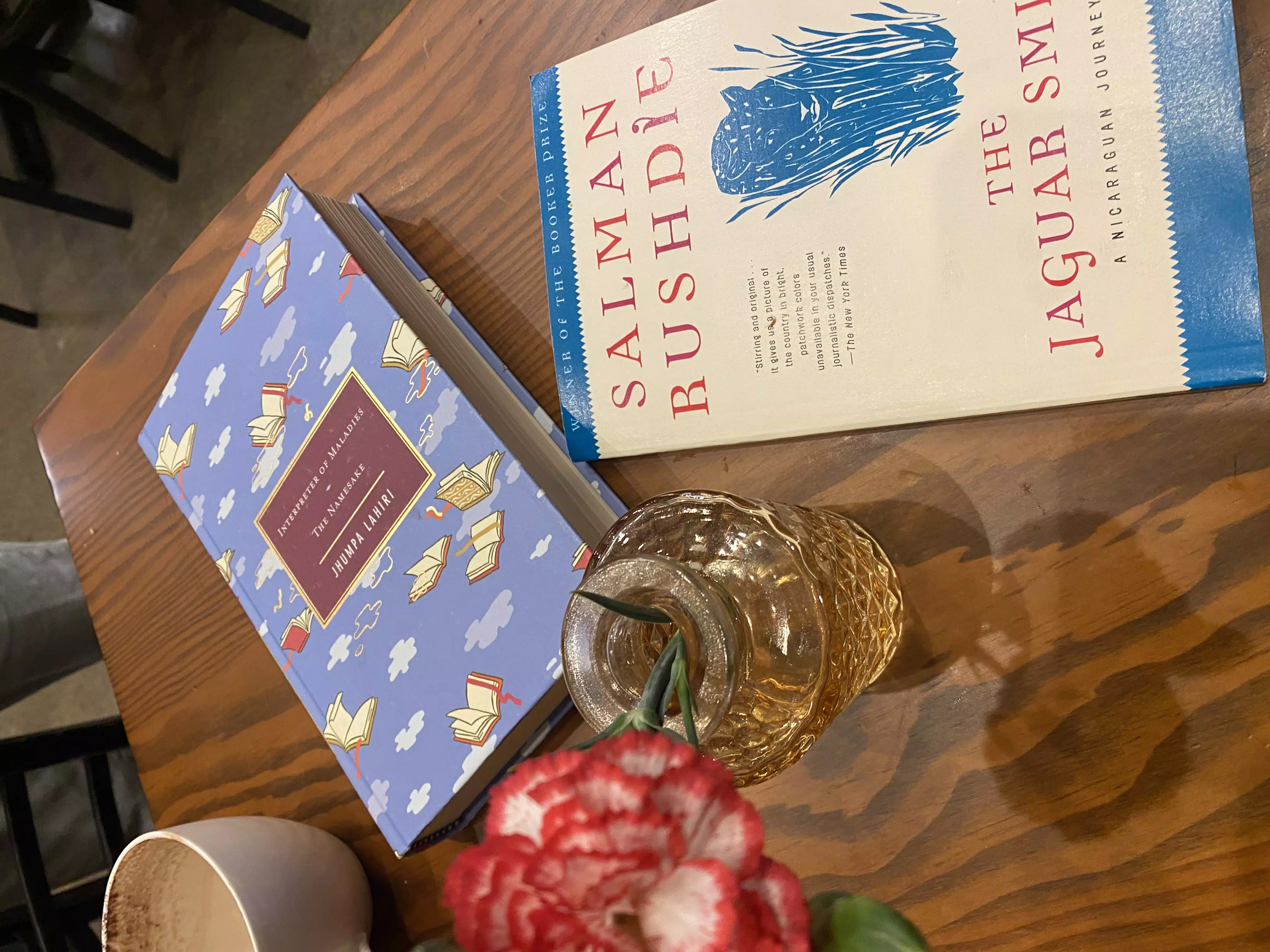
“The lioness has rejoined her cub, and all is right in the jungle” - final title card of movie Kill Bill: Vol. 2
I
A SUDDEN GUST OF THE WIND, casting a miasma of homesickness settled over Tina. That Wednesday morning, the breeze moved westwards across the West End. Something was in the air, and perhaps, she was the vessel emanating an off-putting sensation, she thought. Early dawn had now replaced the scorching vespertine of the summer season. Tina, sensitive to cold temperatures, felt the threat of aching bones brought forth by dropping temperatures, looming over the days to come.
The seats at the kitchen table had reduced from a quartet to three when Axel, her eldest, flew to Montreal to study French language and begin his bachelor’s degree on architecture, the previous summer. He communicated to Tina his desire to move back to the Pacific Northwest, perhaps even transfer to UBC and enroll into an arts program instead.
While cooking breakfast, Tina cracked eggs, tossing the eggshells on the organic bin on top of the concrete kitchen counter. A sudden wave of memories overwhelmed her. As she chopped up onions to fry alongside the chorizo and eggs, she relived mornings in Managua. On those days, she cooked her morning gallopinto and served it with chorizo. She would wait until the serenate of street vendors voicing out their goods throughout the barrios and colonias. Some walked their selling trajectory, relying on rickshaws only when necessary, or to head home after a long day of voicing out their delicacies under the scorching sun. A few others, those selling fresh vegetables and fruits, mobilized through horse-drawn carts. They roomed their carts with loudspeakers, from dust roads to the fancy cobblestoned streets.
Tina especially remembered Marina, a five-foot teenager from Tipitapa who sold pozol dough and buñuelos to fund her college tuition. On the last day she saw her, Tina invited her in for tea and sweets.
“Morena, I am leaving,” said she, serving tea from the hot pot and a blueberry scone on an earthenware plate.
“How do you mean? Will you go back to the Atlantic Coast?” asked Marina.
“No, Mari. Gamaliel and I will leave for Canada. We will take the kids—Axel for high school and Xenia for elementary. They will learn English there.”
Marina understood. “Yes, Doña Tina. I understand.” She hugged Tina. “Please let me see the children once again.”
Tina gave her some belongings: a pair of dresses ordered from Sears’ catalog through customs, and paperbacks of Rubén Darío — Azul, Selected Poems, Selected Writings.
After breakfast Tina went up to the garage. She started up the engine of her car, drove two miles south Marine Drive to the imported goods store. Tina wanted to cook carne asada for dinner, given that Gamaliel and Xenia would be back that night from camping at Golden Ears Lake; a gift Gamaliel conceded to Xenia, partly as her elementary school graduation gift, and because she insisted for months for a camping trip. On her way, she thought to pass by the bookstore along the Main Street. Since her arrival in Vancouver, eight fall seasons before, she dedicated to reading fiction solely in English. She devoured page after page of Marguerite de Navarre’s Heptaméron, Margaret Atwood’s Handmaid’s Tale. Now at her forty-three years of age, Tina considered herself mature enough to venture out in contemporary fiction. Dipping in her taste in new waters, she began reading Mona Awad’s Bunny in between Skytrain commutes. She had not read any novels in a few months. Since Christmas last year, Tina had only read a hardcover of Jhumpa Lahiri’s Roman Stories, given to her by Miguel, the accountant, as a secret Santa gift at her company’s Christmas dinner, wherein Tina cooked a batch of boiled cassava and fried pork for the potluck.
Meanwhile, Tina felt the need to read in Spanish. Upon realizing she had not read anything in her mother-tongue, a pang of nostalgia came over her. Her eyes, driven by desire of the spirit, hungered for Spanish. She felt joy on her soul, not having to worry about prices of books at this stage of her life. Upon her arrival, hers and Gamaliel’s earnings as demolition workers barely afforded them a flat near Oakridge station. With her improving English skills and a few courses of Ancient Rhetoric at the nearby college, Tina at last accepted a position as an executive recruiter at a unionised demolition company. Moreover, Gamaliel left the demolition company and began working as general manager of a sports retail store in the downtown area. Slowly, they began constructing a life in Vancouver, a few leagues away from being disappeared and swallowed up by earth.
II
WALKING THE CART ALONGSIDE the self-defense items, he saw things to defend himself with. If only he had these tools when he was threatened. Rather than choosing to fight, he let himself at his amygdala’s disposal. Gamaliel remembered the genesis of his present self, when, during a lunch break, he found a note slipped between the metal lines of his locker: “sapo hijodeputa, stop talking about the government. You will be disappeared.” It was signed with pink lipstick, “Attn: your beloved general.”
Was this child’s play? He thought himself pranked by one of his colleagues. “Maybe it was Daniel, mad that I refused to give him my Sukia stones.” He remembered jokingly asking what a chele’s need for an Indigenous ornament was. He reckoned possible jealousy from Daniel’s end, for it was him in lieu of Daniel who had gotten the jackpot task of compiling a short story collection of contemporary Central American fiction and translating it to English. This was the opportunity of his lifetime to visit his country’s counterparts: El Salvador, Costa Rica, Guatemala, Panama, he could even adventure into Belize, mysterious Mayan land to him. Gamaliel could witness Honduras’ post-Contra state of affairs first hand. Maybe he would even meet the next Nobel Prize laurate from Central America. How long had it been since Miguel Angel Asturias had received it?
Gamaliel crumpled the paper note and tossed it into the garbage. He brushed it off as mere dog's bark, no bite. Off he went home.
***
THE NEXT DAY GAMALIEL FOUND AN ADDITIONAL NOTE. This time, it was on his doorstep, inside the white paper envelope —placed neatly on top of the home’s porch— lay a white index card. Written in black sharpie, in a rather hurried penmanship, it read: “At a moment’s notice you will be disappeared. Stop inquiring about the transatlantic plan.”
Hitherto, he hadn’t felt true fear. Not since Tina had gotten her domingo siete with Axel barely a zygote. They had both thought a life of hardships would soon await them.
Immediately after realizing this a serious threat, probably from someone in cahoots with the regime, Gamaliel began whispering prayers. In the realm of thought, he offered prayers to Virgin Mary, invoked la Virgen de Guadalupe and even uttered prayers of promises to the patron Saint Dominic of Guzmán. Internally, at his utmost conscious, lost in prayers, Gamaliel offered yearly devotions of manhandling Saint Dominic’s altar on his shoulders during patriotic holidays. He promised Virgin Mary a purísima every December 7th, promised Virgin de Guadalupe seven Our Father’s and a lifetime of sobriety.
No longer would he frequent the cantinas,moving his drunken body to the Caribbean rhythm of the jukebox: Watanegui consup / Yupi pa' ti, yupi pa' mí. His neighbours could expect him holding a copy of the Bible rather than a cold Toña, or a Corona beer if the weather was too hot, on his hand.
Gamaliel remembered he had not told anyone about his investigation into the transatlantic canal. He had only hurled a theory to his wife. From the zaguán, he hurled his interest of heading to the Atlantic coast and write a journalistic report on the Miskito disappearances. Words on the street testified to the disappearances of Miskitos and other riverine communities speaking out about arson in their lands. Gamaliel speculated about a possible transoceanic canal.
“This country is the waist of the American continent. The middlemost, and skinniest in circumference.”
“Wait love. I am with Marina and cannot hear you,” Tina shouted back, drowning out his voice. They canceled out each other’s voice.
Gamaliel continued: “It is only logical to assume possible plans given the circumstances in the country. They may even take away elderly pensions to fund this project. It would do competition with the Panama Canal.”
Tina continued her conversation with Marina: “let him talk. We continue with our daily catch up of novelas.”
Marina only replied, “It is stupendous how sharp some people’s hearing can be Doña Tina.”
III
XENIA FELT ANXIOUS ABOUT HIGH SCHOOL. Before her camping trip, she asked Gamaliel why her video chats with Axel often went unanswered.
“Hija mía,” he began, carrying the shopping cart along the camping aisle. They went on an outing to purchase non-negotiable items for camping: bear spray, food containers, and fire-starter kits. “Your brother will come back soon. But for now, let’s worry about our trip together!”
Truth be told, Xenia felt under the weather lately. She caught herself ruminating how her life would have been had they never fled to the Global North. She imagined herself running down the cobblestoned streets of Managua. Had they never deviated, she could visit La Hacienda de San Jacinto, located on the opposite coast of Lake Xolotlán. What vocations could she have inherited, she wondered to herself. Pottery? Xenia could not center her ceramics piece on the wheel. The art of storytelling? Both her parents had vocations with literature, her brother too. But what did she have in herself?
Xenia spent more time analyzing her facial features on the house’s bathroom mirror. Barefoot on the wet tiles, she stood upright there looking for traces of beauty. She held her hands to her breasts, feeling a knot on her stomach at the absence of curvature on her chest. It was taking too long for her.
She wanted to blossom quickly, feeling beautiful like the contrast of yellow at the centre of a plumeria flower, or the beauty that rhododendrons grouped in a bush emanated. She had seen Bianca Jagger in an episode of BBC’s After Dark, and since then, found ways of resembling her beauty. Seeing her as one of the few successful Nicaraguan actresses inspired her interests for acting and filmmaking. Xenia saw potential in herself.
If she did not turn out to be a beautiful woman, she thought, she could write her own stories. “I will bring stories of my own to be known” she made that promise to herself.
Tina saw her daughter’s interest in filmmaking deepen. Though she prohibited her any R-rated films, she encouraged Xenia to explore documentaries.
“R rated films are off-limit, documentaries of any kind, are not however” Tina said to her daughter. “Explore away; it is an underrated medium.”
Xenia felt joy at her mom’s interest in her future, asking her what her aspirations in life were, to which she would happily, always reply “filmmaking and storytelling.” Tina took her daughter to the film shop and allowed her one camera and whatever supply she should need to experiment and make a film about her upcoming camping trip. Furthermore, she signed up Xenia for a summer-long filmmaking workshop at a local bootcamp, ran by volunteers completing their MFA theses.
Xenia envisioned her mother Tina’s upbringing in Managua. She replayed over the few cassettes her mother brought to this side of the world. On audio, Tina spoke to the tape recorder stating her location and reciting poetry out loud. On two cassettes were evidence that her mother was once her age, and she lived to the fullest.
One could speculate Tina to be recording at a bar, for there was background music that interrupted her conversations on literature with different strangers. Xenia felt tenderness in her breasts, hearing her mom, and imagining Tina’s younger self just a few years ago, before Axel and she granted her with the title of Mother.
Only once had Tina made Xenia upset. Tina had forbidden Tina her choice of dress for her graduation party.
“You are only graduating seventh grade, young miss” Tina scolded.
“No fair,” Xenia protested. “On Tia Ana’s quinceañera party photos you were only about two years my senior. You wore mini skirts on that photo.”
Tina slapped her across the face, and shortly after realizing her violent act, she apologized. She asked Tina for forgiveness, and in turn showed her a never-before seen photograph of Xenia cradled in her mother’s arm, while she read the Popol Vuh on a hammock tied to two different flame trees perfectly aligned meters a part, without uprooting the other, and no nutrient competition owing to fertile land.
IV
AXEL READ A REPORT stating that pines acidify the soil, subsequently burning the root of other seedlings. He sat reading an article on methods of marigold planting in ancient Mesoamerican civilizations, as martyrs for milpas and other vegetation. As he navigated the webpage, a notification on Axel’s right side of the screen popped up. “FROM: UBC, We wish to congratulate you on….” He felt his heart go numb.
Lately, Axel restricted himself to reading only non-fiction and on his laptop only. Reading fiction only exacerbated his mysterious symptoms. It began with dreams. The genesis of those nightmares gave forth to a series of hallucinations. An ominous dream woke him up in sweats, at 10:10am, an hour past his lecture. He materialized in aerial vision, perhaps through the eyes of a tropicbird on a caravel.
Though he had no autonomy over his thinking, he recognized this sailing ship as La Pinta. They were sailing, to their own greediness, far away from Columbus’ own. It was a dream of unheimlich nature, for Axel experienced what he considered a déjà vu through unconsciousness, in the realm of sleep. These dreams escalated to chronicles of birds: another dream narrated through aerial sensation – Axel experienced it as body lightness, a free-floating type of astral projection – saw his plane lifting off the tarmac and metamorphosed into a bird fleeing to the Pacific Northwest. At a stop, maybe some way along the northern parts of Guatemala, the bird was shot with a slingshot by a passerby, immediately turning Axel into himself on top of a moving train. It was as though the flight was destined to happen.
History began itself breaking out of one of his mother’s cassettes and extending itself through the black cartridge. He continued with these dreams, time reliving itself through arbitrary snapshots of the cartridges, each day different. On a differing day, Axel dreamed of Hernán Cortés arriving at the Yucatan peninsula. The next night, he dreamed of being up in the mountains, weapons in hand, his crewmates and him camouflaging themselves in the jungle like chameleons on a new environment. As the beginning of his previous fall semester branched itself through reality, Axel’s dreams manifested entirely through abstract fragments. On another instance, he woke up feeling a pampered wetness on his sheets. He had dreamed of a nahual monkey witch stalking him. The final straw was not a dream, but a mere delusion. As he studied for final exams, homesickness for two different places struck simultaneously, like a lightning striking twice on the same place. Then, he heard a deep voice, whispering from far away.
“I am here!” it said.
When Axel became aware, he turned his head right and left, finding nothing and subsequently dismissing it as phantasmal hearing, the voice revealed itself louder.
“Now, I am far away!”
Hitherto this occurrence, Axel was quick to summon Cartesian doubt, and other tools he acquired from years not only through mere study, but that reckoned with experience first in a language, and then in another. With embers of his Protestant faith, he thought himself —as illogic a conclusion it is— cursed. “I am Ruben,” it declared.
“Dario?”
“Yes. I have come to tell you: Be the homeland too small, one dreams it big.”
Following this episode, Axel visited the student’s health centre.
When the intaker asked if he consumed any substances, he replied “only cannabis. Those shops are everywhere like cactus on desert” The intaker referred him to Dr. Garcia, who suggested Axel visit his country for vacation.
“I cannot” declared Axel, his voice sharp with vexation.
“Why not?” Dr. Garcia pressed further on, noting down on the prescription path, and automatically talking on a low tone to himself as he scribbled, “patient seems to be suffering perceptual disturbances, rx. Risperdal.”
“We are exiled and cannot go back.”
“Why?” asked Dr. Garcia once again.
Axel then asked him for the prescription note, lifted his legs from the cushioned seat and left.
“Thank you. Have a nice day.
V
THE FOUR OF THEM SAT AT THE TABLE, each on a different cardinal point. Axel sat on the seat west to their kitchen. Earlier that day, his flight arrived at the airport. Xenia frets over turning fifteen the upcoming year. Though at a different level institution, she thinks to herself: everything is alright. Tina and Gamaliel sit in the northern and southern seats, respectively.
Spasms of longing, brought forth by the wind entering through the open window, seized them all. Tina sheds a tear, of happiness for their reunion. She also sheds a river of wistfulness, for they are bound, in a foreign land.
Their sole hope: entrance through dual citizenship revoked through diplomatic means. Albeit, they could not have that exact dinner on that exact moment in their homeland, on the other side of the world. Yet, on the northern hemipshere of the world, they were a quartet once more: four flame trees, misaligned but symbiotic, their branches trembling in the same wind ◈




Share your thoughts!
Be the first to start the conversation.