
In a brief reprieve from the chaos of VIFF, a calm washed over the office as we welcomed filmmaker Brian Daniel Johnson and his producing (and life) partner Dide Sile Bilgin to talk about their film, A Welcome Distraction. It's a classic Vancouver meet-and-greet, shaking hands just to say "Sorry, my hands are cold." Outside, the rain has slowed but it's still as grey as ever, at least the fall-coloured leaves add some hue. My co-worker Ishika and I were thrilled to chat with them, excited that someone would finally capture Vancouver the way it actually feels.
A Welcome Distraction follows Ernest (Simon Farrell) as he drifts through Vancouver, navigating heartbreak, grief, and isolation, only to stumble across a possible solution to all his problems: a cult. Framing our conversation with Johnson around the social culture of the city felt natural, since Vancouver itself acts as a character in the film. Rain-soaked streets, Arc'teryx beanies, and seasonal depression are all essentials in Ernest's world.
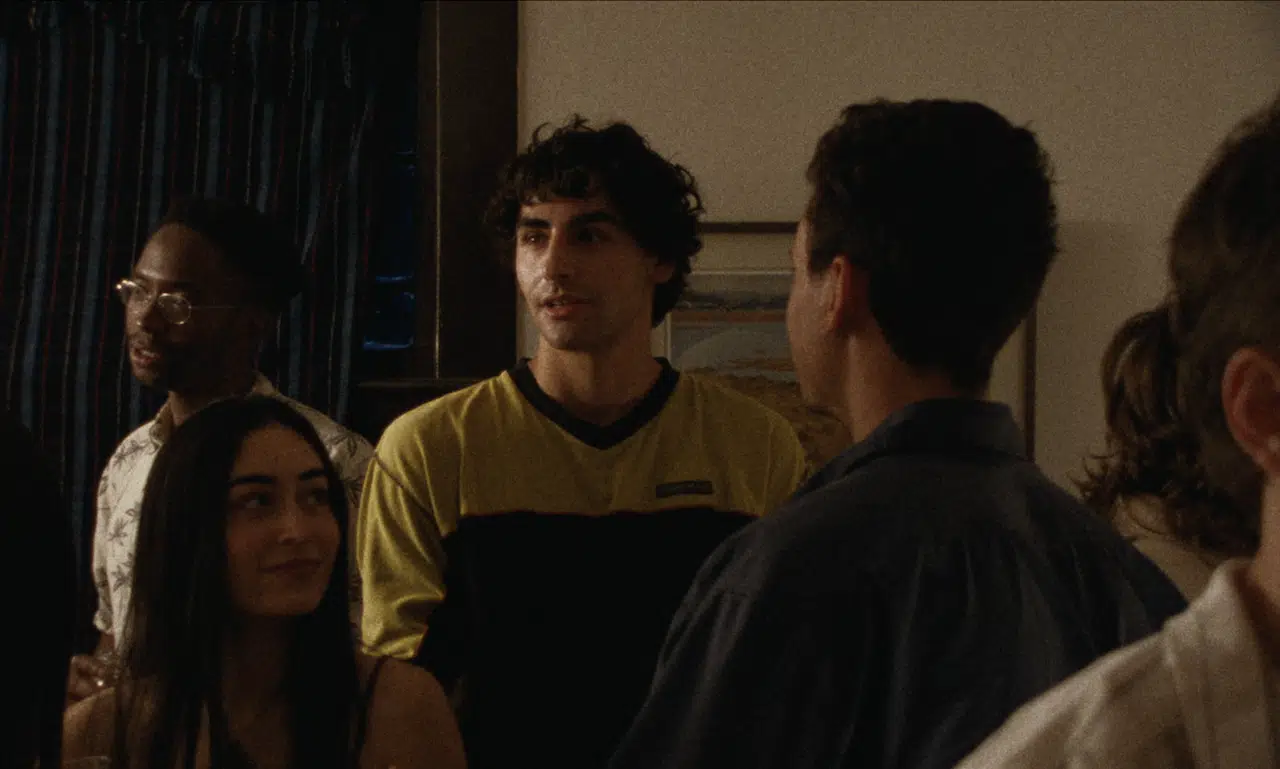
What’s surprising, though, is that A Welcome Distraction might be one of the most unapologetically Vancouver films in years (or ever?)—and Johnson isn’t even from here. He laughs when I bring that up, admitting he’s originally from Washington State. So why make such a Vancouver movie?
"I just found it an amazing city. There's so many amazing stories to tell here, and all the characters in this movie are, to me, Vancouver characters. But there's also weird condescending sentiments that there's no culture in Vancouver, but it's just not true."
Johnson moved here from Tacoma when he was 18, so he's spent his entire adulthood in Vancouver. I was born and raised here, but I often wonder if the experiences of these transplant Vancouverites are different from my own. Can they see the city more clearly than someone who grew up here and is blind to all these nuances?
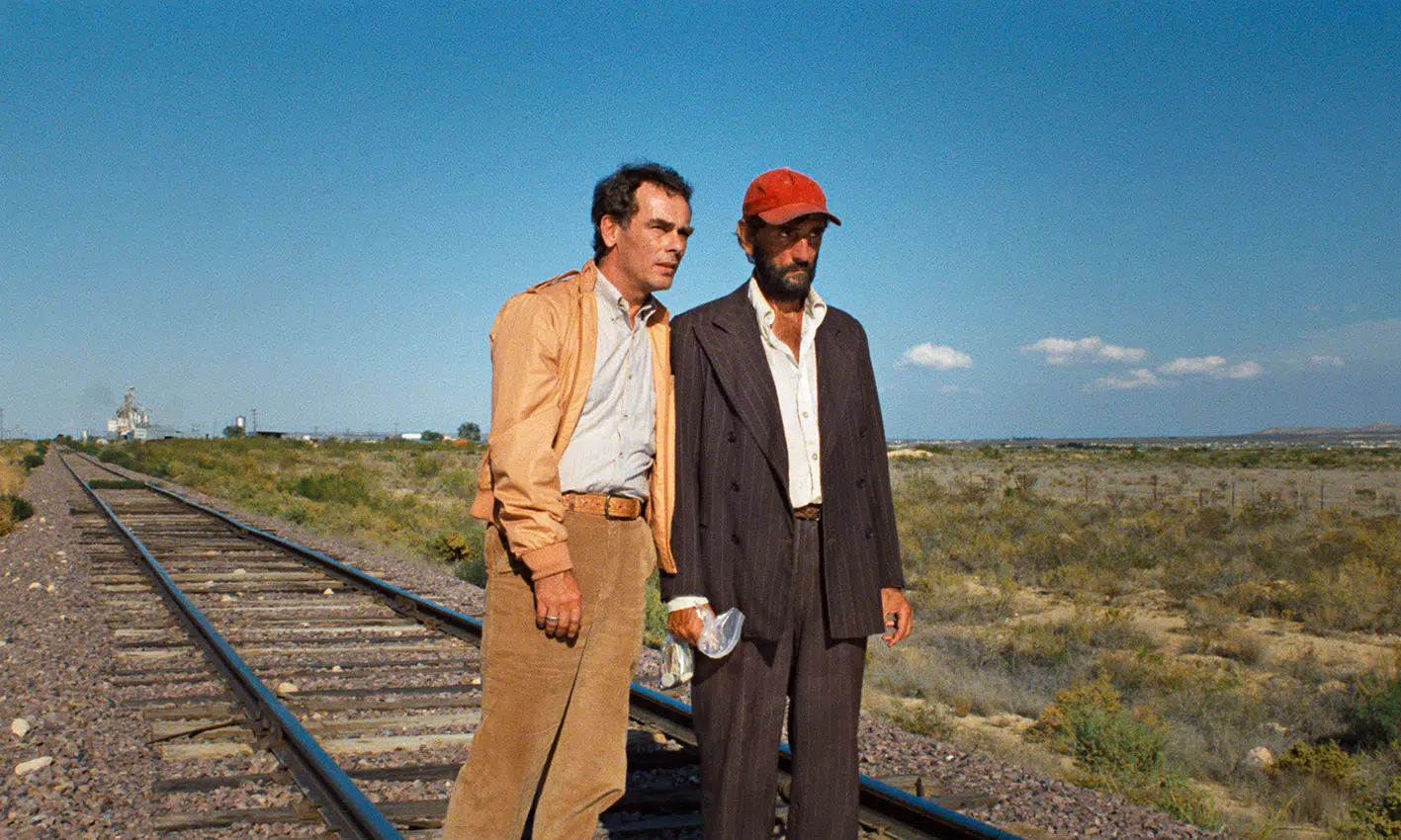
"I do, I think an outsider's perspective is valuable for those things. One of my favourite pieces of American cinema as in it capturing the Americana is Paris, Texas. That's directed by a German guy, starring a German actress. So I think being able to step outside a little bit does help. Having a little bit of a removed perspective, that's really what being a director's all about is having a bit of a removal and seeing the bigger picture."
Johnson also mentioned how his closest friends and collaborators are from here, so he has a direct line to the local haunts. There'll be no Gastown Steam Clock in the film, suffice it to say.
Something the film manages to do so well is balance the existential incongruity that seems to define Vancouver. It’s a city built on contradictions—a postcard paradise where everyone’s perpetually indoors. There's a line in the trailer where Mallory (Madison Isolina) says to Ernest, "I love it here. I don't know why anyone would want to live anywhere else in the world." That's rich coming from someone who probably loves hiking and snowboarding. And despite Johnson being able to hold both truths in the film, he doesn't pretend to know the answers.
"It's this weird mutual agreement that nobody actually wants to agree on, this assumption that you're good in your social circle, I'm good in my social circle. We don't need to be out making friends. It's rainy, we stay inside, and yet, we also say it's the most beautiful place in the world. You can go to the mountains in 20 minutes, you have this great downtown, you have great culture, you have great music, you have great everything. Everything's right there, so what's missing? I still don't know, but I think that I at least represented this confusing duality."
It's a fair question, and one that's plagued us for decades. I'm not sure if anyone, filmmaker or sociology scholar, will be able to crack that case. What Johnson has done, though, is take that very conundrum and tell a story with it. The character of Ernest embodies a kind of waywardness that, for some unknowable reason, seems to thrive in the Pacific Northwest—a lost soul both comforted and consumed by isolation. I think many people in the PNW, myself included, have longed for an easy method, a cure-all to that detachment. It’s the perfect state of mind for someone to fall for a cult of personality, or, you know, an actual cult.
“This wellness group ends up being the crux of the movie. They offer a distraction. They offer a way out. And if you have this thing promising to solve all your problems, why would you deny that and instead face the hard thing? And that's really what Ernest is dealing with.”
Ernest meets Mallory at just the right time and place—a lookout point at Lighthouse Park, as he goes to erase one final trace of his previous relationship. He's at his most alone, most lost, most easily manipulated. As Johnson puts it, Ernest avoids connection not out of cruelty but of guilt, convincing himself that distance is protection.
Mallory doesn't intend to exploit that in a malicious way, but rather in a way that frames Ernest's vulnerability as something that needs solving. When Roman (Adriana Marchand), the group leader, offers him a chance to trade all that in for purpose, structure, and a ready-made sense of belonging, of course he listens. That kind of interaction, that kind of group, doesn't feel super farfetched in a city like Vancouver, and Johnson agrees.
"That seems to be something that's prevalent around here, alternative medicine and alternative lifestyles in general. I was wondering, why does the Northwest seem like good grounds for these weird alt groups? And maybe it's because our governments are on the East Coast, so we're the farthest removed from it, maybe it gives us more time to wonder if there's a different way to go about life."
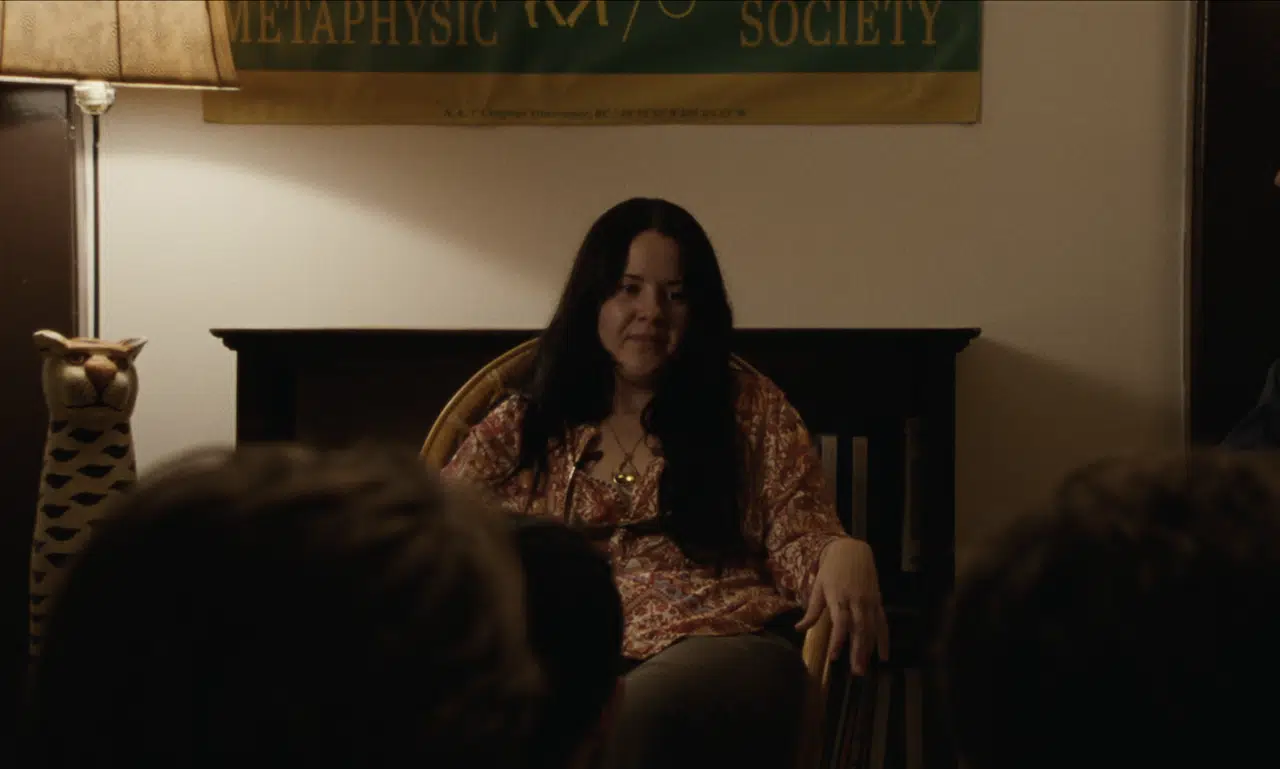
It makes sense, then, that Ernest is so susceptible to these different ways of life—after all, like Johnson said, the PNW practically breeds them. He’s not drawn to alternative lifestyles because he’s curious, but because he’s dissatisfied and disillusioned with the version of adulthood he’s been sold. I wanted to know if Johnson’s fictional wellness group had any real-world parallels. Did he borrow from any local collectives, or is it just Vancouver’s general culture of self-optimization and spiritual seeking that inspired him?
"I was struck by secret societies around the turn of the century, like the Freemasons or Shriners. Shriners were a big inspiration for this. And really just all these community groups, like rotary clubs, they're all kind of the same. It's people looking for a social club, a way to spend some time together. That's kind of where it started, and then I melded that with that PNW stuff. When people meet and come together like that, it's easy for things to get carried away."
All of it is so fascinating to me, as someone who's lived here forever but never encountered any of these "groups." But then I realized, it might not look like people in Fezes or all-white uniforms. It probably looks more like a hot yoga class or a running club. I've never really fit in with those people (duh, I'm a writer), and really always thought that kind of self-improvement identity was a bit performative. To make sure I didn't just have a cynical point of view, I asked Brian if he felt that way too, and if ultimately it causes more disconnection in the end.
"I mean, yes, for sure," he starts. "But it's complicated. I think it all comes from a good place. You really have to find what works for you. At the end of the day, I really think that people are a lot less equipped in this life than they think they are. We're all just kind of hurdling through this crazy thing. People [here in Vancouver] create little micro families. They have to. And what is the difference [between that and a "cult"] at the end of the day?"
We find out during the film that Ernest moved to Vancouver from San Francisco some time ago, which makes his hunt for belonging even more imperative. But by the end of the film, when he's faced with an opportunity to leave, he refuses. Maybe Ernest realized that you take yourself wherever you go. Your problems will always follow you, as long as you stay distracted. But if you’re going to be lost, you might as well do it somewhere beautiful.
As our conversation with Brian wrapped up, we felt bad sending them back out into the rain. But that's just our city doing its usual thing. Ishika and I wished them luck on their World Premiere at VIFF and said we'll be in the audience cheering them on. For the Vancouver film scene, at least, that’s what community looks like—still showing up through the drizzle.
You can catch Brian's beautiful, shamelessly Vancouver film, A Welcome Distraction, at the Vancouver International Film Festival
Saturday October 11 at 3:45 pm
Sunday October 12 at 12:45 pm





Share your thoughts!
Be the first to start the conversation.