
I've grown up listening to the discourse around female empowerment and feminism. I've heard the horror stories of being an overly independent woman, an unloved one, a woman who's weak, who loses herself to love, the literal catch-22 of existing either too much or too little.
When Fleabag came out, the immediate term that swarmed around it was womanhood: this was the show for women made by a woman. Women flocked to the series like their lives depended on it; men began finding ways to love it, even if they didn't quite get it. #performativefeminism, #gottaimpressthegirlies.
I don't know if I would personally consider Fleabag a feminist series, or Fleabag herself a feminist— I actually think that's something that she grapples with herself— but I do think that it explores womanhood in a really beautiful way. I find myself continuously being drawn back to it. Every time I watch it, another part of my own experience as a straight woman is brought to the surface. I'm not saying that I'm a British lady grappling with the deaths of her mother and best friend, but something about her experience feels profoundly real in a way that haunts me.
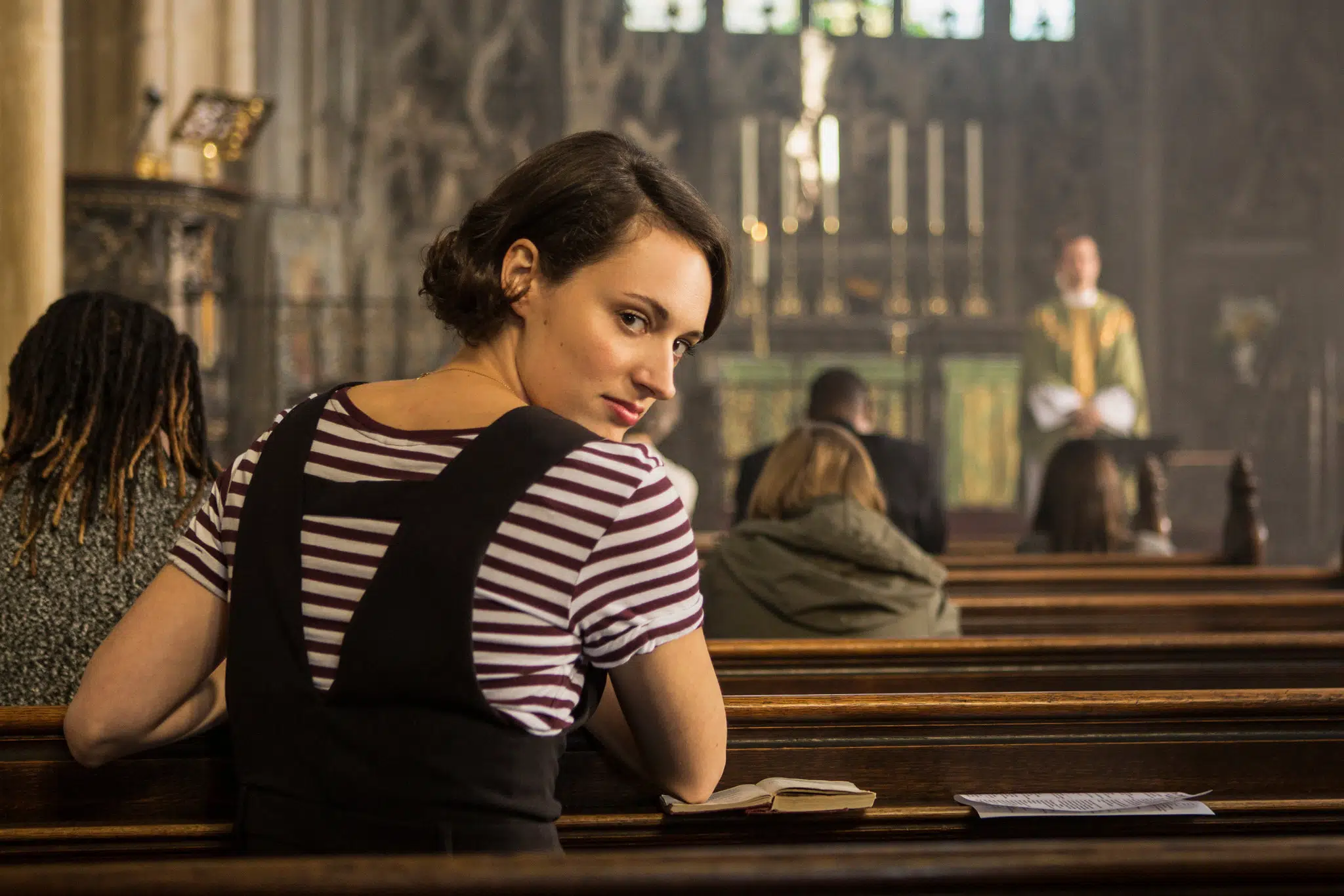
Fleabag is the messy, out-of-pocket kind of funny, but tragic female figure crashing through life, grappling with her grief, trying to stay afloat. And, yet, something about her feels like refuge, a deep sigh of relief. Something about the mess she embodies feels familiar.
This show is actually and unquestionably depressing. I don't know why I keep returning to it, maybe it's the masochist in me, wanting to relive the kind of stripped back, unhidden mess that exists quietly inside of all of us. Seeing it on screen feels cathartic, in a way, because it feels so familiar. Maybe the motivation is simpler. I don't know, it always leads me back to the same old question:
What is it about a real woman that feels so sad?
I've seen this show way too many times to count, and every single time it has brought me to tears. I thought at first that the saddest part was the grief of losing all of her female counterparts (her mom, her best friend). I thought maybe it was the bittersweetness of her relationship with Claire. Maybe it was the honest-to-god attempt to be functional while grappling with grief.
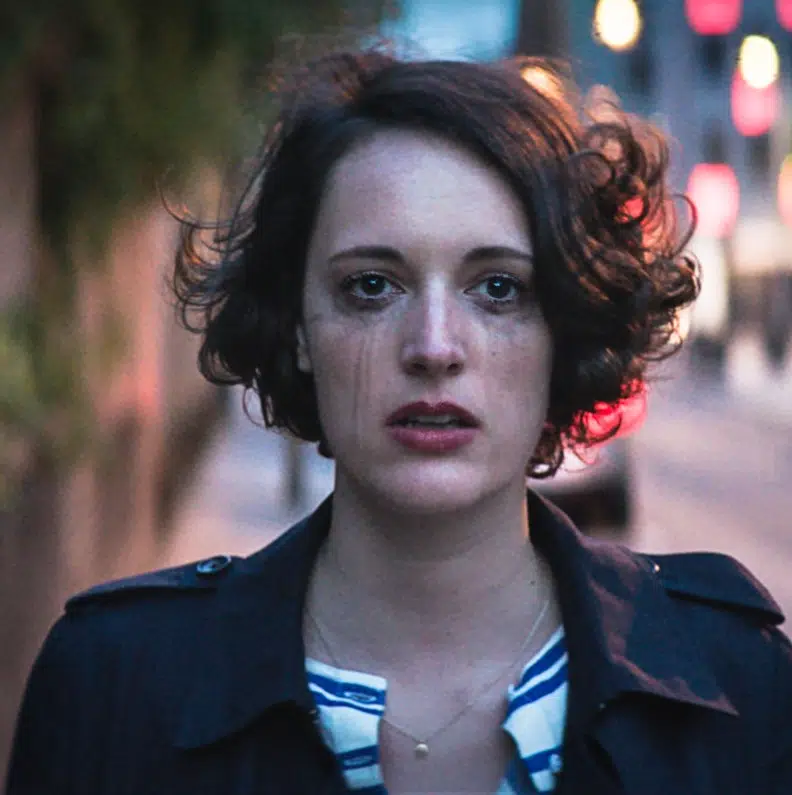
I realized that it was all of that plus something else. It took me a while to point my finger at it, but then there the answer was, sitting right in front of our noses: the reality of womanhood, the isolation that encompasses being a woman. It wasn't just Fleabag's sorrow but what she could see in her sister and, arguably, in her step(god)mother as well: the desire to be known and understood while perpetually being overwritten or sidelined.
It seems like such a small thing, but it does take over. There is no glorification, or even really a moment of forgiveness for any of the female characters. The entire two seasons is a constant battle of pushing back against being undermined, sidelined, neglected. The show suffocates and presses down so that it feels like you're being buried. Which, in a way, Fleabag is. Even in her own narrative, there is no space for her.
The Burial
Consider Fleabag's mother's funeral. What do you recall most from it? For me, it's the scene where Fleabag is rigorously wiping her face, trying to look sadder.
The rest of the funeral scene involves guests walking in, talking about the mom and then exclaiming how beautiful Fleabag looks. I thought that the way everyone mentioned the mom first and then commented on Fleabag's appearance was particularly important because it signals exactly what is happening with the rest of the show. She is in mourning, but her looks end up removing her from her grief and pitting her against her deceased mother. This moment is hilarious and poignant because it lightens the tragedy but also reminds us how there really is no grace. When the guests begin commenting on her appearance immediately after speaking about the mother, her mother's loss becomes buried underneath Fleabag's good looks.
Think about the conversation with Claire; Fleabag is repositioned outside of her grief, arguably even outcasted for not looking sad enough. In the same breath, the godmother is also slut-shamed by Fleabag, which is important because not only does it place Fleabag and the godmother in the same space (separate from the rest of the "real" mourners), but it showcases how women are pitted against one another by women. The mother hovers in the background, invisible, mainly forgotten against the tirade of quips thrown from woman to woman.
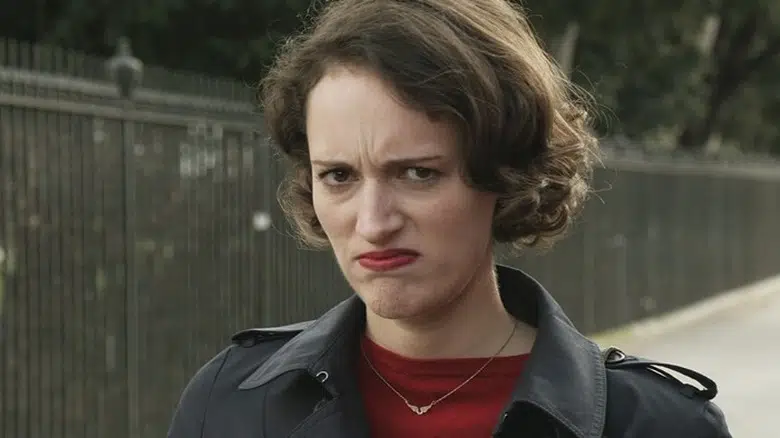
Of course, the burial continues onwards, outside of the church doors. We see it in the way Fleabag comically rampages through life, breaking the statue, trying but failing at mending her fraught relationship with Claire. Grief and loneliness grows, and the more Fleabag attempts at some kind of connection, the lonelier she becomes.
However, she is not the only one. Claire, also, feels lonely. Arguably, so does the godmother. Fleabag sees this. She understands that the very experience of being a woman itself is loneliest.
"I sometimes worry that I wouldn't be such a feminist if I had bigger tits."
One of the most important moments in the show, which I think slips by too quickly, is the joke that Fleabag makes instead during a Quaker service meeting. Although it is posed as this unserious moment, I think the sentiment reveals a lot about the way in which Fleabag complicates female identity. That sentence alone poses the idea that to be a feminist requires being separated from women.
It's such an innocuous joke but it's hefty af. I mean, holy crap. This is it. This is literally what she struggles with. This is the community, the place where she could be wholly understood— we see that in her relationships with Claire and Boo— and yet, it is unattainable.
What happens instead is the Father.
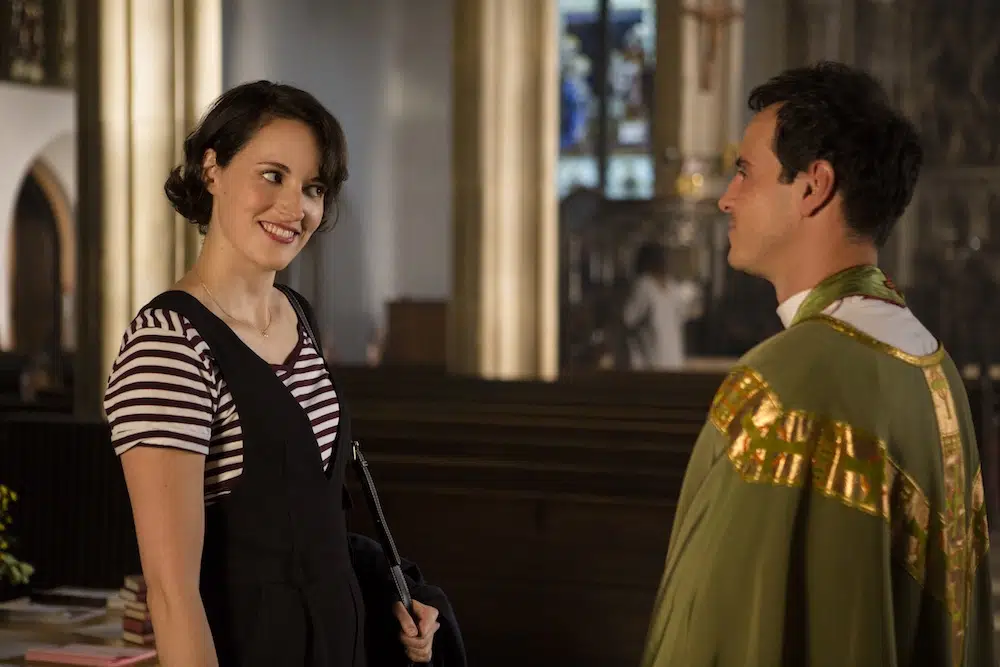
#hotpriesttime
Yes. The hot Priest. The Holy shredded Father. I mean, I don't blame Fleabag one bit.
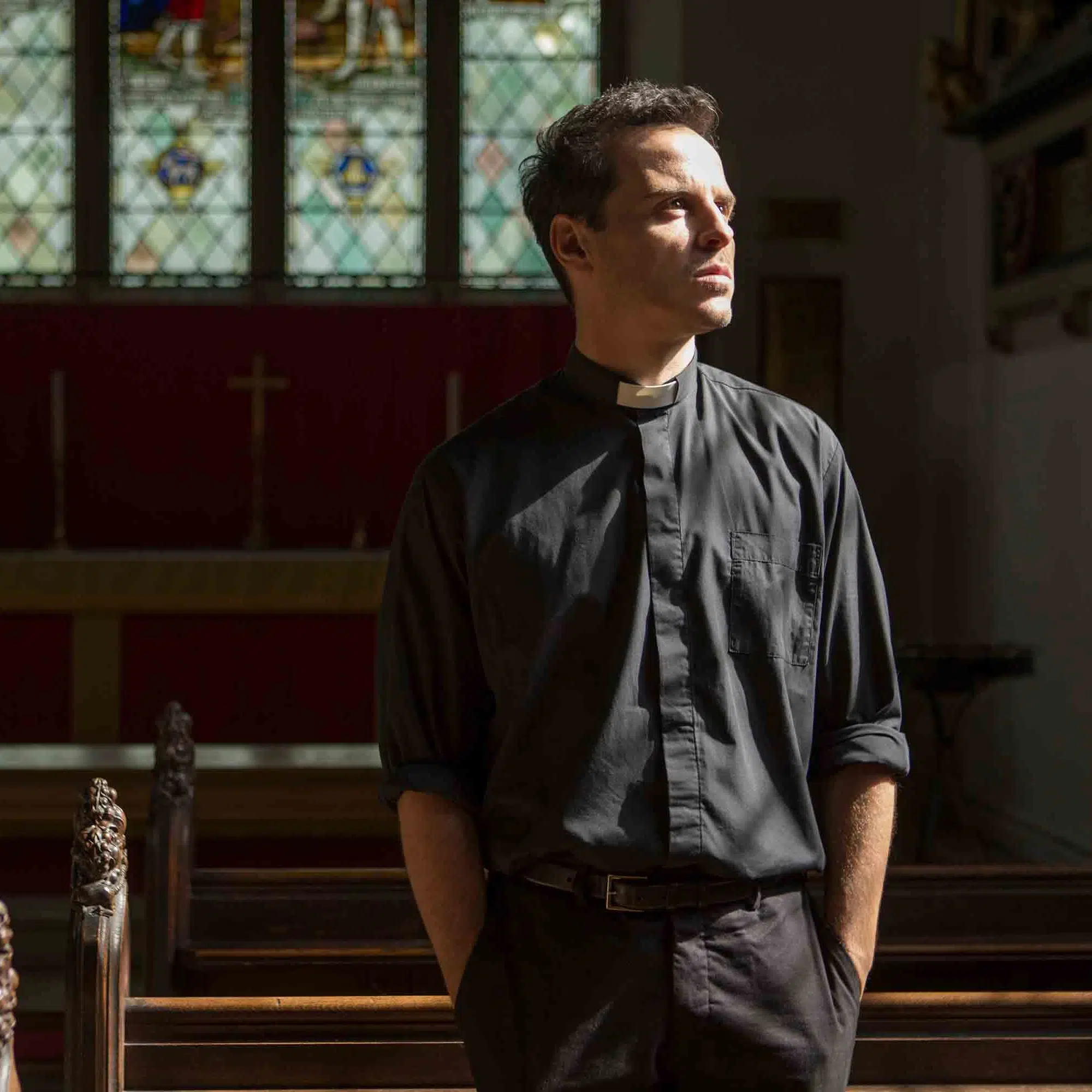
What happens when you can't be seen or understood? That's right. Men come into the picture.
So, the fracture between sisters isn't mending enough. Fleabag is catastrophic. In comes the hot Priest as some blue-sweatered blessing. And he sees Fleabag.
Honestly, that is a HUGE ask. I mean, yes, bare minimum, but like... sexxyy. It's what made the Priest so valuable and important. He encroached Fleabag's narrative in a way that felt safe and homey.
In contrast to all of the other relationships, (I'm thinking Claire and her toxic husband, the step-god-mother and the dad), the Priest and Fleabag seem like the exception. For Fleabag, the Priest presents as a safe haven to be understood.
But then I watched the show again. And again. And each time I rewatched it, the Priest stopped feeling so good intentioned. In fact, what felt like a real, equal connection between the two very quickly highlighted how there was a significant power dynamic between the two of them. The Priest, arguably, was exploiting her vulnerability. He was using his role as the Father to, in some non-incestuous way, father her.
But I didn't want to argue that; I didn't want to let the Father take over Fleabag's story so much. So I switched perspectives. I started thinking about Fleabag's desire. What did she want out of this relationship? What did the Priest actually provide her?
The loneliness immediately returned. The same rivers caught me in their motion; Fleabag just wanted to be seen and understood. Her grief remained unexamined and unprocessed because she was consistently overlooked. She saw the same thing in Claire, in her mom, and arguably even in the godmother, who were all alone, and she did not want to be the same. Her grief wasn't just about losing her friend and betraying her, it was over the loss of a space where she was wholly seen. I started thinking about the shots we get of Boo before she died. It's always the eyes, and they pierce through you at the screen.
We see the same thing with the Priest.
He is not just looking at her. He sees through Fleabag. He breaks through the fourth wall. The only difference, however, is that he is a man, so he is never able to fully understand. Even in her relationship with the Priest, there is something missing, something that cannot replace what Boo provided her. She spells it out for him in the confession scene:
I mean, holy shit. This is it. This is what Fleabag sees happening with all the women in her life; the sheer burden of existing on your own. That's the real stuff, right there. But it's not real. That's the worst part. The Priest can never be Boo. The Priest inadvertently eats Fleabag up, and she lets him because, at the very least, it is something. But it doesn't matter how hard he looks; he will never see her. Not in the way she needs.
This is why I think it's important to bring Fleabag into the Beyond the Binary challenge; it doesn't just say there is an issue, it embeds you in it. It's comedic and dark, and somehow hopeful because it does remind you that there is a space that can exist for women. It's important that Fleabag is the one that knows about Claire's miscarriage. It is important that they are the ones that come back to each other when times get tough. It's important that Boo was Fleabag's safe space, even in memory. When I watch this series over and over again, the most important relationships to me are the ones with women. Fleabag and Boo. Fleabag and Claire.
Those relationships allow each other to unravel messily, without judgment, and for each other to see truly what this messiness actually means. Women are the refuge, when they don't cut each other down, when they don't perform. There is space.





Share your thoughts!
Be the first to start the conversation.