
In March 2020 I was grappling with the possibility that my last relationship with a woman wouldn’t have worked out even if we were both mentally stable and wanted the same things. It wasn’t the fact that she was bisexual and I wasn’t, but it did contribute to my own sense of inadequacy. The truth was, I always felt I would have been the perfect boyfriend. And then Feel Good on Netflix came out and my worries were verbalised by Mae Martin when they said about their girlfriend:
‘I’m just certain that she’ll wake up one day, and she’ll realise that what she really wants, and grew up wanting, is simplicity, and some beefcake boy, you know? Called like, Charlie. With like a B- personality, you know? Because she’s culturally straight so it doesn’t matter how A+ my personality is. That guy, Charlie, he doesn’t even have to try. […] He just has to be simple and kind, and full of sperms.’
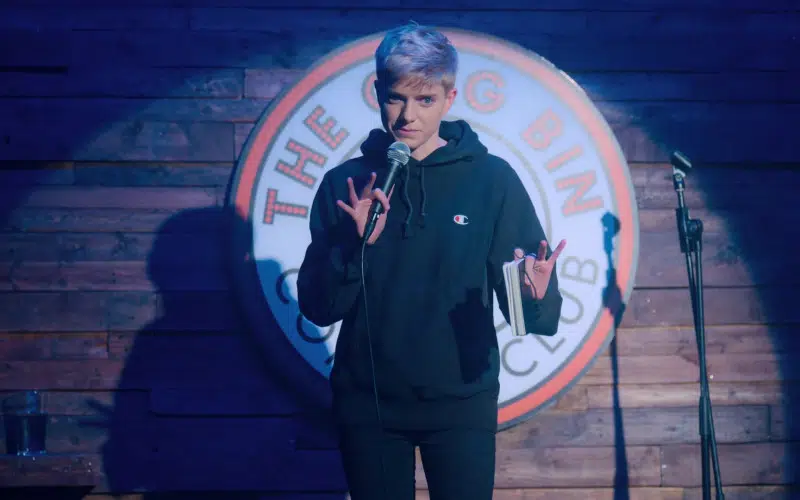
Mae Martin’s character makes jokes about the fact their girlfriend has only ever been with men, but the humour is rooted in a deep-seated understanding that the bar for men is and historically has been much lower. But what does that mean for non-binary people? And non-binary characters on screen? Does being AFAB or AMAB make a difference or have we all evolved so far beyond the binary? After all, growing up being referred to as one gender comes with a set of expectations which are really hard to shake off.
Similarly, a few years ago Amazon gave us Gen V, a spin-off from The Boys, which uses gender duality as a plot device. Jordan is a superhero character who can switch genders seamlessly, but they are technically AMAB and part of the central romantic relationship of the series with Marie, a cis woman. What I found most interesting is Jordan’s acknowledgement of not just that, in their male form, the couple appears to make more sense and would be less confusing to people – essentially straight-passing – but also of their intense insecurity in their female form. Just before the couple kisses for the very first time, Jordan even switches to their male form. After Marie wakes up next to Jordan in their female form, Jordan admits to Maverick:
Jordan: ‘I don’t know, I mean, she just seemed so fucking freaked out when she woke up with me looking like… this. Jenny Boccabella was my first girlfriend in the sixth grade. And she always just wanted me to be a guy. So I changed for her.'
Maverick: 'Did you ask if Marie was freaked out? She might not give a shit.'
Jordan: 'No, I mean, I just assumed that that's what she'd want.'
Maverick: 'That's on you. You're the one who turns into a dude to hook up with her. This is your hangup, not hers.'
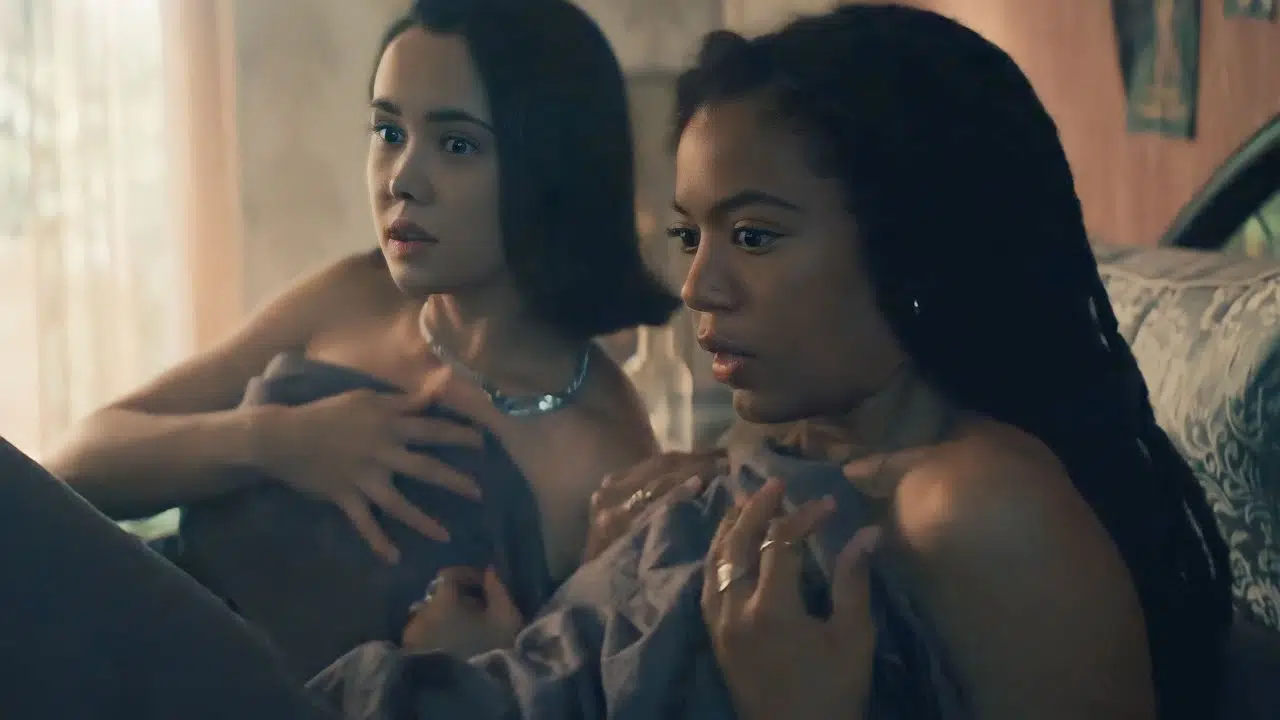
Both Mae, an AFAB non-binary person, and Jordan, an AMAB non-binary person, show the same fear cracking through their armour, whether that be humour or confidence – that queerness, especially between the binary, is still measured against heterosexual norms. Both characters acknowledge to some extent that male mediocrity will always be more acceptable; the default. The patriarchy and heteronormativity have always imposed rules on all of us, whether we are heterosexual, cisgender and male or not. Somehow, men cast a shadow even in lesbian relationships and relationships that hope to transcend the binary. Whether that is in the form of some invisible eye of approval, constant male validation or just something in our heads that is simply too hard to unlearn.
Either way, I think both Feel Good and Gen V offer some hope at least – both of the non-binary characters are given space to explore their fear instead of being punished for expressing it. If their romantic relationships don’t work out, it won’t be because of some gender incompatibility, but rather a much more boring reason that sometimes things just don’t work out.




Share your thoughts!
Be the first to start the conversation.