
Once again, Pablo Larrin caught people’s attention with the nomination of ‘El Conde’ for the Golden Lion Award at the Venice Film Festival. This is not Pablo Larrin's first biographical film. Prior to "El Conde," he had already directed biographical films about Chilean poet Neruda (Neruda, 2016), former US First Lady Jacqueline Kennedy(Jackie, 2016), and British Princess Diana( Spencer 2021). If you have seen these three films, you will notice a common adaptation style that Pablo uses when portraying historical figures: taking a particular period in the character's life, blending real historical materials with fictional scenes, and focusing not on storytelling, but on portraying a specific psychological trait of the character. This approach to filmmaking has its advantages and disadvantages. The benefit is that the director can shape historical figures more flexibly and express their own ideas. However, the challenge lies in the absence of a narrative plot, with the character development relying solely on the actors' performances and the portrayal of details and atmosphere in the films. If not executed successfully, this approach can easily make the hollow. This is exactly Larrin's biographical films are often subject to scrutiny. Today, I would like to discuss the main issues with Pablo's biographical films using "Spencer" as an example.
It is evident that Spencer lacks a strong plot compared to traditional biographical films that focus on a character's history or important events. Instead, Spencer chooses to highlight a lesser-known period in Princess Diana's life - the three days before Christmas in 1991. The media did not extensively cover what transpired during these three days, and the only confirmed aspect is that it occurred three years prior to Diana's divorce from Charles. This lack of clear documentation allows for imaginative interpretation in the movie adaptation. However, the film fails to establish a plot with a coherent storyline. Throughout its nearly two-hour runtime, there are few significant events that can be considered impactful plot twists, resulting in an overall weak narratice.
In my opinion, audiences are attracted to movies with weak plots not because they are curious about the story's development, but for aesthetic or emotional purpose. In terms of aesthetic enjoyment, Spencer does a commendable job. Pablo Larrin uses a low saturation filter to present the picturesque British countryside and magnificent royal estates, resembling oil paintings. Additionally, Kristen Stewart portrays a glamorous and delicate beauty, accompanied by luxurious costumes and a plethora of classical string music. All of these elements provide the audience with pleasant visual and auditory experiences.
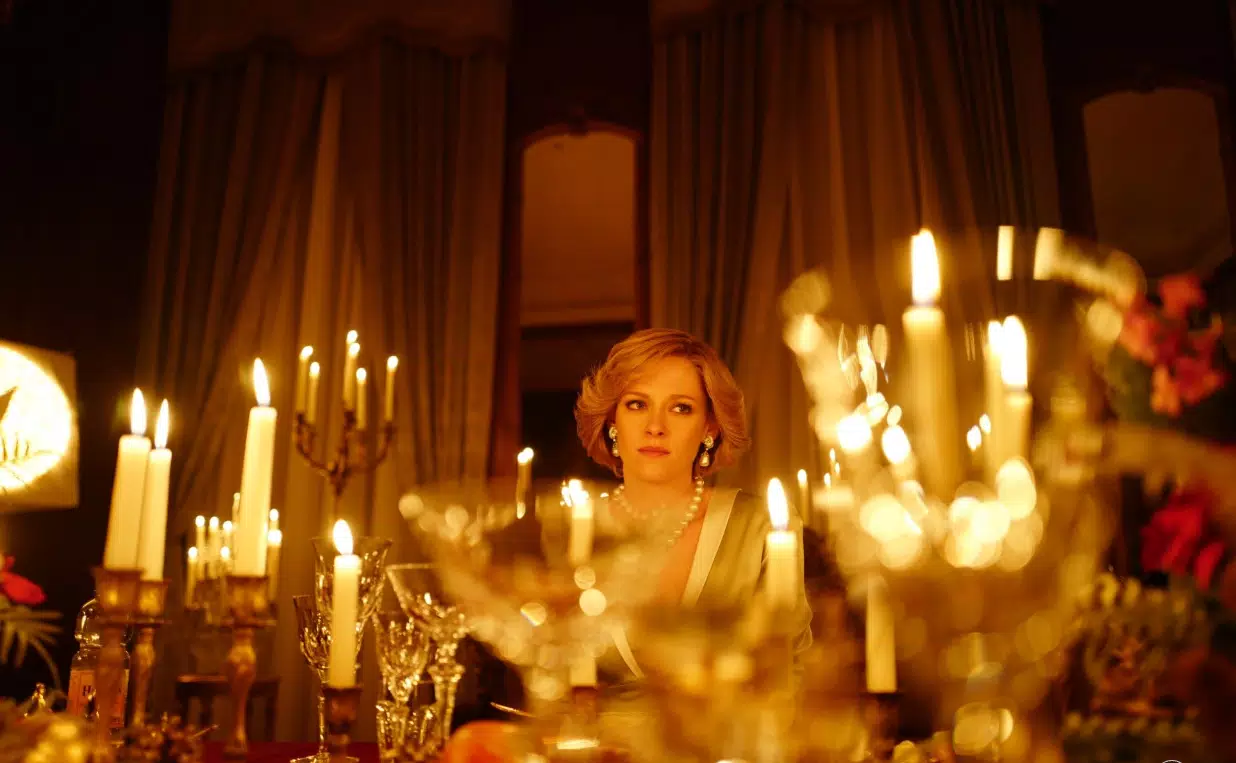
However, opinions on the emotional experience provided by Spencer vary among viewers. Some viewers feel a profound sense of Diana's pain while watching the movie, while others find the portrayal of her emotions to be shallow. After careful consideration, I have realized that these two viewing experiences are not contradictory. Personally, I did feel Diana's pain, but at the same time, I also sensed that the depiction of this pain remained superficial, making the film somewhat hollow overall.
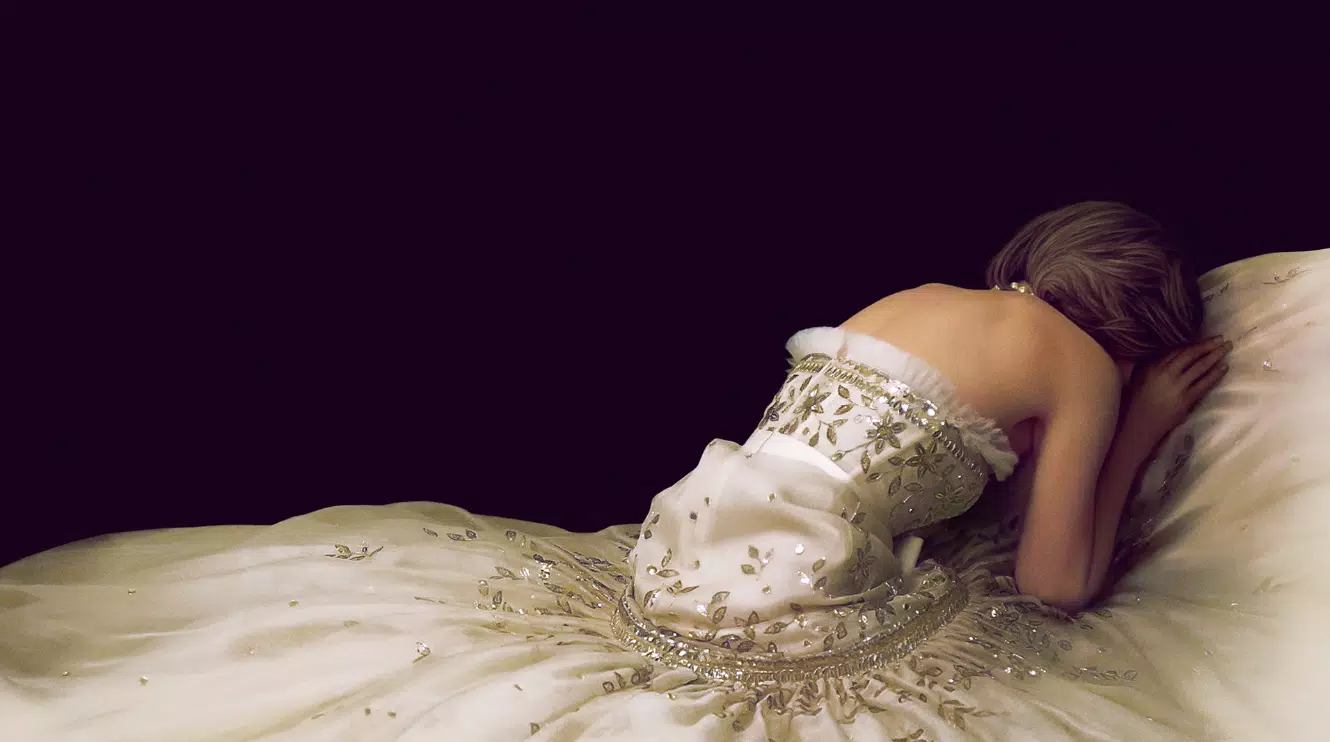
The main reason for this hollowness is that the film fails to provide an interpretation of Diana that exceeds the audience's expectations. Instead, it portrays her as a troubled and anxious young woman, a facet of her character that was already known before watching the film. As one of the most famous members of the royal family worldwide, Diana's pain during her lifetime, such as the rigid suppression of the monarchy and Charles' coldness and infidelity, has already become a well-known topic under the media's extensive coverage. Her unhappiness in the royal family is no secret.What the audience expects to see are richer details that can help them understand Diana better. For example, what specific experiences did she go through? How did the people in the royal family treat her? Regrettably, this is precisely what the movie lacks these insights. While it's clear that she is very unhappy and despises everything about the monarchy, it remains challenging for the audience to truly empathize with her.

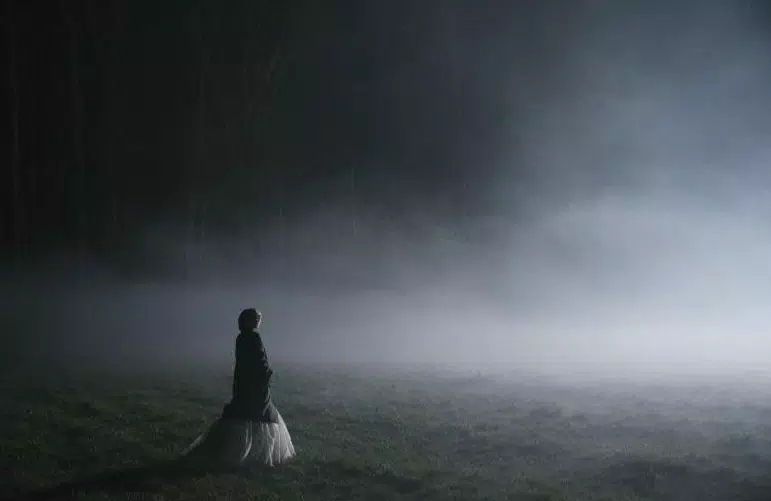
Another major issue with Spencer is its overly simplistic portrayal of Diana's surroundings, which fails to create a context that allows viewers to fully comprehend and empathize with her emotions.To ensure that the audience can relate to the main character in a story, it is important to provide a clear understanding of the protagonist's surroundings. In a movie, these surroundings consist of supporting characters, events, settings and historical context, which together create the internal of the film world. These different elements act as mirrors, reflecting various aspects of the characters. In the case of Spencer, the context is primarily constructed by shaping the physical environment, such as the gloomy weather and vast fields in England that allow the audience to feel the loneliness and melancholy of Diana walking alone in these fields. However, this alone is not enough. The developments of supporting characters and the narration of core events should have played a more crucial role. Unfortunately, while giving up the narration of dramatic events, the director also neglected the careful portrayal of the supporting characters.
The film depicts limited interactions between Charles, Queen Elizabeth, and Diana. Queen Elizabeth's indifference and disdain towards Diana at the dinner party are later revealed to be a product of Diana's imagination. The conversations between Charles and Diana do not exhibit clear hostility or personal emotions. In other words, the two significant figures in Diana's life lack characterization and remain vague in the movie. As for the other supporting characters, they also lack portrayal, relegating them to the role of background characters, blending in with the other objects in the setting.
Due to the vague and thin portrayal of supporting characters, the movie misses the opportunity to use them as mirrors to reflect different dimensions of the protagonist. What we can see is a beautiful yet melancholic Diana, experiencing three days of emotional turmoil on the verge of collapse, without knowing where the emotions came from.
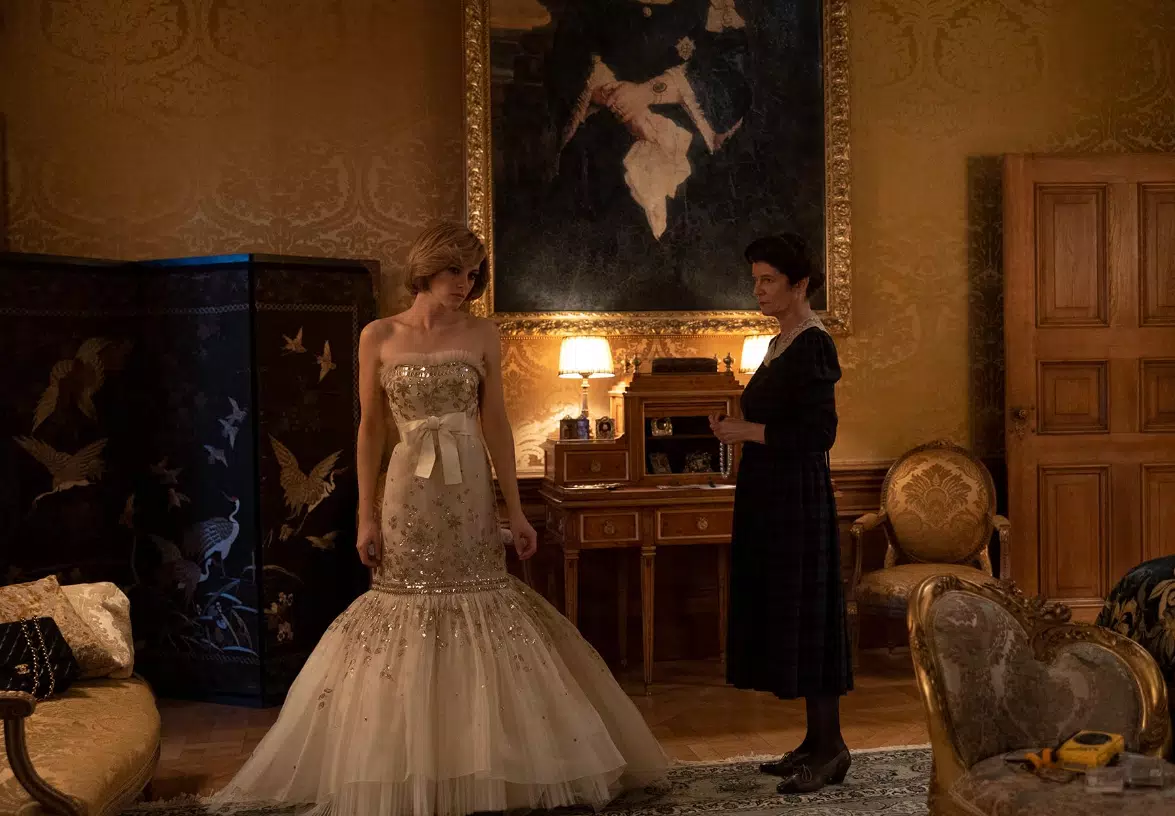
Without a clear storyline, conflicts between characters, and a clear portrayal of supporting characters, the context in Spencer feels like a world devoid of substance, much like the empty fields that Diana alone occupies. All emotional conveyance relies on externalizing Diana's psychology through details. This might explain why the movie is filled with numerous scenes where Diana is alone:looking at herself in the mirror in her room, venturing to the abandoned estate, indulging in sweets, and repeatedly vomiting in the bathroom. These scenes and Diana's hallucinations serve as external manifestations of her inner psychology. For instance, before several dinners, Diana abruptly retreats due to overwhelming distress. While trying on clothes, she suddenly imagines self-inflicting harm. As the audience watches these scenes, their attention becomes fixated on each subtle expression and action of Diana. Unfortunately, the audience only perceives the result of Diana's deep pain, rather than understanding the source of it.
Perhaps to make Diana's pain more tangible, Larrain uses various metaphors for Diana in the movie, attempting to provide an explanation for her suffering indirectly. For example, the metaphor of the pheasant for Diana: at the beginning of the movie, the camera focuses on a motionless pheasant on the road. It doesn't move, and it's unclear if the animal is still alive. Royal vehicles pass by on the road, almost running over the pheasant. This easily brings to mind Diana's fate of eventually dying in a car accident. In later scenes, Diana expresses her thoughts about the pheasant. She mentions that pheasants have beautiful feathers but are tragically treated as prey in the royal game. Later, she goes to the hunting grounds and takes William and Harry away, which includes her reluctance and disgust at involving her young sons directly in pheasant hunting. The metaphor of the pheasant for Diana is accurate but shallow. The reason is that the audience is already too familiar with Diana's fate and doesn't need much thought to understand it from the beginning. The repetition afterward only makes this already clear intention even more obvious.
In summary, in Spencer, due to the lack of characterization of supporting characters and a narrative centered around a story, the film relies on externalizing the protagonist's inner feelings through details. This creates an environment that almost feels like a vacuum, forcing the audience to closely observe how the protagonist gradually collapses whilst knowing the tragic outcome and the pain she endures. After watching it, I can clearly sense Diana's anguish, but I cannot deeply empathize with her pain because in the film, as these sufferings lack emotional logic. Even after watching the film, we still don't know where her anxiety and sadness come from, or why they are so intense. Yet, perhaps this is the feeling that every person who knows Diana's fate but still pays attention to this film wants to experience. At the same time, aspects of Diana's happiness, bravery, innocence, and elegance are also overlooked. As a result, Diana in Spencer is simplified into a one-dimensional character, becoming an emotional being. Her pain and rebellion, portrayed in a too obvious and straightforward manner, become a cliché similar to what gossip tabloids have written countless times. In the end, through exquisite composition, magnificent costumes, grand symphonic musical score, and Kristen Stewart's straightforward portrayal of pain, the film presents us with a magnificent yet hollow tragedy.





Share your thoughts!
Be the first to start the conversation.