
'Oppenheimer' has been highly praised by the audience since its release. The wonderful parts of 'Oppenheimer' lie in its compact plot and fierce conflicts. One who haven't seen the film may wonder how can there be any conflict if Oppenheimer just made the atomic bomb during the World War II and accelerated the end of the most tragic and fatal war? Isn't it obvious that he leaves a mark in history, both for himself and for humanity as a whole? Even if there is something getting in the way, it should be confined in the scientific and professional field. However, if the film told a story about how Oppenheimer overcame the technical bottleneck of making atomic bombs, it would not be a drama film, but rather a documentary film. Instead, in 'Oppenheimer', Nolan focused on the “war” between politicians and scientists. The film naturally unfolds around two hearings, which took place in different time and situation but are closely related in the film with Nolan’s design and arrangement.
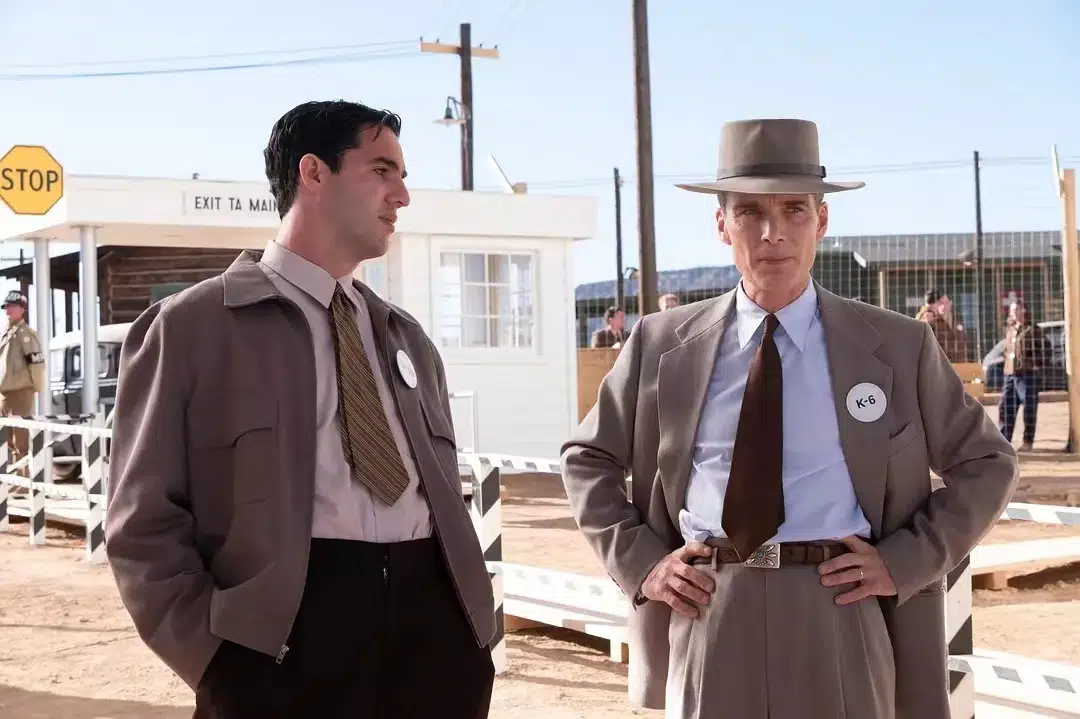
How exactly does Nolan utilize characters’ dialogues to accelerate the process of events and attract audiences? Actually, these two hearings bring increasingly interesting story and increasingly sharp conflicts, leaving the audience more excited. In one hearing, sitting in the corner, Oppenheimer listens to the praise or derogation from his relatives, friends, superiors and colleague. He feels the aggressive verbal violence face to face, which is almost as tantamount to the impact of atomic bomb explosion. Oppenheimer eventually lost his security clearance; However, on narrative level, the portrayal of “father of the atomic bomb” as an ordinary person wins recognition by the audience. In another hearing, the ambitious and pretentious Strauss is punished by his failure to be a member of the cabinet. Therefore, although the film is mainly about making atomic bombs, presenting the scientists’ geniuses, endowments, interesting life stories, and even marital infidelity and love affairs, the two hearings constitute the framework of the story, and the real focus lies in the conflicts between scientists and politicians.
However, Nolan won’t just set despicable villains like some of the politicians as opponents in the film. In most Western films, the biggest enemy and obstacle is often oneself, not others. Oppenheimer, as the “father of the atomic bomb”, is not the kind of person who is arrogant when he successfully made the atomic bomb. On the contrary, when the “Pandora’s Box” which can destroy mankind and the earth is opened, facing this force which is so powerful that mankind can’t control, scientists inevitably began to introspect themselves. Therefore, after the end of World War II, Oppenheimer constantly issued his statements about anti-war, anti-hydrogen bomb and anti-competition between the United States and the Soviet Union. All these not only showed his stance on the side of the peace-loving people of the world and but also highlighted his inner pain in the reflection of success and failure, survival and destruction. That's how a “modern subjectivity” with distinct character, real emotion, rational introspection and self-transcendence is portrayed in the film.
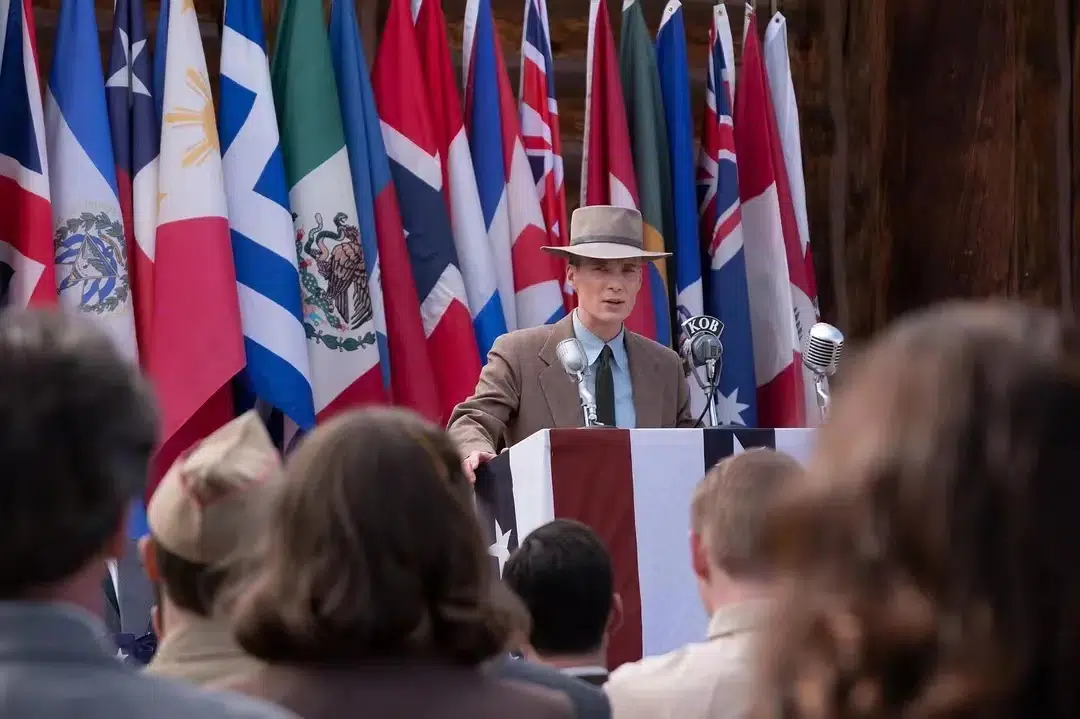
There is no doubt that Oppenheimer sets his self-consciousness of introspection as an internal opponent, which embodies the western modern view of human nature: an individual must undergo a leap from sensibility to rationality, a suffering from body to spirit, and an inner conflict between good and evil, so as to become a modern subject with self-consciousness of introspection. Even if Nolan is recognized as a great storyteller in the world, who can create a stimulating and tense narrative effect, he has no room to let his faculties unfold in the face of the real historical figures of the “father of the atomic bomb”, major historical events and collective memories of the country.
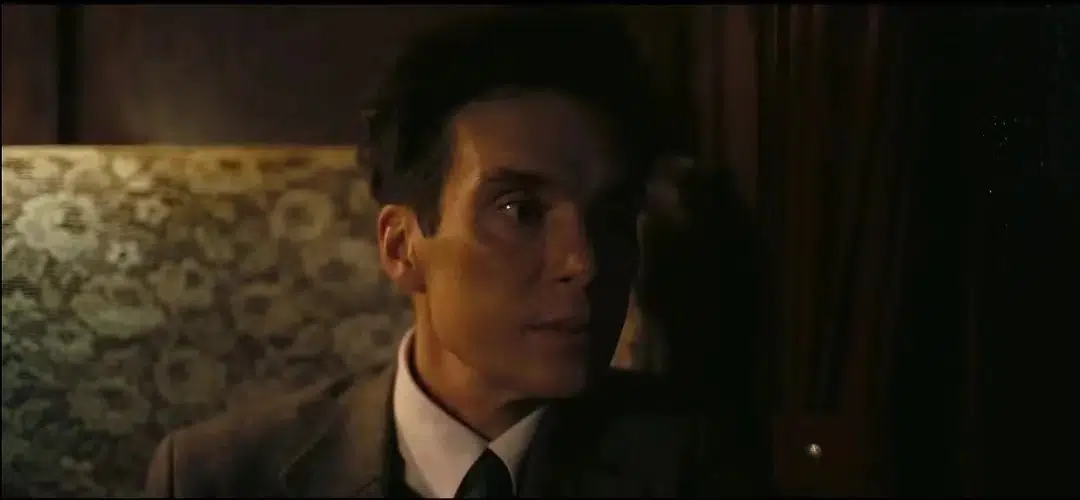
'Oppenheimer' is a typical and standard American biographical film, which expresses a patterned and even rigid ideological theme. Yet, fortunately, Nolan has implanted different art forms in the film. Without those art forms that embody Nolan’s distinct style such as non-linear narrative, dialogue between characters whose rhythm is too fast to be understood, imaginative editing, and wonderful audio-visual effects that leaves us in awe at times, Oppenheimer may just be a mediocre Hollywood film.




Share your thoughts!
Be the first to start the conversation.