
Two years ago, the groundbreaking film "Titane" shocked the world by unexpectedly winning the Palme d'Or at Cannes, sparking widespread controversy. In this prestigious art film festival long dominated by male auteurs, the emergence of a riveting movie directed by a woman was a truly exceptional occurrence. The second Palme d'Or awarded to a female director in Cannes' history not only offered substantial encouragement to women in the creative sphere but also felt especially pertinent in today's landscape, where emphasis on gender equality is paramount. Following this milestone, films helmed by female directors have consistently achieved success at the three major European film festivals and the Oscars, signaling the ascension of a new generation of talented female directors on a global scale.
Two years later, this year's Cannes Palme d'Or once again went to a female director. Justine Triet, with "Anatomy of a Fall," became the third female Palme d'Or winner in Cannes history, carrying even more profound significance. In recent years, female creators have achieved remarkable success, both artistically and commercially. Greta Gerwig's directorial work "Barbie" has unequivocally become this year's global box office champion, and "Anatomy of a Fall" has also captivated a broad audience with its outstanding performance. In France, the film has become the highest-grossing Palme d'Or winner in recent years.
In contrast to the divisive reactions to "Titane," "Anatomy of a Fall" has garnered steady and widespread praise. It doesn't fit within a niche art film category but instead adopts the appearance of a genre film while methodically dissecting the ethical intricacies of marriage, family dynamics, and pertinent contemporary themes in a realistic manner. Resembling a complex puzzle, the movie requires the audience to extract numerous clues embedded within sound, dialogue, the interplay between truth and falsehoods, and the blending of facts and fantasies. It's through this intricate process of piecing together these elements that viewers can unravel the true essence of the characters and their relationships.
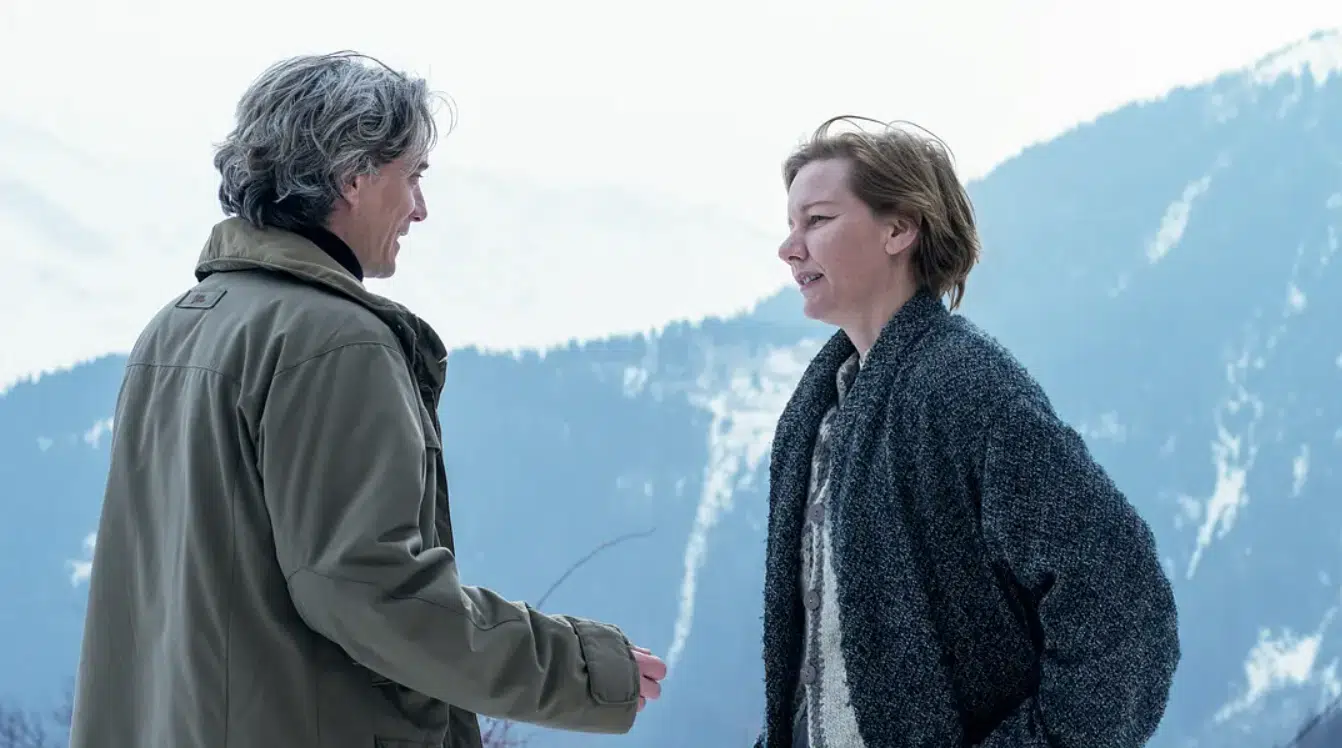
The first 10 minutes abruptly plunge the audience into a crime scene. This opening, arguably one of the best in recent years, creates a powerful visual and psychological impact amid the relaxed home setting and lively musical accompaniment. The script deliberately sets a criminal thriller tone, introducing a dead husband, a bewildered wife, and the only witness, their son, creating a mysterious air around the case of the fatal fall. Especially during the police investigation, reconstructing the events of the day, the son's contradictory statements add a layer of suspense. Was it an accident, suicide, or murder?
The story then shifts to a year later, placing the female protagonist in the throes of prosecution, marking the dramatic entry into the courtroom setting. Traditionally, narratives centered on uncovering the truth tend to highlight intense courtroom confrontations between prosecution and defense lawyers or heated debates among jury members. As expected, the script allocates significant space to the analysis and reconstruction of plausible scenarios surrounding the fatal fall. This meticulous examination delves into various aspects, including scrutinizing bloodstains, understanding biomechanics, and analyzing the positioning of the fall itself.
However, the director's intention goes beyond finding the truth; uncovering the truth is not the ultimate goal of this work. Through the trial process of this falling death, she aims to eloquently expose the lies, deceit, and control within marriage, as well as topics like creativity and reality. The genre film mode serves as a gateway to dissecting the dynamics of marriage and parent-child relationships. To add flair to this courtroom theme, the director uses outstanding audio-visual techniques to break the seriousness and monotony. The presentation of two key pieces of audio evidence is notable: the first reenacts the interview recording of the female journalist from the beginning, transforming private and ambiguous conversations into evidence for everyone to hear. The other is a recording of the couple arguing, and through expert montage, sound is visualized into image frames, connecting private life segments to the public interrogation scene. The public interrogation dissects the intimate and happy marital relationship, magnifying even the subtlest nuances in dialogue, making audiences aware of the issues between the spouses. Thus, attention shifts to the wife's free-spirited lifestyle, bisexual tendencies, extramarital affairs, and her more successful novel writing compared to her husband.
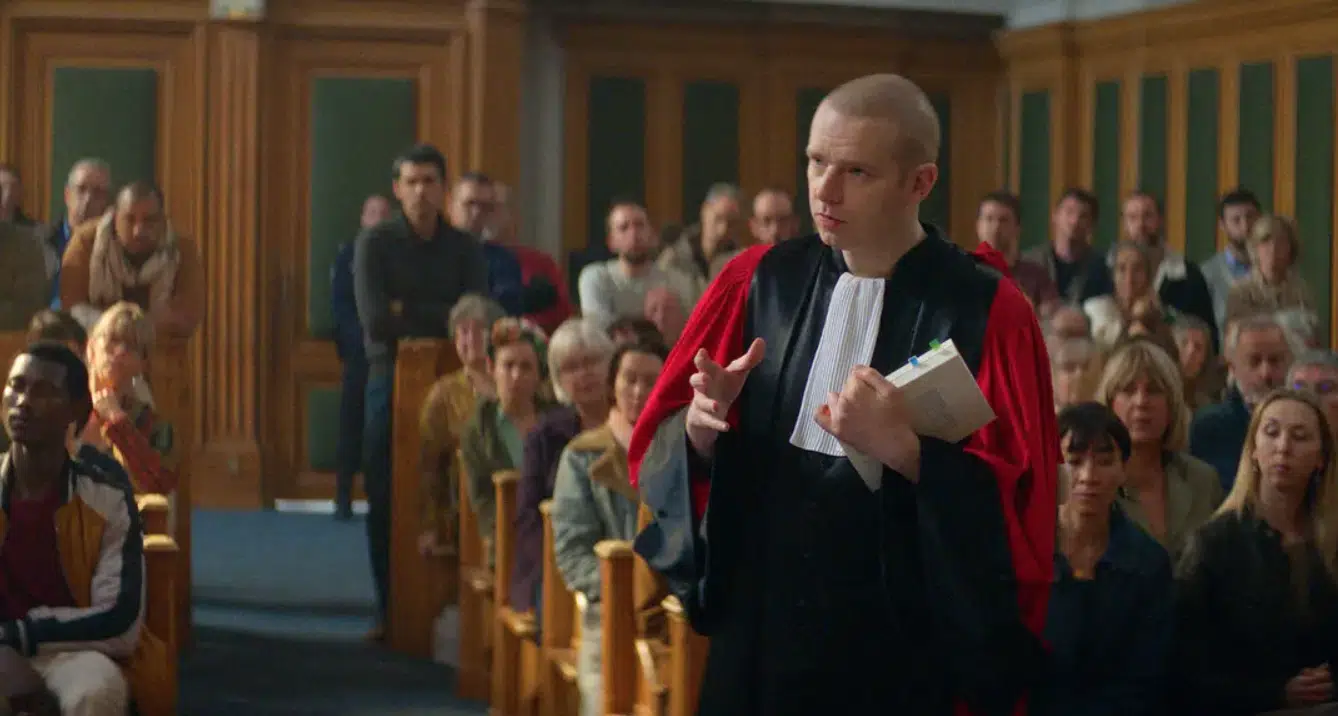
The director skillfully transforms the audience into virtual jurors, enabling them to empathize with either the husband or the wife, actively engaging in the trial process. However, she deliberately withholds complete information, such as only presenting the first half of the quarrel recording, leaving the second part to the female protagonist's personal narration. While this narrative strategy supports the defense of the female protagonist, it seems somewhat lacking in objectivity and comprehensiveness. The noticeable absence of the husband throughout the trial, where the focus remains solely on the actions and words of the female protagonist, unavoidably introduces a bias. This portrayal, where the husband is only represented through recordings or imagined scenes, evokes a notion reminiscent of historical periods marked by the silent oppression of women by male figures.
The screenplay ingeniously flips traditional gender roles, depicting a couple where the woman embodies strength while the man displays vulnerability: the wife engages in infidelity while the husband silently condones it; she exhibits assertive control, contrasting with the husband's psychological fragility; burdened by guilt, the husband grapples with suicidal tendencies, which hampers his progress as a novelist. Yet, his wife offers unwavering support, even resorting to stealing his manuscript to advance her own creative success. The pressures faced by the husband within the family dynamics mirror the challenges frequently encountered by women in today's society. This deliberate gender-swapping narrative serves to highlight society's entrenched and prejudiced perceptions of women, uncovering underlying biases. For instance, both the prosecuting lawyer and the psychologist, who appears as a witness, display attitudes and expressions that reveal these ingrained biases. By steering the narrative in this genre-typical direction, the director provocatively points the finger at the audience: it becomes apparent that people are more drawn to stories where a wife murders her husband rather than witnessing a man in a state of downfall. This underscores the profound influence of ingrained concepts within a male-dominated societal framework.
Triet's previous Cannes competition film, "Sibyl," intentionally blurred the boundaries between creation and reality, allowing creators to enter the fictional world of their novels and interact with the characters. This film delves into the intricate interplay between fiction and reality. Each novel penned by the female protagonist mirrors situations within her own family, often featuring plots involving spousal murder. This creative backdrop intertwines with the falling death case, offering an intriguing avenue to explore the nuances of literary creation intersecting with the real world, despite not being the primary focus of the film.
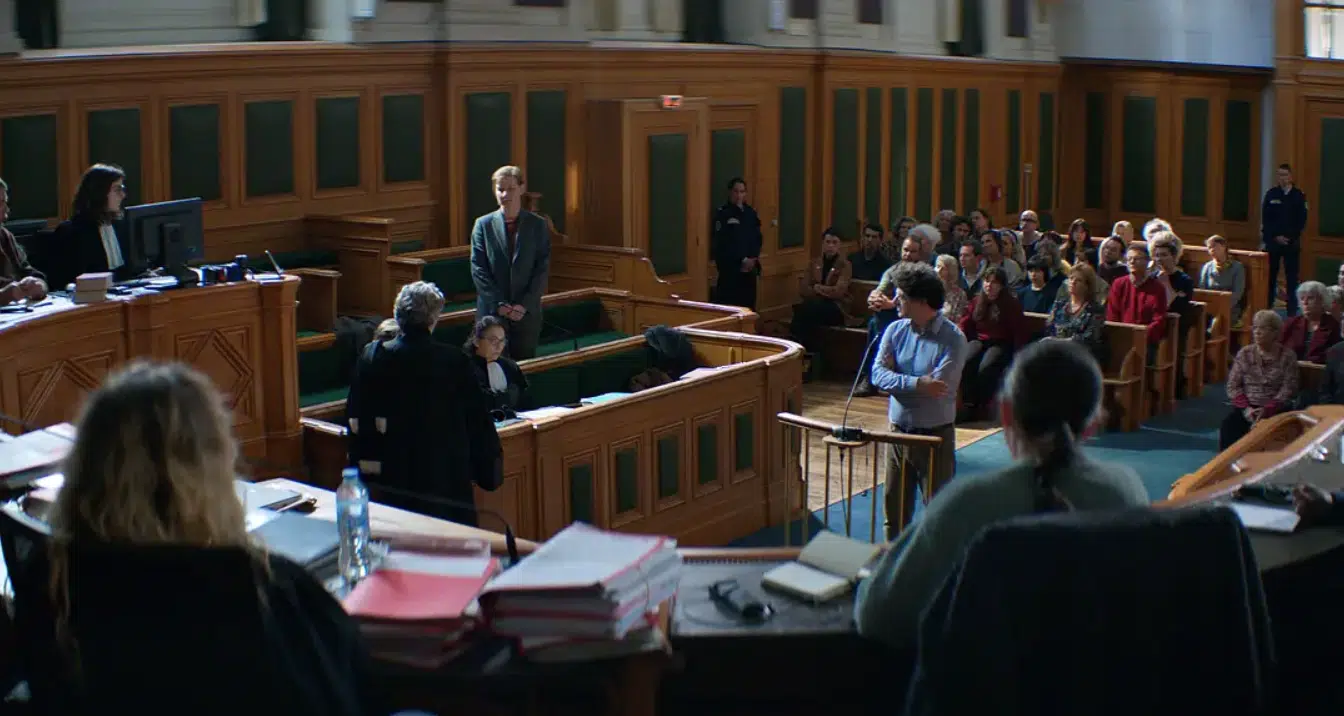
The most captivating aspect of the entire film is Sandra Hüller's flawless performance. The seasoned German actress effortlessly switches between English and French. She speaks English with her son and uses French during the trial, highlighting the bitterness of an international marriage where the wife accommodates the husband's language. However, it also subtly underscores the absolute advantage of English, as the wife wields this sword to secure her maximum interests.
For genre film audiences, it may seem like a conventional story: the wife is accused of murdering her husband and ultimately proves her innocence. However, upon closer examination, it is not that simple: the husband's complete absence, the female protagonist's dominant testimony, coupled with missing evidence loopholes, keep the true facts shrouded in mystery. Just as the son's testimony exonerates the mother of murder suspicion in the end, it does not necessarily represent the actual truth. It implies that without objective and complete information, one can only construct a coherent conclusion based on narratives provided by others and rely on subjective consciousness. For female viewers, this film does indeed offer a perfect ending.





Share your thoughts!
Be the first to start the conversation.