






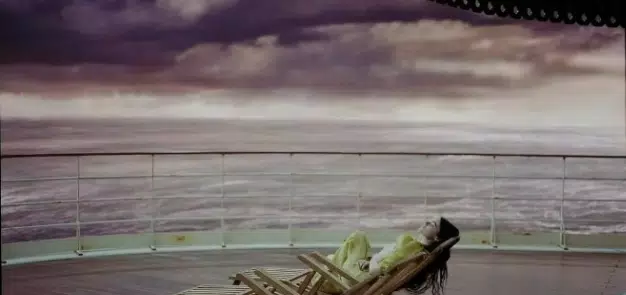
“The new words of the day are: Sea, Highway, Roadtrip and Shotgun. ‘Sea’ is the leather chair with wooden arm rests like the one in the living room. Example: don’t remain standing, sit down in the sea to have a chat.”
This is the opening monologue of the movie "Dogtooth," a Greek film from 2009. It is not about the creation of modern poetry, it's about a peculiar closed family. This family has all the total secrets of totalitarianism. Parents surround their home with high walls. They repeatedly tell their three nearly adult children that the world outside the high walls is dangerous and brutal, only inside the high walls can they be safe and happy. They also tell the children that they can only go out by driving, and to learn how to drive, they must wait for their "dogtooth" to fall off. Their house has no internet, newspapers, television broadcasts, or any information about the outside world. The children play monotonous games day after day in the quiet house, when a stray cat enters the yard, the son kills this unexpected guest without hesitation, and the father praises him for doing well: "Cats are a very cruel animal, specializing in eating people.”
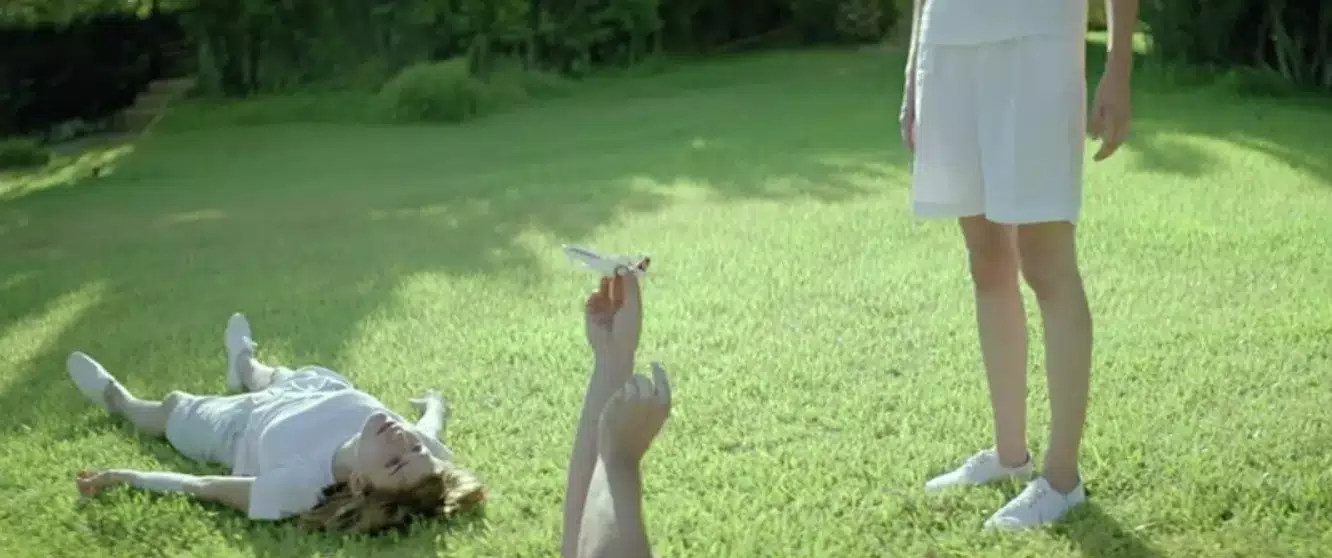
Under this father's governance, violence is pervasive as the children are frequently subjected to beatings and scolding. Additionally, brainwashing techniques are employed, with the radio continuously playing "patriotic" propaganda. In essence, the father enforces a textbook authoritarian regime. One crucial element of this mode of rule is the manipulation and transformation of language.
The sea holds an inherent danger. Its vast, blue expanse, evoking children's curiosity, is akin to the tempting apple in front of Adam and Eve. In contrast, the sofa is a symbol of safety and comfort, suitable only for the repose of sleepy buttocks. Consequently, the sea is redefined as a leather sofa. When everything mysterious is labeled safe and comfortable, the magical becomes mundane, swift things are perceived as sluggish, and the world, through the eyes of children, transforms into a desensitized realm. Upon hearing the word "ghost," the son inquires, "What is a ghost?" The mother, devoid of expression, nonchalantly responds that a ghost is a small yellow flower.
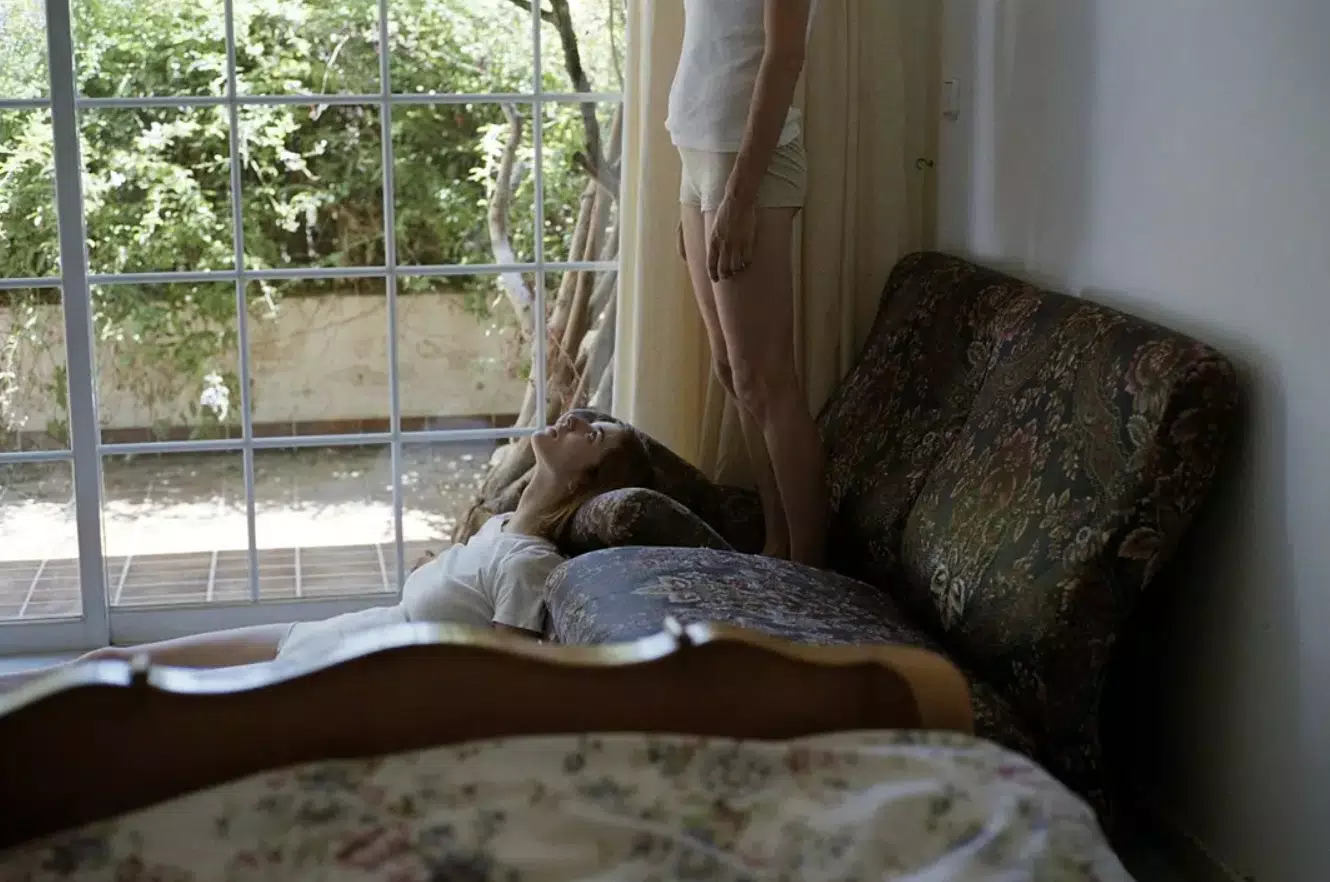
Autocrats consistently attempt to control people's thoughts, yet the human brain remains beyond the direct reach of authorities. Consequently, the focus turns to regulating the expression of those thoughts. Language undergoes a process of disinfection and domestication. Some words are demonized, while others are adorned with bows. Some are injected with sulfuric acid, while others are sprayed with fragrance. The success of this type of education lies in replacing independent thinking with conditioned reflexes, ensuring that every word emits a predetermined "smell" before revealing its contents.
Redefining words is just one way to neuter language. Another way is to directly eliminate certain words altogether. In George Orwell's "1984," Oceania invents a new language called Newspeak. Smedley, an editor of Oceania’s dictionary, excitedly tells Winston that Newspeak is the only language in the world whose vocabulary is shrinking year by year. “Don't you see, Winston, all that matters is to reduce the range of thought?...In the end we shall make thoughtcrime impossible because there will be no language in which it can exist.”
Of course, the cost of increasing sensitive words is that language will become increasingly poor. Even rebellious totalitarians cannot find their own language - they can only borrow the language of those in power.
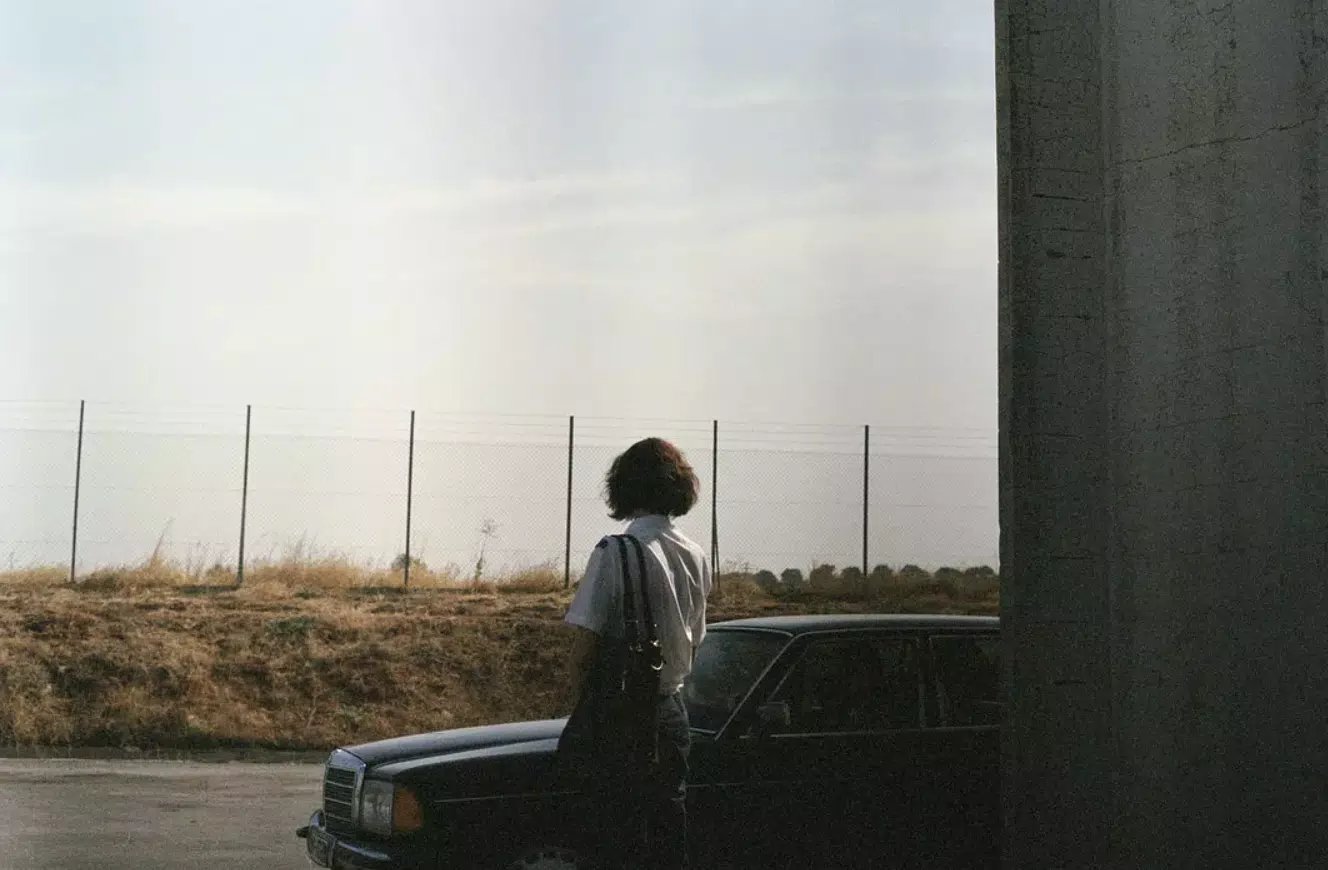
The imposition of censorship in language creation fosters an intellectual scarcity, and this scarcity, in turn, intensifies the poverty of thought. The autocratic nature of a regime often correlates inversely with the abundance of words available. In "Dogtooth," the dog trainer utters, "A dog can be shaped like mud," offering a metaphor that is both startling and thought-provoking. Its truthfulness is open to interpretation. While ordinary people might not frequently use the term "democracy," they grasp the essence of negotiation and discussion.
True emotions always find their language outlet, just as things with wings always want to spread their wings. In the ending of "Dogtooth", the eldest daughter smashes her own teeth and escapes hiding in the trunk of a car. One day, she will hike across a highway and see an endless sea. At that time, her father could no longer hide the magnificence of this world from her.

Language poverty arises from the constraints on thought, and, in turn, it intensifies the deprivation of thought. The level of autocracy in a regime tends to be inversely proportional to the abundance of words. In "Dogtooth," the dog trainer states, "A dog can be shaped like mud." This metaphor is striking, prompting contemplation on its validity. Ordinary people may not frequently use the term "democracy," but they comprehend the spirit of discussion.
True emotions invariably seek an outlet for expression, much like entities with wings inherently yearn to spread them. In the conclusion of "Dogtooth," the eldest daughter, driven by genuine emotions, shatters her own teeth and escapes, concealing herself in the trunk of a car. Someday, she will embark on a journey, traversing a highway until she encounters an endless sea. At that moment, her father will be unable to shield her from the splendor of this world any longer.























Share your thoughts!
Be the first to start the conversation.