
05 Without "The Thick of It," then no "Succession"
Jesse Armstrong once worked under Armando Iannucci on the team of "The Thick of It." [Later, "The Thick of It" was adapted by HBO into the American version “Veep”.] For viewers accustomed to the immersive shooting style of this pseudo-documentary, shows like "The Thick of It" may seem like watching a poorly recorded bootleg. However, this is the distinctive feature of "The Thick of It," the immersive shooting style of the pseudo-documentary.
There is a person in the show who swears incessantly. That person is Malcolm Tucker, who speaks with a heavy Scottish accent and works as a Spin Doctor for the Prime Minister.
Malcolm scolds anyone he catches, regardless of gender or appearance. In Malcolm's eyes, humans are treated with equal, fair, and unbiased abuse. Placed elsewhere, this show might face criticism, even backlash, and the writers might be publicly boycotted.

These formidable British writers dare to strip away the hypocritical facade of their people, presenting the world with stories and characters that, despite artistic processing, remain highly authentic. This is why many popular American shows feel like overconsumed junk food, while concise and impactful British shows are like organically grown green food.
06 Mysterious Character Histories
After watching the first episode of an American show, you usually know the protagonist's full name, psychological state, best friends, quirks, life dreams, and the scripted plot tasks assigned to them. The most typical example is the pilot episode of Vince Gilligan's "Breaking Bad." Vince took less than 15 minutes to give us the basic information about Walter White:

His wife is pregnant; his son has mild cerebral palsy; despite once winning the Nobel Prize in Chemistry, he is now destitute and teaches chemistry at a public high school; due to financial difficulties, he has to work two jobs; he has no status at home, at school, or the car wash; and he has late-stage lung cancer, and even with surgery, he'll survive for at most two to three years. Walter White is a genuine underdog.
These character designs at the show's beginning make the audience feel pity and sympathy for the protagonist, even if he does many morally reprehensible things later. We tend to rationalize and excuse his actions both rationally and emotionally.
British writers, especially comedy writers, are more casual. They are okay with it if the audience forms a negative first impression of the main characters, possibly leading them to abandon the show. [Jesse Armstrong, the creator of "Succession," comes from a comedy writing background.]
Returning to "Succession," Jesse Armstrong continued his habits from "The Thick of It" and "Peep Show"—he avoids using flashbacks, does not clearly explain the characters' origins and backgrounds, and "stubbornly" hints at character histories through dialogue, details, and other indirect means.

For example, in Season 1, Episode 7, Logan sends the children to the home of the eldest son, Connor, for family therapy. At the end of that episode, there's a meaningful close-up of Logan's scarred back, implying that Logan suffered abuse from his uncle during his childhood, possibly explaining why he became the Logan we see today. Abuse was the only "language of love" he understood.
You'll notice that "Succession," although it never explicitly states the background information of the characters, makes us, as the audience, even more curious about the dark histories of the Roy family members. For instance, Logan's third wife, Marcia:
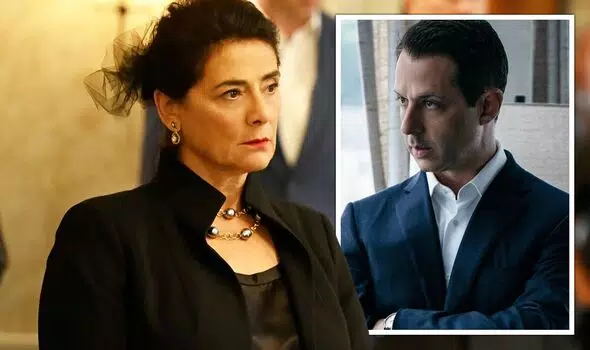
In Season 1, Episode 3, Shiv asks her ex-boyfriend Nate to investigate Marcia. Through this, we glimpse some background information about Marcia: she first appeared in Paris at 31, serving as an editorial assistant. Her first husband was a Lebanese businessman, and they lived a luxurious life in Paris, hosting many high-end parties and mingling with artists, writers, politicians, arms dealers, oil merchants, and more. However, before parachuting into Paris, Marcia's identity and profession still need to be completed. On the other hand, Marcia's mocking attitude toward Willa, dating Shiv's brother, Connor, indicates something about Marcia's past (that Marcia was once like Willa). Later, Marcia says to Shiv, "If you're interested in my past, you can come directly to me." This statement implies that Marcia has extensive and influential connections but is also filled with threats.
In addition, never skip the opening credits of "Succession," which is a window into the past of the Roy family: the absent mother and the absent-minded father.

07 Battle of Succession · The Boldness of the Creator
After watching sharp-witted satirical British shows like "The Thick of It," you'll find that "Succession," an HBO American show, follows the traditional formula of British comedy:
✅ Swaying and zooming camera shots
✅ Mysterious character histories
✅ Fall flat on his face ("L to the OG"—Kendall Roy)
✅ F-words as mantra (Logan Roy)
✅ Morally questionable characters (Roman Roy, etc.)
For viewers accustomed to traditional dramas, feel-good shows, and traditional American dramas, it's easy and natural to project our own thoughts and have some societal expectations for the characters in the show. Especially for a character like Shiv, the only legitimate female heir in the Roy family, viewers hope she can defeat patriarchy and become the strong female lead needed in a new era.
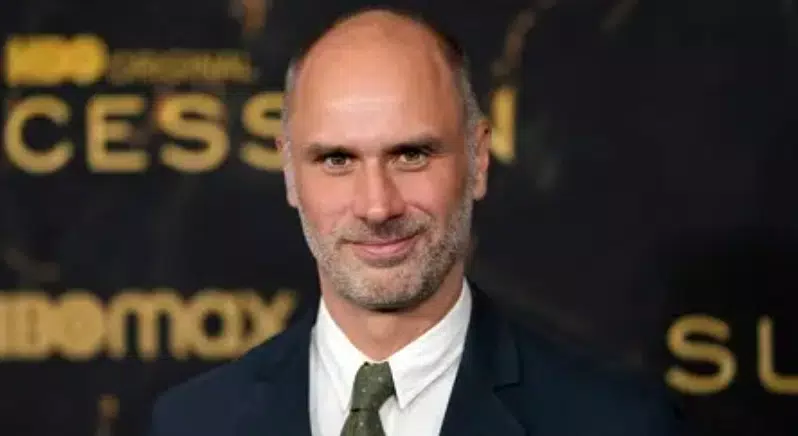
However, British writers like Jesse Armstrong and Armando Iannucci (known for "The Thick of It," "Veep," etc.) never aim to please or cater to anyone's aesthetic or taste just because their show gains popularity. In an era where creators bend to capital, cater to mainstream values, refresh ratings for fanbase harvesting, and accept endless streaming offers for money, having an artist like Jesse, who remains sober, serves his characters, the story itself, and presents an unfiltered view of the natural capital world. What more can we, as the audience, ask for?





Share your thoughts!
Be the first to start the conversation.