
Don't be put off by the title; this might just be the best, most stress-relieving popcorn flick in recent times—"The Fall Guy."
What's even more amazing is that this film, in addition to Hollywood's usual action, comedy, and romance elements, also has a touch of suspense.
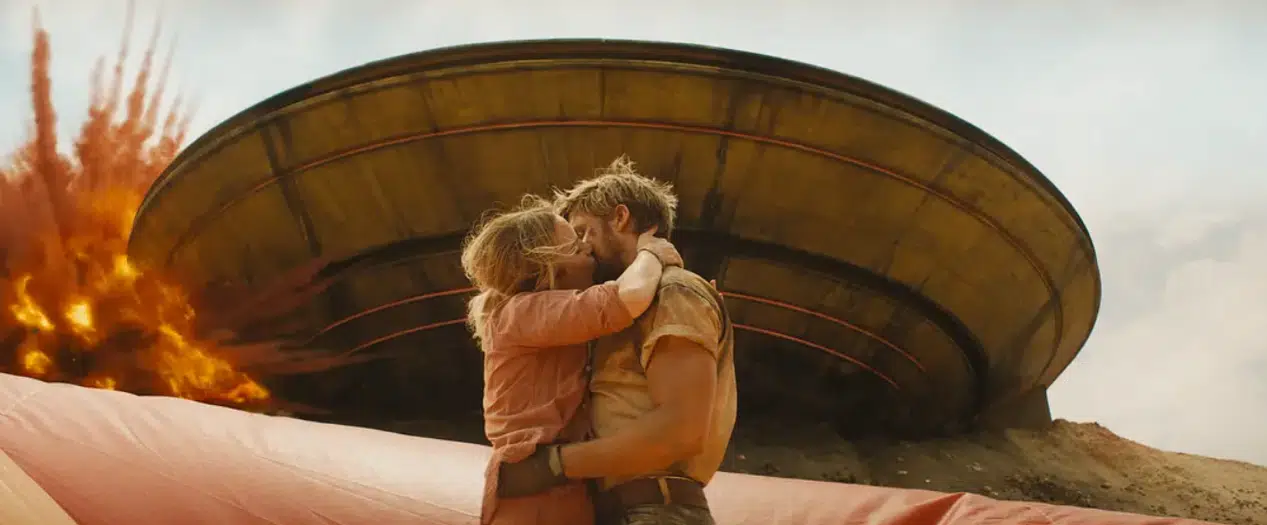
After watching, I lost count of how many blockbusters and stars were referenced: "Fast & Furious," "The Bourne Identity," "Black Panther," "Star Wars," and of course, the most obvious—"Dune." Every time that "Dune"-like BGM played, paired with the actors' exaggerated actions and self-deprecating lines, it brought the house down with laughter.
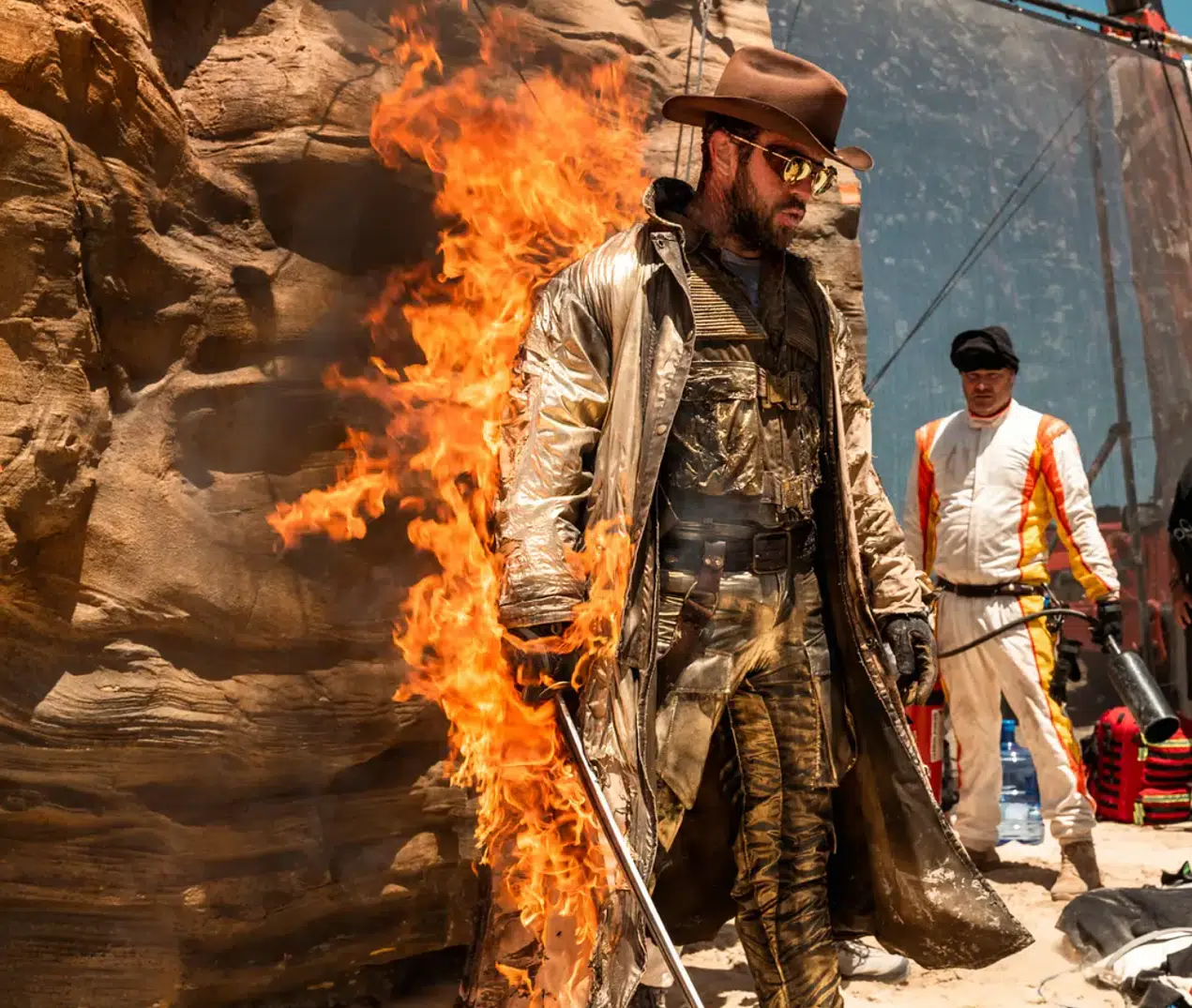
As a film focusing on a stuntman protagonist, the stunt scenes are plentiful and satisfying. From rappelling, city car chases, explosions, and boat pursuits to barehanded plane grabs—it's an action fan’s paradise!
The film's director, David Leitch, comes from a stuntman background. He has been a stunt double for stars like Brad Pitt and Jean-Claude Van Damme. Before directing, he participated in 87 films as a stuntman or action coordinator. In creating this movie, Leitch drew from many personal experiences, thus portraying the daily life of a stuntman with great accuracy.
In 2014, David Leitch successfully transitioned from stuntman to director with "John Wick," starring Keanu Reeves. It became the most iconic action movie series of the past decade. This film showcased Leitch's talent in action design and paved the way for his directorial career.
Subsequently, Leitch directed other successful action films like "Deadpool 2" and "Bullet Train," which we won’t delve into here.
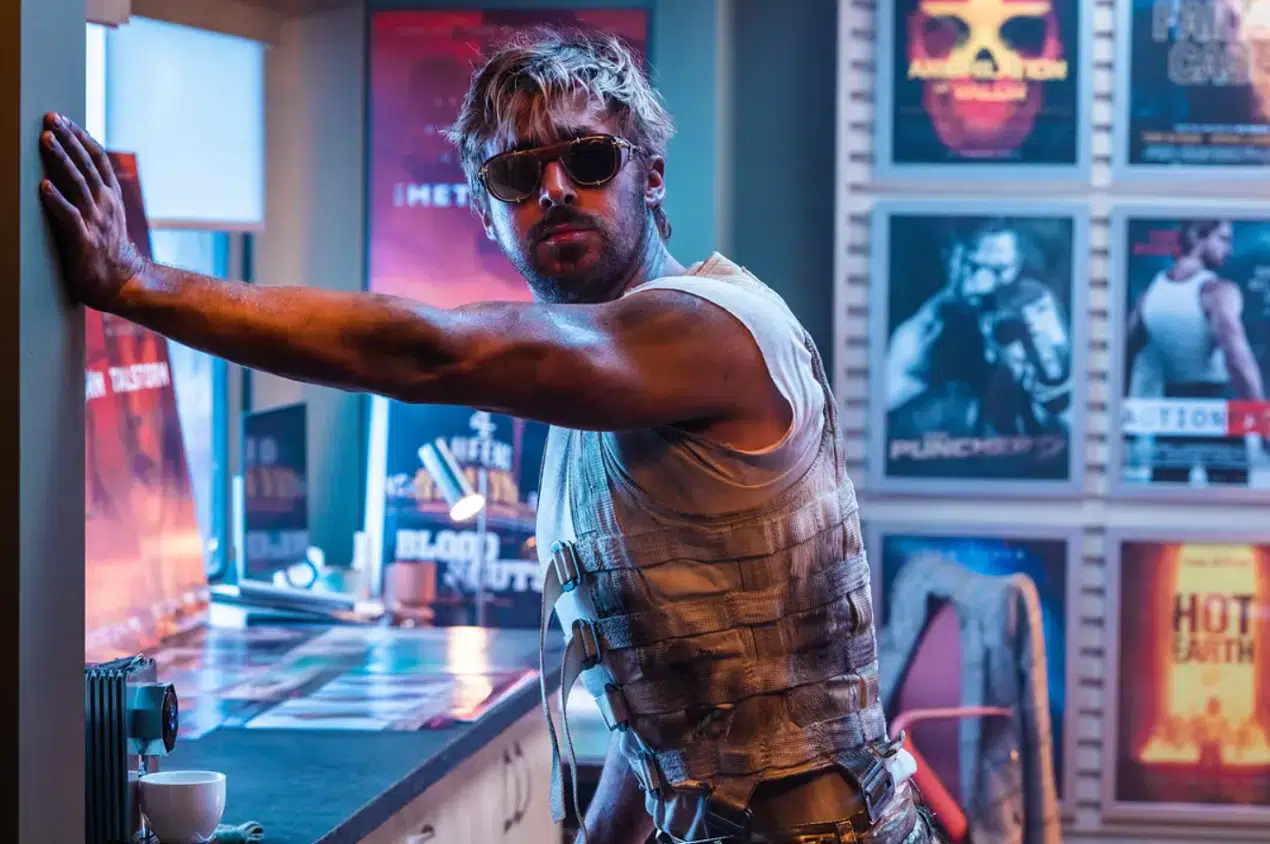
In "The Fall Guy," we again see Leitch's undeniable talent for action design. For example, the nightclub fight scene after the protagonist is drugged. With neon visuals and rhythmic background music, every punch Ryan Gosling throws lands perfectly on beat, reminiscent of the nightclub fight scene with Keanu Reeves in the "John Wick" series.
In the subsequent action scenes, whenever the protagonist finds himself in a tight spot and the audience wonders how he’ll escape, you can't help but admire the director’s ingenious action designs—they’re always so logical, cool, and filled with humor.
Moreover, if you think "it's just a typical popcorn action flick," David Leitch clearly wants to counter that notion: “Who says action directors don’t understand depth?”
In the film, Emily Blunt plays the female lead, a director. There’s a scene where the male and female leads pour out their hearts over the phone. The director cleverly uses split screens to show the distance between them, adding a "director's commentary" touch to the scene.
In the director's mind: “This shot has depth. Can't see it? Let me explain it to you.”
Emily Blunt mentioned that she drew much inspiration for her role from Greta Gerwig, one of Hollywood’s most renowned female directors today.
She said, “This character is warm and charming. I guess there’s a bit of Greta in her.”
As an action movie focusing on stunts, Emily Blunt’s presence in the first half isn’t very strong. But in the latter half, she becomes crucial to the protagonists' comeback, showcasing a “clear-minded” quality.
Towards the end, there’s a scene where the female antagonist verbally attacks the female lead. Initially, the antagonist tries to manipulate her with PUA tactics, but when that doesn’t work, she switches to feminist rhetoric: “Don’t you want to break this male-dominated society with me…”
The female lead responds by punching her. (Don’t listen to what people shouting slogans say; watch what they do.)
This can be seen as a satirical take on today’s superficial, slogan-driven political correctness by the director and screenwriter.
Another deconstruction scene is the “fake 'Dune' scene within a scene.” When Aaron Taylor-Johnson and Jason Momoa each perform their own versions of the same “inspiring speech,” the audience quickly realizes: it’s not the actor’s charm (who might be awful in real life) that moves people, but the atmosphere and dialogue.
Hollywood screenwriters excel at deconstructing trends as well as creating them.
At the end, David Leitch includes many behind-the-scenes clips and a long list of names in the credits to honor stunt performers, reminiscent of early Jackie Chan films' behind-the-scenes footage.
In the film, the director even uses the protagonist to voice the sentiment that “stunt performers don’t have their own Oscar category,” seemingly speaking out for stunt performers.
Of course, this topic is complex. The Academy's opposition is that creating an Oscar for stunt performers might encourage more dangerous stunts. After all, early Jackie Chan and Sammo Hung’s “shoot, jump, hospital” work mode is seen as inhumane in Hollywood.
However, it’s also possible that those stunt performers do dangerous stunts not for practical purposes, but out of a love for challenges, like extreme sports enthusiasts, or a pure love for film, like the protagonists of this film.
As David Leitch said in an interview: “I hope the audience can see the heart and soul of stunt performers in this film. Unlike many stunt performers who might feel worn out if they aren’t stars, I don’t feel that way. I became a stunt performer because I genuinely love it, love doing interesting, challenging, and scary actions. We don’t feel like, oh, we wish we were stars. No, our current status as stunt performers is great. For the love of film, we’re willing to work hard. Colt (Gosling's character) is the same, loving movies and life.”




Share your thoughts!
Be the first to start the conversation.