
I finally watched Anora. I think it's very similar to an adult version of "Home Alone." I know this sounds a bit absurd. But let me explain. There's a reason why I think this way.
First, both films are comedies with a Christmas spirit. The stories both focus on a vulnerable person who is accidentally left at home. In terms of viewing experience, both films make it easy for audiences to laugh in theaters and enjoy the show in comfort.
Second, although their backstories and plot developments differ significantly, both feature seemingly weak protagonists who end up hurting stronger supporting characters. After all the comedic chaos, everyone returns to their own homes at the end.
Finally, both films touch on class issues. While it might not be deliberate in “Home Alone”, Sean Baker definitely addressed it intentionally in “Anora”, and it was likely his main purpose.
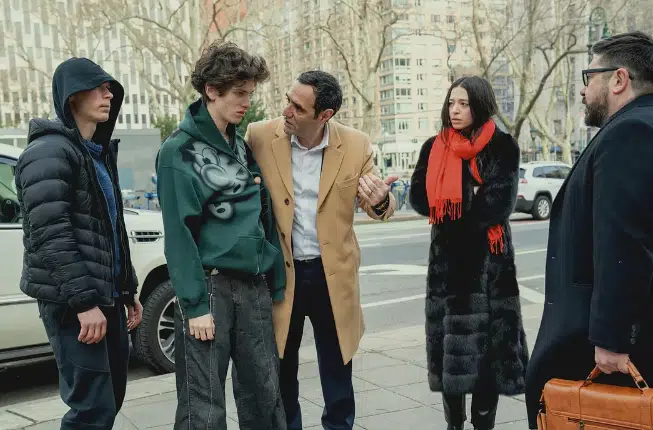
Okay, I know this comparison might seem a bit forced. I just want to express that, I feel like watching “Anora” is like adults watching "Home Alone" because as adults, we can see that all the comedy stems from a deep pain. This pain comes from an almost unsolvable real-life predicament. It's just that “Home Alone”, told from a child's perspective, makes the cruelty of class differences less apparent. For instance, as children, we never realized how pitiful Kevin's neglected state at home was. As a child, I wouldn't have understood just how wealthy Kevin's family was. I wouldn't have felt sympathy for the bumbling burglar then, but now when I watch it, it hurts.
Moreover, 1990s America wasn't really a society of extreme wealth disparity or rigid class stratification, where the luxurious lives of the wealthy constantly stung ordinary viewers. But in “Anora”, I find myself constantly empathizing with the working-class characters. Whether it's Anora selling her body for sexual services, or Igor and his colleagues selling their bodies and time to provide violence. They're all forced by life to sell their labor, time, body, and dignity to varying degrees, and in this process, they try to preserve a bit of self while making small but futile resistance against the machinery that exploits them.

Therefore, rather than a modern version of "Pretty Woman,"(1991) “Anora” is more like a New York version of "Parasite"(2010). Through Anora, a female character struggling at the bottom rungs of society, Sean Baker presents ordinary people's predicaments in contemporary life. The film moves from scenes bathed in ambiguous and tender purple-red hues toward completely cold gray tones. This isn't about the protagonist's fairy tale being shattered - no one in the story believes in fairy tales. It's the audience's fairy tale that crumbles.

Vanya doesn't love Ani. I had a thought while watching: why are there so many scenes of Ivan doing drugs? Is it just to present an atmosphere of decadent revelry? I don't think so. The film rarely shows dizzy, subjective point-of-view shots from the protagonist's perspective, which is even more apparent when compared to the contemporaneously released "Better Man (2024)". The audience gets to maintains an observer's perspective. And from this viewpoint, Ivan is seen as a spoiled rich kid, constantly immersed in drugs, alcohol, and video games. From his first encounter with Ani at the nightclub to their impulsive marriage in Las Vegas, he's barely ever fully sober. To Ivan, Ani is merely for his enjoyment - providing sexual services, accompanying him in entertainment, and helping him become American. The scene where Ani dances for Vanya at home is particularly representative. Lying on the couch, Vanya looks like a child, completely lacking sexual appeal, making Ani's energetic performance seem almost comical. Their interactions often show scenes where "Vanya is playing video games while Ani cuddles beside him, trying to talk or initiate intimacy." In these scenes, Ani struggles to compete for Vanya's attention against video games, which suggests that fundamentally, she's no different from drugs, alcohol, and video games.

But this doesn't mean Vanya is completely muddled and naive. He simply doesn't take Ani and life in America seriously, as evidenced by what he tells his parents during their argument: "What did I do? I just spent time with an escort. Why are you making this such a big deal?" To him, everything is a game, and he's just a child playing games. In this regard, casting Mark Eydelstein as Ivan was a very wise decision. He looks young and lacks the aggression typical of adult males. It's understandable why Ani might think she could benefit from such an apparently naive rich kid.
Yet Ivan is not completely thoughtless and childish. When facing his parents, he's both fearful and clear-headed. When he learns his parents are arriving in America, he begins his reckless revelry. Even when sober, he pretends to still be intoxicated to avoid facing Ani. On this point, Mark Eydelstein's performance is precise. In his GQ interview, he discussed the challenge of avoiding making Vanya a simple antagonist: "For me, it was a big challenge to do him bigger than just antagonist," he says, adding that he and Baker imagined Ivan going through the film in three stages: the first, as a freewheeling prince; the second, a responsibility-avoidant kid; the third, a reluctant villain." Looking at the results, Mark succeeded in this challenge.

Ani doesn't believe in love either. When Vanya invites her for in-call services/New Year's party and to spend a week with him, Ani's first thoughts are about money and work: how much she should charge, how to get time off from the club. After she agrees to be Vanya's girlfriend for a week, the ten-minute montage is filled with scenes of extravagant decadence. Private jets, mansions, casinos, luxury shopping - all the thrills money can buy are displayed. At times, the audience seems to be even more captivated than Anora. Compared to Vanya's recklessness, Ani remains cautious throughout. She never seems to forget she's working, until Vanya proposes marriage with a seemingly reliable reason: not for love, but for a U.S. green card. He says he's serious, saying it twice, and she's tempted. But she's not tempted by love - rather by this sole opportunity to escape poverty. This is the real reason she becomes so adamant about defending this marriage in the latter half of the film.
From start to finish, she carefully probes Vanya's preferences, trying to please him in her own way. She keeps herself on edge all the time; like a warrior throughout the show, she is always calculating how to maintain her new life. Ani's naivety lies in her belief in the law, in something akin to the American Dream. Perhaps we've all heard too many such stories: without a prenup, divorce means assets must be split equally. We've seen such stories, haven't we? Perhaps it's these stories that led both Ani and the audience to overestimate the power of law and marriage. When this illusion is ruthlessly shattered by Vanya's mother, Ani, who had been in fighting mode all along, seems to finally calm down.
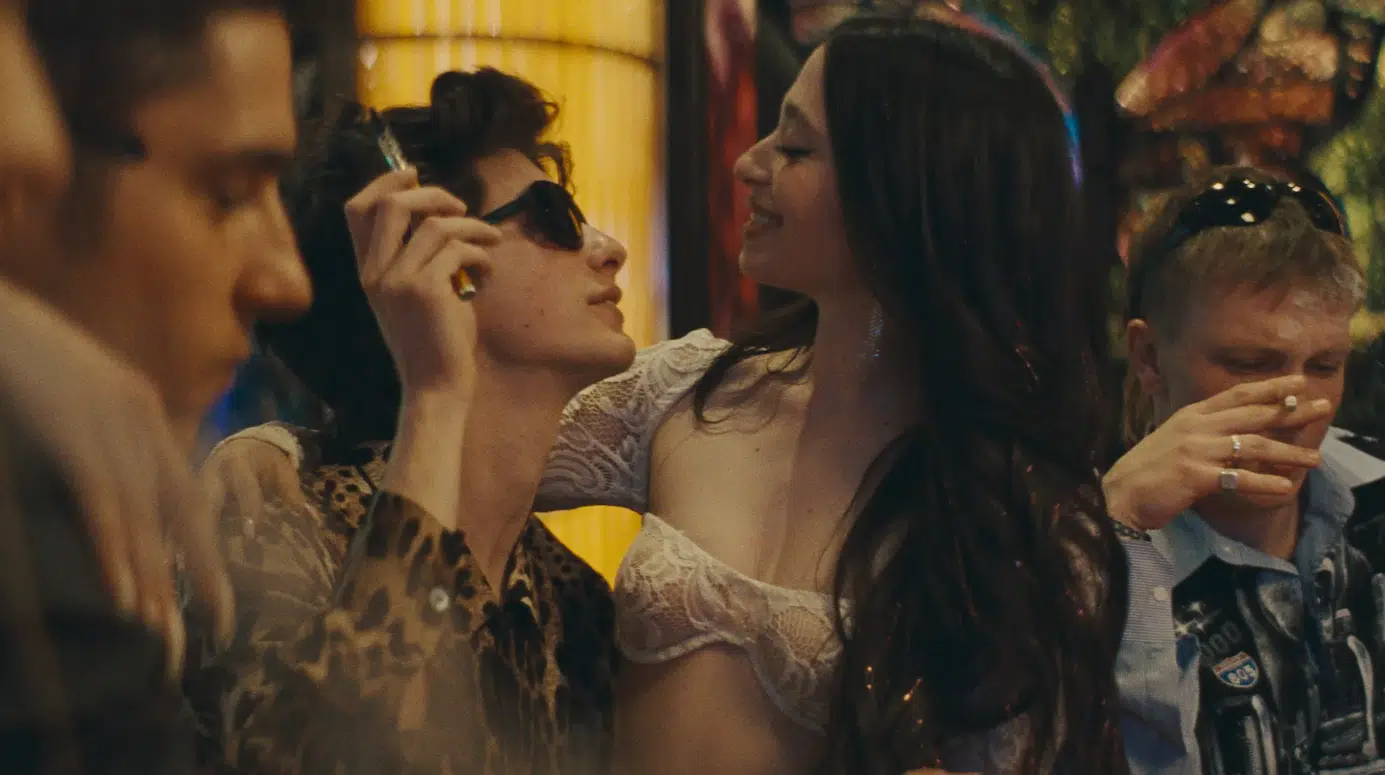
The only thing that might give viewers an illusion of love is the relationship between Ani and Igor. After Igor appears, my perspective of the story shifts to his viewpoint. Igor's words and actions constantly remind me that Ani isn't just a seasoned or delusional sex worker, but a girl who's both hurting herself and being hurt by others. He worries whether she might hurt herself or feel cold. He offers her a scarf, hands her a drink when she's humiliated on the plane, and finally gives her that ring. I believe he does all this out of sympathy and compassion, with a touch of tenderness and fondness, rather than love. Between them exists a gentle emotion mixed with sympathy and pity, and possibly even a kind of alliance between working-class people. When Anora finally breaks down crying in Igor's arms, I don't think she's been reformed or moved by Igor. Her crying is more like a collapse. For the past 24 hours, she's maintained a fighting stance, preserving her self-respect. But when faced with Igor's kiss, she's forced to confront her true self - the self that Igor sees beyond just a sex worker. A fictional American Dream has shattered, and Anora must face a cruel reality with just a hint of warmth.

I believe this film's success in awards and streaming is inseparable from Madison's performance. She precisely portrays Anora in different environments and states. Every scene is so bold and vivid, almost uncomfortably real. She is first and foremost working class, repeatedly soliciting clients at the club, dealing with customers trying to skip payment, negotiating vacation time and health insurance with the club manager. This life without any rose-tinted filter, treating sex as repetitive labor, is the most direct manifestation of capitalism's alienation of the body.
Human alienation by capital is an old, almost outdated theoretical consensus. Marx argued that alienation is a result of capitalism. He believed that alienated workers become separated from their productive activities, labor objectives, and production processes, making work an involuntary activity. Thus, workers cannot identify with their labor or grasp its meaning. Workers inevitably lose control over their work, and consequently, over their lives and sense of self. Workers have never been autonomous, self-realizing human beings; they can only exist in the mode that the bourgeoisie wants them to be. For women, under the added influence of patriarchy, the situation of alienation is even more severe. The alienation of women from their bodies is the most typical result of this dual oppression of class and gender.

From the perspective of alienation theory, like all Sean Baker's films, “Anora” ultimately tells the story of suffering under capitalism's heavy pressure - we must construct an image of ourselves and maintain this image through speaking out in order to preserve dignity and self-respect in a system designed to exploit. The three characters who act as capitalist enforcers demonstrate this hardship and numbness in the oppressive system more clearly. For instance, in the middle of the film, when the group is moving between different locations searching for Vanya, Anora offers to drive, but Toros refuses, citing not wanting to lose the parking spot. Later, when the car is about to be towed for illegal parking, Toros's emotional and irrational response mirrors Anora's outburst at home. Toros and his car serve as a direct metaphor for the relationship between workers and means of production.

The film focuses on the small details and helplessness of ordinary people in the post-capitalist era. However, I must emphasize that gender issues cannot be equated to capitalism issues. While Anora, Igor, Toros, and Garnick all experience working-class hardship, their degrees of alienation differ. The men sell their time, providing violence for capitalists. Though they sometimes sacrifice their dignity, they can regain it when facing those of lower social status. Take, for instance, the restaurant scene where one lectures about the younger generation's irresponsibility and social media addiction—it's his way of venting about life and reasserting his masculinity. Though observers might find this laughable, in his world, he maintains a semblance of working-class dignity.
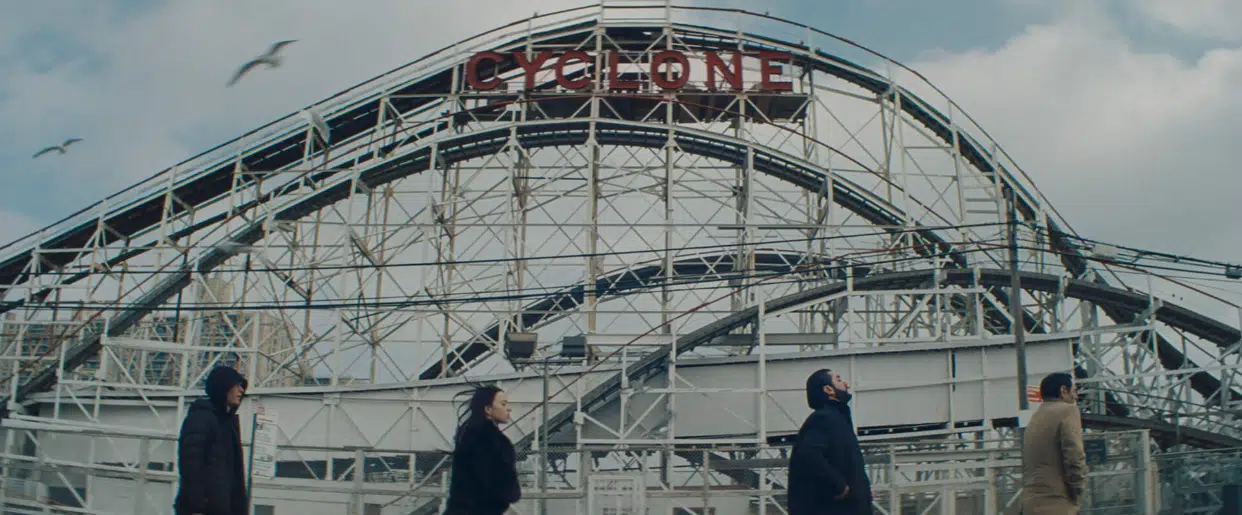
Anora suffers from alienation at a much deeper level. She sells not just her time but transforms her entire body into a means of production. She serves as the most exploited character in the story. Her confrontation with Vanya's family proves futile—Vanya walks away unscathed while Anora's life crumbles. I keep wondering about her fate after the film ends. She won't develop anything lasting with Igor; instead, she'll return to her pre-Vanya life. All she has is a useless diamond ring. While Vanya can dismiss these weeks as mere entertainment, Anora faces harsh realities: explaining her return to the club manager, facing her colleagues, enduring their mockery, and processing the humiliation from Vanya's family. She must invest even more emotional labor to rebuild her protective facade. The thought alone is heartbreaking. While Toros, Igor, and Garnick can avoid these particular struggles, only Anora—this young woman who desperately reached for everything but failed—must face them all. Her conversation with Igor in the snow-filled car reminds me of "Past Lives (2023)." Though unrelated, both films capture ordinary people's struggles in the post-capitalist era. We're all fragile beings forced to wear mature facades while facing the world alone in our hearts.
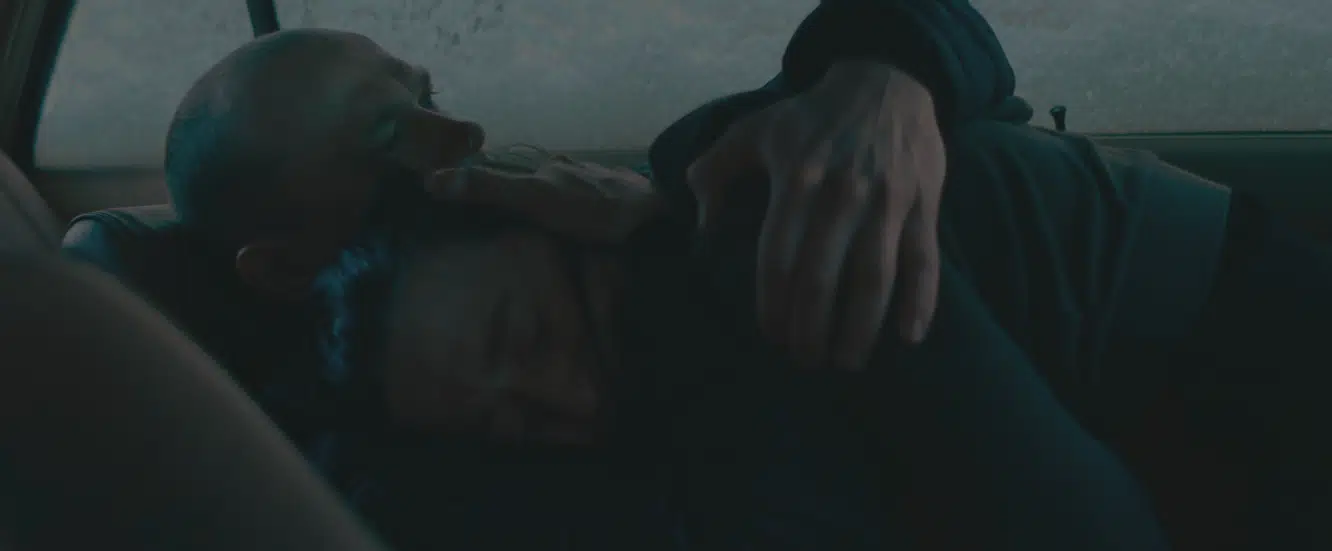
“Anora“ is a good film with a compelling protagonist. While it moves me deeply, I worry for Anora. The film would be better with fewer sex scenes, less profanity, and less reliance on female bodies and narratives to critique capitalism.





Share your thoughts!
Be the first to start the conversation.