
There is an unsettling magnetism in the cinema of violence—a grim allure that Dangerous Animals deftly harnesses and interrogates. This film, which surfaced prominently at Cannes and currently unsettles audiences in theaters, artfully navigates the tightrope of narrative coherence, steering clear of the trap of disjointed storytelling and gratuitous sensationalism. For most of its runtime, the movie is impressively adept at crafting logical, inevitable consequences rather than random, forced happenings. Until, frustratingly, it isn’t.
At its core, Dangerous Animals presents itself not merely as a horror-thriller but as a grotesque allegory of childhood trauma filtered through the male gaze, dripping into the uncomfortable territory of torture porn. The screening I attended sharpened this reading: nine of us, exclusively men, gathered in a theater darkened to witness a narrative centering explicitly around women subjected to male violence. Such a stark demographic reality lent the screening a strange, almost meta-cinematic unease, in ways both nauseating and fascinating.
This discomfort is critical. The antagonist, a serial killer whose history is anchored firmly in trauma and isolation, clearly carries the scars of a twisted childhood. He embodies a bitter vendetta against women, subtly but persistently suggesting a warped maternal wound at the root of his vicious compulsions. Throughout the film, he proclaims himself "strong" and "powerful," openly contrasted against another male protagonist—depicted in grief-stricken tones, buttoned-up, almost Mormon-esque in his restrained presentation. These two masculine archetypes frame a disturbing spectrum: the one who seeks to save and cherish the feminine, and the one who intends only to destroy.The film becomes a savage commentary on masculinity itself, torn between brutal consumption and desperate preservation
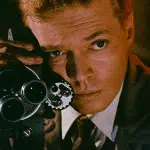
Yet, perhaps most troublingly, the film explores violence not only as a spectacle but as a voyeuristic act. The killer compulsively records his heinous acts, forcing characters—and by extension, the audience—to watch. The narrative becomes self-reflexive when the killer chillingly remarks, “You don't think you want to watch, but deep down, you do.” It’s a moment of sharp meta-commentary aimed directly at us, the viewers in the dark. We are complicit, unwilling yet unable to look away, inviting reflection on our role in perpetuating such cinematic violence.
Dangerous Animals, then, poses pointed, albeit implicit, questions about audience complicity, about the uneasy consumption of violence, and about cinema’s potential reinforcement of harmful tropes and voyeuristic impulses. It's a deeply reflective, darkly provocative narrative—right until its final act.
For much of its runtime, the film crafts its unsettling provocations with unnerving precision—until suddenly, near its conclusion, it falters dramatically. What unfolds then feels forced, unearned, and unjustified, betraying the previously grounded suspension of disbelief. The visceral grotesquery, brutal and visually striking as it may be, is undermined by lazy scripting. It feels like the creators exhausted their storytelling prowess, defaulting to "just because" scenarios that undermine the authenticity previously so painstakingly built.
The climax, designed to be cathartic and shocking, devolves into cliché, emerging hollow, a betrayal of the film’s carefully nurtured tension. The once-brilliant tapestry frays into narrative threads of plot armor and convenient contrivances. In this final act of sabotage, the film stumbles disastrously. Its narrative integrity—previously ironclad—disintegrates into mere spectacle without substance, violence without meaning. The elegance of the horror becomes mere splatter, a garish spectacle lacking the intellectual backbone the film once promised.
Yet, despite this final disappointment, Dangerous Animals remains hauntingly provocative, leaving an uneasy imprint long after the lights return. Its questions linger: Why do we watch? Why can’t we look away? Even flawed, the film remains a powerful examination of trauma, masculinity, and cinema’s dark compulsion, a discomforting mirror held steadily to our collective face.




Share your thoughts!
Be the first to start the conversation.