
This article will most likely be controversial for reasons other than those I intend to discuss.
My opinions on cinema, films, politics and, in general, I believe are almost always controversial, not for the reasons that cause controversy on Twitter, with meaningless opinions aimed solely at creating trends in favour of a tribal narrative. My interest is in seeing new paths, different from those we are used to or those that hashtags and flags try to adapt us to. To break out of dichotomies, to see not just two alternatives, or to try to avoid that correct opinion that seeks not to upset anyone, to look good and come out on top. My opinion is that search for individuality where you don't have to choose between a multiple-choice question where, for example, the answer to your gender or identity is not in a catalogue where you simply choose, or your political choice is reduced to two antagonistic positions and a comfortable third in the middle. Because those answers that define you are not in a formula or market segment, they are within you.
If I wanted to be controversial, just for the sake of it, I could revisit my most popular positions, or unpopular ones to be more precise. Here are a few examples
1. Hollywood is an industry, but cinema is not.
2. Almost all Hollywood films are just for selling tickets, but some manage to sneak in an interesting plot and a denunciation amid the CGI paraphernalia and celebrities of the moment.
3. Sinners is a good film. (Almost all my acquaintances, including film critics and cinephiles, say it's bad).
4. Emilia Pérez is genius in my opinion. It may not be perfect, but it has a message about the capacity for transformation that is extremely interesting, very necessary and timely in our day and age.
5. Wes Anderson has elements of "film Noir”, and fans of the director feel insulted, even though the definition of naive does not imply that the stories or the director are bad.
And I could certainly go on... But here I want to delve deeper into something that goes beyond these specific positions. It's more about a journey I want to take through creative writing, referring to two of the writers/directors I most admire and analysing one of their works, which is also one of my favourites from their filmography.
In an interview, Argentine actor Guillermo Francella stated, paraphrasing, that cinema should be for everyone, that it is no good if only four people go to the cinema or if you get bored watching a film or fall asleep and don't understand anything. The question we can ask ourselves is whether cinema is there to distract us and make us feel better at some point, to make us laugh or move us, or to serve as a topic of conversation on a special occasion... Or is it much more than that? This is a question I ask myself, because a visual narrative art such as cinema, how can it be just entertainment? Literature, a novel, a story, those that have marked generations since time immemorial, from Greek literature through Shakespeare to our times, stories that are repeated, adapted, revived, new conclusions and new analyses are drawn from them. I think we can conclude that cinema is a school.
So if we start from this idea, it is a place where we can learn everything. Or at least everything we need. It is food for the soul, something essential that has become indispensable for some of us, just as literature is for some people, painting for others, comics for others, dance — who knows.
The art of storytelling—whether in novels, short stories, comics, poems, theatre, dance, music, films, etc.—uses metaphor and comparison as its greatest resources to bring the ideas expressed to life in a vivid and personal way, materialised in our imagination, that internal screen called the mind where my nature, my thoughts, do not travel in a straight line like a recipe or a flow chart, but are more like the branches of a tree or its roots, which grow without any apparent pattern but which, if you take a step back, reveal a concrete form. That being the case, as a storytellers, researchers, reader or spectator, we make associations, relate concepts, compare ideas and styles, move forward, then go back, go from one side to the other, digress and perhaps return to the initial topic, starting again; as if it were another loop, because life is not only a ramification of many things intertwined, it is also an infinite spiral of repetitive cycles, like day and night. All this apparent chaos of our infinite reality makes sense thanks to the weaving of stories that connect with our way of understanding the world.
So exercising your imagination, giving it free rein, letting it flow, is perhaps what Alfred Hitchcock meant by his concept of moments of flow, which he described as happiness. Those moments of epiphany where your creative ability unfolds.
And if all this ends up being controversial because the result of these moments are ideas that go beyond the conventions we are used to.
All this rambling about narrative construction leads me to two of the architects of stories who explore the depths of the nature of the human mind.
Kaufman and Lynch
Kaufman's fans will probably want to crucify me, and Lynch's fans will want to do the same, for committing the sacrilege of putting their most sacred messianic figures in the same line or sentence, but that is far from my intention. I am not trying to compare them or rank them in a statistical comparison table or put them on a podium. I know they are different, with different styles, but if we stop to think about their works, common themes begin to emerge.
Putting parts or elements of their own lives into their work or the duality in their characters, such as in Adaptation, as well as dreams or nightmares that are present and move on the border between life and death, a sequence of events that is not always linear; as in "I'm Thinking of Ending Things". or “Synecdoche New York”, also with surrealist and symbolic overtones that can lead to multiple interpretations.
The second one in the title has a film to his credit that, when I saw it for the first time, blew my mind and flooded my consciousness with its demons... and now every time I see it, I enjoy it as much or more than the first time. It is one of those timeless gems that you cannot miss.
Lost Highway
Lost Highway is a film that will shake you to your core, just like your spouse or perhaps that neighbour from across the street or that cynical, charming colleague. You've already been through Snyder's surrealism for beginners with “Sucker Punch” de Zack Snyder, now it's time for the big leagues with David Lynch.
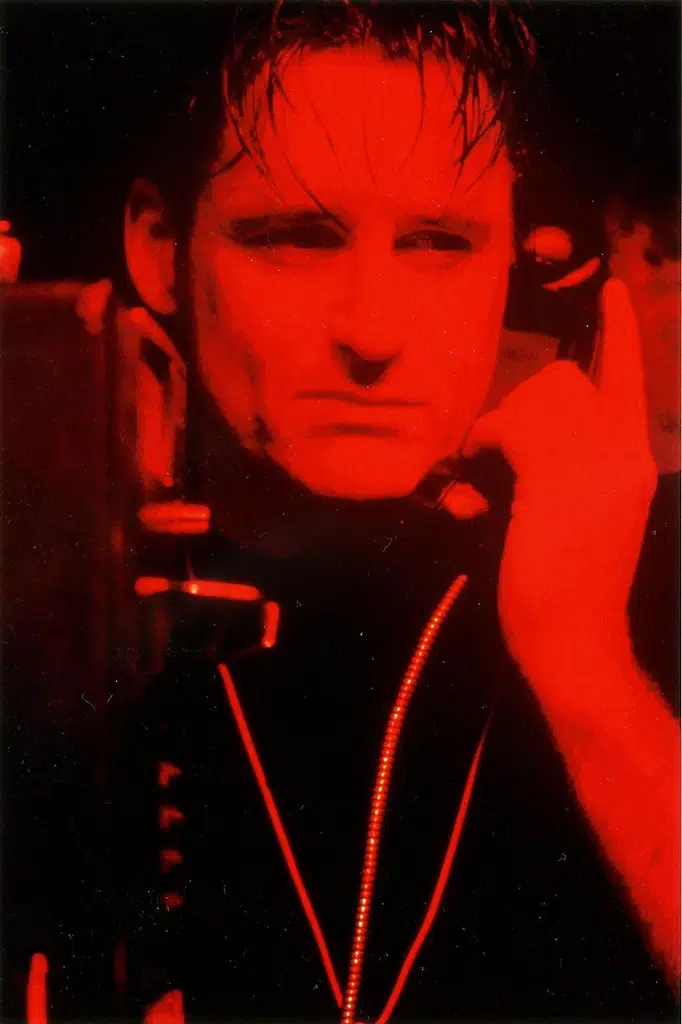
It's a journey, a trip into Fred's subconscious and, at the same time, our own. And, paradoxically, we are more awake than ever within our own subconscious. By travelling into Fred's dreams (Bill Pullman) and nightmares, we are accessing places within ourselves that we do not normally or consciously have access to. It is a dream journey through these unexplored corners of our mind. The difference with other types of films is that when we watch an easier film, where all the events and anecdotes happen in reality and in a linear sequence with lighter and more superficial stories, they entertain and amuse us, serving as a mechanism for sleeping, for resting from our own reality. Lynch does the opposite with his dream world, forcing us to come face to face with our harshest human reality.
Recently, some friends were talking about forgiveness and how certain actions could be considered unforgivable, such as infidelity. This caught my attention. Perhaps, depending on the circumstances, of course, the era, the age, one's conceptions change. The younger you are, the more radical your beliefs are, and the weight of the ego, jealousy and insecurities are also more evident. But regardless of your ability to forgive or not, what is more important is your ability to see yourself and your ability to change your perspective and modify your own paradigms. One of the ways to change those points of view and ways of thinking is through cinema. It is a vehicle that helps us learn to see ourselves reflected in other stories, stories that are foreign to us or perhaps not so foreign, but that can help us imagine situations and contexts that take us out of that comfort zone in which we are rooted without realising it.
Returning to the theme of infidelity, we can talk about one of the best films, if not the best, in the filmography of the master David Lynch, who, through surrealism, dark plots and shades of film noir, takes us into the dreamlike depths of our dreams, fears and even nightmares. If we let ourselves be carried away by his voice, he will take us to a place with mirrors that not only distort our mind and our concept of ourselves, but also many aspects of our lives, allowing us to take a look at the difficult process of getting to know ourselves.
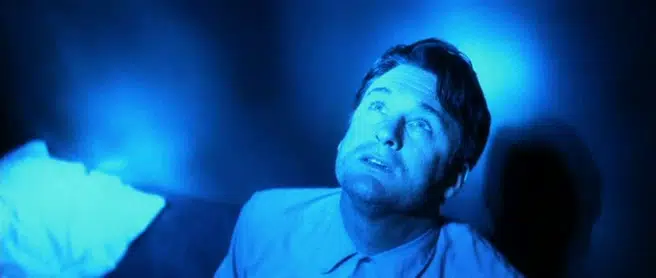
If there is something obscure and difficult to find since time immemorial and memorials by the oldest philosophers who have always sought answers about knowing ourselves, the meaning of life, existentialist themes, what it means to be human, where we come from and where we are going; the search for these answers is one of the most difficult processes. Many of us may have reached death without glimpsing a shred of these answers, regardless of our scientific, academic or religious knowledge. sacred texts seek to provide answers, but often these are insufficient. Science likewise makes advances and discoveries, but there are still many gaps that may never be filled. However, in the midst of all this, there is something that can lead us to those answers. In the early days of literary narrative, there was talk of the fire that the gods gave to man, personified in a mythical figure called Prometheus. If this fire is imagination, then the answers lie within us and in words. Literature is an artefact that reflects this fire of the gods, which, rather than showing us a single path, opens up all paths to self-knowledge.
Ed: Do you own a video camera?
Renee Madison: No. Fred hates them.
Fred Madison: I like to remember things my own way.
Ed: What do you mean by that?
Fred Madison: How I remembered them. Not necessarily the way they happened.
David Lynch's Lost Highway is a film that can be interpreted as a profound and disturbing analysis of fragile masculinity. Through its non-linear and dreamlike narrative, the film explores how insecurity, jealousy, and a man's inability to accept the reality of his own actions can lead to a spiral of violence and dissociation.
The main character, Fred Madison, is a man consumed by jealousy and distrust of his wife, Renée (Patricia Arquette) . His masculinity feels threatened by his suspicions of her infidelity, which leads him down the path of paranoia.
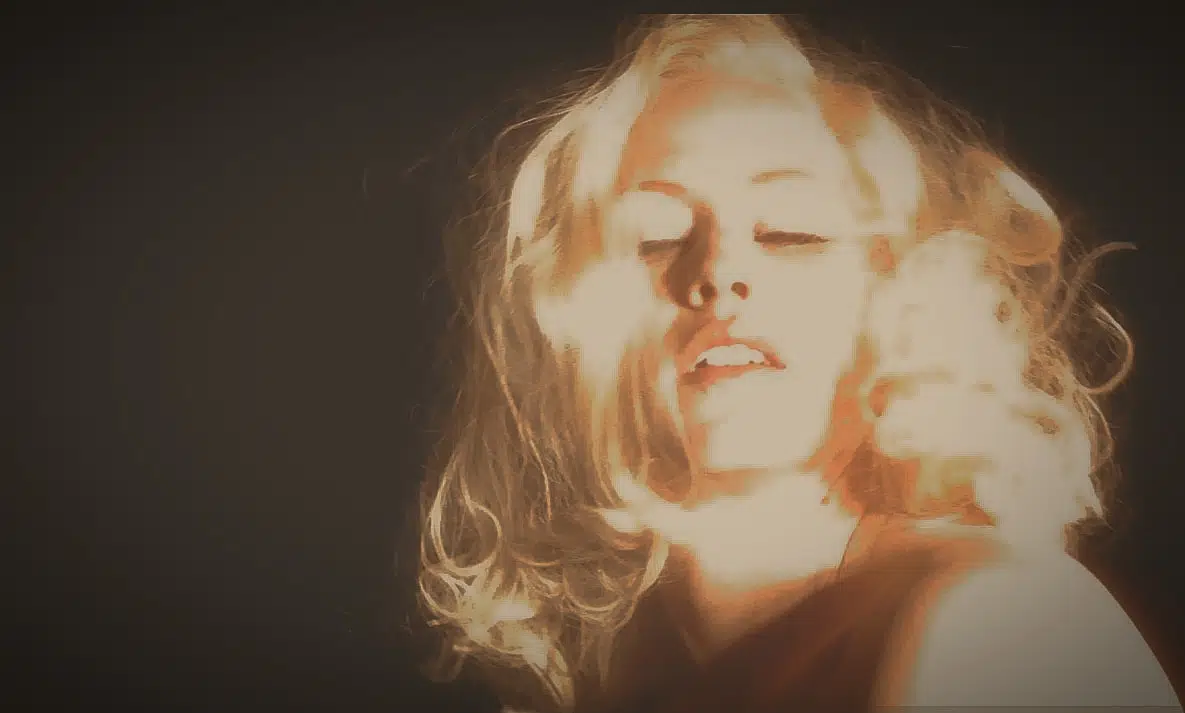
His inability to deal with his insecurities allegedly leads him to murder his wife, as Fred cannot face the truth. Instead of facing guilt and responsibility, his mind breaks down and he creates a new identity, that of Pete Dayton (Balthazar Getty) . This psychological escape is his way of escaping reality and a "self" that he considers a failure as a man. He then lives out the fantasy of being Pete Dayton, who represents everything that Fred is not: he is young, virile, desired by women and apparently powerful. Everything Fred aspires to, a desperate attempt to rewrite his own story and be the "high-value man" he believes he should be. However, even in this new identity, his jealousy and violence resurface, proving that one cannot escape internal problems in this artificial way.
Mr. Eddy (Dick Laurent) is the embodiment of the worst aspects of machismo and possessiveness, a ridiculous character who represents the need to control women and punish them if they do not conform to male expectations.
The "diabolical mysterious man" represents his conscience, that blow of objective reality that Fred does not want to accept. "Lost Highway" is not only a psychological thriller, but also a nightmare about the failure of masculinity. The film shows the damning fate of a man who, unable to accept his own vulnerability, chooses denial, fantasy and violence, becoming trapped in a hellish cycle created by his own fragility.
Lost Highway, as its name suggests, may be a materialisation of the path we are all travelling and a warning to regain control on a safe path before it is too late.
A path that is surely not the product of our free decision to follow that path, but quite the opposite: it is the result of being slaves to our fears and insecurities and that mania of seeking the solution to problems outside ourselves and not within ourselves. We are accustomed to believing that the only thing that is real is the tangible, what is in the waking world, and perhaps what is in our dreams affects us as much or perhaps more than what we see or feel in our apparent reality.
F. W. Murnau's Nosferatu (1922) taught us that sometimes light blinds us, dazzles us, and in the darkness we can sometimes see things better. Perhaps something similar to this is what happens not only with German expressionism and its contrasts and shadows, but also with the surrealism of Lynch or Jodorowski.
¿Qué es el cine para ti? ¿Es algo que te hace parecer más interesante en un cóctel o una reunión social? ¿Es ese pasatiempo que te hace más atractivo? ¿Es solo ese entretenimiento común que te hace reír o sentir una ligera emoción de vez en cuando? ¿Es una industria, un negocio que sirve para vender entradas y productos desechables en forma de merchandising? ¿O es ese potenciador de la conciencia que te acompaña y te ayuda a construir ese camino que llamamos vida?
🔥





Share your thoughts!
Be the first to start the conversation.