
The gazelle finds itself in a new place, grounds that it does not recognize, that do not fit to the shape of its running feet. The gazelle falters. Falls. The gazelle is alone and home is faraway. The gazelle is alone.
To say that Gazelle took me by surprise is an understatement. It was a narrative that began as one thing and then grew into something bigger, something that enveloped my entire soul, shook me to my core. On the night of the world premiere, the theatre was absolutely silent. Other than half-muted sobs and sniffling, there wasn't much to say. There was only space to feel.
What does a gazelle do when it feels trapped? The gazelle runs.

Gazelle is about a music teacher from Turkey, Yakup (Nadir Saribacak), who is seeking political asylum in New York after being exiled. In New York, Yakup works illegally at a restaurant with a community of immigrants, trying to find a way to bring his family over. Hindered by the bureaucracy of the immigration system, Yakup resorts to desperate measures to ensure his family's safety. However, things quickly go awry and Yakup must make the hard decision of letting go and finding his faith.
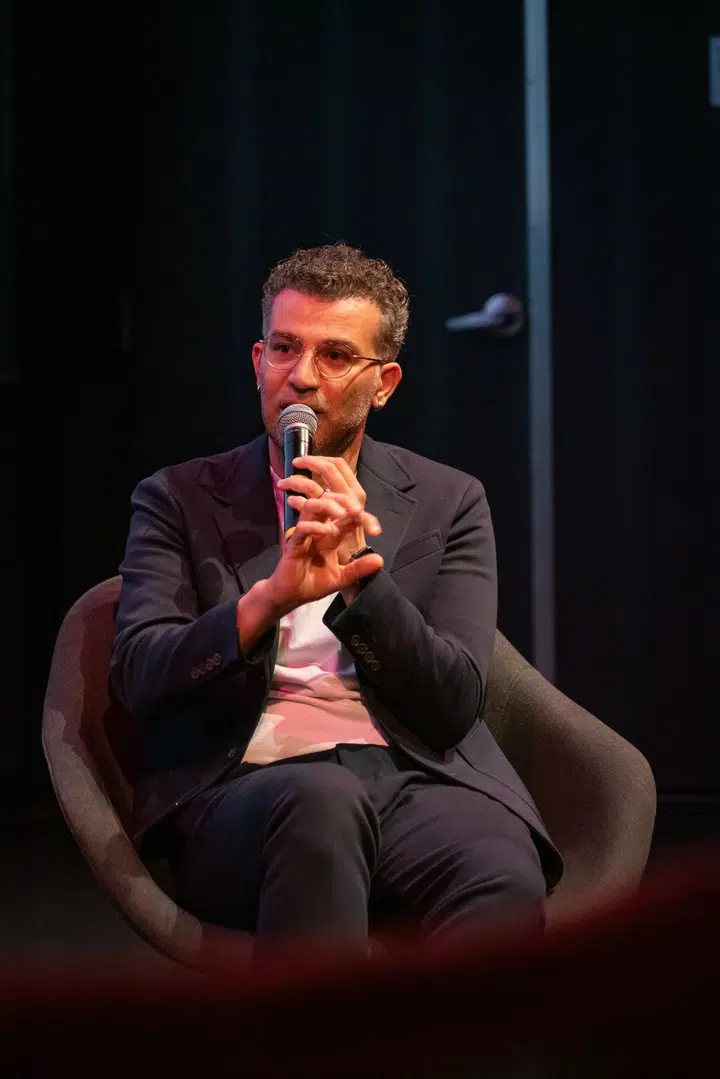
When interviewing director, writer, and star of Gazelle, Nadir Saribacak, and writer and actor, Ayhan Hulagu, I came to a story brimming with life and passion on and off the screen. I could see the thread connecting from their hearts to the film, to Yakup, who undergoes an experience many people can relate to.

Nadir: So, in our story, Yakup changed his country, his homeland, and then, mentally, he is getting sick.
Ayhan: Our goal is not to write an immigrant story. It can be in the background. We have political background that we can use in the background. But, at the end of the day, we have to tell a story of being human. And, now, everyone will have a connection with the character. If one is Middle Eastern, one African, on Egyptian, if they watch the movie and then they will feel something with Yakup. So that's why we didn't focus on the immigrant world, instead it was background. We didn't use political drama. This is our background. Our goal is telling a story as a psychological drama.
Labelling Gazelle as a psychological drama above its socio-political background was a very important distinction for both Ayhan and Nadir. Yakup's emotional and mental strife was the main focus of exploration, trying to demonstrate the way someone can get entrapped in a cycle of anxiety and fear. It was also a tool to allow for Yakup's experience to extend outside of the label of being an immigrant, so that his character can connect with a greater audience. Like everyone else, he is human, struggling to cope with a difficult situation.
Nadir: Okay, but at least art, true to art, we can see them [immigrant stories], what they feel. And that's a good way to understand. I wish people understand what's behind being immigrants. Everybody has some problem, right? And Gazelle's story is not just for immigrants, 'cause that story for everybody, [it's a] human story.
Ayhan: At the end of the day, everyone's background or country or language, it doesn't matter. We are human and we came to this life, and we will live 60, 70 years, or 100 years, if you are lucky. And then you will go out if you believe that there's another world. We just need to enjoy this specific period. Let's listen to each other, [empathize] with another character, and respect them, and then, yeah, and nothing more.

Let me tell you, the film went above and beyond in humanizing Yakup. He was a deeply complex character, driven by his love for his family, caught in a cycle of anxiety and despair. Similarly, the narrative itself was layered, entrenched with symbols and images that not only emphasized his state of mind but worked as a song itself, singing about the emotional plight of leaving home, of losing yourself in the chaos of change.
It all begins with the title, which revolves around the story of the gazelle. The story of the gazelle was introduced by Nadir, who shared a video of an Imam at a mosque, with Ayhan. This story was doubly meaningful for Ayhan, whose father was also an imam, and the way he saw spirituality in Yakup's journey.
Nadir: Gazelle is one animal from, uh, North Africa, right?
Ayhan: Yes, yeah.
Nadir: Imagine that we also in real life, we forced to from our home country, and we are living in the United States. Yakup's character sees Gazelle in the United States, so it means he, the animal [Yakup] had left his homeland, and he is in another. He's also in exile. There's a different meaning. ... Yakup doesn't listen to Imam. And then when he [finally] listen[s], and understand[s] the story, and then when he calmed down, and then stop, then something's changed. This is the same story [for] the gazelle. Animal [the gazelle] stop and just focus[es on] whatever he is doing. And then, everything changed in the forest. So that's why it inspired us for Yakup's story.
The gazelle becomes a symbol of faith, of resilience in the face of displacement. Just like Nadir explains above, when Yakup resists settling, he becomes entrapped in his own helplessness, unable to move forward; it is only when Yakup finally calms down that the air clears and he's able to see past his anxiety. What does the gazelle do in this new, foreign place? Well, keep an eye out on the background, on the trees and the water, and see for yourself.
Where there is space, Gazelle fills it with poetry. From the water imagery which stands for purification and rebirthing, to sound, everything is included with precision and intention that showcases an adept eye for storytelling.
Nadir: Music is good, too. For movies, right? Um, but, um, I think I couldn't, I couldn't use enough music because directing and playing, it's... I [wanted to] use more. But I couldn't. And he's [Yakup is] hypersensitive to sounds. That's important, not just music, all the sounds. And that's good tools for movie. That's why I put the music, like, because, for example, yesterday, two people tell me, like Canadian people: we like the song. And that's good, because we want to find some common things with others and character. Music is common.

Yet, above commonality, Nadir and Ayhan add another layer to Yakup's character when considering his role as a music teacher.
Ayhan: Yeah, another important point I would like to mention, so when we checked the European cinema archive or American archive, they don't see the immigrants as educated. So this is a really important point, because the whole immigrants is not working only. They have a professor, doctor, lawyer, they didn't choose to change their home country. Some things forced them. And so, that's why there is no difference between one white American with Yakup. So that's why we would like to show a specific educated character as a leader of a movie.
Yakup stands as a figure that dismantles preconceived notions and images of an immigrant. The film works hard to create a character that is nuanced and complex, that pushes against the image of immigrants often weaponized against them. Yakup is not only a former teacher, he is a father, a husband, a friend, a musician. To have him working at a restaurant, taking odd jobs in New York challenges perceptions about the working class, as well as the rhetoric used against immigrants. It forces viewers to see that the situation is more complicated than it looks.

Which leads to the integration of Adem (Ayhan Halagu), Nadir's former student, who immigrated to the U.S. much earlier. What I found really interesting about Adem's character was that he was also an immigrant, but he was living an entirely different life. Interestingly, there were various points where Adem's struggles came to light, such as the fragmentation of his identity (aka, the Ricardo name change scene). Although the name scene was established as a moment of comedic relief where Adem is teased for using an "American" name at work, there is a lot more happening behind the scenes.
Ayhan: So, first, Nadir mentioned this point, it started with fun. But you cannot put the jokes randomly in your story. It's pretty many meaningful. So that's why, we are surrounding with multiple Yakups.
Ayhan brings up a very interesting point about the way that the film uses comedy intentionally. In Adem's case, the change in his name showcased how the pressure to assimilate can change a person; for Adem, the ability to belong meant to adopt to this other country. For Yakup, this was very different. Adem brings forth yet another element to the immigrant experience, demonstrating how the term "immigrant" doesn't mean one thing. It can be many things. Many different stories. Many different lives.

Ayhan: It's not... at the end of the day, it's not just a joke. It represents the multiple characters.
The contention between wanting to help and support others while also balancing your own desires and growth is embodied by Adem who feels morally compelled to help his teacher while also needing to create a boundary. It's awkward, at times cringey, the interactions between them, but it showcases how complex and human these experiences are.
Ayhan: So that's why when we put the Adem in the movie, [he] represent[s], of course, someone who moved to another country before Yakup. And also, he is, I think he's only one guy who wants to help Yakup, but he lost his empath[y] with Yakup. He tried to do that [be empathetic], but he can't do it like this. So that's why we would specifically choose some [way for him to] connect with Yakup, his story, [while] also he [Adem] keep continuing his life. So that's why we specifically select this point for [his] identity.
Nadir: Also, other students, did you notice now? Other students. He has other students.
Ayhan: Yeah.
Nadir: And he [the other student] ignored him.
Ayhan: Right. Yeah.
Nadir: He [the other student] doesn't want to see him. That's why... Adem at least, Adem's positive side. He tried to be help[ful]. And, you know, in United States, maybe in Canada, everybody is busy. Everybody's busy, everybody, like, try to help, but... it [never] ends, that's normal. ... Yeah, he has an empathy problem.
Ayhan: Yeah, yeah, that's... When we build the character, that was the important point on the table. He lost his empathy. He tried to help, but some people like that, unfortunately.
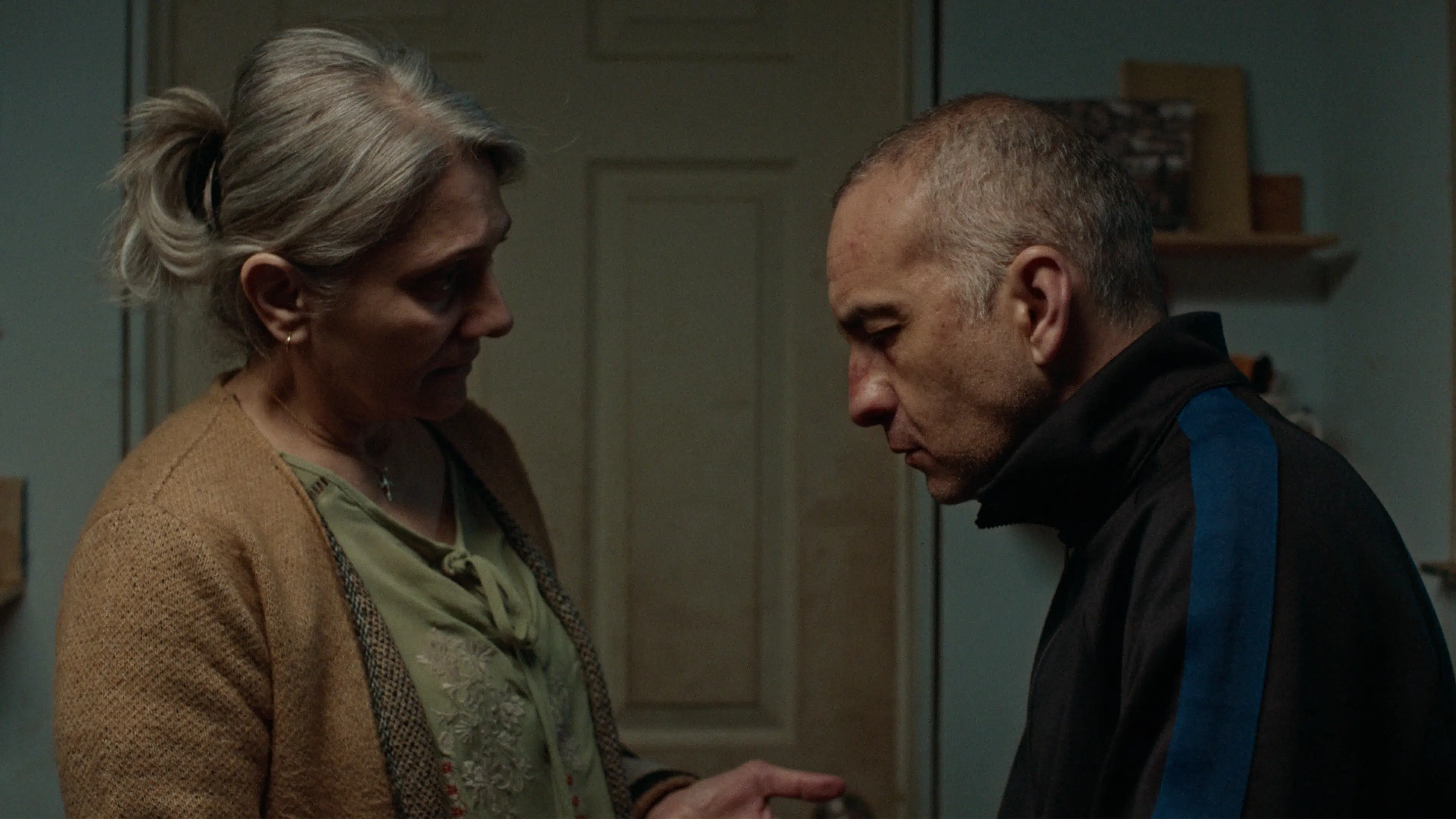
In the end, Gazelle is a story about humanity, asking for our humanity, asking us to listen. Nothing is really solved, but the gazelle settles in place, it rests, it rebirths.
Nadir: Life is not like, romantic like that. That's why his [Yakup's] test is starting after the piano scene. He gets it. He accepts to playing for his daughter, and then it starts a more healthy relationship, I think. Yakup is good right now. He can wait three years, four years, well he's good, he is gradually going to be well. Uh, that's important. Not important, reunion. What's important is how he's seeing life, how his situation, how his respond, that's important than his family. That's why end of the movie is important. We want to finish [on] good things. This is good things because ... he shaved his, did you notice? He shaved his beard. He is more healthy. He accept everything.
Ayhan: And then, technically, for example, how we're going to use the camera, how it's going to help us during the movie, that [when] it's following Yakup … it never stops. And the only one scene [the final scene] the camera also calmed down with Yakub. So, I don't want to ask for the [explanation for] this, but I believe the audience will feel and [keep this] question with them. And at some points, they [the audience] cannot explain, but they can feel. I think it's more meaningful than the other.
Gazelle is a masterpiece in emotional storytelling, exploring the effect of hopelessness, of helplessness, and what that can do to a person. Yakup's journey, although a reflection of a collective experience, becomes personal because it is so wholly embedded in his mind. It is nearly impossible not to be swept away in the gravity of his situation, to have your fists curl when he struggles, to battle waves of tears when he finally breaks down.

Yet, it is not a story of despair, it is of hope and empathy. There is a bittersweetness to Yakup's story that leaves you wanting more. And, that is the point. It's about healing, about learning to settle and embrace the community around you. Yakup learns to accept his fate, he yields to destiny, and in turn, perhaps a better life awaits him after all.
If you haven't watched it yet, now would definitely be the time.
Gazelle will be playing at International Village on Sunday October 12th.
Book your tickets here: https://viff.org/whats-on/viff25-gazelle/





Share your thoughts!
Be the first to start the conversation.