
Christmas isn’t recognizable without miracles, joy, hope, and consumerism. It’s a season that asks you to celebrate while privately forcing reflection at the same time. You look at the year behind you, the life you’re living, the choices you made, and the ones you avoided. While I was watching Tokyo Godfathers, I kept thinking about how closely that feeling mirrors the film itself. You’re surrounded by warmth and lights, but there’s an undercurrent of discomfort you can’t fully shake. The movie understands that contradiction and stays inside it.
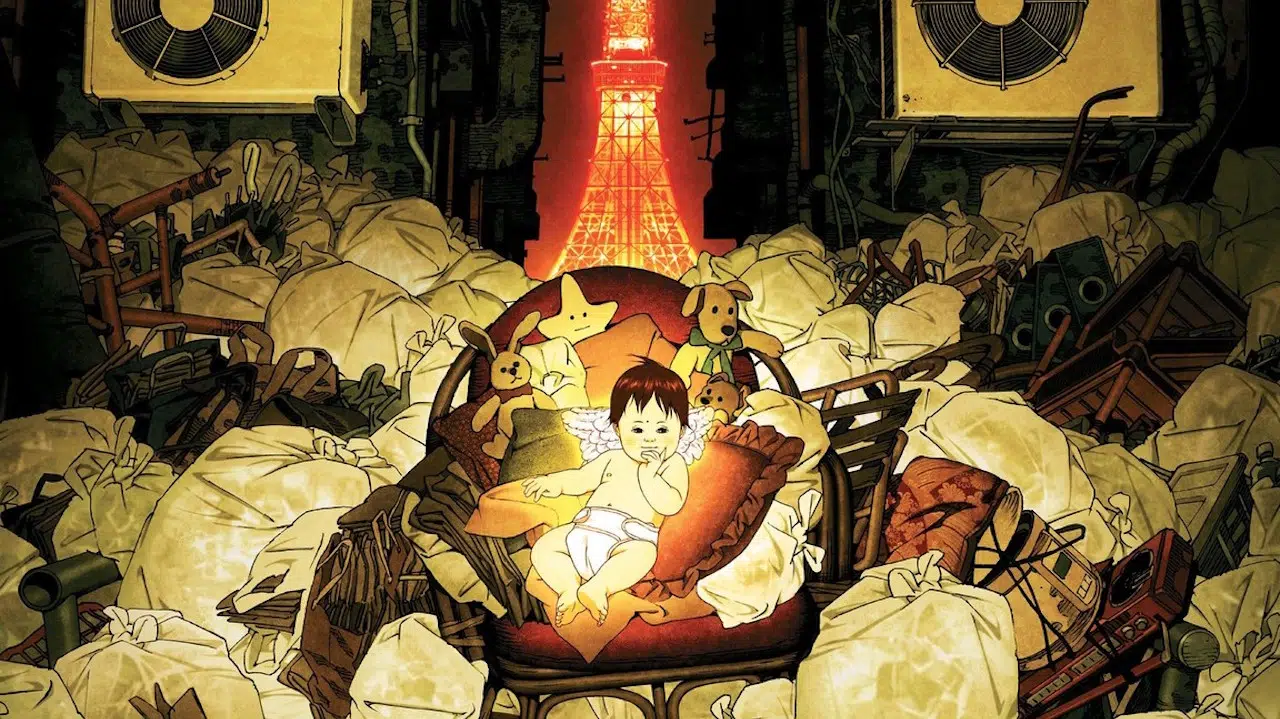
Of all animation filmmakers, Satoshi Kon has one of the most fascinating catalogues in the medium. His first two films, Perfect Blue and Millennium Actress, are tightly constructed psychological works that blur identity, memory, and reality. They speak to each other in structure and theme, and watching one reshapes how you understand the other. Kon knew that approach couldn’t be his only language. You can feel that awareness with how deliberately different Tokyo Godfathers is.
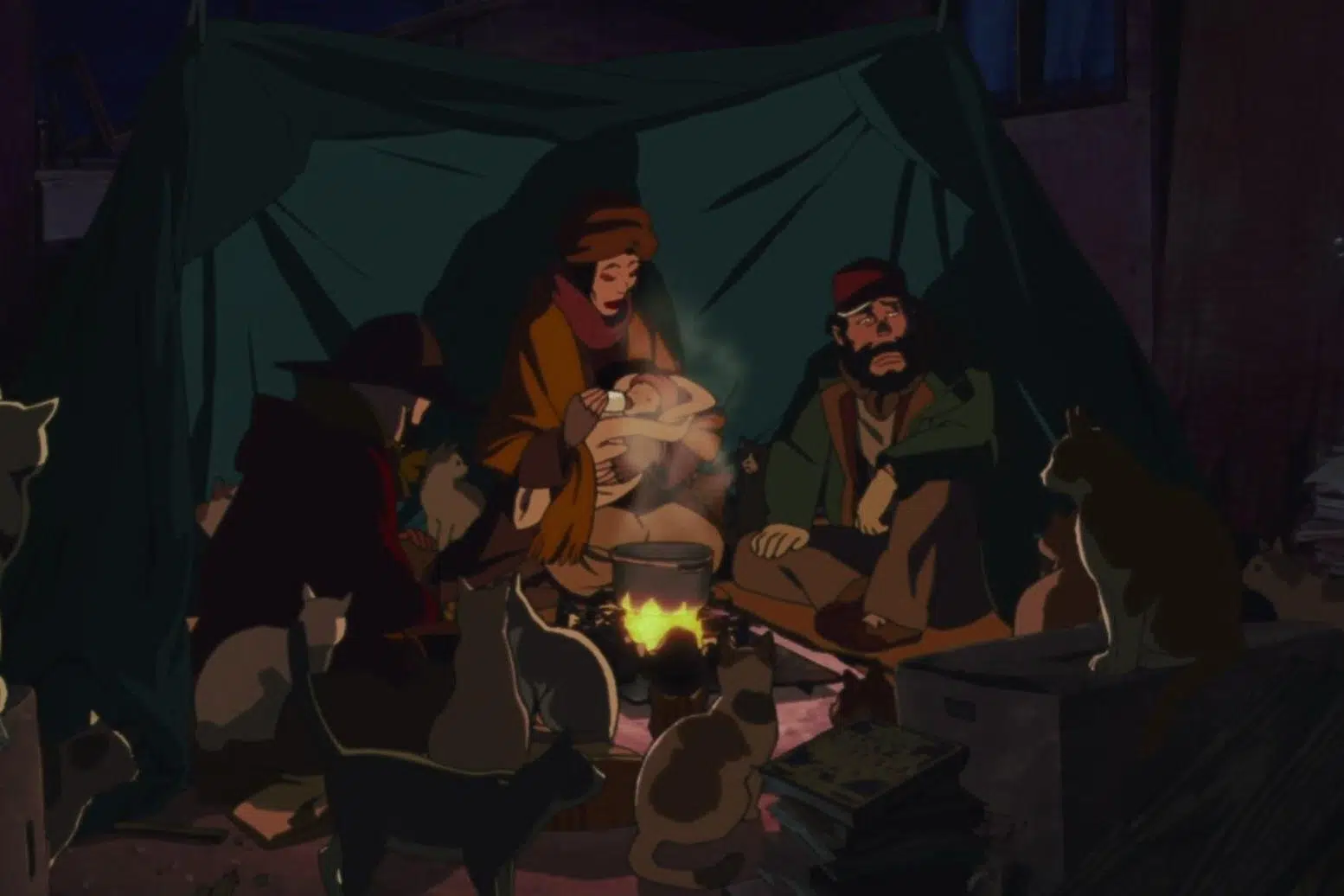
In this film, Kon pivots toward something more grounded without losing his voice. The plot is simple: Three homeless people, Hana, Miyuki and Gin, living in central Tokyo, find an abandoned baby in the trash on Christmas Eve and decide to search for her mother. What hooked me immediately with its really unorthodox perspective about the underbelly of Japan. Homeless people are rarely imagined as participants in the holiday at all. Their lives are often ignored during a season built around abundance and togetherness. Kon places them in the center instead. I realized how rare it felt to see Christmas framed through people's society actively avoids looking at.
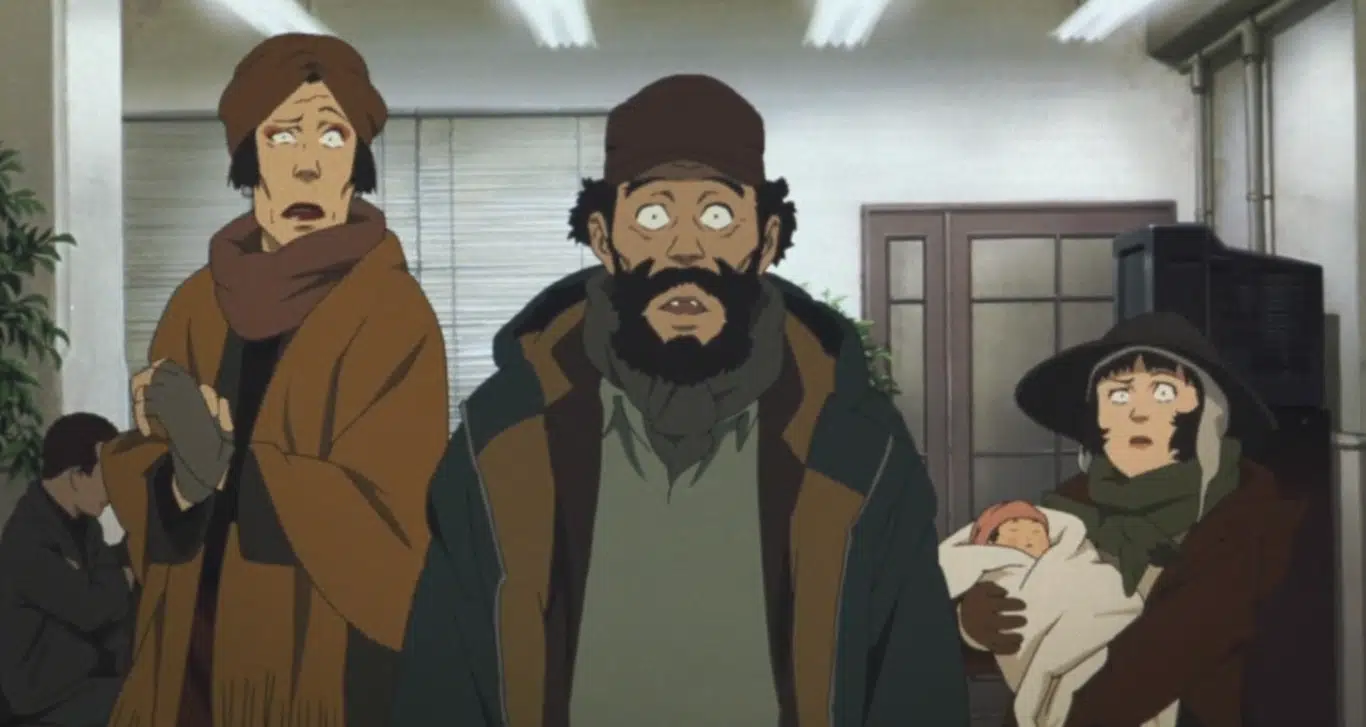
In Satoshi Kon's cynical fashion, Tokyo Godfathers also heavily critiques Japanese society’s relationship with shame and social failure. The city is beautiful, crowded, and largely indifferent. Systems exist, but compassion is inconsistent. I was struck by how easily people disappear once they fall outside productivity and respectability. Each of the three characters ends up homeless for different reasons, but the emotional thread connecting them is shame. Shame is tied to family. Shame is tied to failure. Shame that becomes heavy enough to make returning home feel impossible.
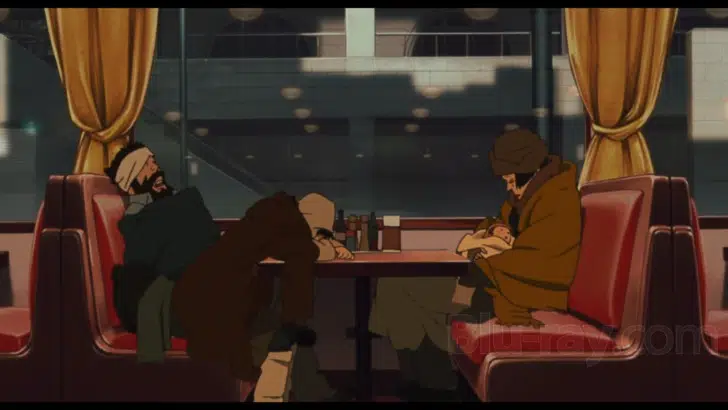
Christmas amplifies that feeling. It’s a season obsessed with milestones and reunions, and if your life doesn’t align with that image, the gap becomes impossible to ignore. Consumerism, of course, enters the film’s emotional landscape. Christmas encourages reflection while offering distraction at the same time. Buying and giving can feel like emotional maintenance, a way to avoid sitting with dissatisfaction. Watching Tokyo Godfathers, I kept noticing how the city pulses with lights and excess while the protagonists move through it without access to those comforts. They don’t have the option of numbing themselves with things. All they have is responsibility.As I watched, what stood out wasn’t the coincidence-driven structure or the holiday framing, but how patiently the film lets the characters exist inside that journey. The story keeps moving, but it never rushes their emotional reckoning.

The most meaningful act in the film isn’t gift-giving. It’s choosing to take care of a child when there’s no obligation to do so. Especially when you have nothing. That choice complicates everything for them. It demands patience, sacrifice, and emotional presence. The fact that this happens during Christmas, a time so focused on symbolic generosity, made that decision feel even more significant to me while watching.
Although Kon steps away from the heavy dream logic of his earlier films, he never abandons it entirely. The surreal elements surface through memory and emotional rupture rather than narrative confusion. Miyuki’s past with her father bleeds into the present. Hana’s declining health emerges through fragmented recollection. Gin’s guilt appears through encounters that feel slightly unreal. As I watched these moments unfold, they felt less like stylistic flourishes and more like reminders that the past never stays where you leave it.
Gin’s arc stood out to me the most. He is a father who abandoned his family because of gambling debts. It was harder for him to return and accept guilt than to run away to a life significantly worse. At his lowest point, he encounters an old man dying alone on the street. Before his face is revealed, the resemblance is unsettling. The same clothes. The same posture. The same exhaustion. When I first saw this scene, I genuinely thought it might be Gin himself, projected outward. It simply presents a possibility and lets you sit with it. What deepens Gin’s story is how often he’s confronted by people who reflect what he could have been. The doctor who marries his daughter shares his age, appearance, and even the tragic backstory Gin once falsely claimed. The difference is honesty. Watching this unfold, it became clear that Gin isn’t trapped by circumstance alone. He’s trapped by fear, and the film allows that realization to arrive slowly through his stubborn nature.

Hana’s character is another reason this film stayed with me. Queer characters in anime are often handled poorly, so I was cautious at first. That concern faded quickly. Hana’s identity is never reduced to spectacle or humour. She is emotionally intuitive, deeply sentimental, and often the most grounded presence in the group. I found myself naturally following her emotional cues. She becomes the lens through which the film feels safest to experience. She informs anyone to warn her before telling a sad story, or else she'll cry. She scolds Miyuki like a mother, even though she's never had that experience, and she risks her life at every corner to protect people she doesn't even know. For someone on the outskirts of society, she's incredibly simple to understand and just as easy to love.

The balance between the three leads is one of the film’s greatest strengths. No one dominates the story because each character has something new to add when exploring the faults of such a performative holiday. Their dynamic feels shaped by conflict as much as care. They argue, support one another, and make mistakes together. As an ensemble, they feel intentional, which is rare and incredibly effective.
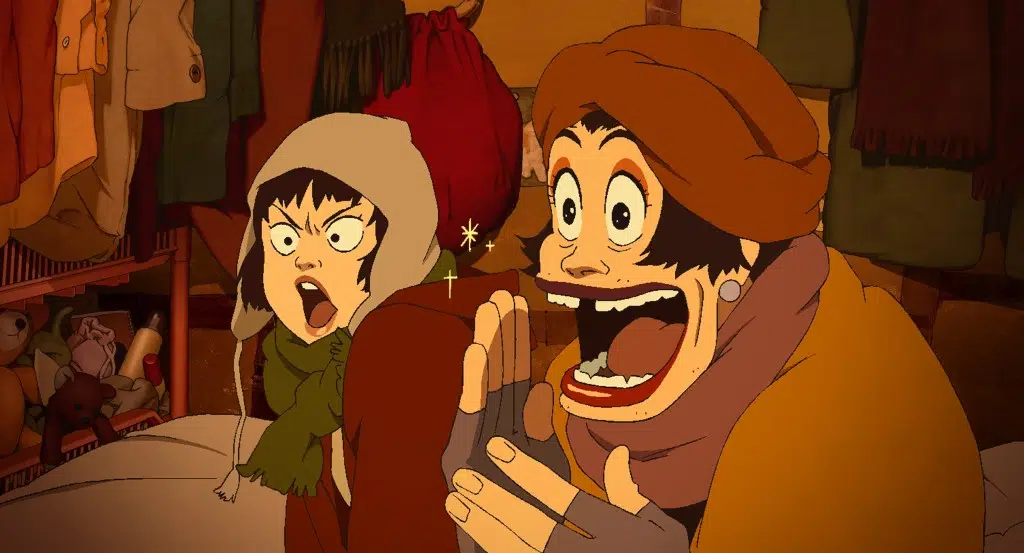
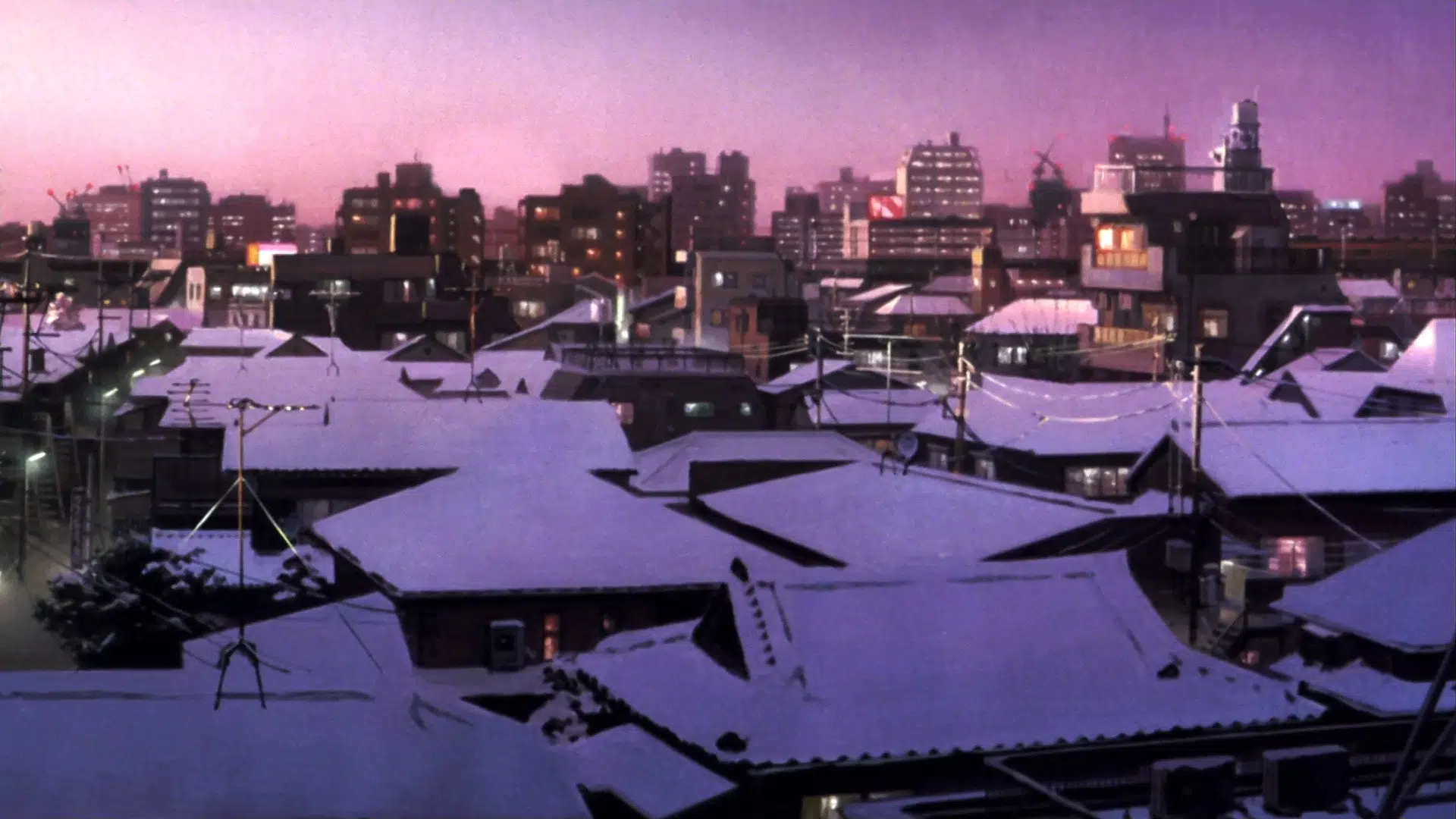
Visually, the winter setting does a lot of emotional work. Cold tones dominate the city, while warmer hues appear during moments of connection. Kon uses lighting and colour temperature with restraint, reinforcing emotional shifts without calling attention to technique. It’s subtle, but once you notice it, it becomes impossible to unsee. The Christmas setting is woven into the film rather than layered on top of it. Hana’s haikus as a comedic intervention, the snow, and the sense of time closing in all contribute to the atmosphere. The holiday doesn’t resolve anything for the characters. It intensifies what they’re already carrying. Watching it during the season makes that effect even stronger.
By the end, Tokyo Godfathers arrives at hope without denying consequence. The characters don’t erase their pasts. What they gain is the ability to face themselves honestly, supported by people who refuse to let them disappear. That support becomes the foundation for bravery, connection, and reintegration.
This year has felt strangely un-Christmassy to me. I’m not sure if it’s because I’m constantly being fed ads online, or because so many people are dealing with economic stress that joy feels harder to access. It could also just be the reality of being a full-fledged adult, where Christmas slowly loses the sense of wonder it once had. At a certain point, responsibility dulls the magic.
I also grew up in a place where Christmas didn’t carry much religious significance. It was never a deeply sacred event. I’d usually get some money from my parents, go about my day, and that was it. Even now, when I think about Christmas globally, it’s clear how differently it’s treated. Some countries don’t celebrate it at all. In Japan, it exists more as a novelty than a major cultural event, something closer to an aesthetic than a belief. Tokyo Godfathers humbles the Christmas spirit because it refuses to participate in the fantasy that the season depends on.

So when I strip away the Coca-Cola red, the shopping bags, the snow imagery, and the religious symbolism, what Christmas means to me becomes much more dull. It’s the moment when people pause and actually reflect on their lives. It's the moment when they think about who they’ve been, who they’re becoming, and what they want to change. It’s about deciding to be someone you can live with, and maybe even someone you’re proud of.




Share your thoughts!
Be the first to start the conversation.