
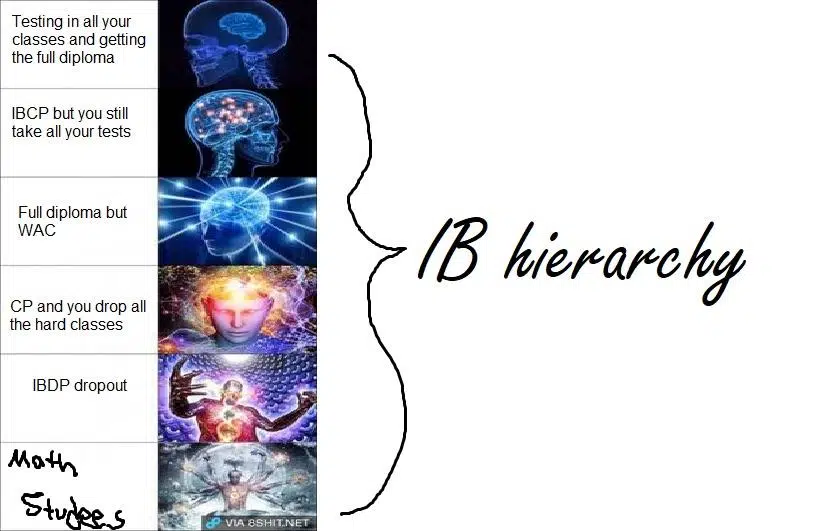
I think the earliest memory I have of crashing out was in 11th grade. I did the International Baccalaureate, and for any of you approval-seeking clowns who also did it, I’m very sorry for your trauma. The program was a two-year intensive course which included six different classes, a 4,000-word essay, a couple of dozen final exams, and your will to live. It didn’t help that I was also attending one of the best private high schools in the Middle East, where my average test scores hovered around 30 percent or below.
My point is, I was stressed, unhappy, and extremely miserable. A lot of it had to do with the type of school I was going to and the people in it.
Now I'm not saying I went to Yale or any Ivy League school, but I was often around brilliant, talented and most importantly, filthy rich students whose allowance was bigger than my parents' yearly salaries combined. That kind of class disparity fucks with your mind a little bit about who you are and what you deserve. If entitlement could be the name of a high school, it would've been mine. This ignorance of privilege is the cusp of students at Yale University portrayed in Luca Guadagnino's film After the Hunt.

Yale, as a setting, runs on reputation first and education second. Every interaction in the film reflects that. People speak carefully. Emails and conversations are more about documenting that the right steps were taken, more than what is right. The campus feels calm on the surface, but everything underneath is tense and strategic. You can tell that everyone knows a single misstep can stick with them long after graduation or tenure. The social dynamic at Yale in the film is built around credibility.
Who gets believed, who gets protected, and who gets silently pushed out all depend on where you stand within the institution. Students know how to frame their experiences in ways that will be taken seriously. Faculty know how to respond without exposing themselves as liable, replaceable, or out of step with the institution’s preferred narrative. Administrators know how to contain damage. No one is openly cruel, but no one is neutral either.

The film shows this clearly through how allegations and concerns are handled. There are meetings, formal language, and reassurances that the process will be fair. At the same time, it is obvious that everyone involved is aware of the stakes. Careers, legacies, and the school’s image all hang in the balance. That tightening is what creates pressure on individuals, especially students who already feel small in a place designed to produce excellence.

Alma, Margaret, and Hank all move through this environment differently, but they are shaped by the same rules. Alma represents students who have grown up understanding how institutional language works. She is emotionally articulate and confident in naming harm. When she speaks, she does so with intention. She knows when to emphasize impact and when to align her experience with broader conversations happening on campus. This is portrayed as fluency rather than manipulation.
Margaret exists in a more complicated position. She has institutional power and social credibility, but she is also deeply aware of how fragile that power is. Her actions reflect someone trying to balance personal ethics with professional survival. When decisions need to be made, her concern is never just about what is right but about what will be defensible later. This comes across most strongly when she appears empathetic but avoids committing fully to any stance that could implicate her.
Hank operates according to a different set of expectations. He believes in due process and academic norms that once defined authority in these spaces. He does not understand how quickly narratives form or how little control he has over them. The film shows this through his reliance on evidence, procedure, and private discussion in an environment that prioritizes public accountability and perception.

What ties these three together seems like ideology at first, but leans more towards motivation. Each of them is invested in being seen as correct. Alma wants her experience recognized. Margaret wants her judgment to be trusted. Hank wants his integrity affirmed. Their disagreements stem from generational differences, but their behaviour reflects the same underlying pressure.
Everyone is trying to protect their position within the system. The film presents these generational divides without flattening them into talking points. Younger students are more comfortable with public discourse and moral language. Older faculty rely on institutional safeguards and established norms. Middle-generation academics try to bridge both worlds while holding onto stability. These approaches clash, but none of them exist outside the logic of the institution.

Reputation plays a central role in every major decision. The fear of being misunderstood, misrepresented, or publicly condemned drives behaviour more than any single belief system. After the Hunt follows a college professor whose life starts falling apart after a student’s accusation drags a personal mistake into the open and turns it into a campus-wide issue.
The film includes moments where private conversations are cautious to the point of paralysis, and public statements are carefully worded to avoid liability. During the administrative meeting scene, Alma’s concerns are acknowledged in a controlled, institutional setting. The language used is careful and procedural. No one dismisses Alma outright, but no one commits to a clear outcome either. The emphasis is on process and restraint rather than resolution.
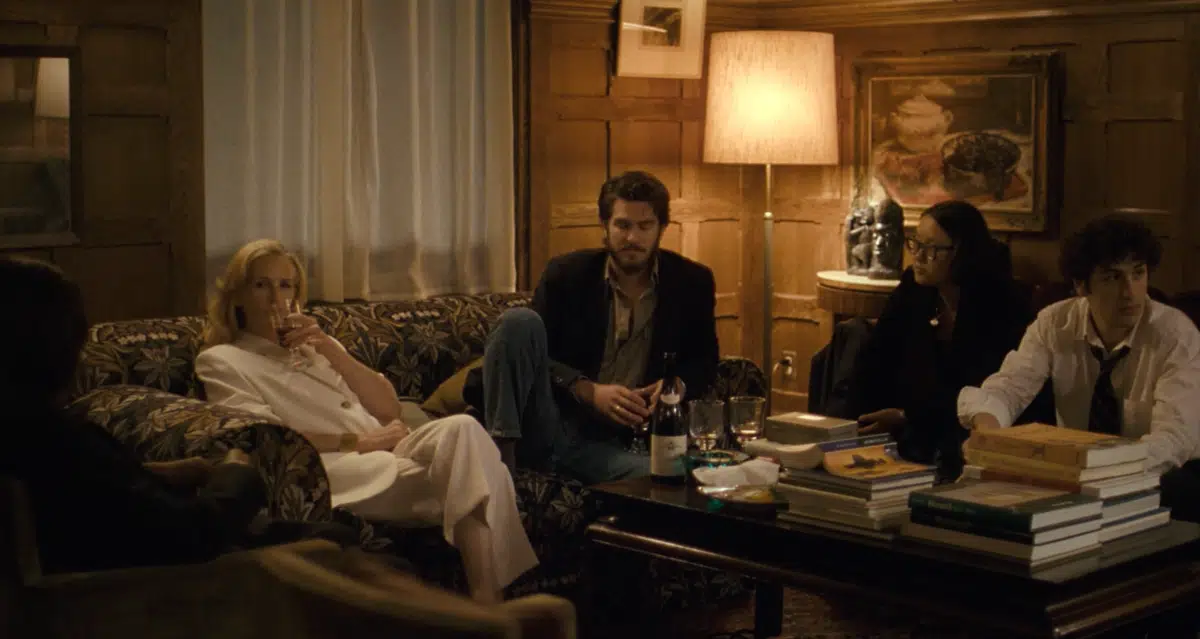
This is where schools like this shape a specific type of person. Students and faculty alike learn to prioritize how things look over how they feel. Being right matters more than being unsure. Admitting confusion or vulnerability feels risky.
The film does not suggest that these people are dishonest. It suggests that the system rewards a narrow range of behaviour. Alma has already mastered this. Margaret is constantly calibrating it. Hank struggles to adapt to it. The film ends with the understanding that everyone involved will carry the consequences differently, depending on their position.

Halfway through the IB program, while I was failing multiple classes, my parents pushed me to drop out and pursue something I actually liked. They did not think I could survive the workload or the environment, especially one built around constant performance and approval. Dropping out was treated as a moral flaw. If you were not taking the hardest classes and visibly suffering through them, it did not matter. Most of my friends were smarter than me, or at least better at playing the game.
The judgment was clear in the jokes about exam papers and who was really trying. Teachers took you less seriously the moment you stepped out of the system. Once you were out, you were invisible. I wanted desperately to be part of that shared misery. This kind of suffering was supposed to lead somewhere. That made it worse when it turned out to be true that without expensive tutors or institutional backing, you fell behind. Every vulnerability became proof that you did not deserve to be there. It took me years to stop measuring myself against people who had more support and catered to a specific reputation. Even now, traces of it still linger as an adult in mature spaces I hopelessly want to be part of.
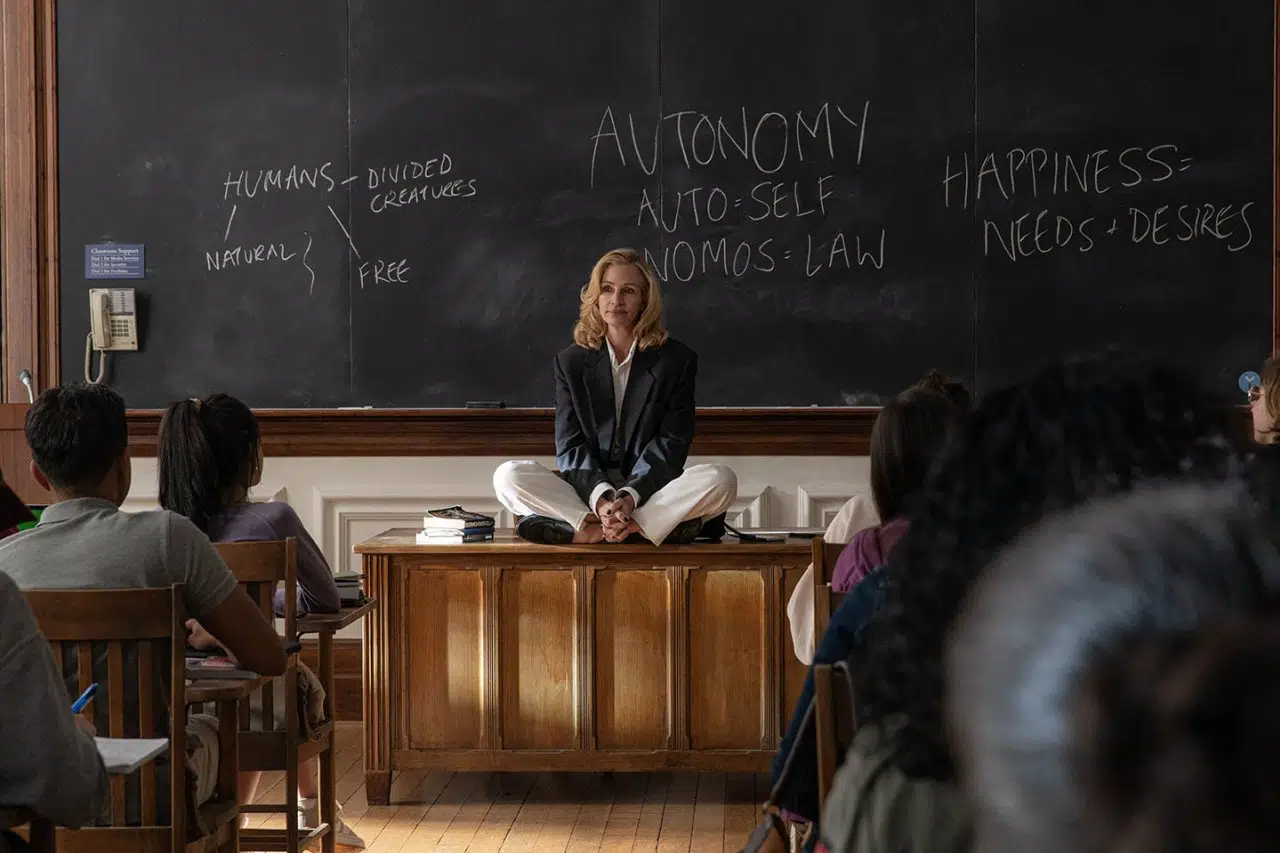
What makes After the Hunt resonate beyond academia is the behaviours it shows that are not limited to universities. They show up in workplaces, online spaces, and cultural institutions. The film does not argue that these spaces are beyond repair. It also does not romanticize them. Watching it feels familiar if you have ever been in a place where success came with conditions and failure felt permanent.
It might even seem comforting. I think I liked this movie as much as I did because I saw a bit of myself in every corrupt thought each of the characters had. By the end, the film suggests that environments like Yale are changing in surface-level ways while maintaining the same underlying priorities. The language evolves. The politics shift. The pressure remains. The setting changes, but the competition does not. The result is not exaggerated. Just attentive to how fear and ambition actually function when everyone has something to lose.





Share your thoughts!
Be the first to start the conversation.