
You know that meme that goes, "You look different... Yeah, I just watched a new movie."? That was me after watching The Stranger, a new adaptation of the famous Albert Camus novella. However, it's not a totally new personality that I've adorned. It is more of a rebirth of a lifestyle that I tried once before, but had forgotten to the annals of time.

Camus's novella reached me in my early 20s. I was just starting to gain independence and the world seemed like a never-ending opportunity. The story of Meursault, a man who mourns his mother by smoking cigarettes, making love and swimming in the sea, felt like an absurd revelation. Camus was saying that nothing matters and that life is all the better because of it.
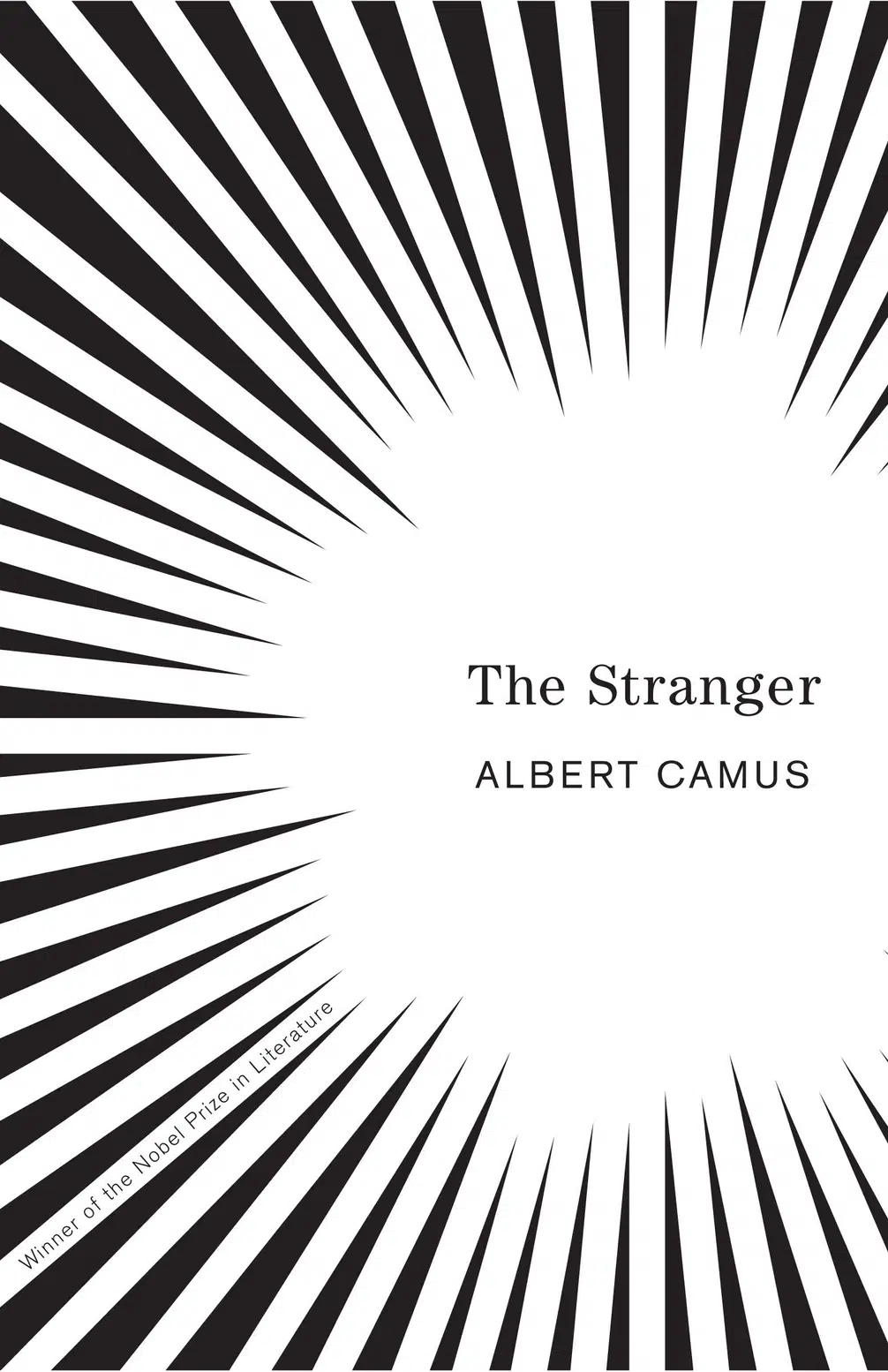
Known more for his philosophy than his story, Camus used his fiction to express his views on how to exist in a world that doesn't always make a lot of sense. To tell you why this concept connected with me would be antithetical to Camus's absurd philosophy. His exact point is that there is no point. That if something makes us feel an intense emotion, then that is enough.
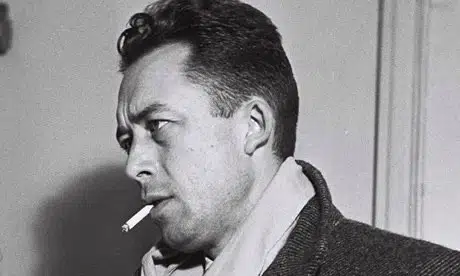
His ideas certainly made me feel something. I'm not sure if I was romanticizing this lifestyle, or saw something ideal in the simplicity. What I do know is that Meursault is one of my favourite characters in all of literature. He's definitely one of the ones that I think most about in my day-to-day life.
Now, watching François Ozon's adaptation in my early 30s, I'm ready to try my hand at absurdity again. When you have no personality of your own, and you allow art to influence how you live your life, it's hard to stay consistent like Meursault. One month it's Camus, the next it's Scorsese, the next it's Norman Fucking Rockwell.
My Camus resurgence is welcome, as I am in the pursuit of simple consistency. I always think of that T. S. Eliot line, "Distracted from distraction by distraction." Life feels like I'm killing time until something happens, but I'm not sure what that something is. I scroll through social media for hours. I play video games until two in the morning. I watch movie after movie and choose not to eat dinner. I hate it, but it feels like my life is on a daily loop of distractions from distractions. I find it extremely difficult to break this cycle.

Camus destroys it with ease. Meursault experiences life in its rawest form. He is not one for distraction. He is completely within the moment, not thinking of past tears or future fears. He absorbs the moment in real time. Like William Faulkner's Quentin Compson would say, he is in time.
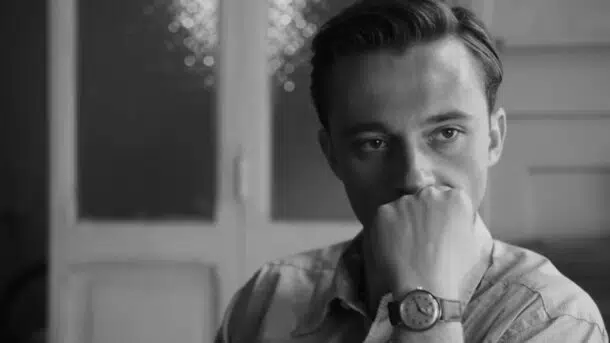
Meursault does not like anything that detracts from reality. He hates lies and will not tell them, sometimes to his own fault. As he exclaims to his girlfriend, Marie, he is sure that people must never play games. Anything that can be interpreted as a fantasy or blind faith is the enemy of Meursault. This puts him in direct contention with religion.
I am not a very religious person, but I'm not brave enough to go as far as Meursault. His scene with the priest is where a majority of his philosophy is revealled. He goes as far as to say that God cannot compare to even a single hair on a woman's head. Bold talk, and one that is very self-assured. But that is Meursault and that's why I admire him.
As with most heroes, we cannot be exactly like them — we are only human after all. What we can do is take bits of their existence and try to imbue them into our own reality.
No, I'm not going to start smoking cigarettes, although Benjamin Voisin, who plays Meursault, makes it look insanely cool. But I can choose to feel the moment more intensely. That comes with cutting out distractions, embracing the ceaseless voice in my head and trying to live in reality as much as possible.

I tried it, but if I can speak my truth, it's very hard to live a Meursault lifestyle in the winter. The film is set in Algeria, a North African country that is always warm. Outside, under the blazing sun, is Meursault's playground. When it's negative degrees and pouring rain and the wind is howling, it's hard to live without distraction because the only option is to sit inside. I do not want to go stir crazy. However, I will still try! What's the harm in trying?

To my surprise, there were actually some elements of the film that were better than the novella. What came across especially in the film, even more so than I remember in the book, is the cultural differences between the French and Arab populations. This becomes a major factor in the story, but what I found interesting in the film was the use of the visual medium to better place Meursault in this cultural diaspora.
Camus's terse writing sometimes hides how different Meursault must have felt in this country that was colonized by France but was not really France. When you hear the call to prayer blast through the streets; when you see the Arabs dressed differently than Meursault; when you feel institutional racism seep into Meursault's trial in the third act, the film is able to provide a better representation of the differences of the time period than the book was able to do.

But what the movie really does the most is it gives me a way to revisit this classic story and this inspiring philosophy without having to read the novella again. It's a great access point to reach a new audience with this story and the questions it poses about humanity. If you've never read Camus and are adverse to reading, then you're probably not reading this… oh… Well, still, the movie is a quality alternative to reading the novella!
This film will have strong staying power with me. Like the novella, it reminded me of a certain way to live. How do I live more like Meursault? I'm not saying I want to kill someone because it's a hot day, but I appreciate and admire his ability to live life in the moment to its fullest potential. He is not one who embraces distraction. He is existing in the moment, almost in a meditative state, and taking each day and thing as it comes. He does not mind that he does not have the answers. He embraces his ignorance and wears it almost as a mark of pride. He goes to work and works hard because that's what he's there to do. He is not interested in advancing in his company. He just gives his all to everything that is put in front of him because of his love for life, not for some personal gain.
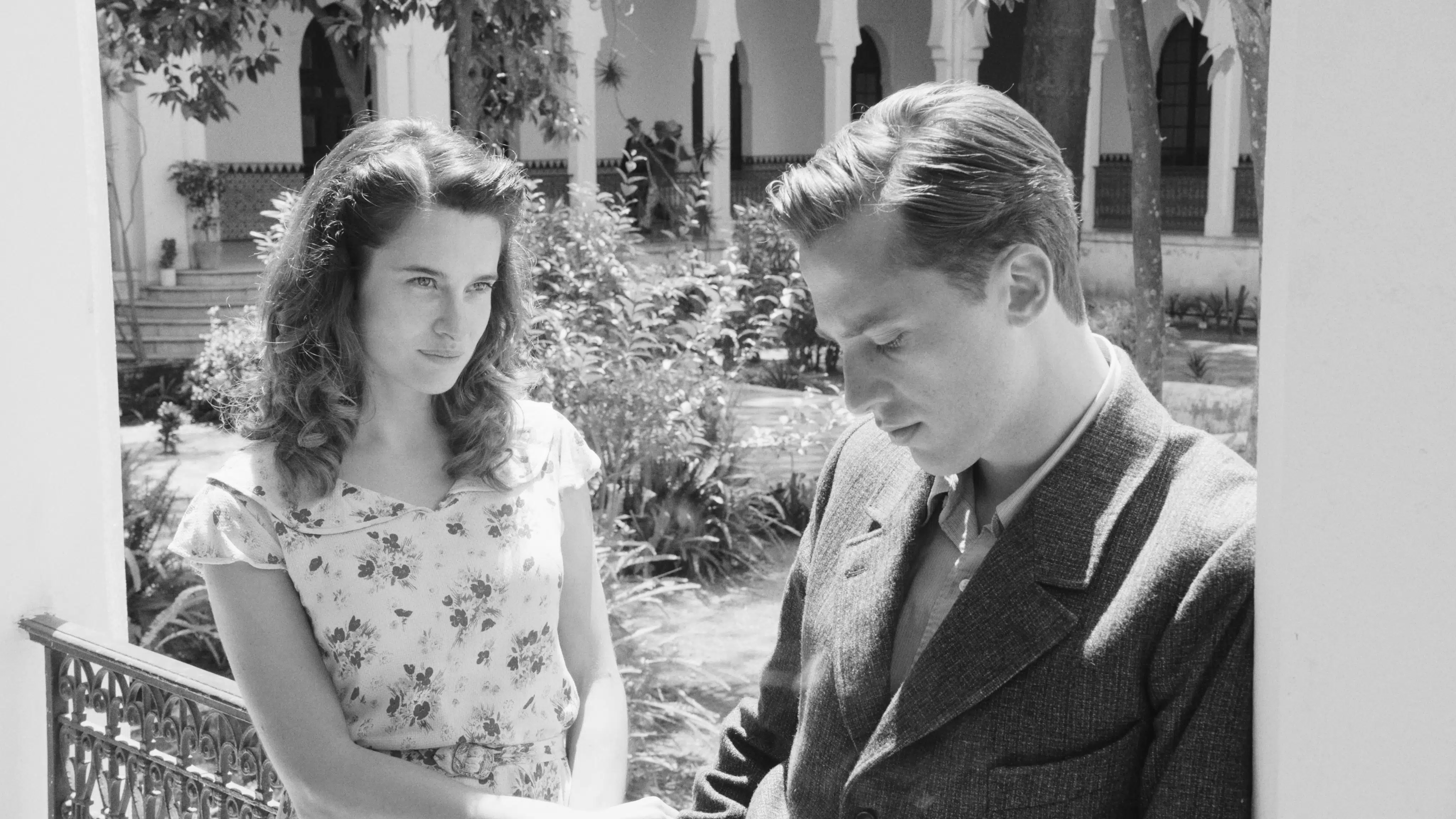
To Camus, to Meursault, life is not some game where you win by having a higher salary or a higher social class. It is meant to be experienced each day. To embrace the feeling of things, rather than what you can gain from something. That's why there are scenes where Meursault, through his aimless life, comes home and chugs water or crashes onto his bed in a heap of exhaustion. Although he is just living — swimming, making love, smoking cigarettes — he exhausts himself within the experiences of daily life. This, to me, is absurdly captivating.





Share your thoughts!
Be the first to start the conversation.