
In his transcendent debut - The Four Agreements - Don Miguel Ruiz writes about how humans as a species amongst all other living creatures, judge ourselves more cruelly than all. He explains that true justice is paying only once for your mistakes, while true injustice means paying more than once. Many people would agree that our ability to remember and create memories is perhaps one of our greatest gifts. Yet Ruiz argues that this supposed blessing can also be an incredible burden. We as humans are wired to see the bad in everything. Trying to see the light when we know darkness exists all around us is virtually impossible. This is to little fault of our own, I'm sure we'd all like to be more optimistic, but at it's core this is an irrational dream. Thinking of all the good, all the happy, is the easiest way to be surprised by a danger or a pain. We're survivors, and survivors always think of the bad, so that we may be ready to defend themselves against it if need be. Whether it's a past failure or an impending doom, the only way for us to remain who we are, is beat ourselves up and live in fear.
Ruiz expands upon the former, detailing how other animals may make mistakes, but they do not dwell. Their brains are simply not designed to do so. They'll usually pay greater prices for smaller hiccups, but they'll always walk away pure of mind. Humans on the other hand, never forget. Sometimes it's a marvel, and sometimes we pay the greatest type of price…a perpetual one. As Ruiz says:
“The human is the only animal on earth that pays a thousand times for the same mistake... We make a mistake, we judge ourselves... and we punish ourselves... But every time we remember, we judge ourselves again...”

The Four Agreements came around after Ruiz had gotten into a near-fatal crash, whereby he left his training and practice of being a medical surgeon, to go learn under his mother and grandfather, a Toltec faith healer and a shaman respectively.
When I thought about writing this article after watching Christopher Nolan's Memento (2000) for the first time last night, the only blueprint thought I had was the quote from Miguel Ruiz's famous work. It's the most prominent line I remember from the entire book of teachings, and seemed more relevant to this film than any other work of art I've seen.
The funny little observation that popped into my mind when trying to connect these very different pieces of work was: Don Miguel Ruiz didn't really account for people like Leonard Shelby, did he?
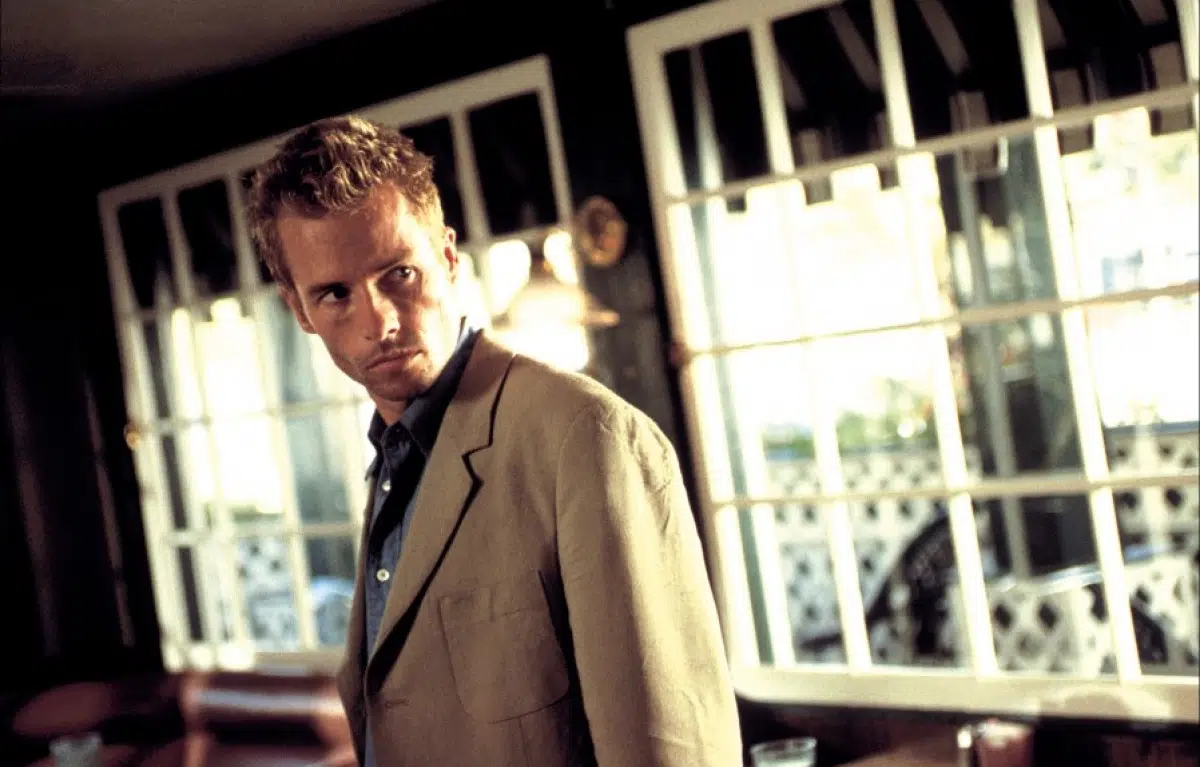
And I guess he didn't. I mean Lenny certainly does not pay the ultimate price of remembering his failures, so they never have to come back and haunt him. He's living the ultimate example of the saying, oblivion is bliss. Even after being told to his face that the life he is living is a lie, an intricate merry-go-round designed by his own conscious to frame his wife's murder as a travesty he must avenge, his short-term memory loss comes to the rescue and clicks the reset button.
The rare case of his condition, allows him to be the perfect test subject for Ruiz's theories, who believes that this disconnect from our unjust selves would allow us personal liberation and peace. It is guilt that starves Lenny of his purpose, it's the reason this story even exists and that reveals two sides of the coin. Even though his condition wipes his memory every few minutes, never allowing him to settle into a place or learn somebody's name, all of it was created by his initial guilt. He could not live with the thought that he'd killed his own wife, so he constructed a way to put himself back on the right side of history.

I mean it's all in his head of course. There is no “right” side of his story, what's done is done, and we see that at the end of the film. But his last line reaffirms it: “Now, where was I”. The job's not finished, justice has not been served, and we already know he will not stop at anything until it's done.

Guy Pearce is electric in this role, and despite having practically no emotional arc throughout the film, you still feel a deep empathy towards Lenny. Nolan is always in complete control of his story's intricacies and Memento is no exception. The dual timeline structure to this narrative is one of the most clever and unique solutions I've seen towards such a chronologically complex puzzle.
Switching between a more subjective, first-person point of view in the color scenes, and a cinematic, third-person perspective in the black and white scenes gives us the whole breadth of every sequence throughout Lenny's story. This gestalt allows for a deeper understanding instead of just trying to cheaply impress the audience, hence bringing forth my inquisitions.

Don Miguel Ruiz is hardly the first to exercise and proliferate this philosophy. Friedrich Nietzsche openly envied the nature of other animals over humans, describing their existence as “fettered by no past”. Buddhists also believe letting go of our attachment to the past, allows us to enter Nirvana free of greed, hatred and delusion.
Yet here's a simple story, shown to us in all it's scope. Leonard Shelby is a suffering man, that's hard to deny. His condition will never loosen it's grip, yet it feels as though the one purpose he's curated for himself is all the sustenance his mind needs. Which lends the question:
If living in the present, and absolving ourselves from our past mistakes are the steps towards enlightenment, should a man like Lenny be pitied, or envied?




Share your thoughts!
Be the first to start the conversation.