
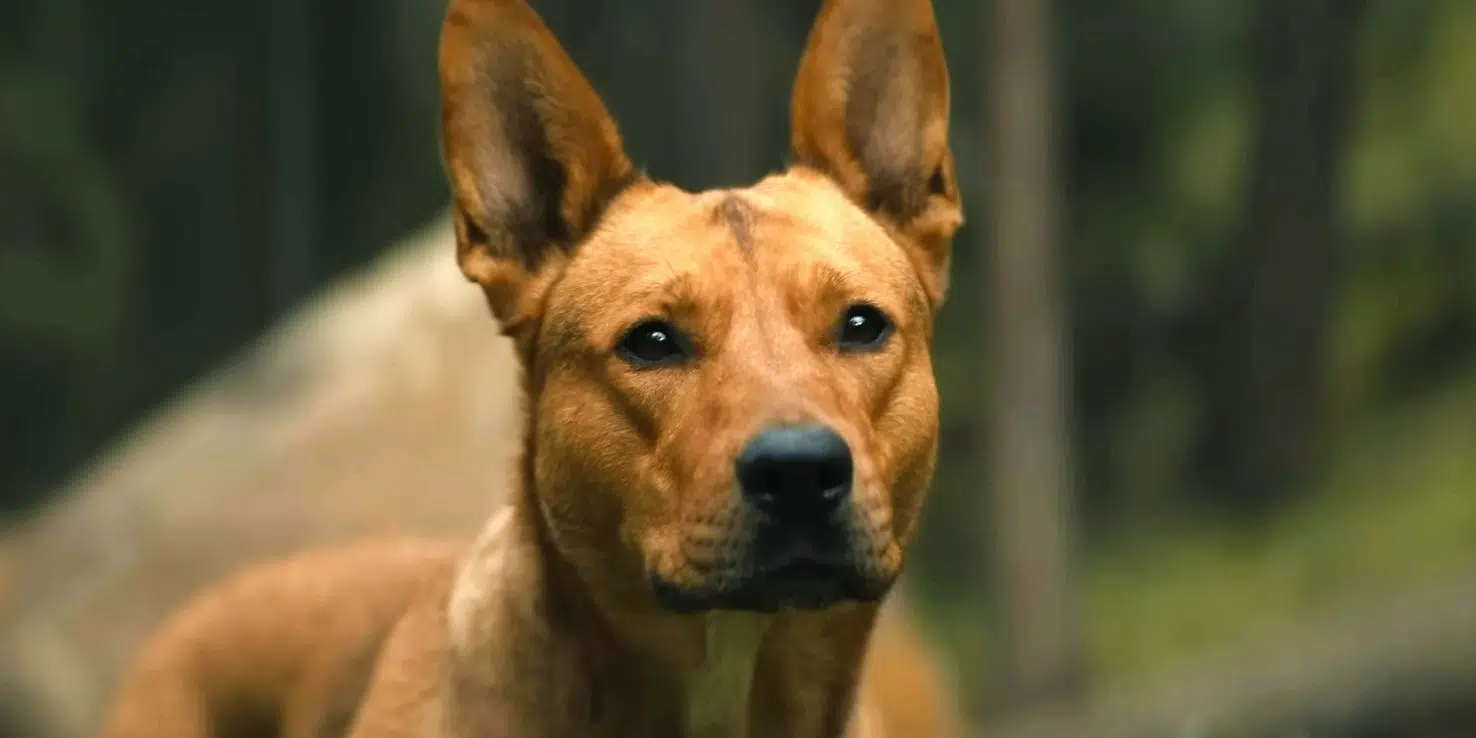
I consider myself someone with a generally refined taste in films, appreciating those with profound and unique themes, complex characters, and an emotional depth that elevates them to the realm of intellectual art. However, I occasionally indulge in a very different cinematic experience: movies featuring dogs with CGI-enhanced mouths, speaking nonsense, and making exaggerated expressions that, inexplicably, tug at my heartstrings.
Though this pastime might be deemed embarrassing, it remains a guilty pleasure. I reserve time for moments of solitude or joke about it in lighthearted conversation. I’ve watched so many of these films that I could likely name most of the real-life dog actors and their filmographies with an almost unsettling level of accuracy. I mean seriously, dogs who do mimic the way humans behave and speak? that's f*king hilarious. But at the same time sad, which is a point I will get to later. I was on my couch scrolling through TikTok when I realized I could be doing something productive instead. So I turned on my telly and the 1st movie that graced my nearsighted eyes “Strays" with two funny-looking 3-pound small dogs that would probably start a fight with my 40-pound German shepherd any day if threatened.
I proceeded to spend the next 1 hour and 30 minutes mostly gagging, laughing maybe twice and always confused. As an R-rated film voiced by Will Ferrell and Will Forte, I wasn't surprised a mere 54% graced the film on rotten tomatoes, still, I couldn't take my eyes off the screen. Im a huge dog lover, I've spent at least 70% of my life with dogs and now that I'm in Canada without the money, energy or time to get one, I substitute the absence with films about dogs. Though the speaking and a lot of the action are CGI, most of these films hire real dog actors to play out the stunts with extreme precision.
Despite my disappointment with this movie's story, jokes, and overall presentation, it made me think about how dogs are supposed to act and how certain emotions can be evoked from an animal with no ego. If you think about it, dogs are the original actors who perform their roles most authentically. They don’t know they’re being filmed or that they’ll be watched and perceived later. They only understand instructions and rewards.
This train of thought led me down a rabbit hole, where I discovered some fascinating things. Dogs have a rich history of acting in films, with legends like Rin Tin Tin, Lassie, Old Yeller, and many more, who built entire franchises on their success. There’s even an award for the best dog performance, known as the Palm Dog Award. But beyond the glamour of their lives lies an art form. Dog actors are trained to do many of the same things as human actors. They can show specific emotions, hit marks, jump, play dead, fight other dogs, and even drink beer. For example, in Homeward Bound, Shadow watches his master drive away and abandon him. His facial expressions evoke a desperate longing to chase after the car, but he knows he can’t. But how? It’s not like the dog understands the full context of the story or the emotional backstory.
It turns out that all dog actors have their trainers behind the camera giving instructions. In one instance, director Duwayne Dunham revealed that Molly (the dog’s real name) in Homeward Bound was shown a bird she was eager to catch but was held back because she wasn’t given the release command. The emotions you see on screen come from her entire body expressing anticipation and desperation to catch the bird. However, the audience interprets this as sadness, as those are the emotions we naturally respond to.

There are many ways to get a dog to "act" and express emotions. One common method involves direct reactions to the trainer. For example, in White god, trainer Teressa Anne Miller explained, “Everything that dog does is a reflection of my body language or tone of voice.” Hagen, the dog in the film, followed Teressa’s commands and quick cues, interpreting them flawlessly. Miller also mentioned that film sets with dogs are often more relaxed, with trainers allowing dogs to keep guessing and looking around, which creates a broader range of natural emotions while keeping the dog’s attention.
Much like child actors, there are usually multiple dogs playing the same role to avoid overworking or stressing any one animal. This can also be an advantage, as each dog’s unique personality adds depth to the performance. Trainers are often hidden just off-camera, using gestures and sounds to guide the dog’s performance. In some cases, if the camera angle is too wide for the trainer to hide, they may appear on-screen as part of the film. For example, in Spider-Man 3, the police officers chasing Sandman were the dogs’ trainers. Similarly, in Air Bud, the referee was Buddy’s trainer.


A trainer’s job begins months before production. They break down the script to identify all the tricks the dog needs to perform. Conditioning plays a major role in this, using a system called command-and-reward. Trainers often use clickers to signal to the dog when it’s doing something correctly. Behind the scenes, a dog’s performance can be noisy and chaotic due to constant instructions from the trainer, though all this is edited out in post-production. Not all dogs are suited to acting. To be a successful dog actor, the animal must be able to ignore the many distractions of a movie set, respond authentically to the human actors, and consistently follow commands. Even the best-trained dogs can be unpredictable, but this unpredictability often breathes life into their performances. Filmmakers sometimes allow dogs to improvise or expand their movements beyond what was scripted to achieve a more natural and dynamic result.
Some breeds may be more challenging to work with than others. For instance, coordinating the five or six German Shepherds used in John Wick 3 required months of training to ensure safety. Halle Berry worked for eight months alongside the stunt team to build trust with the dogs, spending long hours in play sessions. The dogs were trained to bite specific colour-coded, padded areas on the stunt performers. Another challenge in filmmaking is faking dog fights. In reality, dogs are often just playing with each other. Through clever sound effects and visual editing, these playful interactions are transformed into violent-looking scenes. For example, in The Killer, visual effects were used to erase wagging tails during supposed fight scenes because the dogs were too happy to act aggressively. Dogs also bring unique quirks to their performances. In The Mask, Max, the Jack Russell Terrier, had a signature trait of not letting go of objects, which was enhanced with dubbed squeaks and squeals to add comedic effect. Similarly, in Air Bud, Buddy used a lubricated softball to create the illusion of shooting a basketball.

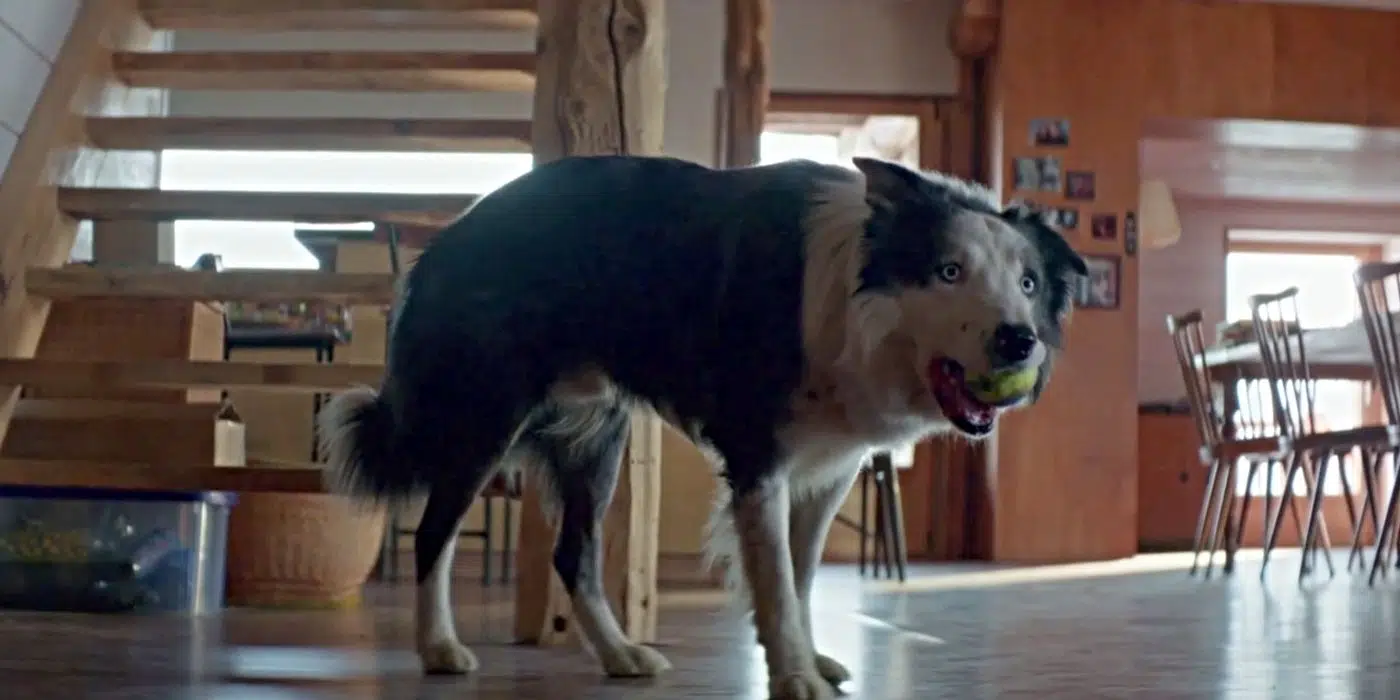
There are endless creative techniques to train dogs for specific commands because of their intelligence, obedience, and adaptability. However, no performance moved me more than Messi’s in Anatomy of a Fall. Messi, who played Snoop in the film, took the “play dead” command to an extraordinary level. In the scene where Daniel discovers Snoop poisoned and near death, Messi is trained to remain completely limp and unresponsive, even when picked up. A hidden tube contraption created the illusion of laboured breathing. This remarkable performance earned Messi the well-deserved Palm Dog Award in 2023. He even attended the Oscars that year alongside his human co-stars.
The bond between humans and dogs has remained stable for decades due to domestication and specific breed training, something we haven’t been able to achieve with cats. Cats understand what we want but simply don’t care. Dogs, on the other hand, use their expressions to communicate with us, even if they aren’t feeling the emotions they portray. They’ve been doing this for thousands of years, long before cameras were invented. It’s important to remember that dogs are not people and will never act like Brad Pitt or Daniel Day-Lewis. Good filmmakers embrace this and use a dog’s authentic behaviour to evoke empathy. This is why CGI dogs often feel so unnatural and unsettling, they’re stripped of their canine essence and made to mimic human behaviour, which is both bizarre and unnecessary.
My point is that we should let dogs be dogs, no matter the genre of film. It’s absurd to deny such a universally beloved species the chance to act naturally. Dogs don’t live long lives, but through movies, we commemorate their impact and celebrate their presence. In conclusion, even if we don't deserve dogs, we at least deserve them in the movies we watch. Because they are the ultimate good boys/girls.





¡Comparte lo que piensas!
Sé la primera persona en comenzar una conversación.