
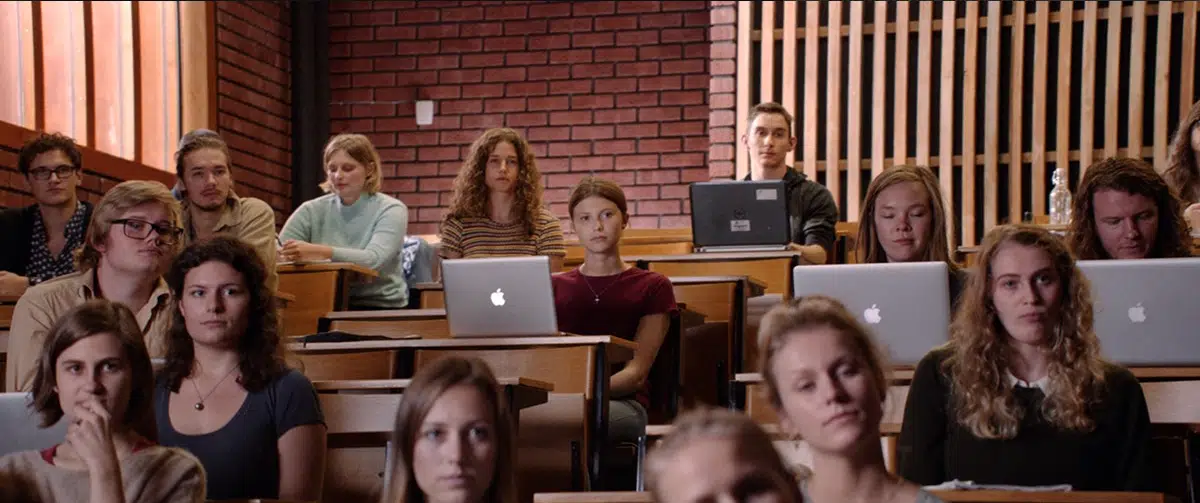
There’s something deeply satisfying about the first line of a film being spoken by an irrelevant character who just so happens to tell you the thesis of the film. Thelma, unfortunately, just misses this satisfaction, but not by much : its second spoken line comes from a professor explaining the concept of how we can observe matter as a particle or a wave depending on how we measure it. While it might seem like a simple way to introduce the film’s university setting, this line actually hints at what we need to remember in order to truly understand the film : perspective is everything.
To truly get what the film is trying to communicate, it’s important to look at how the film explores knowledge and the lack thereof. At the start of the film, Thelma has just left a conservative rural community in order to go to university in a big city. The premise naturally lends the film a sense of transition, and a huge part of that transition for Thelma is being exposed to other ways of thinking and living that will inevitably change how she sees the world. She struggles at first, as her entire worldview is based on her parents’ strict Christian beliefs, beliefs that she is proud of but which put her at odds with most of her classmates. Later she shows signs of questioning her perspective, though, telling her father she finds the belief in a 6000-year-old world odd. Her father, though, reprimands her, reminding her of her ignorance and that nobody knows everything. This moment is a clear example of how Thelma still internalises her parents' perspective, as she later uses it in an argument with another student.
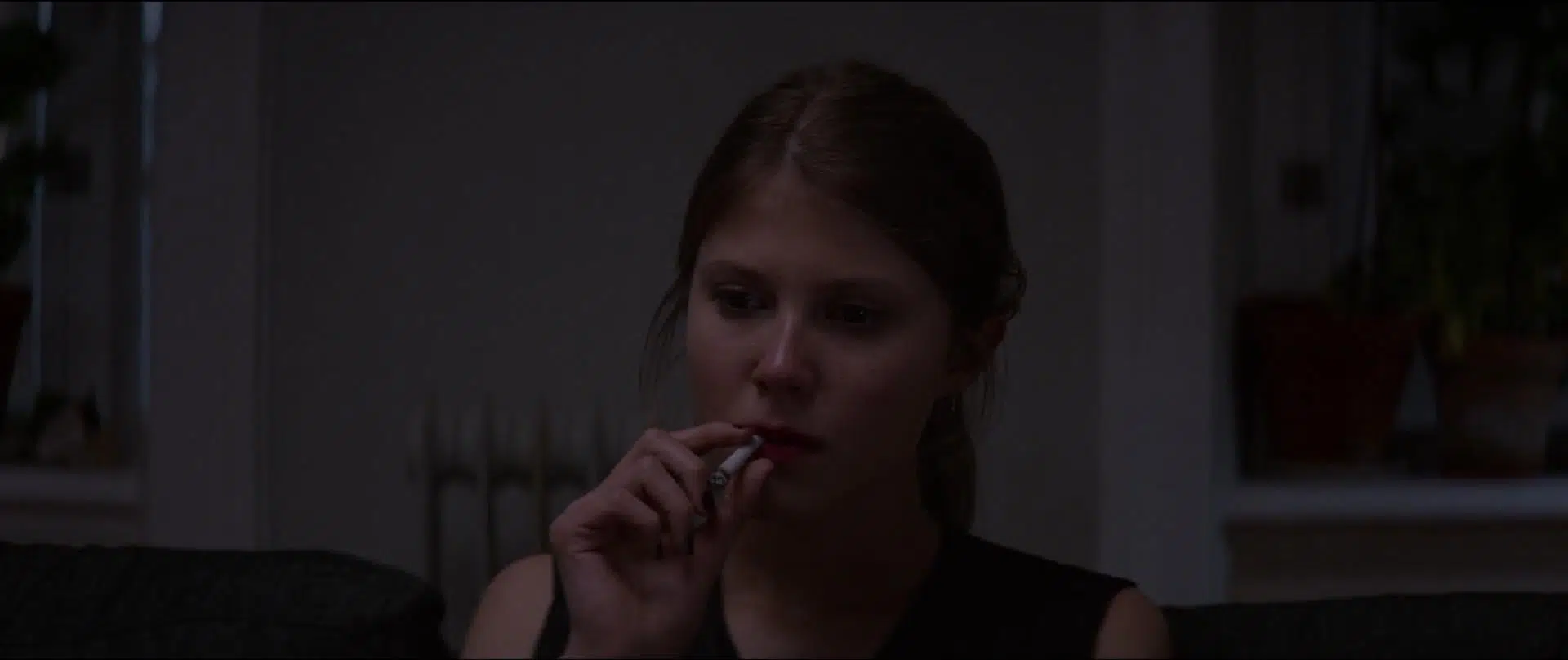
Ironically, though, Thelma’s father’s reminder that she doesn’t know everything ultimately encourages her to begin experimenting to increase her understanding of the world. She starts drinking, smoking, and even kisses Anja - the last of which is a step too far, irreconcilable with the homophobic perspective she was raised with. At first, she continues to call her father for advice, calling him crying to admit her “wrongdoing”, treating him as a sort of confessional. Anja, however, makes Thelma question this relationship as they discuss their perspectives on their fathers : Thelma loves hers despite apparent abuse in her childhood, and Anja has gone from hating her father to accepting him after he was absent. By the time she calls her father to confess, then, it’s clear that she is already beginning to move away from dependence on her father’s perspective as she lies to him about what “sin” she really committed. Finally, she starts developing her own independent worldview, one that is formed by learning more about herself and the personal history that was hidden from her.
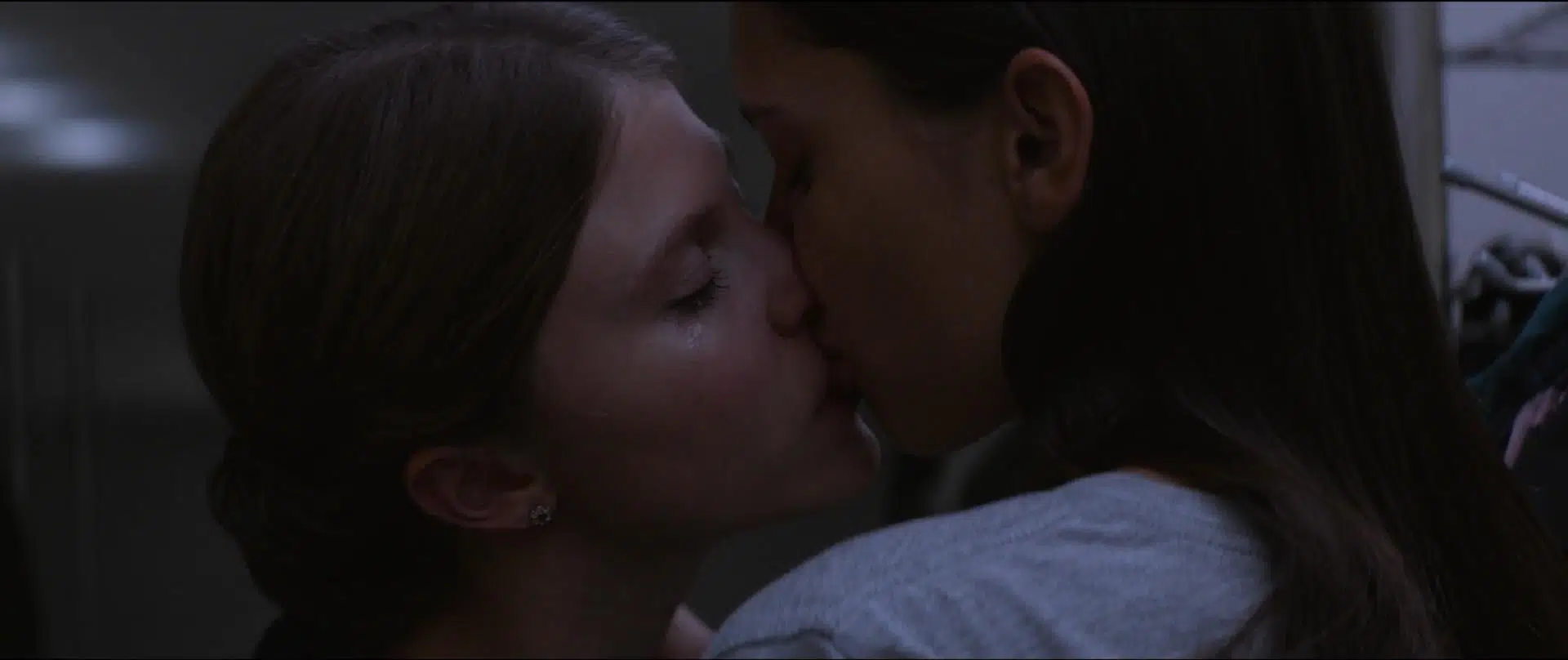
This is the most basic exploration of knowledge and ignorance in the film, one which reminds us of the freedom and power that comes from exploring for oneself and developing one’s own perspective. More interesting, however, is what the film says about how perspective might define reality. One of the film’s best moments is when Thelma smokes marijuana at a party and hallucinates a sexual encounter with Anja, after they’ve kissed but before Thelma can accept her desires. It’s soon revealed, though, that the cigarette she was given was entirely normal - how, then, did she hallucinate? The scientific answer would be an extreme case of the placebo effect, but the meaning behind it is that what you perceive becomes your truth and your reality. For Thelma, the marijuana and the sexual encounter were true and meaningful experiences even though they weren’t real simply because she perceived them as real. Her lack of knowledge meant her perspective was wrong, but it was nonetheless true to her.
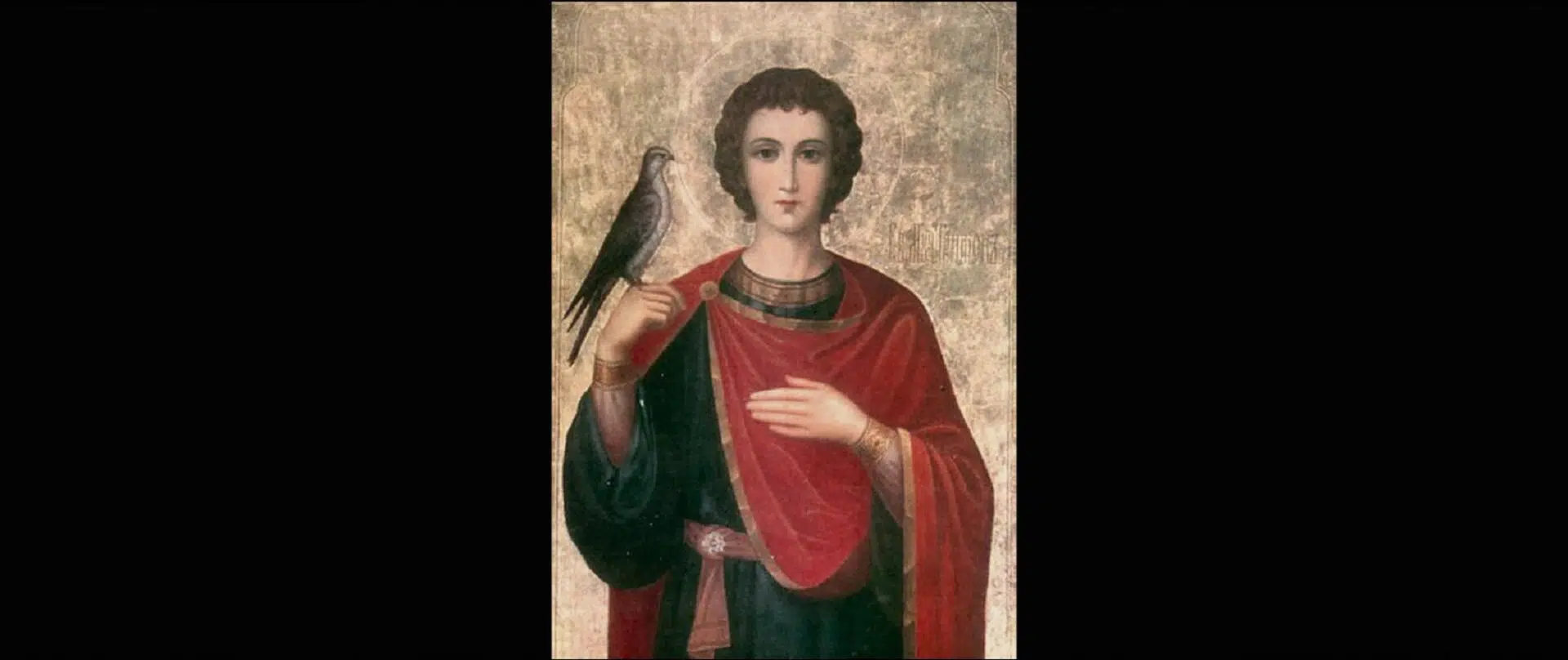
The idea of perception as truth is key to the film because many of the “evil” acts in the film can be traced back to issues of perspective. In the film, Thelma has magic powers that allow her to control reality according to her desires. When Thelma causes Anja to disappear, though, isn’t her true desire, but rather the fault of her homophobic perspective causing her internal strife. This perspective, too, was a result of how her parents perceived her powers as dangerous and evil, causing them to indoctrinate her with ideas of strict Christian self-control. Instead of teaching Thelma how to manage her powers, they force her to repress them, and in doing so they only make them more dangerous. Had they changed their perspective to view her powers as a gift, they could have prevented many problems. Indeed, when Thelma is researching her powers, we see that powers like hers have been perceived as everything from godly gifts to demonic curses and even hysterical illnesses throughout history. Thelma’s powers are not inherently dangerous, but they can be when seen that way. Her parents chose to view them as evil, and in doing so manifested exactly what they feared.
Altogether, Thelma isn’t just a gripping watch, it’s also deeply thought-provoking, making us question how our own perceptions might influence our realities as well. Its last scene, especially, drives home the question of objective and subjective truths. More than anything, though, it reminds us that the most important thing we can do for our own happiness and peace of mind is to continue learning and growing, discovering the world for ourselves so that we don’t end up slaves to the perceptions and ideologies of others. Somehow straddling the line between high philosophy, coming-of-age, and thriller, I really can’t recommend Thelma enough.





Share your thoughts!
Be the first to start the conversation.