
"Inside Out 2"(2024) is hitting theaters this week, sparking renewed interest in the original film and making it one of the hottest movies on Disney+ right now. Fans are revisiting the first installment while eagerly anticipating and speculating about the sequel. The original "Inside Out"(2015) is considered one of Pixar's most imaginative movies, exploring the complexities of human emotions and memory through amazing concepts like core memories, personality islands, dream factory, the subconscious, train of thought, imagination land, and memory dump.
"Inside Out" is Pixar's 15th animated feature and Pete Docter's third movie, following "Monsters, Inc."(2001) and "Up"(2009). The story was inspired by Docter's personal experience: his daughter Elie was a lively and happy child, but she suddenly became quiet and withdrawn at 11. This change made Docter wonder: What was she thinking? Why had she changed? In a bid to seek answers to these questions, Docter created a story about the mind, blending scientific theories with creative fiction. The movie follows a young girl named Riley, who moves with her parents from Minnesota to San Francisco. The dirty, cramped apartment, unfamiliar school, and fading friendships make Riley feel lost, and her negative emotions build up, causing her inner world to crumble. But the real deal happens inside her mind, where five emotions (Joy, Sadness, Fear, Disgust, and Anger) control her actions and manage the magical world of long-term memory and the subconscious.

Joy is a live wire who constantly tries to keep Riley happy and whose pet phrase is "I can fix it!"; Fear is a bundle of nerves who keeps Riley safe by warning her of danger; Disgust is a picky, sharp-tongued character who stops her from eating broccoli; Anger has a fiery temper and ensures Riley is treated fairly; while Sadness, shaped like a teardrop, quietly appears and sometimes makes Riley burst into tears or feel overwhelmed with sorrow. There are many other imaginative and touching moments in the movie. For instance, the pink hybrid of cat, elephant, and dolphin Bing Bong cries candies, and his departure symbolizes farewell to childhood toys. Each design is filled with childlike wonder and deep meaning, showcasing Pixar's creativity and emotional depth.
The core idea of "Inside Out" is a group of tiny people in the brain controlling a person's actions, which, although novel, isn't entirely new. Woody Allen's 1960s classic "Everything You Always Wanted to Know About Sex" and the British sci-fi series "Doctor Who" have similar concepts. However, a great idea alone doesn't make a great movie. The real magic is in how this idea is uniquely and effectively brought to life, which is why "Inside Out" shines. It's not just a fun science film that visually explains how our brain works; it's also a story about growing up, family, self-awareness, and emotions.
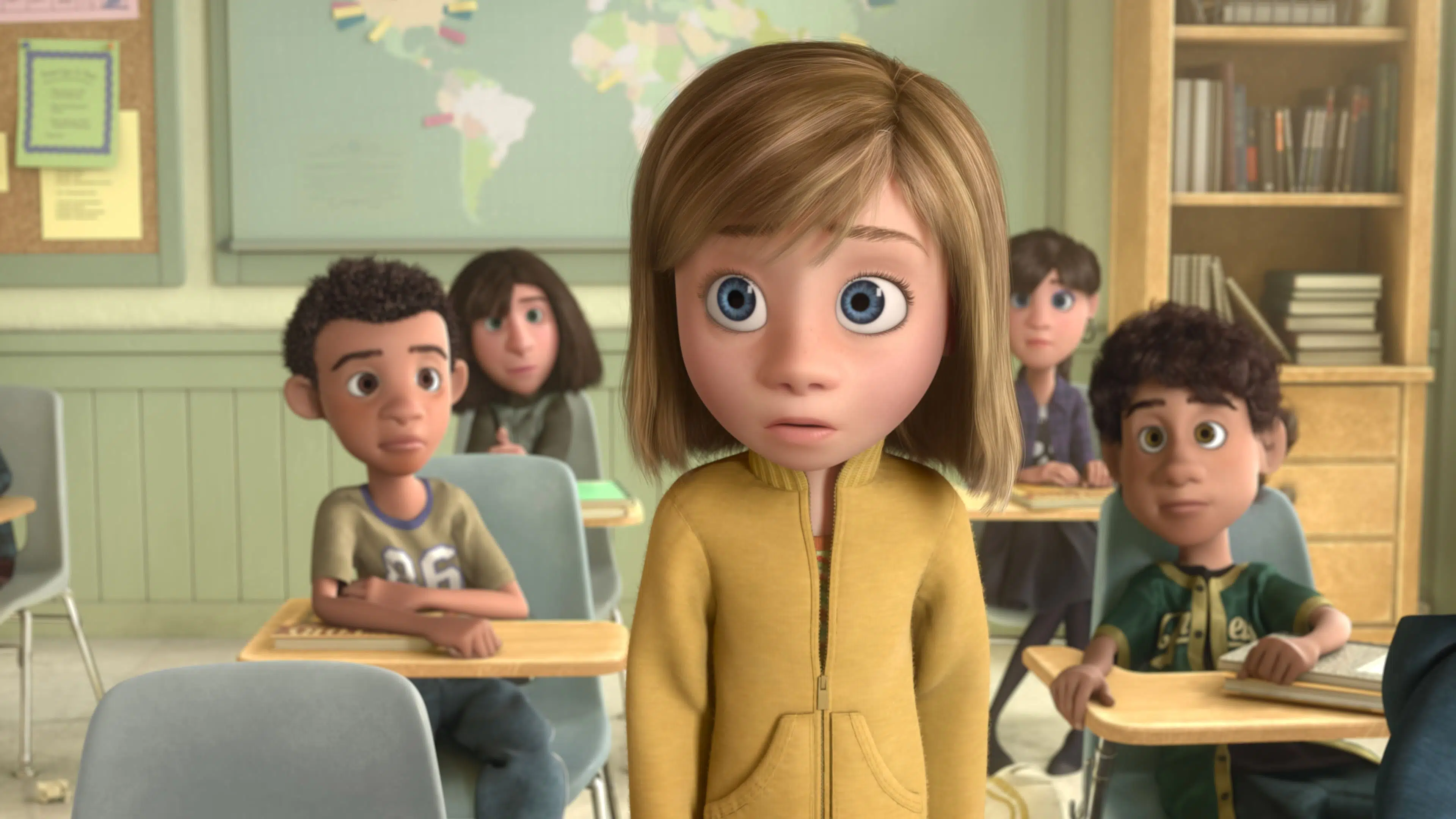
Riley's growth hints at a deeper issue: joy often steps back as we grow up, and even our happiest memories can get tinged with sadness. If you look at the mind of Riley's mom, you'll see that Joy isn't the leader; Sadness is. Does this mean that sadness becomes the dominant emotion as we age? Then I noticed that in the mind of Riley's dad, Anger is in charge, which might suggest that our personalities are shaped by the different emotions that are getting ahold of us. But even if sadness becomes someone's main emotion, it's not necessarily a bad thing and it's nothing to be scared of.
The main takeaway from this movie is that every emotion has its inherent merit and deserves to be cherished. Our culture often compels us to reject sadness and anger as they are labeled as harmful "negative energy," and pretend to be happy to hide our true feelings. In reality, all emotions have their own meaning and value, and suppressing any of them can lead to dysfunction. For the past 11 years, Joy has been suppressing her other counterparts, especially Sadness, and running the control panel—she even keeps her away from it. This leads to a meltdown. Joy and Sadness then get kicked out of the brain's control room, hinting at the start of depression, where joy and sadness are the first emotions to disappear.

Fans are eagerly anticipating "Inside Out 2" and hoping for new emotional characters and storylines. It's said that the first film considered up to 27 different emotions, including surprise, pride, and trust, but ultimately settled on five to keep the story simple. Will the sequel introduce more emotional characters to enrich Riley's inner world and create more drama? Additionally, the first film made cultural adjustments for different regions. For example, Riley's dad daydreams about playing hockey in the North American version and it was changed to soccer in other regions. In addition, Riley's least favorite food is broccoli, but in the Japanese version, it is green pepper because the locals generally dislike it. Will the sequel also tweak some details according to the cultural context? These questions are hot topics among fans.
Get ready for a journey back into the whimsical world of "Inside Out" with its highly anticipated sequel hitting theaters this week. Pixar's imaginative exploration of emotions and memories continues to captivate audiences, sparking both nostalgia and excitement for what's to come. The team behind "Inside Out 2" might face a lot of pressure. The original film has set a high bar, and the sequel needs to maintain that quality while also bringing fresh storylines and character development. This is a significant challenge, but it's also a fantastic opportunity for Pixar to showcase its creativity and storytelling prowess once again.





Share your thoughts!
Be the first to start the conversation.