
There is no better filmmaker to capture Frankenstein than Guillermo del Toro. For decades, he has dwelled among ghosts, demons, and monsters as their most ardent humanist. In Crimson Peak, he painted Gothic decay with a lover’s tenderness; in The Shape of Water, he turned the monstrous into the divine. Now, with Frankenstein, he brings Mary Shelley’s novel to life as intricately as the Doctor does his Creature, rendered in baroque decadence, steeped in melancholy, and pulsing with the raw ache of creation. Del Toro’s adaptation is not only one of the most faithful to Shelley’s text, but also one of the most emotionally devastating retellings ever to grace the screen.
The film opens, as Shelley’s novel does, amid the frozen desolation of the Arctic. A Danish ship, locked in the ice and led by Captain Anderson (Lars Mikkelsen), discovers a frail, injured man in the white void: Victor Frankenstein (Oscar Isaac). Soon, the crew is besieged by a monstrous figure of immense strength whose wounds heal as fast as they appear. “What manner of devil made you?” Anderson demands. Victor did. From there, Victor recounts the terrible story that led him to the ends of the Earth as he confesses to the crime of playing God.
Del Toro’s storytelling mirrors Shelley’s layered prose: a tale within a tale, stitched from memory and regret. We see Victor’s youth, shaped by a household as cold as the landscapes he will later wander. His father, Baron Leopold Frankenstein (Charles Dance), a stern and respected physician, despises both wife and son, offering the boy only lessons in anatomy disguised as paternal bonding. His mother (Mia Goth), who dies in childbirth delivering his brother William (Felix Kammerer), is both his first and last vision of love. “She who was life is now death,” Victor mourns. From that moment, the boundary between the two becomes his obsession.
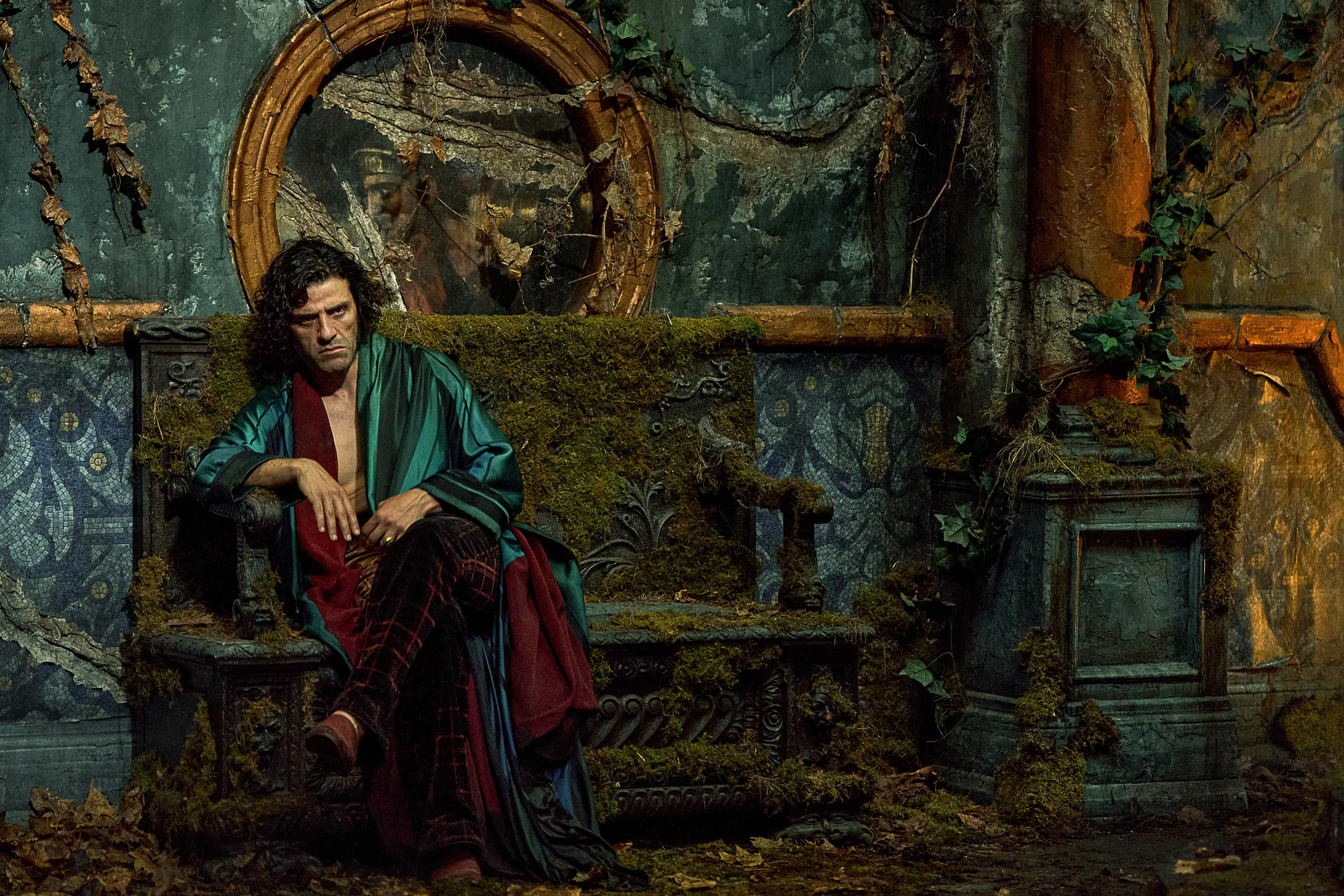
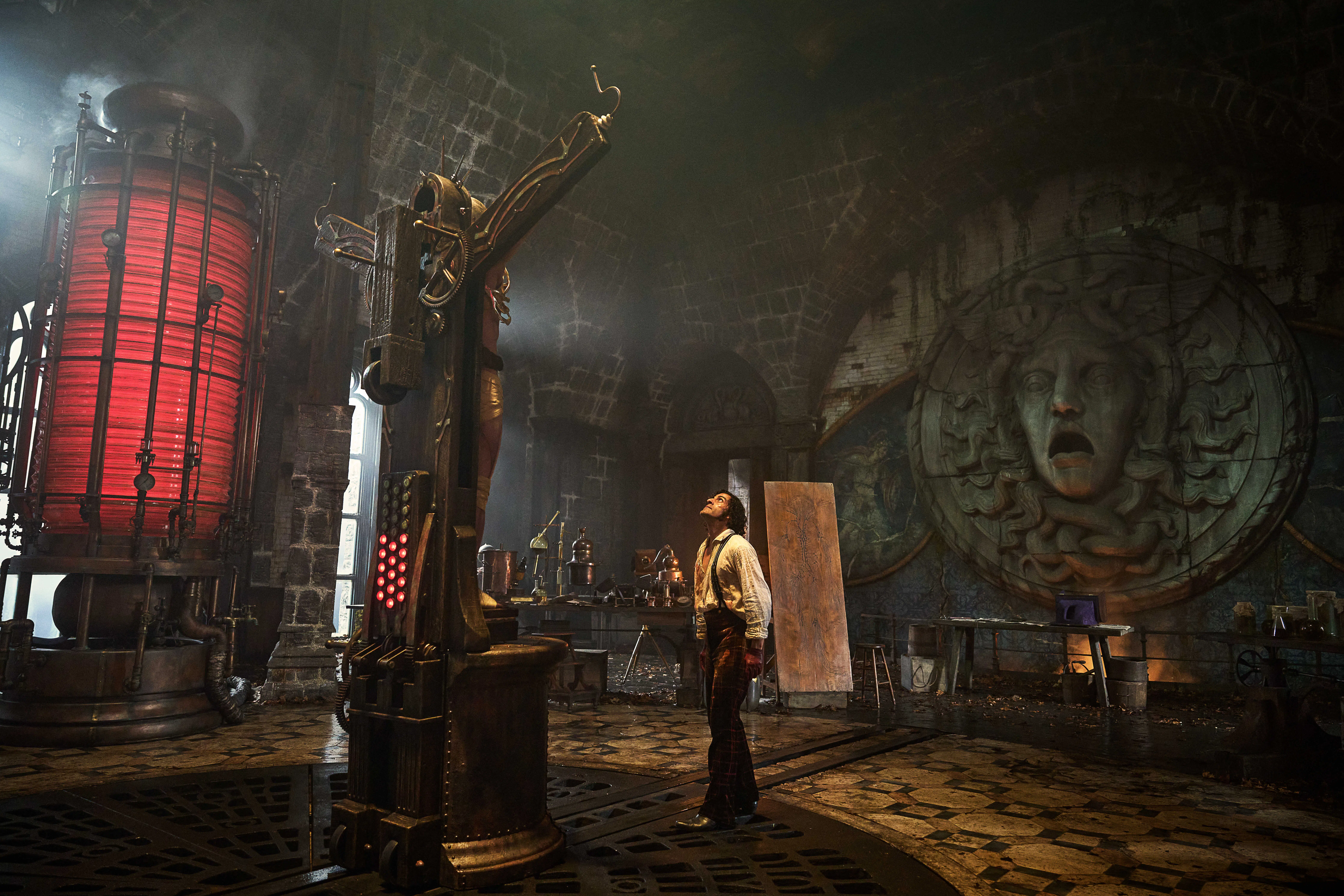
Isaac’s Victor is not the manic cackling scientist of cinematic cliché, but an intelligent, wounded man whose ambition is equal parts brilliance and grief. Dismissed from the Royal College of Surgeons after an unholy experiment, he is given another chance by Henrich Harlander (Christoph Waltz), a syphilitic arms dealer who offers Victor an abandoned tower and unlimited funds in exchange for results. Tamara Deverell’s production design here is exquisite: the tower rises in decay, much like Allerdale Hall in Crimson Peak — a cathedral of rust and thunder. It's both laboratory and tomb, a monument to the madness of progress.
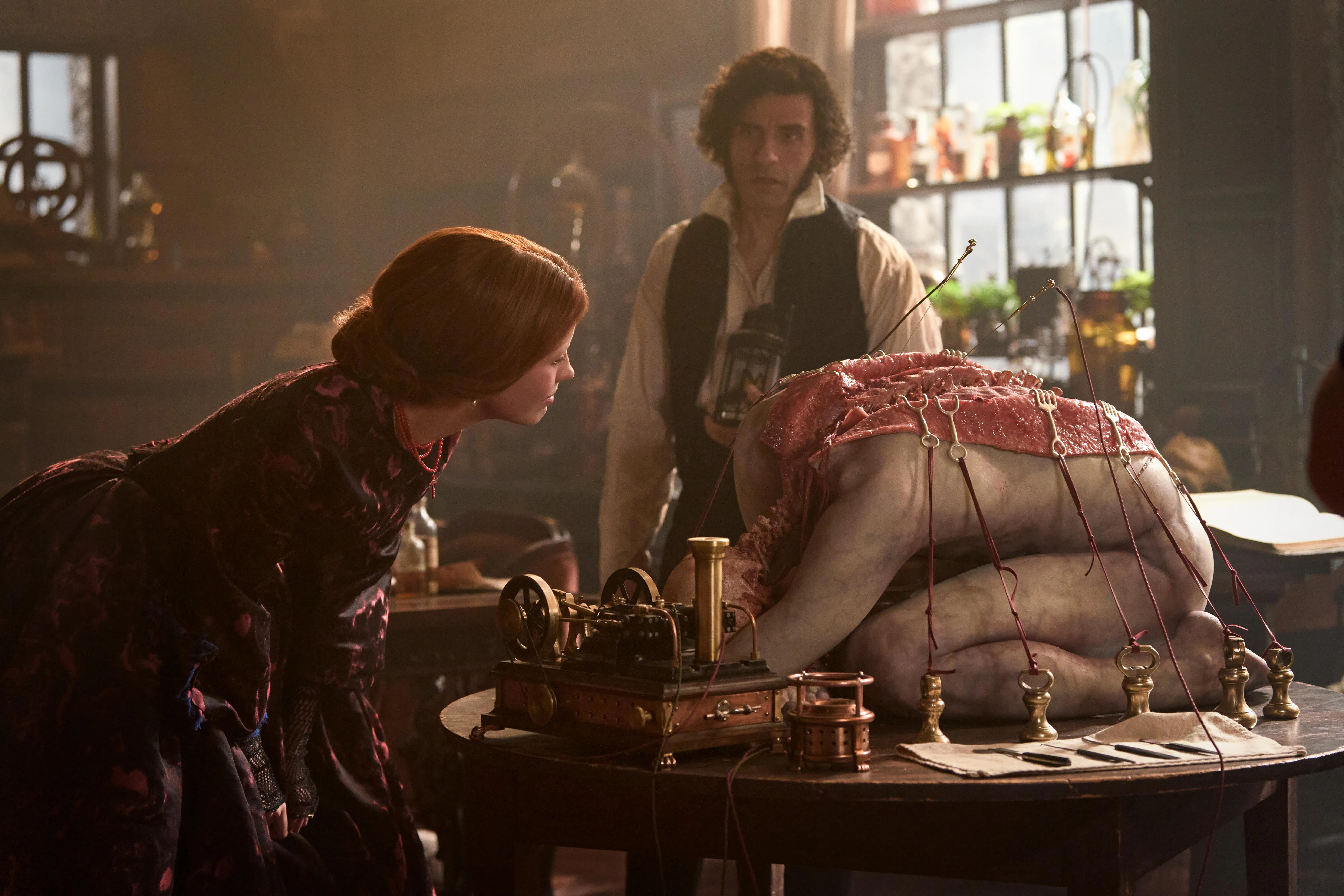
When Henrich's impatience mounts, Victor raids battlefields, collecting fragments of humanity, soldiers from the Crimean War, and hanged criminals, to craft a body of impossible beauty and horror. His artistry is grotesque and intimate: he sketches skin like a painter, sculpts flesh like clay, and cuts into limbs with reverence. The film’s parallels between Victor and Del Toro are striking; both are artists shaping life from decay, crafting worlds of terror that tremble with empathy. When the Creature finally rises, awakened by lightning coursing through the lymphatic system, Del Toro stages it not as spectacle but as sorrow. The birth of the Creature is both a miracle and a mistake. It’s a scene of trembling awe that shifts into unbearable loneliness.
Jacob Elordi's performance as the Creature is staggering. Where Boris Karloff’s 1931 monster under James Whale's direction became the defining image of the Universal Monsters — stitched forehead, heavy boots, a mute, tragic figure — Elordi reclaims Shelley’s original vision: articulate, curious, childlike, and heartbreakingly human. His performance is more physical than vocal at first; his eyes do most of the speaking. When Victor chains him in the bowels of the tower, the Creature’s bewilderment cuts deeper than fear. He carries the pain of a newborn abandoned by its parent. William’s fiancée, Elizabeth (Mia Goth, in her second role in the film), becomes the Creature’s fleeting glimpse of compassion. Through her, he learns his second word, her name, before he is marked for destruction by his creator.
Del Toro lingers on the contrast between Victor’s sterile brilliance and Elizabeth’s warmth, between the Creator’s control and the Creature’s yearning for choice. “Only monsters play God,” Elizabeth warns, and Victor’s descent proves her right. His attempt to destroy his creation ends in fire and ruin; the Creature escapes into the wild, truly born through flame rather than lightning.
The film’s middle act mirrors the novel’s most poignant chapters: the Creature’s exile and education. Taking refuge in a farmhouse, he observes an old blind man (David Bradley) teaching his granddaughter to read. In secret, the Creature aids them, chopping wood, leaving food, and they thank their unseen benefactor as “the Spirit of the Forest.” These scenes, scored with melancholy tenderness, are where Del Toro’s empathy shines brightest. When the blind man at last befriends the Creature, teaching him to speak and read, we see the monster become a man. Yet humanity, as Shelley warned, is a cruel tutor. The family’s eventual rejection drives him back toward vengeance, learning hatred through the world’s own violence.
From there, Frankenstein follows the inexorable path of tragedy. The Creature returns to demand from Victor what he has been denied: a companion. When Victor refuses, the Creature, cursed with an incessant heart, goes off into the wilderness, mourning the possibility of love. The film ends as it began: on ice. Victor pursues the Creature across the Arctic, their fates frozen together. When Victor begs forgiveness, the Creature easily grants it, learning much earlier than most of us that holding on to hatred will not allow you to face the sunrise and reach toward it as if to embrace life itself, as the Creature does in the end.
Del Toro’s Frankenstein stands among the greatest adaptations of Shelley’s masterpiece. While James Whale’s 1931 Frankenstein and the films that came after it (Bride of Frankenstein, Mary Shelley's Frankenstein, and even comedies like Young Frankenstein) cemented the story’s mythic stature within Universal’s monster pantheon and beyond, they also distilled its horror into archetype. Del Toro restores its soul. His film is not about lightning and laboratories, but he really focuses on loneliness, creation, and the tragedy of being unloved. Shelley’s subtitle, The Modern Prometheus, refers to Victor’s theft of divine fire, his hubristic attempt to animate life. Del Toro reclaims that metaphor, turning Prometheus into a mirror for the creator himself: one who gives life through imagination and suffers for it.
The significance of Frankenstein cannot be overstated. It’s the wellspring of modern horror, one of the first to birth science fiction and redefine what monsters could mean. Every creature that has haunted cinema since, like Godzilla, The Thing, and the Xenomorph, owes its pulse to Shelley’s creation. Del Toro understands this lineage deeply. His film doesn’t just adapt Frankenstein; it communes with its ghosts, paying tribute to Whale’s expressionist angles, to Karloff’s aching silence, and to every iteration that has kept the Creature alive in popular imagination.
Ultimately, Del Toro’s Frankenstein is a film of breathtaking empathy. It moves like poetry — slow, deliberate, aching with the rhythm of Shelley’s prose. Through Isaac’s tortured genius and Elordi’s soulful creature, it asks the same questions that have haunted us for two centuries: What makes us human? What do we owe to our creations? And can love exist without forgiveness?
In the final shot, as the Creature lets the sun touch his face, tears falling down his cheek, Del Toro gives us the most profound answer yet. What makes us human isn’t divine power or scientific mastery, but the yearning to connect, to understand, to create, to reach beyond ourselves. The Creature’s act of walking toward the sun (and symbolically, toward love, belonging, and meaning) embodies that. Frankenstein is a masterwork of gothic beauty and despair. It’s a creation worthy of its creator.






Share your thoughts!
Be the first to start the conversation.