
The Smashing Machine wasn't the smash hit that The Rock wanted. It proves that you can have the coolest director, the coolest production company, and the most famous actor in the world, but if you don't have a story, you don't have anything. It's not that the story of Mark Kerr is uneventful. It's that, on the surface, it lacks any originality that would differentiate it from the many fighter movies that have come before. Maybe I was gaslighting myself, but I couldn't accept that this was all we were going to get from this Rock/Safdie/A24 collaboration. After watching it, I kept thinking about the movie over and over, and what I uncovered was a curious theme that unified The Smashing Machine.
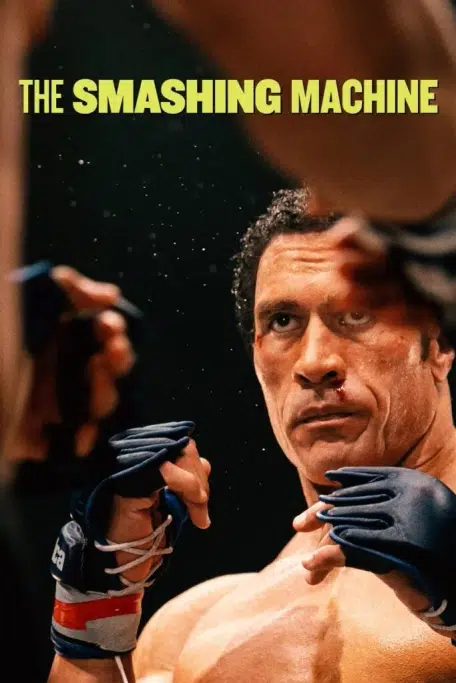
When the audience is first introduced to Mark, he's fighting in a ballroom in Brazil. While he makes good on his nickname, smashing the faces of his opponents like a well-calibrated machine, Mark has a voiceover interview where he talks about why he loves fighting. For him, what it comes down to is the rush of victory, the feeling of dominating another man and having his hand raised in front of the fans. To him, this is the greatest high in the world.
As with every high, it is accompanied by withdrawal. For Mark, all the glory of victory is countered later by chronic pain. To cope with every bone and muscle within his body screaming in agony, Mark turns, like many fighters, to opioids. As is commonly known, injecting opioids is a slippery slope. Although we only see him shoot up once, the implication is that Mark is using these drugs all the time, even before his fights. It's possible that he has an addictive personality, and opioids are addictive (as it says on the bottle during a closeup). Luckily, he takes preventative measures and cleans himself up by going to rehab.
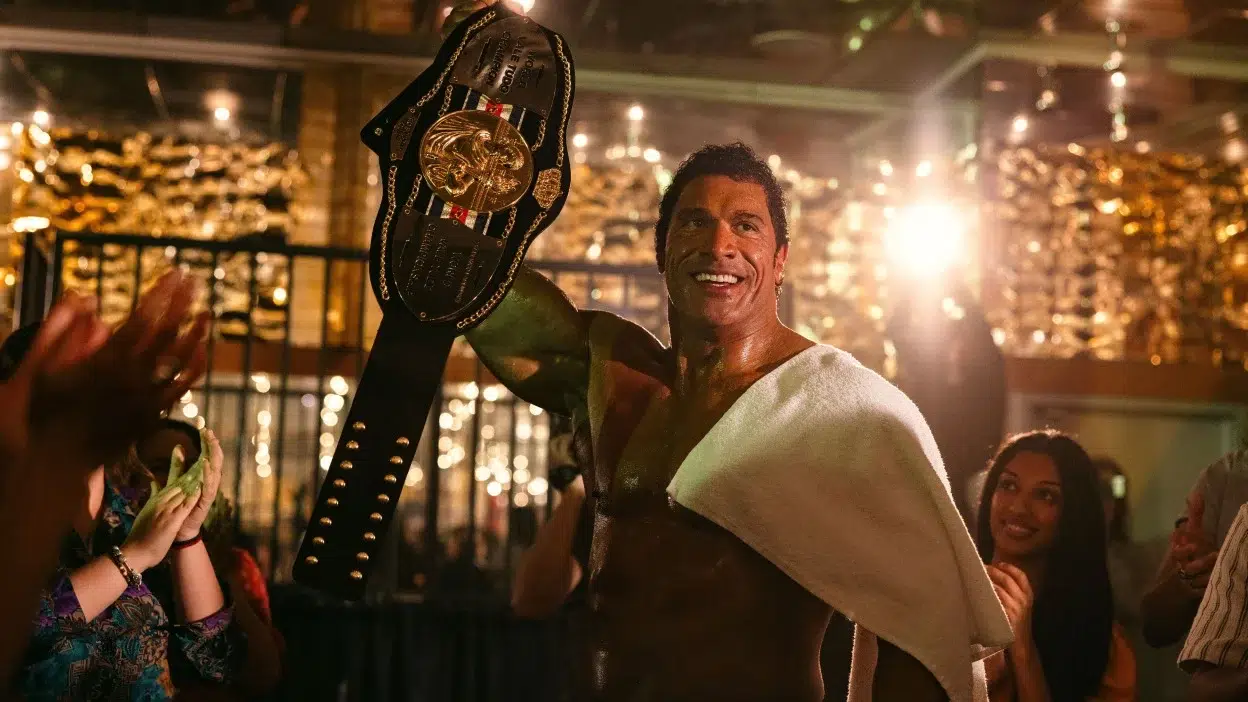
That doesn't stop his pursuit of something to ignite his body, to shed the baseness of existence and fly closer to the sun. Mark's rock (pun intended) throughout the movie is his wife, Dawn (Emily Blunt). At first, their relationship seems fine: she's pretty; he's a big strong man. It doesn't take long to see the toxicity. There is the first Japan fight sequence, before he goes to rehab, where Mark is warming up in his dressing room when Dawn enters. Mark's trainer (Ryan Bader) is surprised that Dawn is there. He gives them the room and Dawn starts getting into Mark's head, right when he is supposed to be focusing on the match. She makes him look at her in the eye and that's when she asks, "are you high?" He doesn't respond. He doesn't need to.
Later, when he's clean, Mark is trying to live on the straight and narrow, but any recovering addict will tell you that it's difficult to change your own life when the lives of all those around you stay the same. In what is portrayed as a personal affront to Mark, who is at home trying to not do drugs, Dawn goes out for lunch margaritas and comes home buzzing. This bothers Mark and he tries to talk to her in his surprisingly soft-as-a-feather tone, but she's not listening. She doesn't want to adapt her lifestyle to meet Mark's new standards.
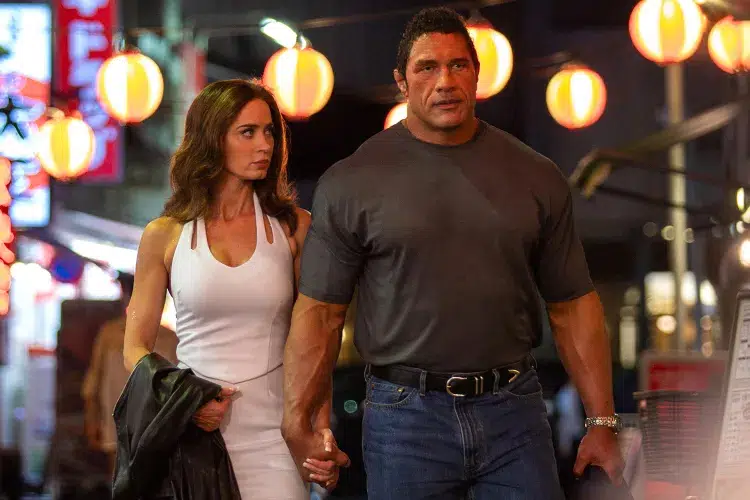
Their relationship is turbulent. At one moment, she is smashing a gift Mark bought for her. At another, she is gifting that same gift back to Mark, fixed up with superglue and tender loving care. This back and forth is continuous, akin to how a drug can feel like heaven at one moment but put you into hell in the next.
Nobody seems to like Dawn except for Mark. His trainer doesn't think that she's a good presence in the locker room. When Mark goes back to train with Bas Rutten (playing himself), the old trainer is concerned when Dawn shows up and Mark dips out early to spend time with her. Their reactions, to me, felt like the reactions that a friend would have after watching a buddy go for that fifth or sixth beer on a Wednesday night. There's no stopping a man from doing what he wants to do, but damn does it hurt to sit by and watch it happen.
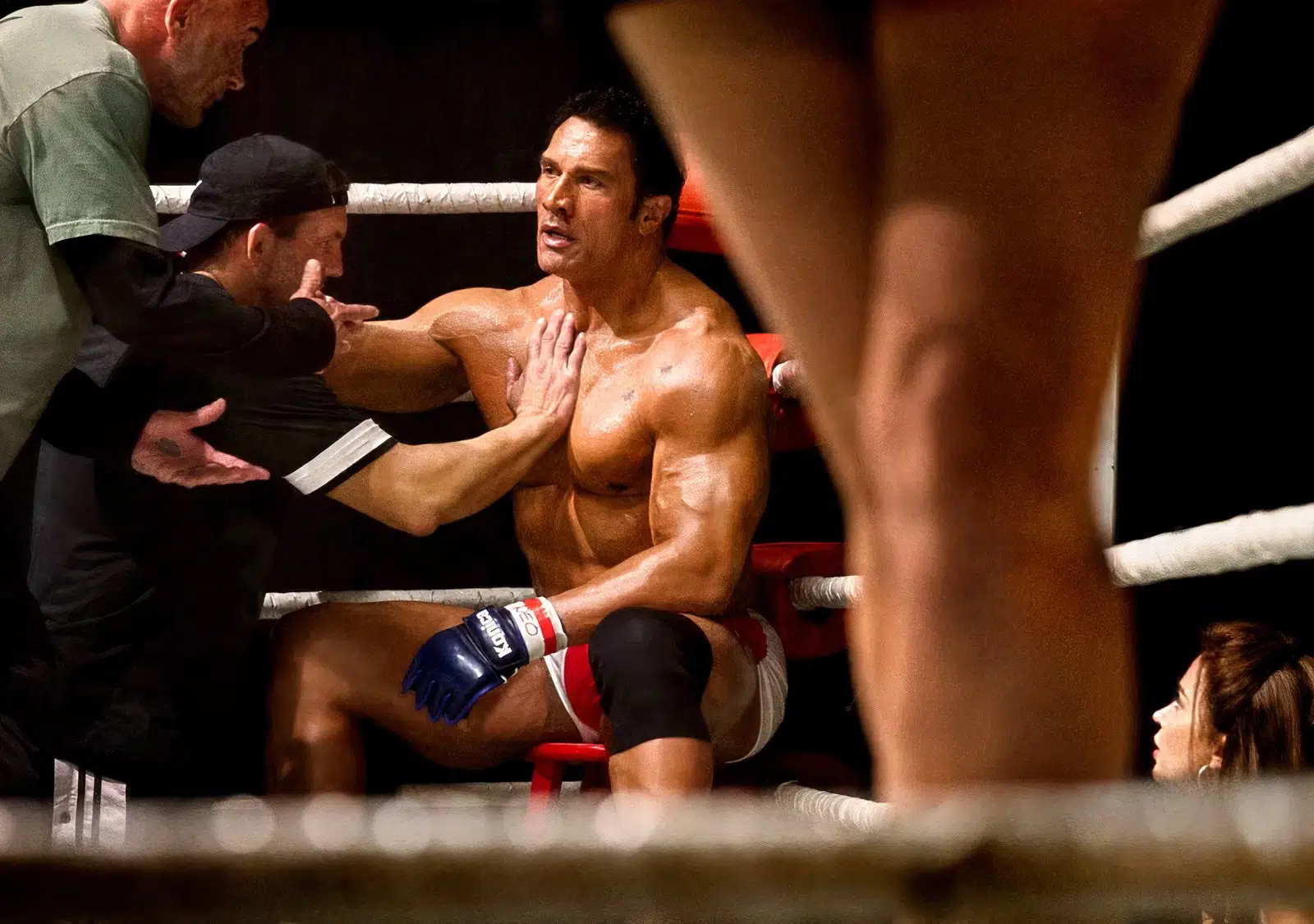
Is love an addiction? Can another person's presence make you high? The power that Dawn holds over Mark is prevalent in all their scenes together. Even when they argue, even when she doesn't respect his desires, Mark stays with Dawn, bends to her, allows her to throw him off his game before a big fight, because, if he is not in love with her, he is addicted to her. He cannot see that he could potentially be better off with a different partner. He can't quit his love/addiction and the high he gets from being with her.
Finally, there is the strongest high, the one that is "orgasmic," as Mark explains it to Dawn. Winning. Beating another man so badly that he cannot continue to defend himself. Being declared better than your opponent in front of a stadium of people. Above the opioids, above Dawn, the one high that Mark can't live without is winning.
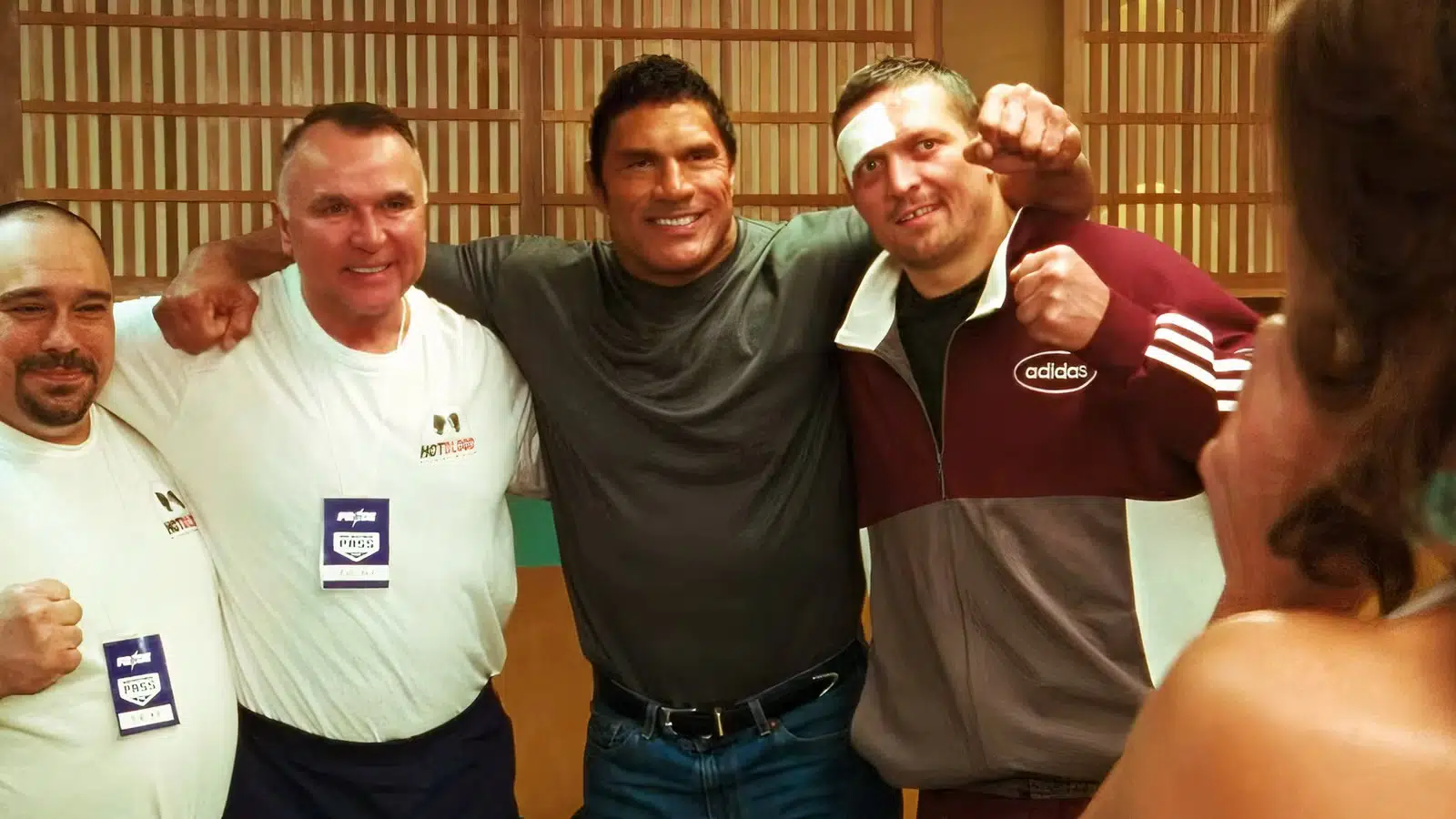
It's what makes him confident in the early stages of his career. He can fight while stoned because he wins. Since he wins, he's doing the right thing, because it results in that ultimate feeling, the one that he is constantly chasing.
He can kick drugs, but only if he can continue fighting. Chasing victory is where he gains his life purpose. Usually, after going to rehab, a 12-step program is put in place that puts God at the forefront of a recovering addict's life. Not for Mark. There is little to no mention of God; Mark has the church of the ring. This is where he absolves his sins. Where the real world melts away and he becomes one with himself and his goal of smashing his opponent to pieces.
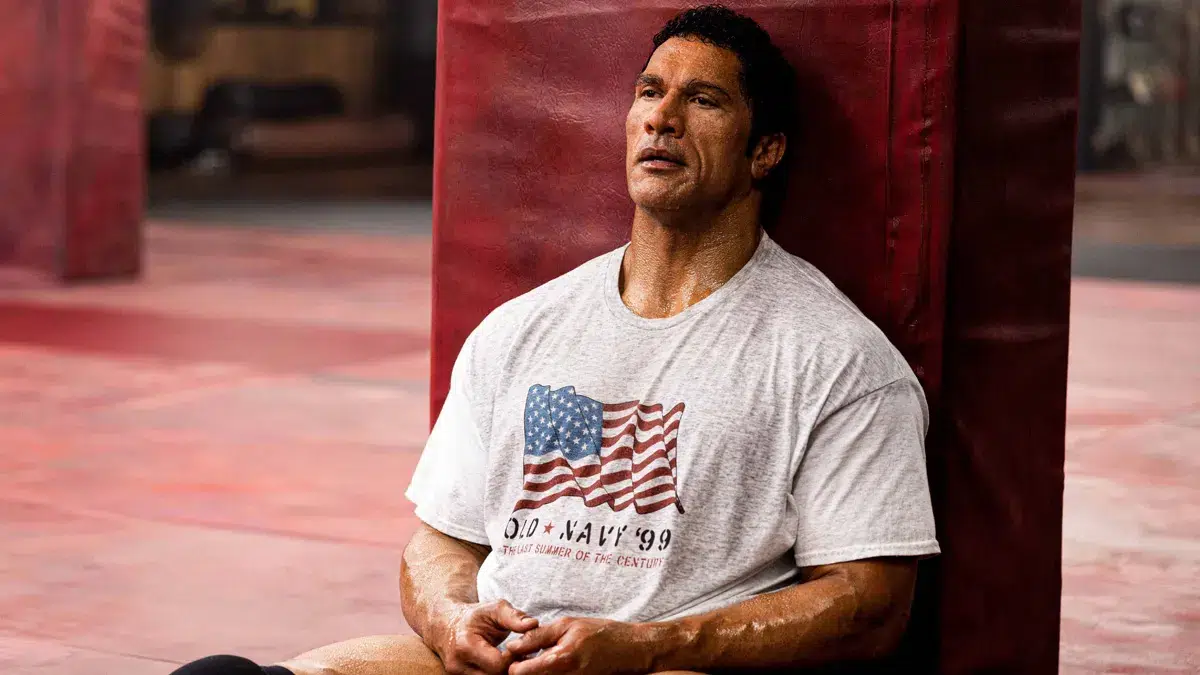
The film becomes a tug of war between Mark's two favourite addictions: fighting and Dawn. In a surprising twist, when Mark is moments away from winning the biggest tournament of his life, he has a revelation. As he curls on the mat, he starts seeing flashes of the people that have cared for him. Perhaps, he realized that his vain pursuit of glory was selfish and that he would not be in this position without the people that propped him up. That includes his trainer, Dawn, and Bas.
Is it the right call, to focus on love rather than victory? His relationship with Dawn wasn't a good one. His trainer is a fighter as well, but he's also his friend, and I think he just wanted to see Mark happy. It just so happened that Mark was happiest when he won. Bas wants Mark to continue fighting and winning. His relationships are tied to victories. A losing fighter is good for nobody, except for winning fighters who can put the hurt on them. Losing doesn't feel orgasmic, but it gives Mark a new-found sense of peace.
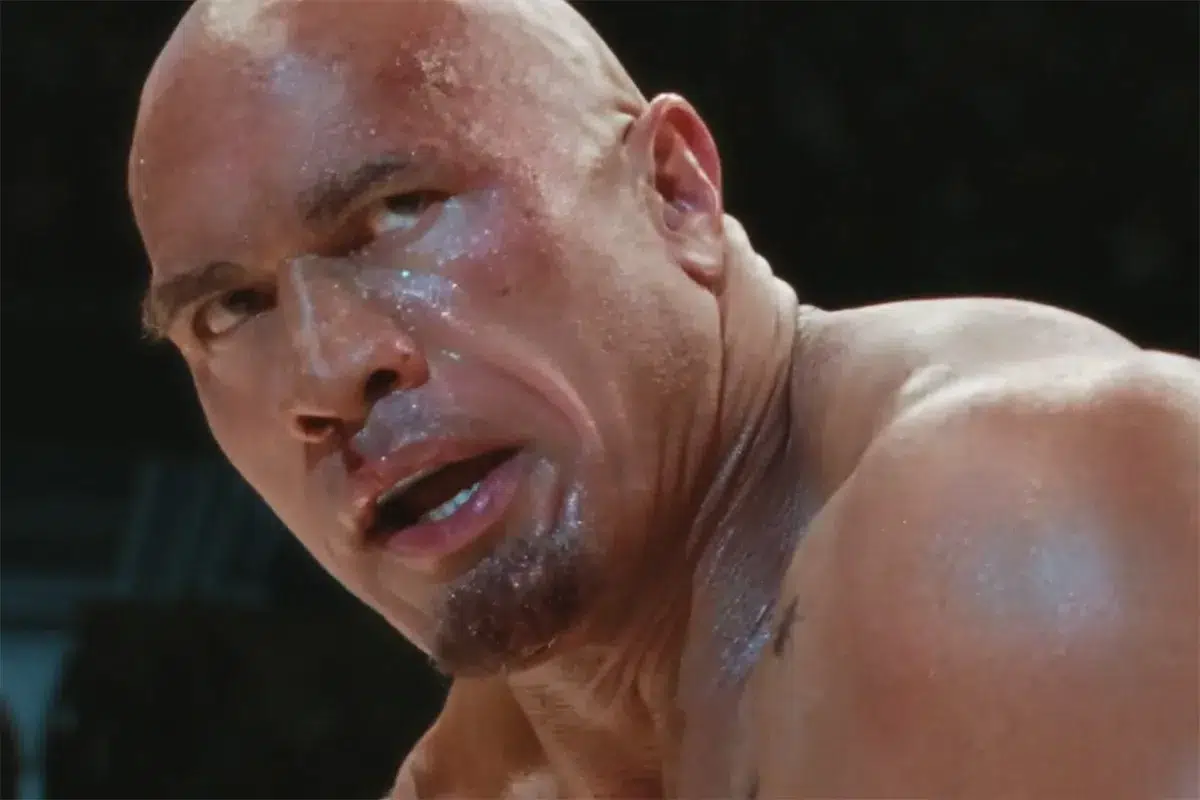
The Smashing Machine is a movie about shedding, like a desert snake. Mark has to shed the drugs to prove that he can win without them. The people around him think he should shed Dawn so that he can focus even more on winning and being the best fighter possible. Maybe Mark thinks that too, until the moment in the ring where his desire to win sheds, leaving him in his own skin, unable to forget the people that matter most to him. This spiritual deconstruction, this distilling of life down to its most potent moments, is what The Smashing Machine is really about. Benny Safdie chose to bury this theme under such nuance that it's an easy movie to watch but a difficult one to decipher.



Share your thoughts!
Be the first to start the conversation.