
During Awards Season, cinemas can get a bit stuffy. Gone are the popcorn thrills of the summer and the unsung heroes of spring.
In the dead of winter, all the worthwhile movies are either three hours long, artsy as hell, or densely impenetrable. The Secret Agent is all three of these things.
That may scare some North Americans away from this film, but I'm here to say that you don't need a history degree or a keen artistic sense to enjoy this Oscar contender from Brazil.

Director Kleber Mendonça Filho smartly wraps his political neo-noir in the comforting sheets of entertainment and cinematic nostalgia, creating a film that can be enjoyed on the surface or analyzed to incredible depths.
Brazilian cinema emerged from international hibernation last year with Walter Salles's amazing film, I'm Still Here. It won the Oscar for Best International Feature and made swaths of North American viewers realize that they don't know anything about Brazilian history, myself included.
The Secret Agent is like a spiritual successor to I'm Still Here, as it is set in the same era and also includes themes of political corruption. However, The Secret Agent is much less demanding than I'm Still Here, and much more accessible through its B-movie vibe.

I should clarify that this accessibility is a bit of a front.
Despite its breezy look, everything in The Secret Agent holds a deeper meaning, a half-truth, a fractured memory.
Even the title doesn't tell the full story. It is a captivating title, one that makes you think the film will be about some Brazilian James Bond in a sort of Black Bag situation. This is only sort of true.
I spent the early stages of the film trying to decipher just who our protagonist, Armando (Wagner Moura), really is. Mendonça keeps him purposefully enigmatic. Armando is not really a secret agent. He's a man, a teacher, who has made enough enemies to go on the run. He lives like a refugee in his home city of Recife, but the reason behind his hiding-in-plain-sight strategy is intentionally obscure.
The film's story is not entirely linear, and it takes the full runtime for all the pieces of Armando's story to fall into place. With the misdirection title and the nonlinear narrative, it's difficult to understand just what and who Armando is running from.
Under the guise of an espionage thriller, Armando's world is really an oppressive world populated by egotistical men flexing the size of their power.

And it is about a lot of men. The film explores the underbelly of Brazil's patriarchal history. A majority of the characters fall under the umbrella of father-son relationships, but there are also power hierarchies, in-law relationships, and found-family situations.
The lead corrupt cop, Euclides (Robério Diógenes), is always joined by his two sons. The bad businessman, Ghirotti (Luciano Chirolli), is joined by his son at an important dinner scene with Armando (pay attention to the dialogue in this scene, if you want to decipher this film). The protagonist himself grapples with his strained relationship with his young son, Fernando.
Nearly all the male characters are attached to the people that will carry on their legacy. This is important for the film, as it makes the subtle twist at the end all the more powerful (more on that later).

While the adults run around playing espionage games, Fernando just wants to go see Jaws. As with everything in this movie, there is the surface and the depth to young Fernando's want.
A kid wanting to go see a mature movie is relatable. I remember the movies that my dad took me to even when I was probably too young to watch.
This little subplot made me empathize with Armando's whole family and each of their roles in making the boy's dream come true.
Then, there's the depths, as a human leg is discovered inside the belly of a shark, turning the imaginary menace into something much more real. This plot point may sound absurd and surreal, but that's on purpose.

Because, the thing about Brazilian history, for us North American ignoramuses, is that not only are we not taught it, but it's also difficult to decipher. Keeping details murky was done largely on purpose by the dictatorship, and this is where The Secret Agent's absurdism and surrealism work so well.
I'm sitting in the Rio Theatre, watching a severed leg become sentient and start kicking homosexuals in the gut, in a scene that has no relation whatsoever to the actual plot of the movie. Yet, it works to illustrate Mendonça's point about the absurdity of the era.
Speaking with my Brazilian contact (yes, I have one of those), I learned that the dictatorship would often publish absurd stories in the newspaper to cover up the very real news that wasn't making the headlines. This surreal adventure of the leg is, on the surface, funny and entertaining, but in its depth lurks the dark undertones of freedom-of-speech suppression.
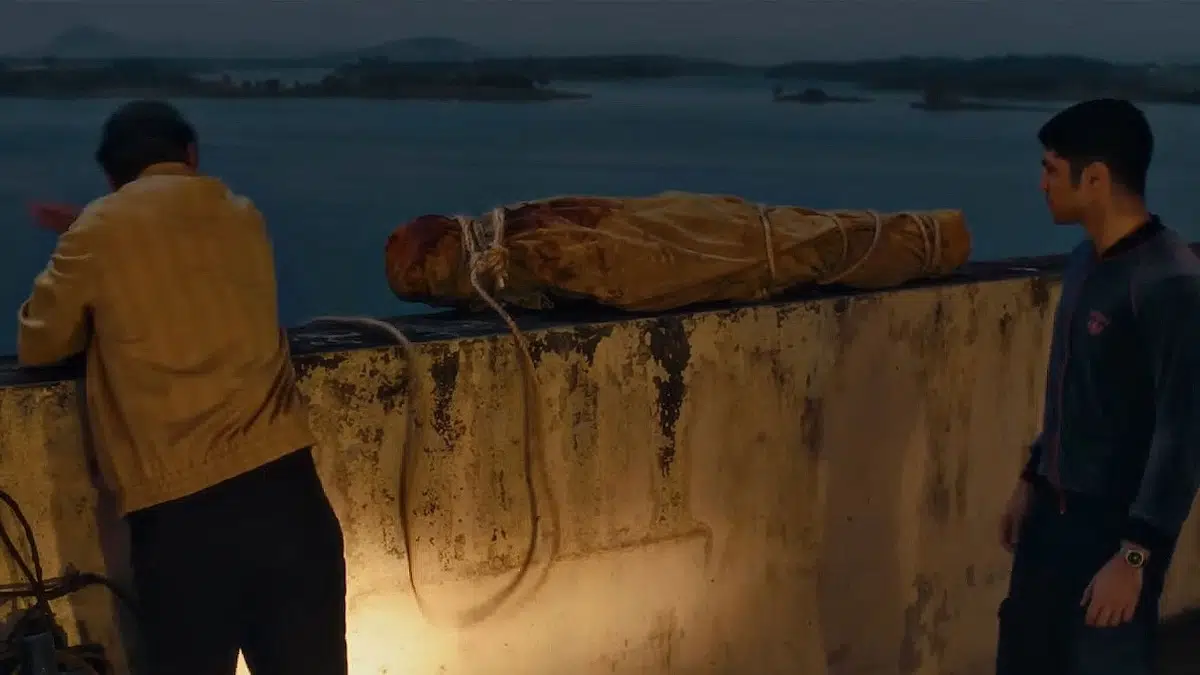
As I write this, I realize that maybe I shouldn't have said that this movie is more accessible than I'm Still Here. I guess what I mean is that it's more easily enjoyable, even if you don't fully grasp what Mendonça is saying.
I think I understood it pretty well, but compared to my Brazilian contact, my understanding is childish. He's seen the film four times and simply can't get enough of it, but he understands Brazilian history deeply.
And I think that's really the brilliance of this film. Having some knowledge helps, but even if you know nothing, it's still a very engaging and cool movie. That's unlike I'm Still Here, which I watched in complete ignorance and only learned about its context after the fact. I wish I knew the history before, because it would have helped me understand the movie better.
You don't need intensive prep to love The Secret Agent, but the more you know, the more you'll gain.

From an artistic standpoint, what I keep coming back to is the film's symbolism of blood.
The movie is broken into three chapters, and the third is titled "Blood Transfusion." There is all the father-son relationships, which also play with the concept of bloodlines, and that theme is concluded masterfully in the film's final chapter. This symbol is also the reason that Jaws is the movie they constantly reference, a movie about a shark that can smell blood and will attack the source.
The film's climax does result in bloodshed, and it left me wondering the purpose behind the violence, or if there even is a reason other than men trying to display their authoritarianism. The puny purpose behind their vicious actions is the real horror of the film.
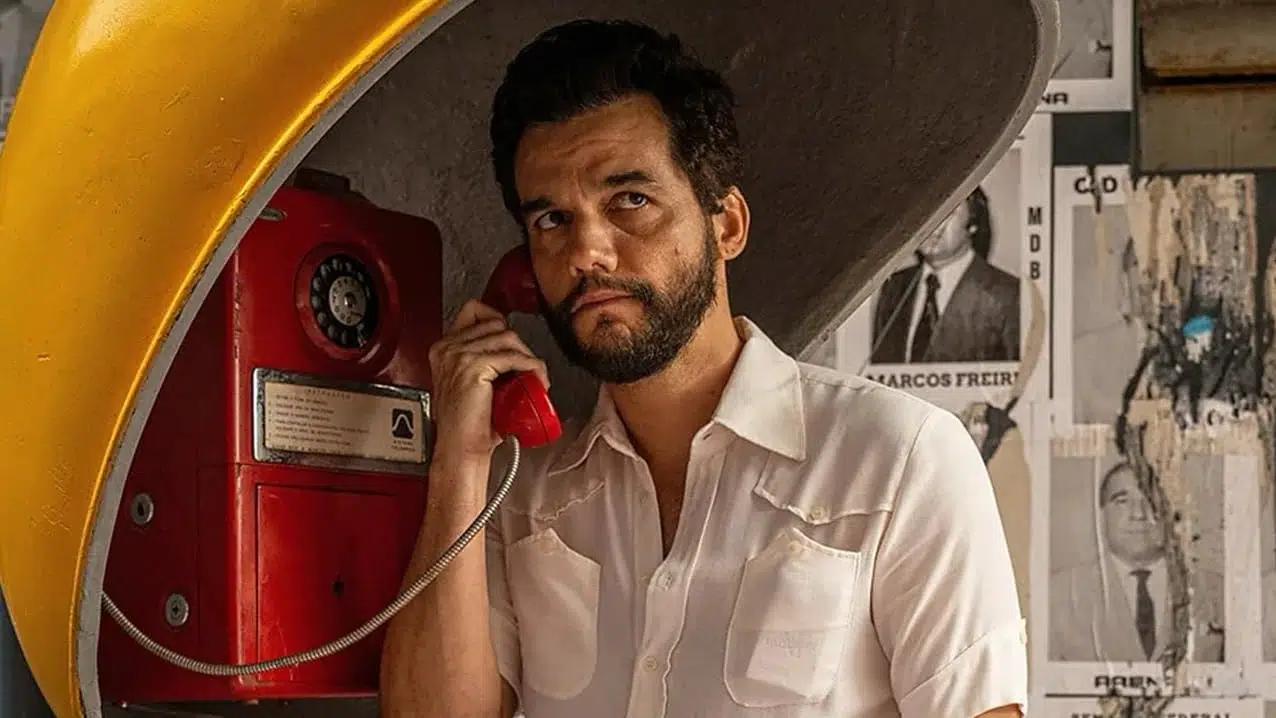
The final scene where the theme of bloodlines gets wrapped up was especially poignant to me. Spoiler alert, from here on.
Fernando meets with the student that is unearthing his father's story. She tells all of her findings, but she's surprised to learn that Fernando knows none of this. We find out that Fernando prefers not to look back on that time.
While these students, who have no relation to him or his father, continue to dig up the past, I was left wondering who they were doing it for. It made me think about our relationship to history, and whether it's our responsibility to remember strangers if the people who loved them prefer to forget.
It was a puzzling conclusion to a puzzling movie.
Good thing I love puzzles.





Share your thoughts!
Be the first to start the conversation.