
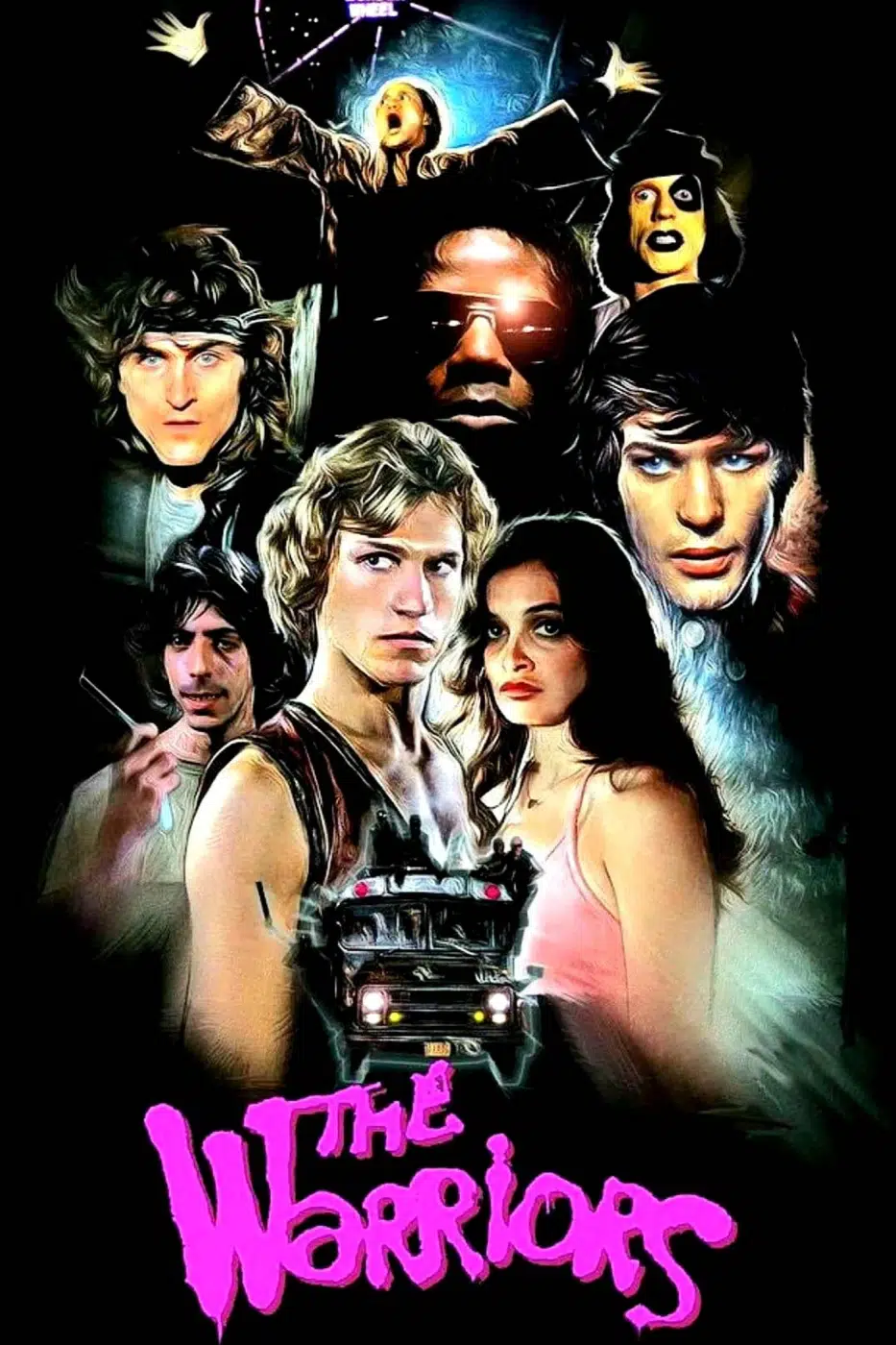
I thought this was going to be easy to write. I thought, "I love The Warriors! Surely, the words will just flow onto the page." Then, I realized that cult classics are somewhat hard to write about, because what is there to say that hasn't already been said?
I tried to get my mind into a new space, to think creatively. I tried listening to Lin-Manuel Miranda's auditory play of The Warriors that he released a couple years ago. I listened for about 20 seconds before turning it off. That's not my Warriors.

I decided to do the next logical thing and rewatch the movie. This proved to be a more difficult task than expected. I couldn't find it streaming anywhere — not even on niche, free streamers like Tubi and Kanopy. I had to rent the bloody thing for five bucks.
It turned out to be a small price to pay. The rewatch was simply fantastic. The HD rendering is drop-dead gorgeous. Plus, it reminded me of what I loved about this movie, showed the issues that are still quasi-problematic, and revealed new concepts that I hadn't clocked when I was younger.
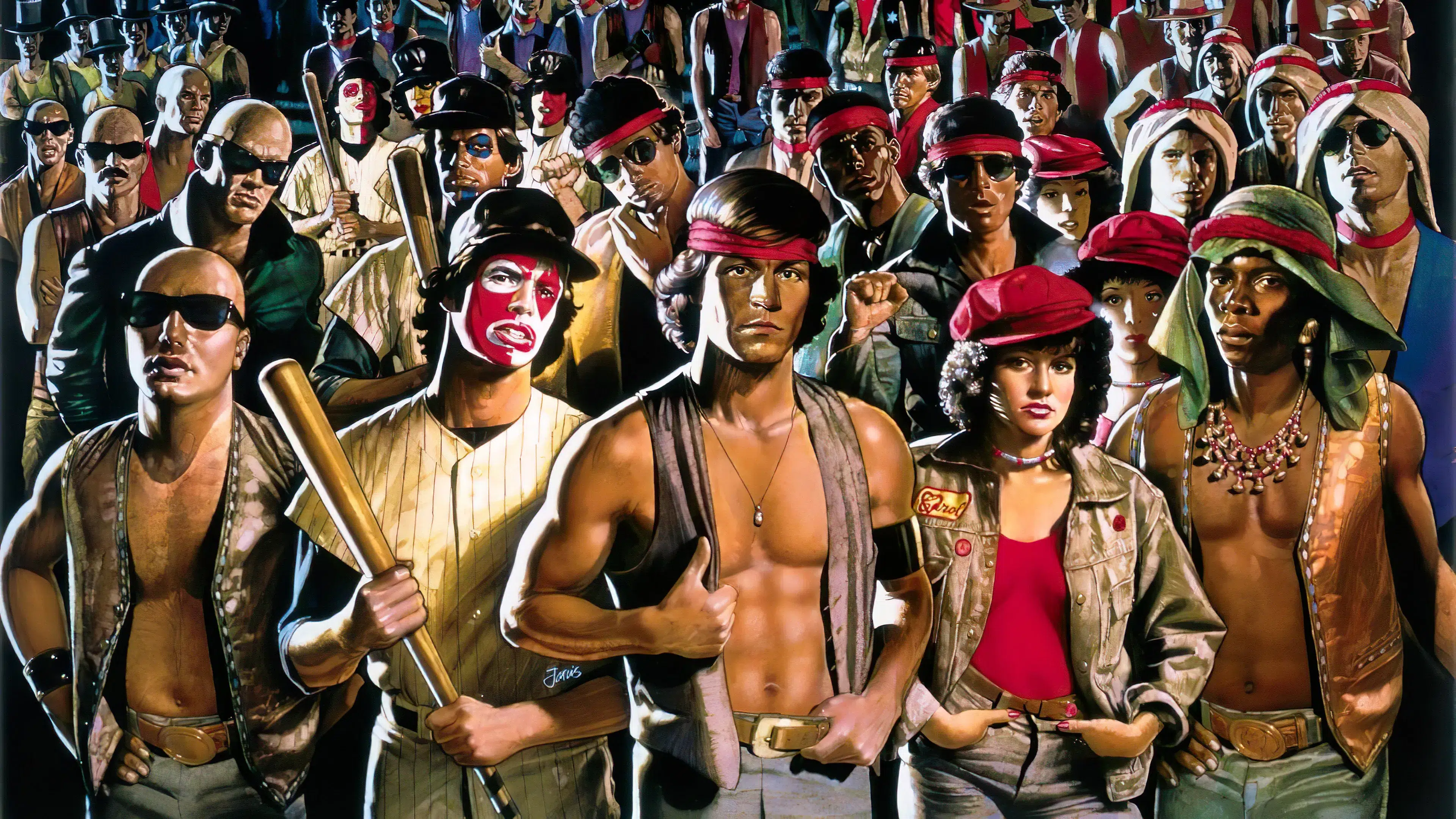
Growing up with all brothers and no sisters, and being a diehard wrestling fan, it's no surprise that The Warriors resonated with me. It's extra macho and full of cooly choreographed fight sequences. The Warriors fights are rough around the edges, but that gives them a flare of danger that heightens the tension. It's hard to decipher what is choreographed and what is real. Like the fight between The Warriors and The Punks in the subway-station bathroom is a prime example. It looks like they're kicking the crap out of each other, but I'm sure it was all planned. At least, I hope it was.
Maybe I'm getting ahead of myself. For those who don't know anything about The Warriors, I should provide some context. It's a movie, obviously. It takes place in one night. Street gang The Warriors from Coney Island travel all the way to The Bronx (an hour-and-a-half train ride in modern times, per Google Maps) for a gang summit hosted by The Riffs. At this massive meeting in Van Cortlandt Park, Cyrus, the leader of The Riffs, asks the simple question: "Can you count, suckers?" If the gangs formed a truce and joined together, they would outnumber the cops and, therefore, control New York City. The gangsters, all in their full gang colours, love this unifying idea. That is until one of The Rogues, Luther, shoots and kills Cyrus during the articulate leader's speech. Chaos ensues and, during the kerfuffle, Luther yells out that he saw The Warriors shoot Cyrus. Without anyone to counter Luther's accusation, The Warriors become public enemy No. 1. Our hero gang must "bop" their way back to Coney Island with all the gangs in New York trying to take them down.

If this sounds like a simple story, that's because it is. There's no crazy subplot or even any overt social messaging. These are unapologetic bad boys who use their fists to protect each other against a world that wants to leave them wasted.
A high majority of the film takes place at night. Legend has it that The Warriors was a painful shoot, with uncomfortable conditions, bad blood between director and actors, and some run ins with real-life gangs. The end result was worth it. The film is loaded with gorgeous and gritty New York nightscapes. There aren't any helicopter shots of the Empire State Building. This is on-the-ground cinematography of liminal, forgotten avenues in the city that never sleeps. If you've read me for a while, you know that I love liminal spaces, and this was one aspect of The Warriors that really stuck out to me on this rewatch.

Take the scene where the radio DJ puts the word out that The Riffs want The Warriors captured dead or alive. First of all, this is a brilliant plot device — using a radio DJ who plays a "hit" song to let all the gangs know that there's a bounty on The Warriors' heads. The song, "Nowhere to Run," plays while the camera shoots all these empty, dark New York streets. As the montage continues, the gangs start getting shown, all listening to this song and preparing to go out and find these most-wanted Warriors.

What I like most about The Warriors is its complete lack of a moral compass. Sometimes, with gangster or youth-culture movies, there is this need for the characters to see the light, if you will. It's expected that, if they start out as scoundrels, they'll either die to prove that their lifestyle is unsustainable or they will change their life and start walking the straight path. That is not The Warriors. They're gangsters and they're not changing. They're also not gangsters with big hearts. They're tough lowlifes and they act as such. Therefore, there is some homophobia and misogyny in the film. The film's homophobia is what it is — a reflection of societal attitudes of New York in the late 1970s. I'd argue that there's an element of queer coding interlaced in all the outrageous outfits that these many gangs wear. The misogyny is a little bit more counterbalanced.
There are three separate interactions with women in The Warriors. Ajax comes onto a woman aggressively in the park, and things look like they are about to get mighty rapey when it's revealed that the woman is actually an undercover cop. Then there's the scene where some of The Warriors end up at a party with The Lizzies, an all-girl gang. Things seem to be going pretty smoothly, until we find out that The Lizzies listen to the radio too and have plans to take out The Warriors. A fight ensues and The Warriors narrowly escape (as happens often in this film).

The third is the most prominent, and that is Mercy, a girl who is first introduced when The Warriors must bop their way through the turf of The Orphans. This rival gang uses Mercy as a decoy to distract The Warriors while they prepare an ambush. The plan does not go well and they get bopped back to the orphanage. Mercy ends up sticking with The Warriors and she stays with them throughout the whole movie. She develops a relationship with Swan, the second-in-command and de facto leader of The Warriors after Cleon gets jumped. Their love story is kind of thin, and it does start in an edgy way, but I think it develops into something pretty close to sweet.
Swan and Mercy have The Warriors' most underrated scene. They are riding the subway back to Coney and a group of four young people, two girls and two guys, get on at one of the stops. They look like they just came back from a party or a prom. They're laughing and having a great time, and they seem to be about the same age as Swan and Mercy. Only, the differences in their looks could not be more, well, different. The partygoers notice Swan and Mercy's tattered clothes, their hands dirtied by the streets, the cut under Swan's eye. Mercy, feeling vulnerable, goes to fix her hair, but Swan stops her hand. Without saying anything, but expertly using blocking and camerawork, this scene speaks strongly about class disparity and the different walks of life that each of us take. It also reinforces The Warriors' unique stubbornness to not have their characters change.

While I struggled to think of what to write in this article, I did probably too much research into New York gang culture of the 1970s. The Warriors, at time of release, was criticized for its lack of realism. Yet, the record shows that three people were killed either on their way to or from the movie. Walter Hill, the director, chalks this up to gangs coming to see the film and ending up sitting side-by-side with their rival during the screening. How realistic the film is, I think, is debatable. It is definitely stylized and romanticized. But it's true that a meeting like we see at the start of the film really happened.
In the early 1970s, 200 gang members met up on Hoe Avenue in The Bronx to negotiate a truce. Dozens of gangs were represented and a truce was brokered. This ushered in an era of relative peace that lasted until the crack-cocaine epidemic of the 1980s. It was during this peace era that youths who used to beef now got together for dance parties. It was at these parties that the origins of hip-hop were founded. Pretty cool, huh? Maybe, Cyrus was onto something.
And if you're interested in the Hoe Avenue peace meeting, check out this documentary:





Share your thoughts!
Be the first to start the conversation.