
The video store used to be a ubiquitous part of North American life. These outposts of popular culture were an important gathering place. Not like a movie theatre, which is a destination in and of itself, video stores were outposts along the way to entertainment. A nexus of choice staffed with passionate movie fans. If the excitement of going to the movie theatre is the watching experience itself, the excitement of the video store was the anticipation of watching a film. Any film. Maybe something you didn’t even know existed until you discovered it on some obscure shelf recommended by Quentin, the video store guy. As a child of the ‘80s, the very idea of stepping foot in a video store brings me back to some of my most formative adolescent and teenage memories.
Imagine my elation as I was planning a recent road trip and discovered that my path would take me past the last existing Blockbuster Video store on the planet. It’s located in Bend, Oregon. An unassuming, and breathtakingly beautiful little hamlet of a town. Since 2019, this strip mall unit in the center of Oregon State has been the last surviving fortress of a once mighty company. At its height, Blockbuster boasted 9,000 stores worldwide with close to 90,000 employees. It wasn’t the only chain of video rental stores, but it was certainly the undisputed champion of the business. The blue and yellow branding shaped in the form of a ripped movie ticket is burned into the brain of all Millennials as a symbol of joy.
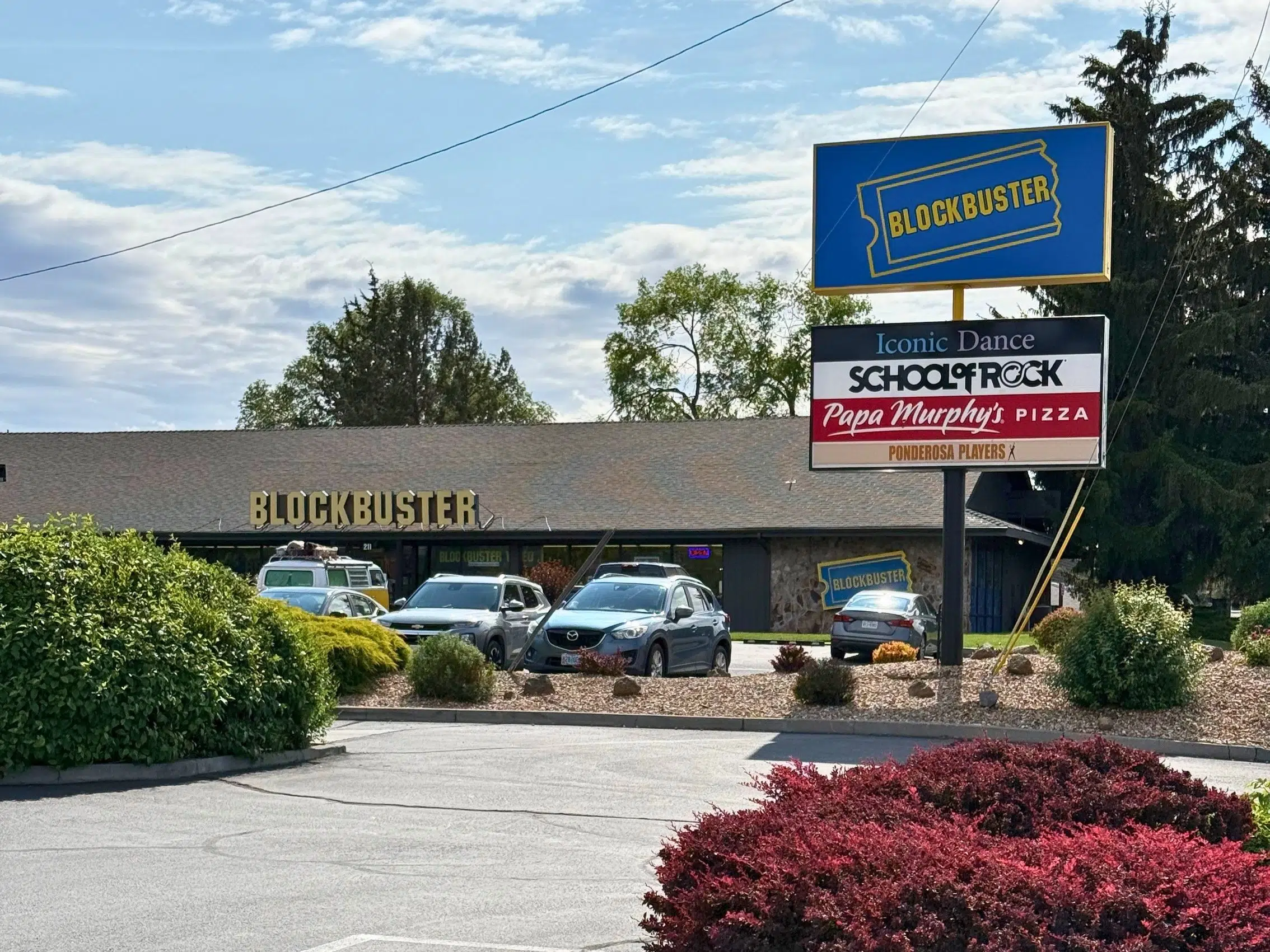 Walking up to the store feels like a slow warp through the space-time continuum. As I approached, I no longer felt like I was in 2026, but rather sometime in the early aughts. Maybe even the late ‘90s. It felt comfortable and warm. Like slipping on a favourite pair of perfectly worn-in blue jeans. The echoes of exhilaration from past Friday and Saturday nights spent renting movies washed over me. For a moment, anything was possible. I entered a wormhole to another dimension. A dimension where your bedtime doesn’t exist, all the best flavours of Old Dutch chips are endless, and there’s never-ending root beer. A dimension where the uniform is pajamas, and your best friends are always there to sleep over.
Inside, the last Blockbuster looks exactly as you’d expect. Rows of home videos (blu-rays) available to rent. Organized by genre, new release, and other categories. They even had an A24 section. This is a working video store, stocked with up-to-date titles. Balancing out the modern movie options, the walls are adorned with old-school marketing installations. A giant banner announcing the release of Uncle Buck (1989) with John Candy smiling down from behind Buck’s signature cigar. A cardboard stand-up poster with Jamie Lee Curtis and Arnold Schwarzenegger dressed in tux and gown from True Lies (1994). Woody and Buzz overlook the new releases, only it’s not Woody and Buzz from the current Toy Story in theatres right now, it’s Woody and Buzz from Toy Story 2 (1999).
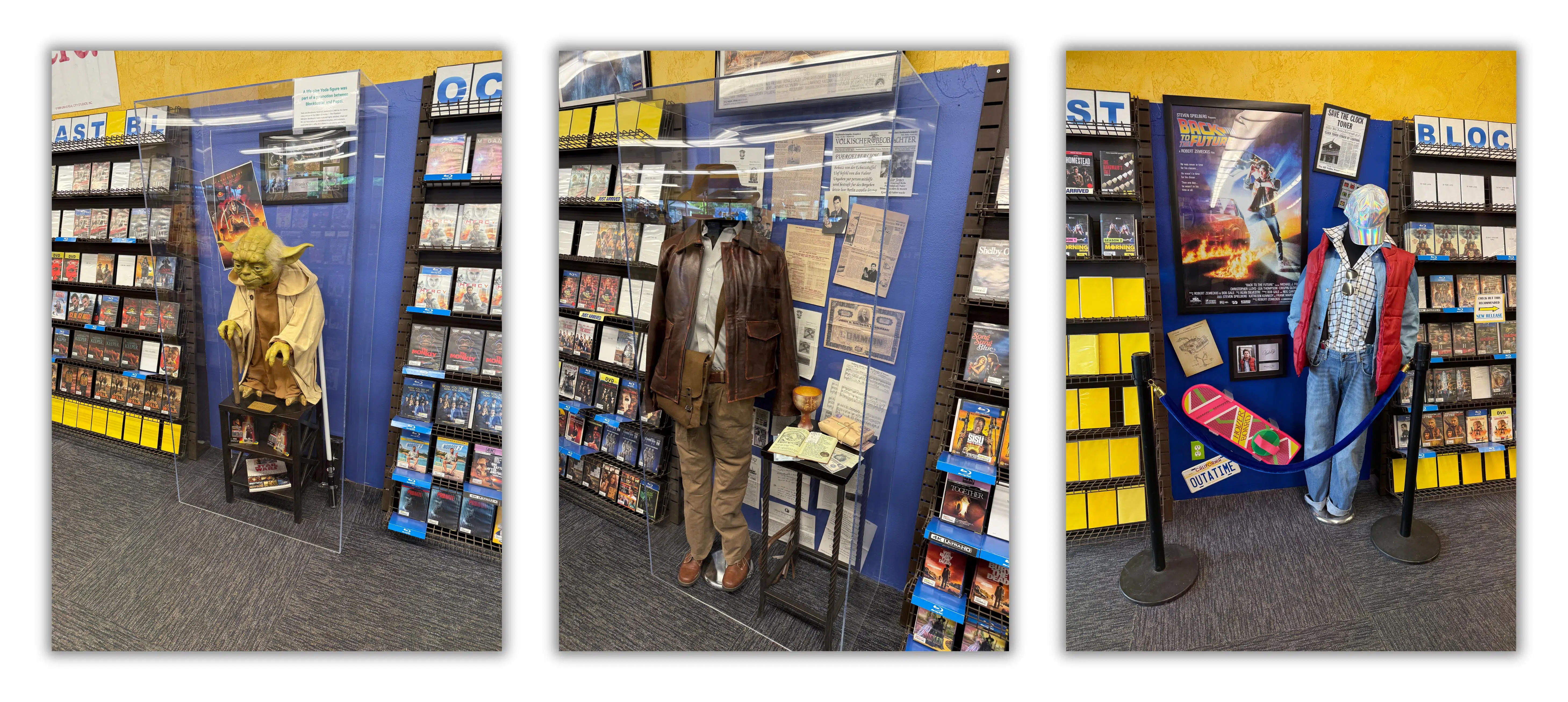
 Scattered throughout the store are museum-like bits of film memorabilia. Much of which has been signed by visiting celebrities over the years. There’s even a corner of the store dedicated to the old-school living room—dead media scattered all over the place, a giant bookshelf filled with movies and board games. The entire place is a love letter to a time when movies where the zenith of our culture. A time when you had to physically hold them in your hands and move them from apartment to apartment with you like the necessities of life that they are.
As I wandered through this time machine of a building, I was overcome with the swell of the feelings, and I’m not ashamed to say I teared up a little. Rarely is one confronted with such a tangible opportunity to reach into a well of past enjoyment. Slumber parties with friends where core memories were made, weekend nights with the babysitter that let you eat all the candy you wanted, teenage discoveries of arthouse movies that shaped the adult you became—all embodied in a fluorescent-lit box store.
 I’m not normally big on nostalgia. Particularly when it comes to movies, I think it’s really been overdone. Remakes, reboots, and rehashes of everything that was once original and cutting edge gets me down. On the other hand, I’m also weary of the rapid pace of change we’re all living through. It feels like my life has been one technological revolution after another. I’d love to go just one decade without having a fundamental shift in society due to some disruptive tech. Sure, our lives are more connected and convenient than ever, but I can’t help but feel like we’ve thrown the baby out with the bathwater.
Streaming services have made film and TV more disposable than ever. They exist in the cloud. You can’t ever really own them. There’s no case to hold, no jacket to read. Video stores demanded that you put skin in the game. You had to leave your house. You had to walk through aisles of releases. Upon arriving at a selection, you had to put money down. From the moment you left that store, there was a ticking clock. Disrespect that clock and be charged even more cash. Back then, if you’d have told me that one day I’d be able to stream almost anything I wanted in the comfort of my own home I’d have been over the moon. Tell me that I’d one day long for the experience of having to go rent a movie and I’d have called you crazy. And yet, here I am writing a love letter to a less convenient way to enjoy a movie.
 Humans are innately ritualistic creatures. Our rituals ground us. They keep us sane. They give us something to do—an activity that creates a shared experience which bonds us with people we might not ever speak to. The exact opposite of today’s custom algorithms that only serve to reinforce our bubbles. I’m reminded of a quote from one of my all-time favourite movies, “T-Rex doesn’t want to be fed. He wants to hunt.” Like the majestic T-Rex from Jurassic Park, it’s not healthy for us to have everything provided to us so easily. The ritual of the hunt is too important. The tiny social interactions that come with having to rent a video from a brick-and-mortar store are like invisible glue that binds society together. Sure, it’s great to be able to pick from thousands of titles from the comfort of your couch, but who cares if you never get to share the experience with anyone?
Someone once described Peliplat to me as the video store experience put online. I think this idea of social interaction connected to film was what they were talking about. Those little moments when someone recommends their most treasured movie to you. Or when you get to illustrate why you love the movies you do. The video store was a place for this society of film fans both niche and mainstream to rub elbows. Even though this website is digital, I do feel that sense of community here too. Having recently walked through my memories of video store’s past, I think I agree that Peliplat is the closest thing on the internet to recapturing that experience.
If you want to know more about how this Blockbuster in Bend, Oregon survived to become the last one left in existence, they made a documentary about it called The Last Blockbuster. It’s available right now on Tubi for free.
And if you’re ever in Bend, Oregon I urge you to make the stop. Not only is it a way to quite literally walk down memory lane, but Bend is also a beautiful little town.
I think I’ll have to go back soon.




Share your thoughts!
Be the first to start the conversation.