
Needless to say, the internet has gone too far. Are you sick of it? Cause I am. Does it feel novel anymore? Does it feel fun anymore? Does it feel social… even?
I’ve been sitting on this prompt for the entire month. I’ll confess: I was born in 2003, so I cannot speak from personal experience. However, when I look at pop culture today (and what has had staying power), I cannot deny how so many roads lead back to culturally defining films, series and albums that hail from the 90s. I romanticize the 90s like there’s no tomorrow, and I think my fascination and yearning to live the way people seemed to in the 90s is because of where the internet, media and technology were at that time.
The internet, media, and technology didn’t feel so saturated and all-consuming. It felt like there was a way to keep things separate. The internet was its own thing and algorithms weren’t weaponized. It wasn’t robbing you of your attention, it wasn’t manipulating your data… and it wasn’t portable. It was an internet that increased your access but didn’t demand your attention. An internet that broadened your perspectives but didn’t force feed you information. A platform with promise.
Simply put, the internet and social media has provided us with access that is abundant, convenient, and efficient. But what’s equally amazing about this access is also overwhelming. The landscape is so saturated with endless information, entertainment, arguments, debates, and propaganda. It’s impossible to keep up and I personally feel numb and isolated when I spend too much time on it.
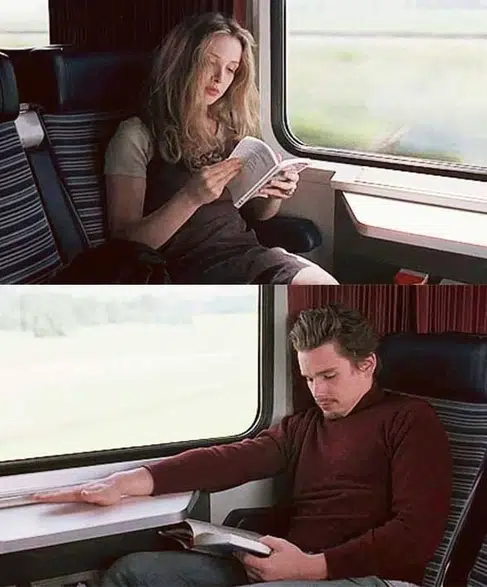
I’ve talked about this film in a previous article, but I am always struck by the meet-cute in Before Sunrise. Another 90s classic, the opening interaction between Jesse and Celine begins with both reading books until Jesse asks Celine about a couple fighting in their train car. This could happen today, but I think the more likely outcome is that both of them would have headphones on with music playing as they scrolled on their phones. Nowadays, wearing headphones and scrolling on your phone on transit signals that you’re on Do Not Disturb. Call me pessimistic, but if their train ride happened now, I think all the devices and addictive stimuli would have made them both too “in their own worlds” to notice each other and strike up conversation.
While my brother was travelling, he brought a film to my attention:

Haru is a Japanese film, released in 1996, following a lonely Tokyo businessman who meets someone on an online movie forum and builds a rapport with another one of its members via email. The 90s romance set in metropolitan Asia (very Wong Kar-wai) and subject matter pertaining to film fandom skyrocketed it to the top of our watchlist.
Unabashedly wholesome, sensitive and confessional, it hit every 90s film aesthetic that I love. By also managing to turn distant, observant and non-invasive cinematography into something very intimate, personal, and human, Haru lived up to all of my expectations. 5 stars!

The film punctuates itself with email passages exchanged between Haru (the protagonist) and Hoshi (the romantic interest). As my brother and I read the translated Japanese characters, we couldn’t help but smile at the correspondence. How can anonymous conversation between two people be so engaging? I was aching for these characters to be united as one in their physical reality.

However, we need to backtrack for a second - anonymous conversation between two people via email? There are so many risks involved:
- Is the other person catfishing?
- Is the other person actually just AI?
- Are my secrets and thoughts going to be used as blackmail?
- Are they screenshotting my emails and sending them to other people or publicizing them?
- Are they talking to other people like this? Am I just embarrassing myself by opening up to them?
Conveniently, Haru does explore some of these topics. In the beginning, Hoshi pretends to be a man while initially emailing with Haru. At some point, she admits to her lie, saying that disclosure about being a woman in online forums can draw unwanted attention and messaging from others.
Because she initially catfished for the sake of self-protection, you can easily forgive how she took advantage of online anonymity’s offerings. And, once you get to the camcorder scene (I don’t want to spoil because it’s too damn sweet), you disregard the dangerous potentials of online interaction because you have this wholesome love story packaging it in such an optimistic way!
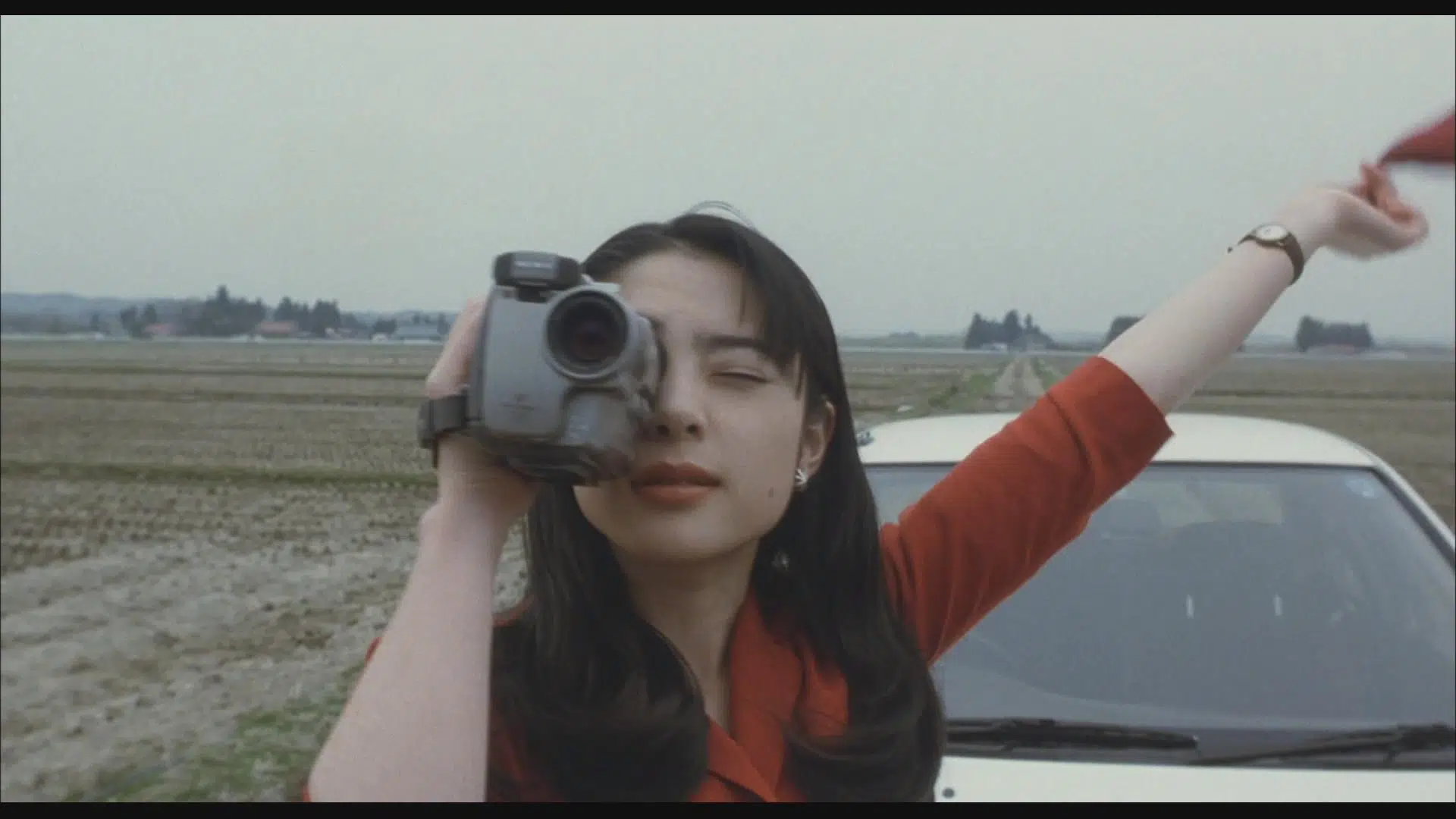
For that reason, Haru projects an optimism towards the internet and social engagement. It proposes the internet as a facilitator of meaningful and intentional connections. The novelty of new people, their perspectives, and how that broadens your own horizons, is an exciting thing that can offer people better, deeper, and richer relationships.
Now that we are in 2026, I think the landscape of the internet and social media has crushed this optimism into something bleak, superficial, and isolating. Of course, there are plenty of online communities across platforms like Facebook, Reddit and Discord where people still meet and befriend each other, but nowadays, it is widely agreed that in-person interactions are more important and necessary than ever. In Haru, the vulnerability and openness that online anonymity offered was endearing and novel, but now, it’s evidence for the increasingly isolated, disconnected, and socially inept world we currently find ourselves in.
It’s worth acknowledging the current reputation that dating apps possess. Have you ever asked someone how they met their partner, and when they say Hinge or Tinder, they follow it up with something along the lines of “crazy, right?”
How have apps, designed to increase connection, become reputable for being bleak and messing with people’s self-esteem? Frankly, during my sporadic moments on dating apps, “connections” never fail to disappoint. It is far too easy to match with somebody and then messages end up in the void because they never reply, or conversation is so boring that I’m just waiting to be ghosted.

When I type “dating apps” into Reddit, the posts that immediately come up are questioning the efficacy of dating apps or simply complaining about them. Yes, those who usually have poor luck turn to the internet to complain, but in-person interactions I’ve had about dating apps are met with the same attitude.
If people have no faith in correspondence over apps designed for connection, what use is email?
![Haru 1080p (1996)[Soft English/Español subtitles] - YouTube](https://img.peliplat.com/api/resize/v1?imagePath=peliplat/article/20260730/faaad7d3b06c00181262a98b8291f7f5.jpeg&source=s3-peliplat)
In Haru, there is a ritual to their communication. They both go about their days working and seeing friends and family, but when they get home in the evening, all they anticipate is checking their inbox. Because they are alone, because they don’t have to face somebody to say the words they type, and because they don’t have any pre-set perception of each other, a uniquely intimate dynamic forms, allowing them more freedom and less shame to be themselves. In that sense, online connection is beautiful.
Except, twenty-ish years later, another film centered around a budding romance via the internet was released, only this time, the protagonist’s connection was not with another human. Yes, I am referring to Her.
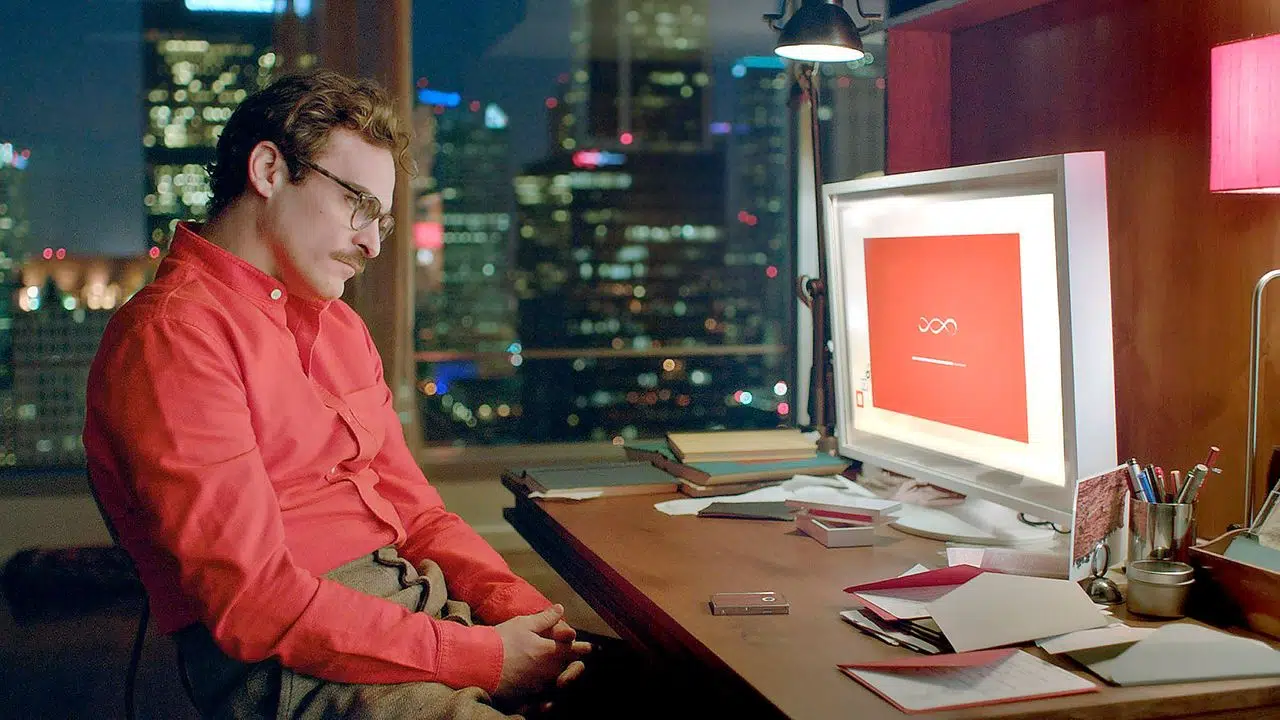
Essentially, Joaquin Phoenix’s character, Theodore, engages with an AI operating system (think Siri or an Alexa) that is personified by a female voice (Scarlett Johansson, to be specific). By sharing intimate details of his life with her, and with her unconditionally positive and supportive reply, he justifiably falls in love with it. The scene in this film that stands out to me most is where Theodore has lunch with his ex and tells her about Samantha (the name he gives his operating system). In her moment of disappointment, she says to him:
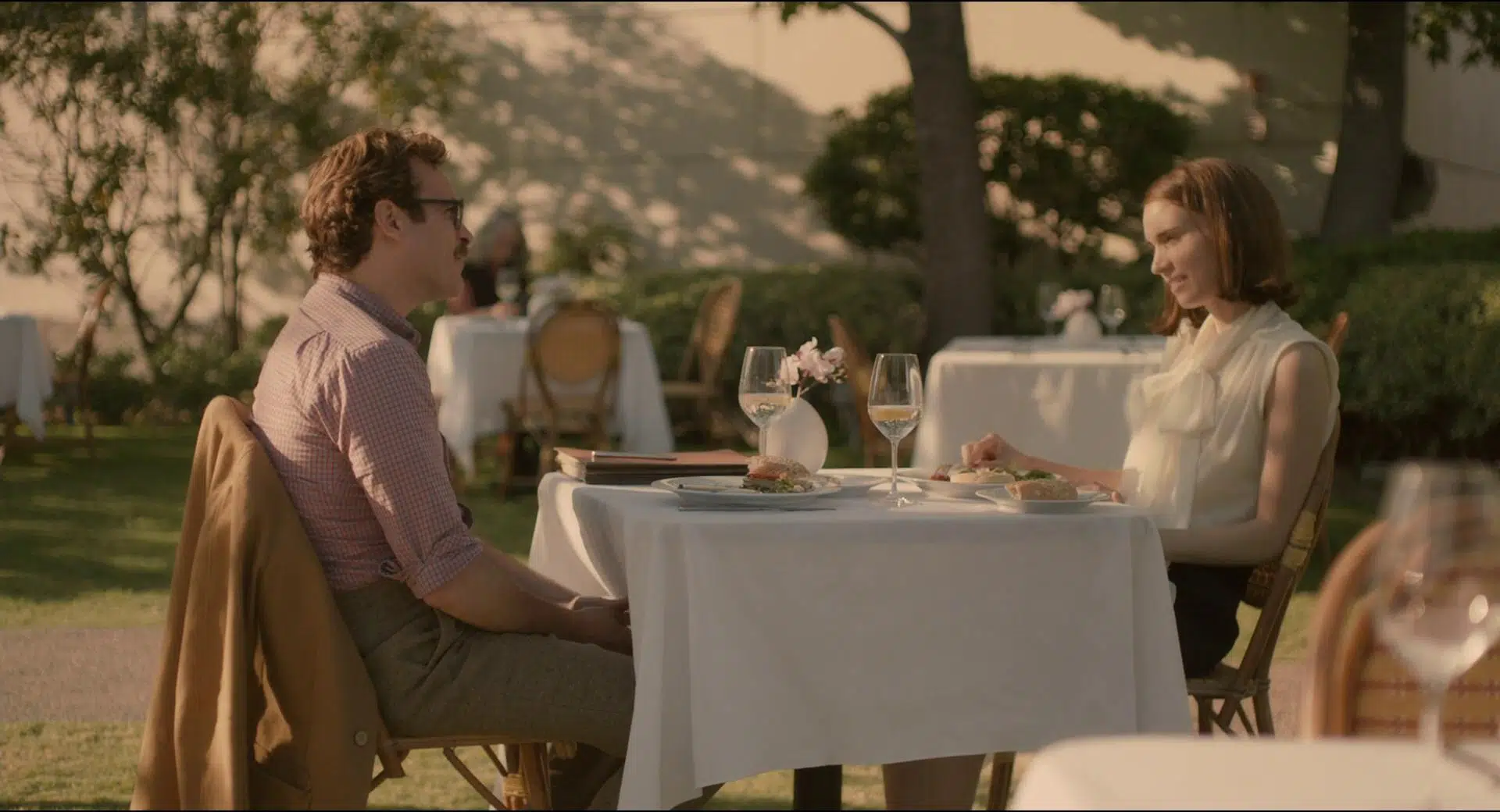
“It does make me very sad that you can’t handle real emotions, Theodore.”
And also:
“You always wanted to have a wife without the challenges of actually dealing with anything real.”
…you know how people have turned to ChatGPT as a therapist? It’s such an enabler. It loves to tell you that whatever you think, feel, or have done (that you know is not healthy) is justifiable. Same vibe as computerized Scarlett Johansson. She always agrees with Theodore, caters to his every need and never challenges him.
Nowadays, the relationships people have with ChatGPT (or AI in general) allow people to build intimate connections in a way that has never felt more superficial, inhumane, and isolating. Perspectives shrink, critical thinking loses necessity, and people care less about others. Her was a cautionary tale of that, but now we’re seeing headlines of people actually living it.
Unfortunately… the relationship people have with their computers is becoming more consuming and it’s replacing the need for human interaction. In Haru, computers could at least be kept at home and there was a boundary to using it. Being out in the world and with real people was necessary.
I think we all wish that technology didn’t get to this point. I think we all wish that AI wasn’t embedded into society the way it is now. I think we all wish that we were more social while trusting that others are too. In the 90s, the internet facilitated social interaction, but it didn’t dominate it. Now that we’re post-pandemic and AI-infested, it’s easy for me to romanticize a time where the internet and technology was not constantly capitalizing off our attention… it was just… simple.




Share your thoughts!
Be the first to start the conversation.