






David Fincher's new film, "The Killer," has received positive reviews at the Venice Film Festival and is set to be released in November. The trailer for the movie has recently been unveiled, but after watching it, I have some reservations about the film.
The trailer maintains the director's distinctive style, showcasing a minimalist dark tone that delves into the darker aspects of humanity. It appears to be another Fincher-esque play with themes of lies and deception.
"Stick to the plan," Fassbender's repeated line acts as a steady beat, establishing the rhythm of the entire trailer. It creates the impression of a ruthless assassin who unwaveringly adheres to plans and maintains professional standards. The mechanical repetition suggests an emotionless killing machine that flawlessly performs every kill. However, we all anticipate that this story will push him to make errors and deviate from his usual norms.
Order is disrupted and plans are destroyed. This will create the core tension in "The Killer".
It brings to mind another distinctive but not quite successful work by David Finch, “The Game," a thriller released in 1997. In this film, the protagonist Nicolas is a successful man who has a fear of change and losing everything he has. However, when he becomes entangled in a nightmarish game, changes come one after another.
From a technical standpoint, "The Game" does not have any evident flaws. Or rather, it is remarkably well-crafted. The games portrayed in the film are cleverly designed, and the deceptions and tricks played against Nicolas are as intricately intertwined as the gears inside a Swiss watch.
I label it as ‘distinctive' because compared to Finch's other films, "The Game" leans more towards positivity and brightness. It focuses on themes of self-redemption rather than lies and murder. On a personal note, I perceive it as ‘not quite successful.’ Regardless, it has a rating of 7.8 on Peliplat, which is not low, to be honest. But after watching it, instead of feeling any resonance, I felt deceived, dubious, and exhausted.
PS: The following are just my personal takes.
Deceived
Usually, plot twists in movies are often the most thrilling aspects for fans. However, in "The Game," I felt deceived by the consecutive twists.
From a creator's perspective, I understand David Finch's intention to surprise the audience with multiple twists. But from a viewer's point of view, Finch fails as the ultimate twist in the movie is not a successful one.
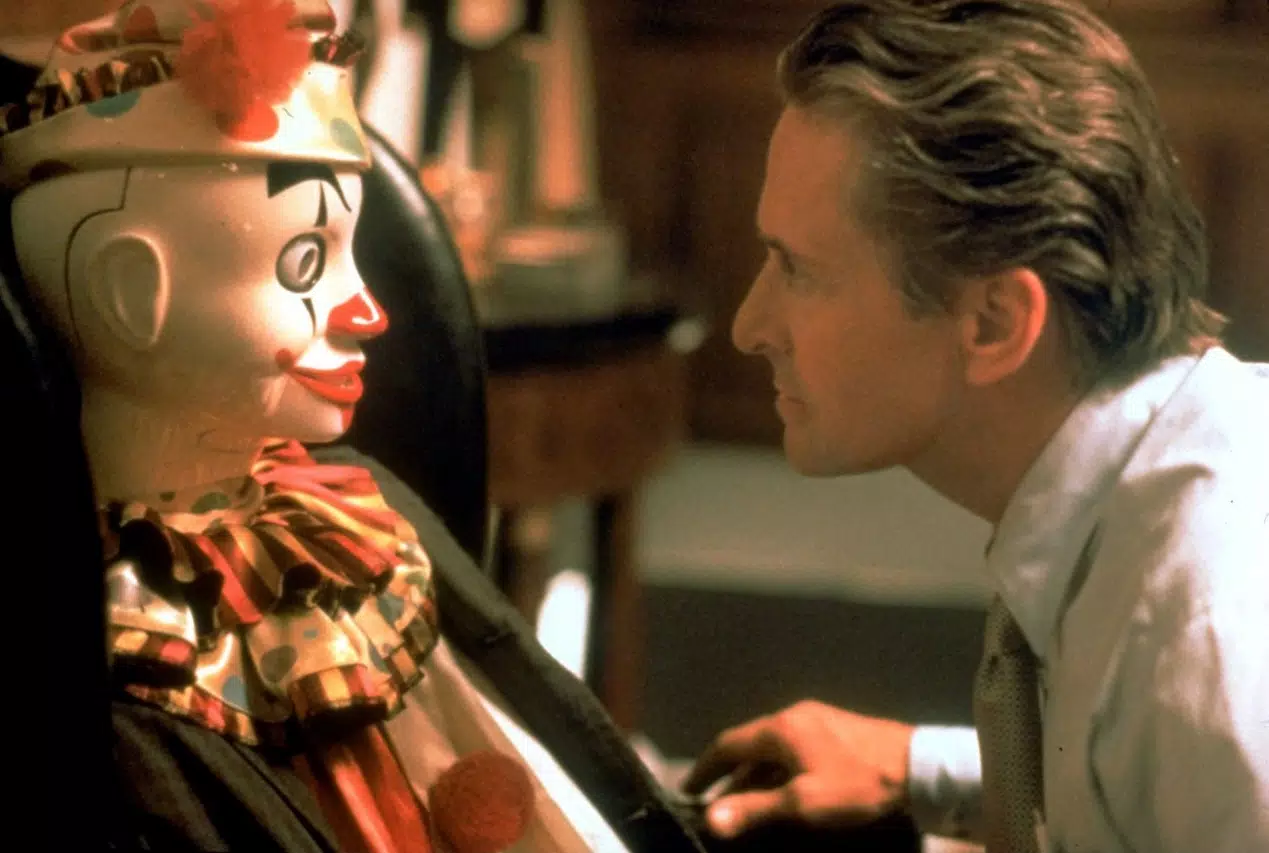
In a gripping story, a successful twist can work wonders by leading to an unexpected yet reasonable outcome. It makes the audience realize that they have been seeing only a partial view of events. Thus, when the truth is revealed, it actually provides an answer from a different, more objective perspective. The audience may have guessed incorrectly, but they don’t feel fooled, not at all. Such a twist completely changes their attitude previously limited to the protagonist's perspective and even subverts their understanding of the entire world constructed in the film.
Here, let me give an example from the 1968 film "Planet of the Apes," which features an exceptionally clever ending twist.
In this movie, Charlton Heston has been sent to a foreign planet, where he crashed landed and discovered that the apes are in control. The whole film is his fight against the apes. At the end of the film, Charlton Heston is walking along a beach in a distance, when suddenly he stops and falls to his knees in shock. The camera looks down through these spiky objects on the statue at him. And then we reverse frame, revealing the Statue of Liberty lying broken on this beach. You thus realize that the whole film actually took place on Earth in the future.
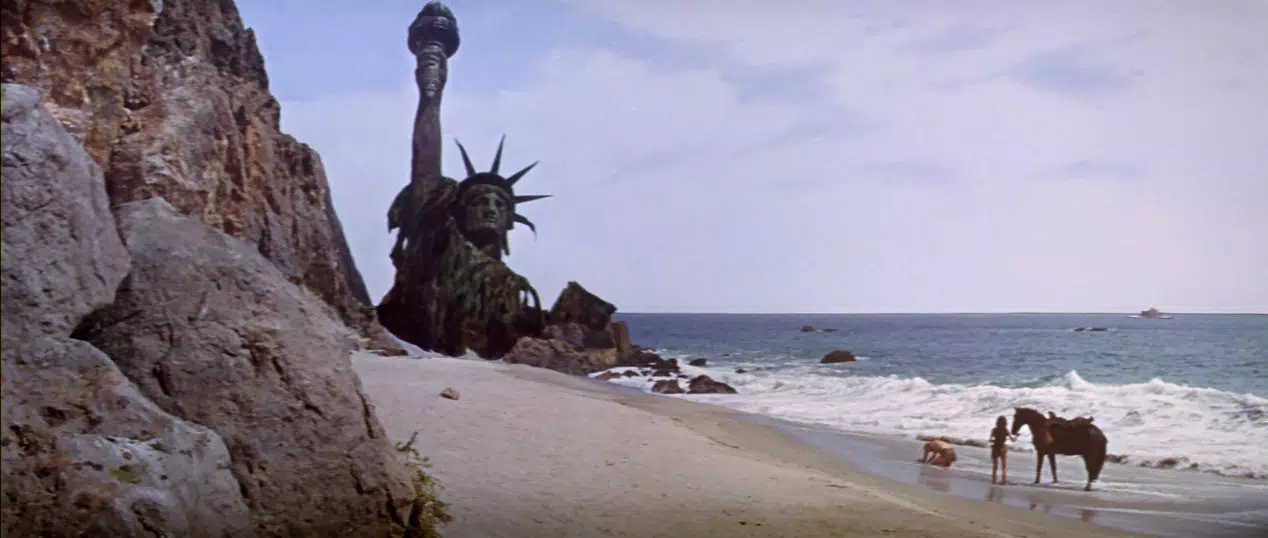
First of all, it's such a huge surprise. But it also completely changes our attitude towards Charlton Heston.
Initially, we follow the perspective of the protagonist, identifying with the idea that humans are more intelligent and dominant, while apes are inferior. Until the last moment, when the protagonist realizes that he was wrong, everything changes in an instant, and the original rules are completely overturned.
The shift in camera perspective tells us that the director didn't intentionally deceive us, but rather, we only saw one side of the story.
However, when watching "The Game," the feeling of being fooled and deceived is so strong because the director doesn't guide the audience to realize the change in rules. Throughout the movie, we, like the protagonist, feel bewildered and manipulated, unable to understand the meaning behind it all. There isn’t any spot-on moment or a subversion of understanding when the final twist occurs. Instead, we simply say, "Okay, it's finally over."
On the surface, Nicolas' fate in "The Game" seems to be decided by the game designer, but it is actually determined by the director. It's similar to the spinning top at the end of "Inception," where the audience's perception of Cobb's life is determined by whether the top eventually stops or not. In "The Game," Nicolas' life outcome is also determined by the director. The difference is that Christopher Nolan chooses to respect the audience by ending the movie at the moment when the spinning top is about to stop, allowing them to contemplate Cobb's ending. In contrast, Finch chooses to fool the audience by adding unnecessary twists to Nicolas' already concluded story. In this context, we can't even marvel at fate sparing Nicolas because it's obvious how the director intentionally designs the fate of his character.

On the other hand, the film is filled with a thick air of suspense. Throughout the entire film, I tried to find the reasons behind each strange event following Nicolas’s steps only to find at the last moment that everything is just a game set up by his brother. Thus, the atmosphere in the film suddenly reduces from full conspiracy to extreme innocence.
Søren Kierkegaard, Nobel Prize-winning author and master of structural realism, once wrote that in the development of a suspense story, it is best to start from simplicity and gradually move towards complexity, leading readers step by step to a new height without them even realizing it. On the contrary, it is awful if it starts from complexity and ends in simplicity. Readers are quickly thrown into the height of doubt at the beginning but then fall heavily afterward, experiencing a feeling of being deceived.
There are many examples of the latter. We often see suspense movies that seem intriguing at the beginning, only to find out in the end that it was all just a dream of the main character.
From this perspective, "The Game" simplifies a complex world through a straightforward explanation. However, this approach gives me a sense of shallowness and insincerity, leaving me feeling deceived.
Thank you for reading this far. I have much more to say about "The Game" and the feelings of dubiousness and exhaustion it brought me. You can find it in the second part of the article:
David Fincher's "Killer" may disappoint you like “The Game” (Part 2)
Follow me for more discussions and discoveries of great films!
























View replies 1