
I went check out Manodrome all because of Jesse Eisenberg and Adrien Brody. I knew the movie got a ton of bad reviews after it premiered at the Berlin International Film Festival, but still for me it was worth giving it a shot to see the performances of Oscar-winning actor Brody and Oscar-nominated Eisenberg. After watching this flick, I was left speechless by the huge gap between its massive ambition and the abysmal result as well as its social allegorical narrative. As a non-straight female viewer, I really feel the movie's criticism of toxic masculinity, but I can also clearly get the ambiguous attitude towards whether men are just victims of toxic masculinity. To some extent, it's exactly this ambiguity that prevents the film from going deeper into the reflection on toxic masculinity.
Manodrome is the first film in English directed by South African filmmaker John Trengove. His previous film, The Wound, explores relationships between men within the context of the Xhosa initiation ritual of Ulwaluko in Africa. With Manodrome, Trengove explores another aspect of stories about men and their relationships, shifting his focus from male homosexual relationships to male homosocial desire.
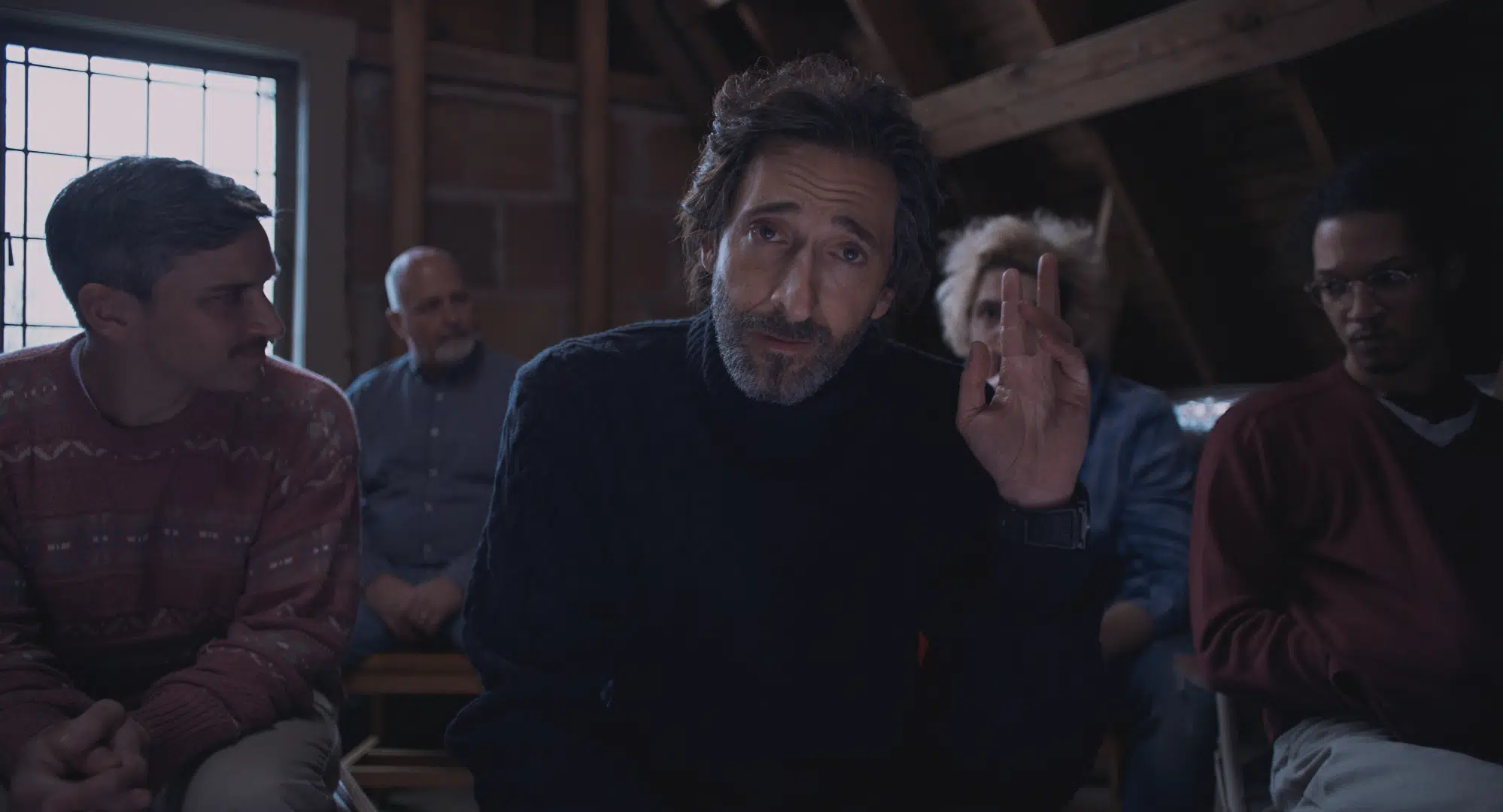
In the film, what matters most for the main character Ralphie, played by Eisenberg, is his bond with the group Manodrome led by Dad Dan (Adrien Brody). This non-sexual relationship, known as homosociality, is based on male homosocial desire common in patriarchal societies that a man's subjectivity is determined by the recognition and approval of other men. Men in such systems are most afraid of the loss of their subjectivity and being objectified like women, which explains why male homosocial desire coexists with the rejection of male homosexuality.
Manodrome explores both the positive (men seeking validation from each other) and the negative (homophobia) aspect of such desire. As Ralphie’s girlfriend is about to give birth, the harsh realities of life threaten to overwhelm this father-to-be. Making a living by driving Uber apparently can’t ease any of the burden. Dad Dan's male group, at that moment, becomes Ralphie's last straw. The members of this group are struggling in life as Raphie do, and Ralphie starts receiving care, recognition, and even praise from them. What keeps their bond strong is their shared anger and resentment towards others (especially women) and the world.
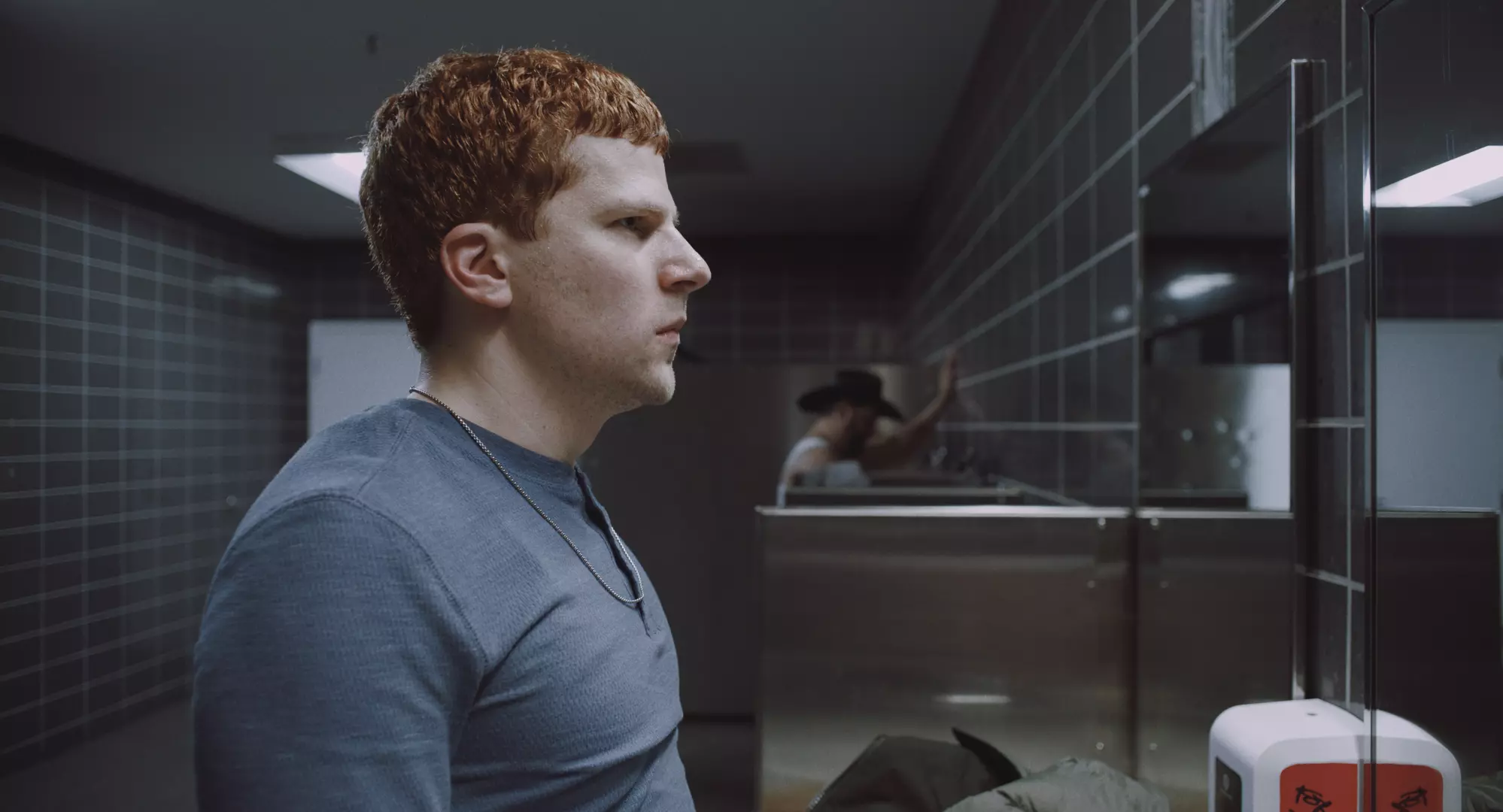
It is so reminiscent of another movie about male groups: Fight Club. In my opinion, In this film, the underground boxing club is filled with hormone and muscular bodies of men (with hardly any overweight men). The bloody fights create a visually impactful aesthetic of violence around the turn of the millennium. No matter where its ending leads to, Fight Club clearly sends the message that these men in underground clubs are cool and attractive. Manodrome, on the other hand, not only tells the story of a male group from an ordinary member's perspective, but also deconstructs the hidden homosocial desire among male groups and criticizes toxic masculinity. The most admirable thing about Manodrome is that it destroys all illusions about these male groups driven by anger and hatred, sparing no mercy in showing how absurd, ridiculous, childish, and hypocritical they are.
Eisenberg and Brody really blew me away; their performances are not only one of the highlights of this film, but also perfectly nails the theme of deconstructing male homosocial desire. The subtle deliberateness of anger and pain they skillfully performed dissolves the seriousness of their existence as group members. Perhaps in case that the audience wouldn't get it, the director designed a plot on purpose that directly shows how ridiculous this association and its members look from an outsider's view. In one scene, a team member bumps into his ex-girlfriend at a mall. The ex-girlfriend's shock and sadness upon seeing her ex-boyfriend and the team member's freak-out, makes Ralphie, who has fully given in to the squad, suddenly break down, wanting nothing but run away. In that moment, he can totally see his future life in that member. However, he can’t resist the temptation of immediate and short-lived satisfaction, ditching his pregnant girlfriend and joining the Manodrome in a frenzy.
Eisenberg has always been really good at showing vulnerability and complexity in his characters, and he can create a genuine emotional connection between the audience and the characters. However, in Manodrome, Eisenberg seems to intentionally keep some distance from the character he plays. This doesn't mean that his performance is bad, but makes it kinda hard to understand and relate to Ralphie's actions and experiences, even though I thought the character was real and believable. It even feels like he brings his problems on himself. This is a big difference between Manodrome and Fight Club. While Fight Club criticizes the success culture and consumerism, Manodrome looks at issues within men as individuals and as a group. Through Ralphie's experiences before and after joining Manodrome, the movie raises a number of questions. For example, why do guys like Ralphie put their dignity above practical survival in a tough economic situation? Why does Ralphie avoid becoming a dad and resent his own irresponsible father while also wanting guidance and protection from his father figure (Dad Dan)? And why is he both attracted to and filled with anger and hatred towards the black dudes at the gym?
Some of the questions are already answered in Manodrome, while others are left for the audience to ponder. Here I’m going to try to explain the complex relationship between Ralphie and the black man with the concept of male homosocial desire.. Ralphie joins Manodrome due to challenges in establishing his own subjectivity, seeking recognition and affirmation from other men. However, the faltering subjectivity collapses entirely when he engages in same-sex activities with the black man at the gym. As mentioned above, male homosocial desire precludes the sexual objectification of men, yet what he did has defied this principle. Unable to take it, all he can do is to kill the one who threatened his subjectivity. The peril of male homosocial desire, therefore, is demonstrated through the seemingly abrupt murder.
What bugs me about Manodrome is that it clearly recognizes the existence of male homosocial desire and its impact, yet it still blames Ralphie's issues and challenges on the absence of his father. It’s pretty much like humanity has discovered the vastness of the universe but some still think the sun is the center of it. By making Ralphie's dad the root of the problem, whilst a caring and wise father figure saves the day, Ralphie dodges away from responsibilities for his actions. He is made a son who’s got hurt by one ‘father’ figure and is protected by another, instead of an agent that harms others. It's precisely Manodrome's unclear stance on Ralphie that stops the movie from fully criticizing and exposing male homosocial desire and toxic masculinity. As Manodrome refuses to make male homosocial desire the main cause of Ralphie's struggles and downplays the mistakes he makes influenced by it, it shifts the focus of criticism and resistance from patriarchy to an unfit father. Such a shame of the gap between what it could’ve achieved and what actually turns out.




Share your thoughts!
Be the first to start the conversation.