
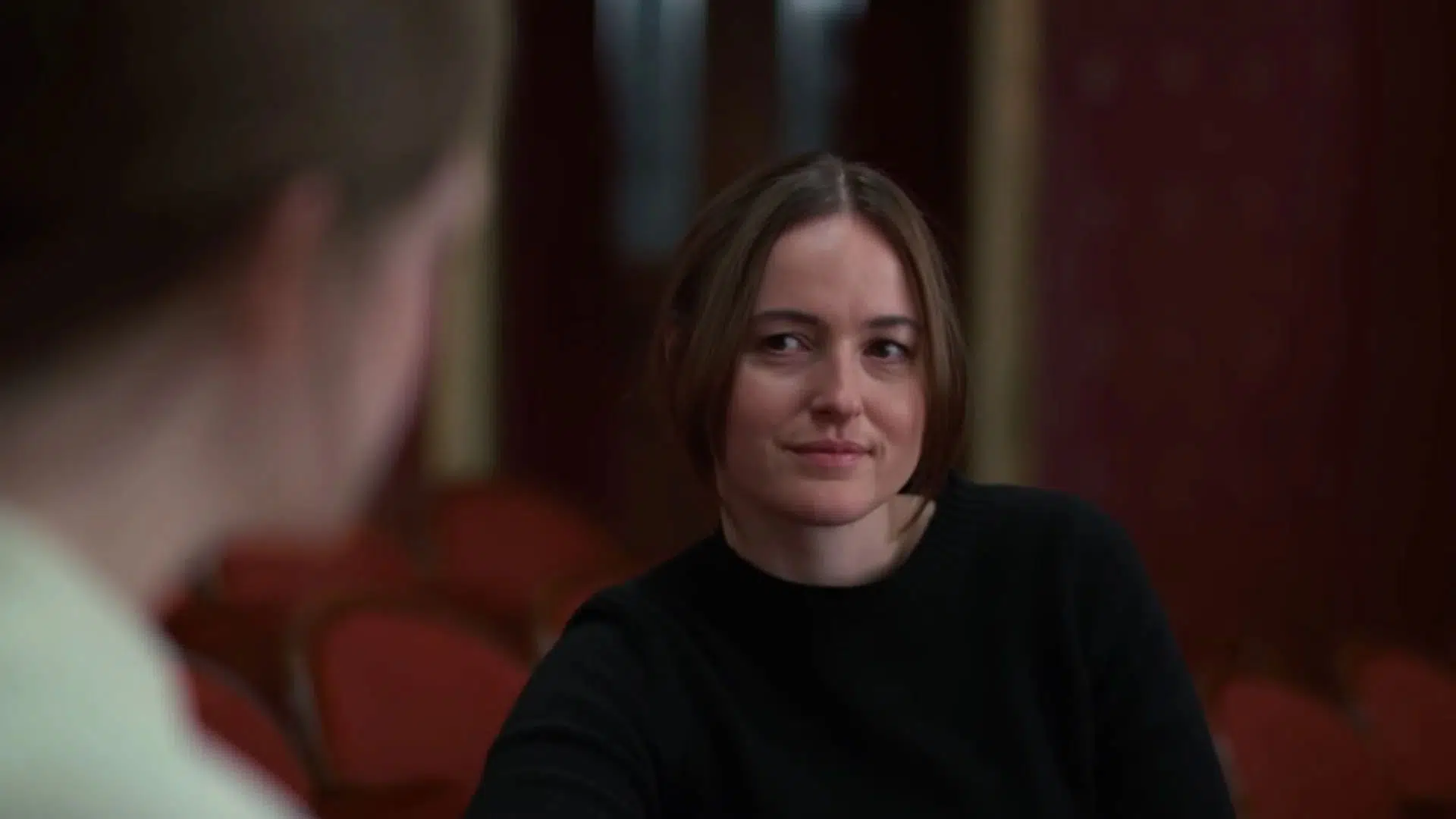
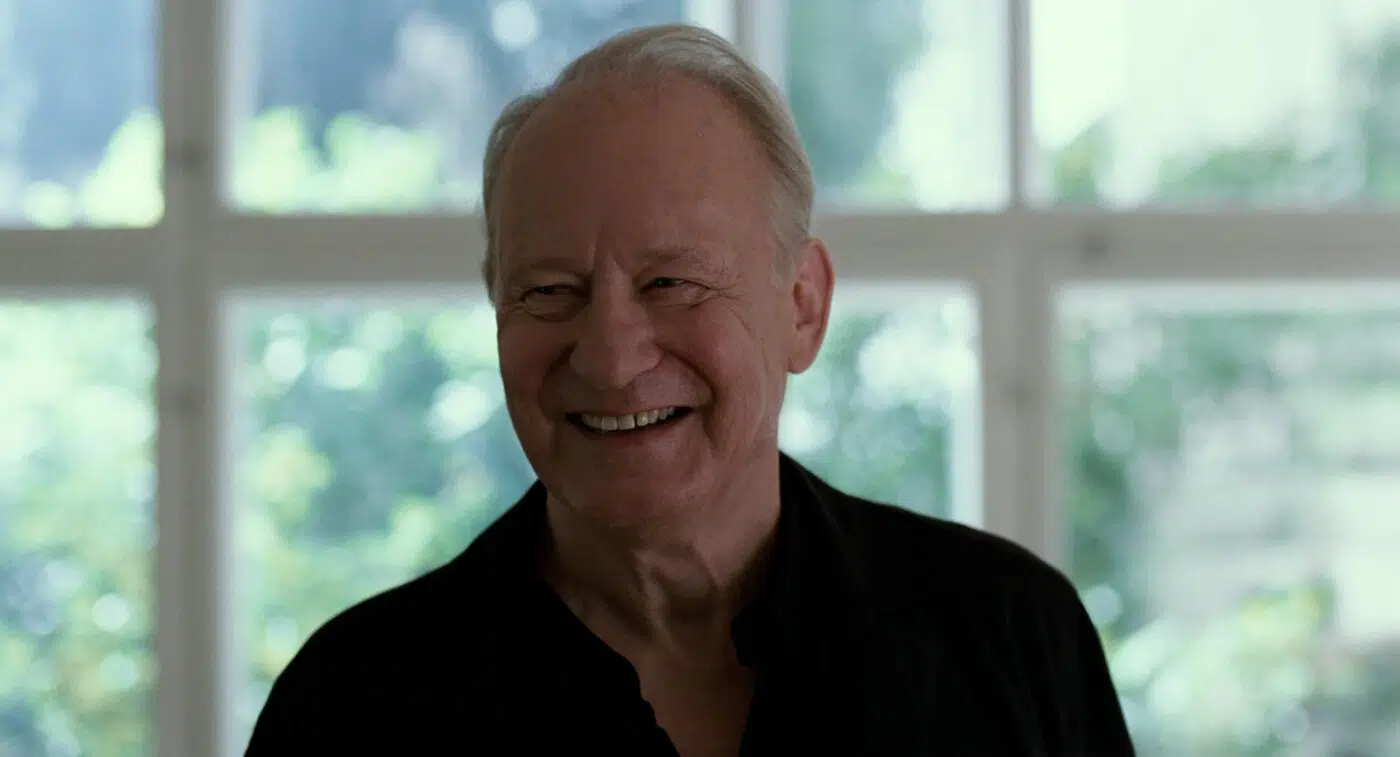
I wasn't expecting to relate so heavily to Sentimental Value, a Norwegian film about two sisters and their estranged auteur-director father. However, the cold reflection of reality was imposed upon me by director Joachim Trier. I understood Nora (Renate Reinsve), who must deal with her father, Gustav (Stellan Skarsgård), and his plan to make a new film, which he hopes she will star in.
Sentimental Value is an exploration of family relationships and our desire to connect with our loved ones. It reveals the difficulties of not only letting go of the past but also embracing the differences in others and accepting flawed people because they are exactly that. No one in Sentimental Value is close to perfect, but they bleed humanly and ask us to find sympathy even when it feels like there is none.
As I age, my relationship with my parents changes. It's only natural to grow up and need them less, but it's also normal to still desire to keep them near, to feel the need to absorb as much as I can from them before they leave. Parent mortality has become an unpleasant thought that creeps into my psyche more often these days.
My dad is in his 70s, only a few years older than Gustav. Lately, there is this divide between my father and I. Like Gustav, my father is always trying to find a way to keep me close to him. Like Nora, I've broken off from him and attempted to forge my own path. He, however, only knows his way, and he expects me to fit into his structure.
He's a venture capitalist, which means he helps turn private companies into public companies so that they can trade on the stock market. It's not a normal job. It doesn't provide a fixed salary; it doesn't come with retirement benefits. It's a business that relies solely on "the deal." If a deal is successful, everyone is happy. If a deal flops, things get very stressful very quickly. In my dad's world, a deal is everything.
In a lot of ways, I see a relationship between what my dad does and what Gustav does. As a film director, there's no guarantee of anything. Success relies on making a group of people believe in your project so that they (1) finance it and (2) work with you to make it a reality. What's really the difference between a screenplay and a prospectus?
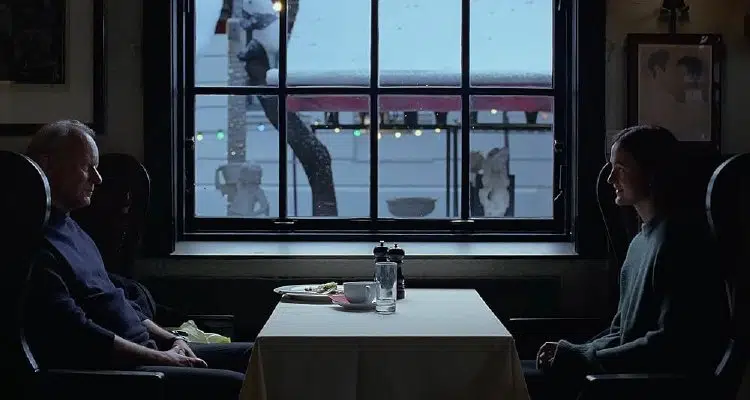
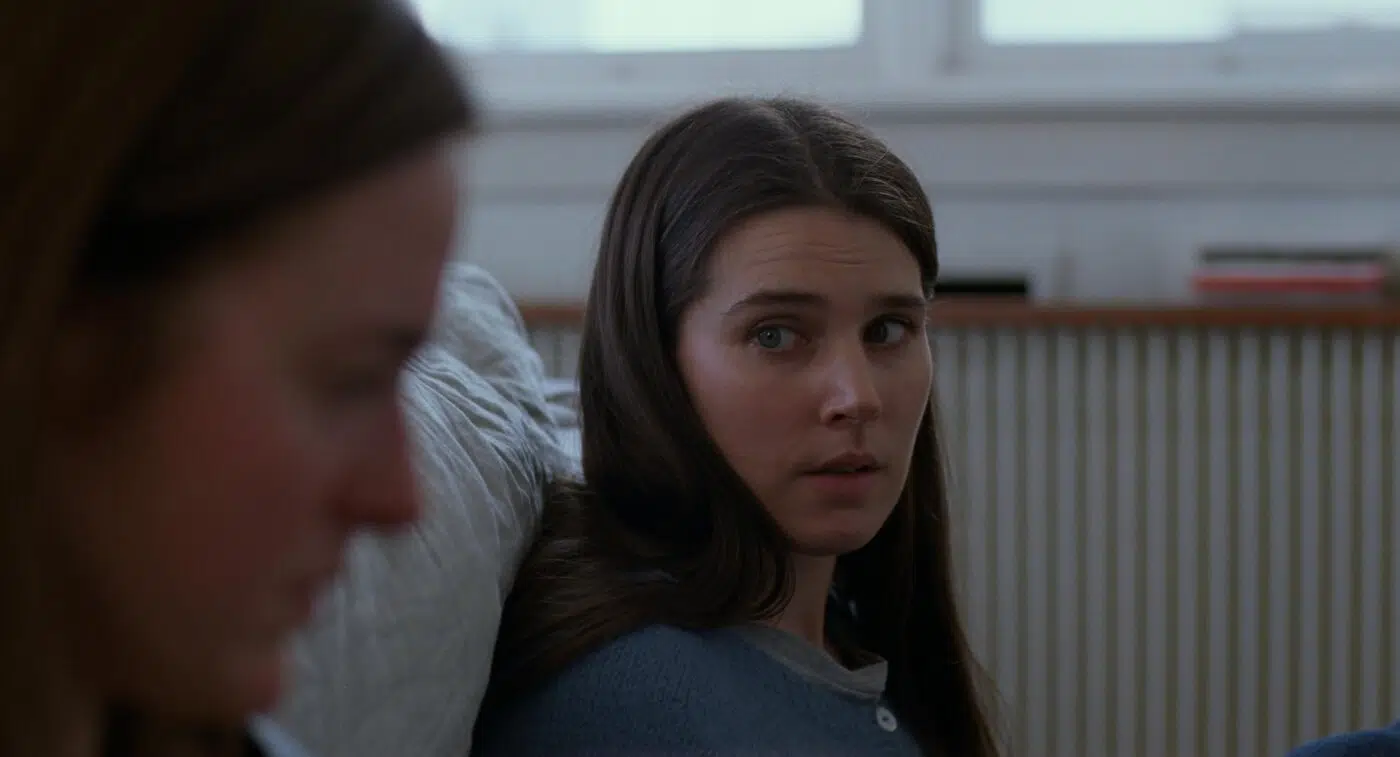
There's this one scene in Sentimental Value where Gustav meets Nora for lunch in a pub-like restaurant. They're both wearing sweaters but of different colour, symbolizing that they're cut from the same cloth but varied in their hues. Nora is obviously uncomfortable but also curious as to what her dad wants. That's when he presents his new script.
This is the crux of the film. It implies everything that Gustav is trying to achieve. He clearly wants to reconnect with his daughter. Unsure of how to do it, he retreats to his old ways, his tried-and-true methods. He writes her a screenplay because it's the only form of communication that he's mastered, that he knows, that he still understands.
Nora is not convinced. Wary of her and her father's history, she leaves their lunch without taking the offered script. I liked that this wasn't a mopey scene where Gustav grovels at his daughter. Everything that is unsaid makes up the meaning of this scene.
These days, I'm just trying to live my life. I've found my little niche and I'm happy with what I do. It's not perfect but nothing is. Still, every once in a while, my phone will ring and it'll be my dad asking me to lunch. I don't think I've ever had a lunch with my dad that didn't come with an ulterior motive.
It always comes back to the deal. Despite his age, him and his equally old colleagues are still trying to get another deal going. Some of their ideas are bizarre and some are more typical, but my dad always wants me to get involved.
Even though he's my family and he's had a lot of success, it's my duty to be wary of these ideas. As he's gotten older, his focus has become more sporadic. He will come up with a "great idea" and that will be his focus, but then six months later he has a new idea and I never hear about that last idea again. At least Gustav maintained his long-term conviction.
These days, I spend my time with friends talking about films and new ideas, and any spare time is spent coming up with my own form of deals. They're more in line with Gustav's style, that is, creative endeavours that could provide me with some success, either financial or honourific. It's a different medium that leads to a similar goal.
Despite the similarities, my dad never tries to connect with me on my level. It's only through his lens that he looks to form a connection. Do I blame him? Do I find that offensive? Not really. That's why I empathized with Gustav in Sentimental Value. I understood what he was going for and his own shortcomings that make it so difficult for him to reach his goal. It's the same with my dad. He wants a relationship with me, but it has to be through his structure. It's not really selfishness; it's more stubbornness. As with Gustav, the stubbornness of my father has carried on through to the child.
I applaud Trier for understanding this complicated dynamic. It's not exactly clear or easily definable, but I was wowed to feel so seen. Despite language, sex and distance, I felt vulnerable in that theatre — like my life was being exposed through the lives of Gustav and Nora. It was beautiful but it made me melancholic, because I knew what kind of article it would pull out of me. I knew it was forcing me to explore a relationship that I prefer to keep inside, rather than out for this small world to see. I mean, who really likes talking about their relationship with their dad?
The difference between Nora and I is that I never chose to shut my dad out of my life. She refuses to let hers back in, while I refuse to let mine go. The truth is that I'm afraid. He makes jokes about dying soon and we laugh, but I'm terrified of the day. I know, like most people, that there will be a shameful element of relief, but it will be accompanied by a grief I have yet to ever experience. In truth, I can't comprehend the end of this man that is my constant. I won't have him to turn to. He won't see my life continue. There will be no more lunches.
Having an aging father is difficult. It's complex and comes with myriad of emotions. Sentimental Value explores that with genius clarity. By telling what felt like a hyperpersonal story, Trier was able to reflect my own story and create a deeply relatable film. I didn't even get a chance to discuss the symbolism of the family house and the memories that walls can contain. I'll save it for another article, the written form that I know, that I love, that allows me to connect with all of you through a structure that I'm comfortable with.





Share your thoughts!
Be the first to start the conversation.